St. Joseph

When They Lived:

St. Joseph, also known as Joseph the Worker, lived during the first century AD, believed to be born around 1 BC and passing away around 18 AD.

Where They Lived:

St. Joseph’s life primarily unfolded in Nazareth, a small town in Galilee, which was a region in ancient Palestine.

Notable World Events During Their Time:

  • Roman Occupation: The land of Palestine was under Roman occupation, with various Roman governors and procurators.
  • Birth of Jesus: The nativity story revolved around Joseph and Mary seeking refuge in Bethlehem.
  • Death of Herod the Great: A significant transition in the political landscape of Palestine.
  • Expansion of the Roman Empire: St. Joseph’s experiences were shaped by Roman culture and governance.
  • Development of Judaism: A period of significant theological and cultural growth.
  • Scientific Advances: Continuing discoveries contributing to expanding human knowledge.

Their Patronage:

St. Joseph is recognized as the patron saint of various aspects of life:

  • Workers and Laborers
  • Fathers and Families
  • The Dying
  • Craftsmen and Engineers
  • Social Justice Causes

Early Life

Saint Joseph is one of the most popular and revered saints in Christianity. Venerated as the earthly father of Jesus Christ, what little is known about him is taken from his appearance in the Bible.

Saint Joseph has since been studied by various historians. However, these studies were made difficult by the fact that he existed even before Jesus Christ was born.

There are various books, facts, and hearsay about him.

There have been many difficulties in theologians and historians being able to place the birth of Saint Joseph. Many historians fix his date of birth to be circa 100 B.C.E.

Saint Joseph first made an appearance in the Bible in the book of Matthew, the New Testament.

In the book of Matthew, Saint Joseph is said to be a descendant of King David. What he did earlier in his career is up for argument. Even his account of his life before meeting the Virgin Mary varies.

Some historians claim Saint Joseph had children from a former Marriage. So accounts Claim that Joseph was a virgin before he met the Blessed Mary.

Dedication and Devotion

Saint Joseph was said to have lived in Nazareth. He was described in the Bible as being a “tekton”. This was taken by literal accounts to mean carpenter.

However, the literal translation of the word was said to mean technical, placing Saint Joseph as a maker of things. Like other information about this saint, this little piece of information has been debated for years.

Joseph was betrothed to Mary, whom he had met as a virgin. After discovering she was pregnant with a child, the Bible describes him as wishing to secretly divorce Mary in order to save her reputation.

After making up his mind, however, he had a dream where he was instructed by an angel to stay with Mary and the Child. He was told that the child was a product of the Holy Spirit.

A man who believed in God, Saint Joseph trusted this vision and stayed married to Mary.

After Mary gave birth to Jesus Christ in Bethlehem, Joseph was recorded in the Bible to once again have a vision. In this vision, an angel warned him about returning home.

It was shown to him that King Herod of Judea bore malevolent thoughts toward his child. Fearing for their lives, Saint Joseph led his family to Egypt.

They lived there for some years before the angel once again appeared to him to break the news of Herod’s death.

Saint Joseph settled in Nazareth with his family. There, he taught Jesus the art of Carpentry.

It is noted that the last time Saint Joseph appeared in the Bible (Luke 2:41–49) was when Jesus went missing. Joseph found young Jesus teaching in the temple.

It is recorded in the Bible that when told by his parents that they had been searching for him, Jesus replied, “Why were you searching for me? Did you not know that I must be in my Father’s house”.

He was, however, mentioned once more in John 6:41–42 when Jesus Christ was being discussed by the Jews: “Is this not Jesus, the son of Joseph, whose father and mother we know? How can he now say, ‘I came down from heaven?”.

Legacy

Saint Joseph is famously associated with the accounts of Jesus Christ. He is venerated across all Christian denominations as the father of Jesus Christ.

Because of the lack of proper documentation, it is not clear what he spent the rest of his life doing.

It is still argued today whether Saint Joseph had any children except Jesus Christ. Some historical accounts venerate him as a Perpetual Virgin.

These accounts assume that Saint Joseph and the Virgin Mary remained chaste throughout their marriage.

There are lots of writings intended to fill up the space left open by the missing accounts of Saint Joseph.

Death and Canonization

Saint Joseph’s death is not recorded in the Bible.

Some accounts claim that he passed away before Jesus started his ministry. Others claim that Saint Joseph passed away peacefully at the age of 111. This is supported by various 17th-century writings.

He was named the patron of the universal church by Pope Pius IX in 1870.

Saint Joseph is celebrated by Western Christianity on the 19th of March. He is also commemorated on the third Wednesday after Easter Sunday and on the 1st of May.

5 Interesting Facts About St. Joseph

  • Did you know that Saint Joseph is the Patron Saint of many things
    including Fathers, Immigrants, Craftsmen, and Cebu?
  • Did you know that Saint Joseph’s supposed father is Jacob?
  • Did you know that Saint Joseph was named the patron saint of several
    countries like America, Croatia, Belgium, and Peru?
  • Did you know that there is no recorded quote from Saint Joseph in the
    Holy Bible?
  • Did you know that some accounts record Saint Joseph dying in Jesus
    Christ’s and the Virgin Mary’s arms

Prayer to St. Joseph

Hail, Guardian of the Redeemer,Spouse of the Blessed Virgin Mary! To you, God entrusted his only Son; in you, Mary placed her trust; with you, Christ became man. Blessed Joseph, to us, too, show yourself a father and guide us in the path of life. Obtain for us grace, mercy, and courage, and defend us from every evil. Amen.

Source:[https://portlanddiocese.org/prayers-st-joseph]{.ul}
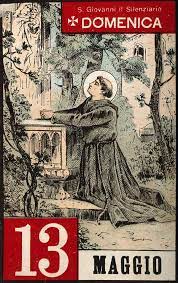
St. John the Silent

When They Lived

St. John the Silent, also known as St. John the Hesychast, lived from 800 AD to 880 AD.

Where They Lived

St. John the Silent lived in various regions, primarily in Egypt and Palestine. He spent a significant portion of his life in the desert of Wadi Natrun in Egypt, where he pursued a life of solitude and contemplation.

Notable World Events During Their Time

  • Charlemagne’s Empire: Charlemagne’s reign marked the Carolingian Renaissance, a revival of learning and culture in Europe.
  • Great Heathen Army and Viking Invasions: The Viking Age saw the formation of the Great Heathen Army and Viking activities across Europe.
  • Arab-Byzantine Wars: Ongoing conflicts between the Byzantine Empire and Arab Caliphates, with implications for the Holy Land.
  • Photios I and the East-West Schism: Tensions between the Eastern Orthodox Church and Roman Catholic Church that eventually led to the East-West Schism in 1054.

Patronage

St. John the Silent is revered as a patron saint of contemplatives, hermits, and those seeking inner peace. His life of solitude and dedication to silent prayer makes him a symbol of the importance of finding stillness and communion with the divine in a noisy world. He also serves as an inspiration for those striving for spiritual growth and seeking a deeper connection with their faith.

St. John’s journey from a prominent position in society to a life of solitude in the desert, where he focused on silence and prayer, offers a unique perspective on the human quest for meaning and connection. His story can be seen as a timeless example of how individuals navigate the complexities of their world to find a higher purpose, regardless of the events that unfold around them.

Early Childhood

John was born in 454 in Nicopolis, Armenia. He came from a noble family consisting of Generals and Governors. However, John was a devout Christian at a very young age and did not follow the careers popular in his family. After the death of his parents when he was 18 years old, he built a monastery where he lived with ten other monks. Their lifestyle was one of hard work and devotion.

John’s leadership and lifestyle of devotion impressed the Archbishop of Sebaste, who promptly anointed John as Bishop of Colonia in Armenia. At the age of 21, John felt that he was not yet ready and worthy of the office, but he accepted the position. He led his diocese for nine years with honor, love, and humility. He resigned from his position and went to Jerusalem, where he lived in isolation.

John in the Monastery of St. Sabas

As he was praying one night, John had a vision of a bright cross forming in the air and heard a voice telling him to follow the light if he wanted salvation. That light moved and pointed to the monastery of St. Sabas. This prompted him to join the monastery, which had 150 monks, at the age of 38. After passing the tests, he was given a separate hermitage, where he lived in seclusion uninterrupted.

John fasted for five days a week while confined in his cell. He only left his cell on Saturdays and Sundays when attending the public Mass. After three years of dedicated devotion, John was made the steward of the monastery.

After four years, St. Sabas decided to make John a priest. However, he did not know that John was a bishop in Armenia. John had kept the secret to himself. Upon his arrival at Calvary for the ordination, John requested a private meeting with the patriarch Elias of Jerusalem. He confessed to the patriarch that he was a bishop who fled from his duties in Armenia.

This startled the patriarch, who stopped the ordaining and immediately informed St. Sabas about his decision but did not reveal John’s secret. St. Sabas panicked and thought that John had committed a crime, but after praying, God revealed the truth to him.

He confronted John about his secret and expressed his disappointment. This forced John to decide to leave the monastery, but Sabas managed to convince him to stay. He also promised that he would keep the secret safe. For the next four years, John lived in his cell, secluded, not speaking to anyone except the person who brought him essentials.

In the year 503, trouble and divisions perpetrated by rogue disciples forced St. Sabas to leave his monastery. John also left and moved to the nearby wilderness, where he spent six years in silence. He communicated with God, and he only ate wild roots, together with herbs.

When St. Sabas returned to the monastery, he convinced John to return with him, and he agreed. However, John was accustomed to conversing with God alone, and he found anything else empty. He returned to his old solitary cell and pursued his obscurity and humility. He lived there for forty more years and never turned away anyone seeking counsel or instruction.

Miracles

Cyril of Scythopolis was one of the people who benefited from John’s counsel. He later wrote about John’s life. John was 90 years old when he met 16-year-old Cyril, who came seeking advice about his life. John advised him to join the Laura of St. Euthymius monastery, but Cyril did not listen to the advice. Instead, he went to a small monastery on the banks of the Jordan River. He fell sick and regretted not listening to John.

John appeared to Cyril in a dream, rebuking him for not obeying simple instructions. He told him that if he returned to St. Euthymius monastery, he would get well and find his salvation. Cyril obeyed the instruction by going to St. Euthymius’ monastery, and upon arrival, he miraculously regained his good health.

Another miracle witnessed by Cyril is that of a man named George, who brought his demon-possessed son to John. John immediately understood the distressing condition of the child without being told. He made the sign of the cross on the child’s forehead with blessed oil, and instantly the child was delivered from the evil spirit.

Death and Patronage

John died in 558 at the age of 104 due to natural causes. He lived a life of solitude for 76 years, interrupted by the nine years he spent as abbot of Colonia. His Feast Day is on the 13th of May.

St. John is the Patron Saint of the love of Silence. A Christian silence, or silence of virtue, gives a person time to meditate and converse with God.

5 Interesting Facts About St. John the Silent

  • When John was in the wilderness, legend has it that he was protected.
    by a lion that lived nearby.
  • When John was in the desert, a man mysteriously appeared and gave
    He had hot white loaves, wine, oil, fresh cheeses, eggs, and a jar of honey.
  • St. John’s Feast Day is on the 13th of May.

Prayer to St. John the Silent

Father, you called St. John to the solitary life in which he prayed for others. Grant us the signs we seek for discerning Your will and purifying our hearts, dear Lord, so that we may serve You more perfectly. In Christ’s name, we pray. Amen.

St. John of God

When They Lived:

St. John of God, also known as Juan Ciudad, lived during the late 15th and early 16th centuries. He was born on March 8, 1495, in Montemor-o-Novo, Portugal, and passed away on March 8, 1550, in Granada, Spain.

Where They Lived:

St. John of God spent a significant part of his life in Granada, Spain. It was in this city that he carried out his charitable works and founded the Order of Hospitallers, also known as the Brothers Hospitallers of St. John of God.

Notable World Events During Their Time:

  • 1492 – Columbus’ Voyage to the Americas: In the same year St. John of God was born, Christopher Columbus made his first voyage to the Americas, marking the beginning of European exploration and colonization of the New World.
  • 1517 – Martin Luther’s 95 Theses: This event ignited the Protestant Reformation, leading to significant changes in the religious landscape of Europe and beyond.
  • 1543 – Copernicus’ Heliocentric Model: Nicolaus Copernicus published his groundbreaking work “De Revolutionibus Orbium Coelestium,” introducing the heliocentric model of the solar system, challenging the geocentric views of the time.
  • 1520s-1530s – Renaissance and Humanism: The Renaissance was in full swing during St. John of God’s life, fostering advancements in art, science, and philosophy. Humanism, a cultural movement that emphasized human potential and achievement, also gained momentum.
  • 1519-1522 – Magellan’s Circumnavigation: Ferdinand Magellan’s expedition became the first known successful circumnavigation of the Earth, expanding global geographical knowledge.
  • 1533 – Pizarro Conquers the Inca Empire: Spanish conquistador Francisco Pizarro’s capture of the Inca emperor marked a significant chapter in the conquest of South America.

Their Patronage:

St. John of God is recognized as the patron saint of a wide range of people and professions, including hospitals, nurses, firefighters, and the sick. His life’s work was centered around caring for the sick and marginalized, and his selfless dedication has made him a symbol of compassion and service. His patronage extends not only to those in the medical field but also to individuals in various vocations that involve aiding those in need.

St. John of God’s legacy of establishing hospitals and caring for the less fortunate continues to inspire people worldwide. His life story reminds us of the importance of extending a helping hand to those who are suffering, regardless of their background or circumstances. In an era marked by significant global events, his emphasis on humanitarianism and kindness remains a timeless and relevant example for people of all walks of life.

The Rise of St. John of God

Born on March 8, 1495, in the Evora District in Portugal, he was named Joao Duarte Cidade. Saint John of God was from a family with great religious faith, and when he was 8 years old, he went missing, and his mother died from the grief caused by his disappearance. His father joined a Catholic order, and this resulted in him being a homeless orphan in Spain until he was taken in as a shepherd by a farmer named Francisco Mayoral.

Pleased with Saint John’s performance, the farmer persuaded him to marry his daughter so that he could be his heir, but Saint John was not up for the idea, and he ended up joining the company of foot soldiers as a means of escaping the farmer. While serving as a foot soldier, he was appointed to guard an enormous loot, and he ended up being condemned to death as he was the main suspect in the loot. It was a narrow escape for him when he was pardoned, and he ended up returning to farm life and doing pastoral farming for the next four years.

Still unmarried, he joined the troops to fight in Hungary against the Turks, and he was a trooper for the next eighteen years, serving in different parts of Europe. He finally decided to return to his hometown and his family, as he had been gone for so long that he had forgotten his parents’ names. However, he realized that he did not have any ties with the region after learning about what happened to his parents.

He returned to Spain and continued with his pastoral work until he was no longer satisfied with his occupation and decided to move to Africa, where he could work to free Christians who were enslaved there.

5 Interesting Facts About St. John of God

  1. St. John of God is believed to have had a heavenly guest who visited.
    him during the early days of his charity work.
  2. He exchanged his cloak with any beggar he met.
  3. His order has been officially entrusted with the medical care of
    the pope.
  4. His order is present in 53 countries and operates in more than 300
    hospitals and has more than 45,000 members.
  5. The Brothers Hospitallers were formed 20 years after his death.

Prayer to St. John of God

St. John of God, patron of the sick and compassionate brother to all who suffer or are troubled in any way,I turn to you with great confidence in my time of need. I ask you, John, to speak to Jesus on my behalf. He will listen to you because you tried to be like Him in the compassion and love you had for people in need. I know only Jesus can really help me, but I also know that He can be influenced by someone close to Him. I plead with you, Brother John, to present this special intention of mine to Jesus so that He may grant it according to His will ……(mention the intention).Help me, John, to strengthen my faith, my hope, and my love for Jesus and our Mother Mary, for whom you had such a special love. All glory to the Father, Son, and Holy Spirit. Amen

St. John of Damascus

When he lived: St. John of Damascus, also known as John Damascene, lived from around 676 AD to 749 AD.

Where he lived: St. John of Damascus was born and spent most of his life in Damascus, which is now the capital of Syria. At that time, Damascus was a vital center of trade, culture, and learning in the Byzantine Empire.

Notable world events during the time of his life:

  • Islamic Expansion: During St. John’s lifetime, the Islamic Caliphate was expanding rapidly. The Battle of Tours in 732 AD marked a significant event when the Franks, under the leadership of Charles Martel, halted the Muslim expansion into Europe.
  • Iconoclasm Controversy: St. John of Damascus lived during the height of the Iconoclasm Controversy in the Byzantine Empire. He was a staunch defender of the veneration of icons and wrote extensively in support of their use.
  • Rise of the Carolingian Empire: St. John’s era saw the establishment of the Carolingian Empire under Charlemagne, who was crowned Holy Roman Emperor in 800 AD.
  • Abbasid Caliphate and the House of Wisdom: The Abbasid Caliphate, centered in Baghdad, flourished during St. John’s time. This period witnessed significant advancements in science, philosophy, and culture.
  • Umayyad and Abbasid Conflict: The ongoing conflict between the Umayyad and Abbasid Caliphates had repercussions across the Islamic world.

His patronage: St. John of Damascus is known as the patron saint of scholars, theologians, and writers. His intellectual contributions and unwavering faith have made him an inspirational figure for those dedicated to the pursuit of knowledge and the exploration of spirituality.

Early Life and Education

John was born in Damascus, Syria, in the late 7th century. His father, Sergius, was a high-ranking government official, and his mother, Maria, was a devout Christian. From a young age, John was well-educated and fluent in both Greek and Arabic. He studied at the monastery of St. Sabas near Jerusalem, where he became a monk and devoted himself to a life of prayer and study.

The Iconoclastic Controversy

In the 8th century, a movement known as Iconoclasm swept through the Byzantine Empire. Iconoclasts believed that the use of icons, or religious images, was a form of idolatry and should be abolished. This belief was met with strong opposition from many Christians, who saw icons as a way to honor and venerate the saints.

John of Damascus was one of the most vocal opponents of Iconoclasm. He wrote several treatises defending the use of icons, including “Three Treatises on the Divine Images” and “On the Divine Images: Against Those Who Attack Them.” In these works, John argued that icons were not idols but rather a way to honor the saints and venerate Christ. He also argued that the use of icons was rooted in the Christian tradition and had been endorsed by previous Church fathers.

John’s arguments were influential in the eventual defeat of Iconoclasm. In 787, the Second Council of Nicaea issued a decree affirming the use of icons in the Church, a decision that is known as the Triumph of Orthodoxy.

Other Contributions

In addition to his work on icons, John of Damascus was also a prolific writer and theologian. He wrote extensively on a wide range of topics, including philosophy, theology, and church history. He is perhaps best known for his work “The Fountain of Knowledge,” which is a summary of the entirety of Christian doctrine. This work was widely read and was considered a seminal text in the field of theology.

John was also a hymnographer, and he is credited with writing some of the most famous hymns in the Eastern Christian tradition. One of his most famous hymns is the “Hymn of the Pearl,” which is sung during the Feast of the Annunciation.

Legacy

John of Damascus was one of the most important figures in the history of Eastern Christianity. His defense of icons during the Iconoclastic Controversy helped to preserve the use of icons in the Church, and his writings on theology and philosophy continue to be studied and admired today. He was declared a saint by the Orthodox Church, and his feast day is celebrated on December 4th.

In conclusion, Saint John of Damascus was a remarkable figure who made significant contributions to the fields of theology, philosophy, and hymnography. His defense of icons during the Iconoclastic Controversy was instrumental in preserving the use of icons in the Church, and his writings continue to be studied and revered to this day.

Prayer to St. John

Yes, there is a prayer to Saint John of Damascus. The following is a traditional prayer for him:

O Holy Father John of Damascus,

Who, in defense of the holy icons,

Did suffer banishment for the love of Christ,

Intercede with Him to grant us grace.

To keep His commandments with all our hearts,

That we may be delivered from the snares of the enemy.

And win the crown of victory in the Kingdom of Heaven.

Amen.

Five Facts

  • Saint John of Damascus was born in Damascus, Syria, in the late 7th century.
  • He was a monk at the monastery of St. Sabas near Jerusalem and was well-educated in both Greek and Arabic.
  • John was a vocal opponent of Iconoclasm and wrote several treatises defending the use of icons in the Church.
  • He was a prolific writer and theologian and is known for his work “The Fount of Knowledge,” a summary of Christian doctrine.
  • John was declared a saint by the Orthodox Church, and his feast day is celebrated on December 4th.

St. John Neumann

When They Lived:

St. John Neumann, also known as St. John Nepomucene Neumann, lived from March 28, 1811, to January 5, 1860.

Where They Lived:

St. John Neumann lived in various locations, but he is most famously associated with the United States. He spent a significant part of his life in the United States, particularly in the state of Pennsylvania. He served as the Bishop of Philadelphia and is often remembered for his contributions to the Catholic Church in the country.

Notable World Events During Their Life:

  • Industrial Revolution (18th-19th century): St. John Neumann’s life coincided with the peak of the Industrial Revolution. This period brought about significant technological advancements, urbanization, and social changes.
  • California Gold Rush (1848-1855): The discovery of gold in California in 1848 triggered a massive influx of people seeking their fortunes.
  • Publication of Charles Darwin’s “On the Origin of Species” (1859): Just a year before St. John Neumann’s death, Charles Darwin published his groundbreaking work on evolution.
  • Crimean War (1853-1856): St. John Neumann’s lifetime also witnessed the Crimean War, a conflict involving various European powers.
  • Telegraph and Morse Code (1830s-1840s): Samuel Morse developed the telegraph and Morse code, revolutionizing long-distance communication.
  • Opening of Japan (1853-1854): Commodore Matthew Perry’s expedition to Japan led to the opening of the previously isolated nation to international trade and influence.

Their Patronage:

St. John Neumann is the patron saint of a variety of groups and causes, including Catholic education, immigrants, and sick children.

His dedication to education and his efforts to establish a strong Catholic school system earned him the patronage of educational institutions and educators. Due to his own experience as an immigrant from Bohemia (modern-day Czech Republic), he became a symbol of hope and support for immigrants in the United States. Additionally, his care for the health and well-being of children, especially during a cholera epidemic, led to his association with the protection of sick children.</p

Early Life

John Neumann was born on the 28th of March, 1811, in Prachatice, Bohemia (now called the Czech Republic). Out of the six children his parents had, he was the third. In 1823, He wrote and passed with distinction the entrance exam into a school in Budweis run by the Piarist Fathers.

Education

In 1831, Neumann joined the Diocese of Budweis seminary to study theology. During his second year of study at the seminary, Neumann read reports from the Leopoldine Society requesting more priests in the United States, particularly to attend to the German-speaking communities residing there.

These reports, along with a spirited lecture given by the seminary director about Apostle Paul’s missionary activities, gave him all the encouragement he needed to leave for America. He planned to go there and offer spiritual support to European immigrants living in America.

Dedication and Devotion

In June 1836, Neumann became a priest, and his ordination was carried out by John Dubois, the bishop of New York. Dubois then assigned Neumann to assist Father Alexander Pax in offering pastoral services to the German immigrants residing in the Buffalo area. Dubois also directed Neumann to make a stop at Rochester before moving on to Buffalo.

The German Catholics warmly welcomed his arrival in Rochester. Some of the parishioners even planned to request that Bishop Dubois assign Neumann to Rochester permanently.

By January 1842, John Neumann had joined the Redemptorists as a result of his desire to live in a religious community that truly matched his missionary vocation.

Even though Neumann’s primary missions were North Bush, Lancaster, and Williamsburg, soon he was administering Tonawanda, Transit,Pendleton, Batavia, and Sheldon. For more than four years, Brother Neumann traveled from house to house, station to station, in the cold winter and the hot summer, baptizing newborns, blessing the dying, visiting the sick, and encouraging faith in backsliding members.

Legacy

He was a diligent and determined missionary dedicated to fulfilling his vocation no matter the circumstances. After assiduously working as the vice-provincial superior of the Redemptorists from 1846 to 1849, he took over the role of parish priest for St. Alphonsus Church in Baltimore. In 1852, he was made the bishop of Philadelphia and consecrated by Francis Kenrick, the Archbishop of Baltimore.

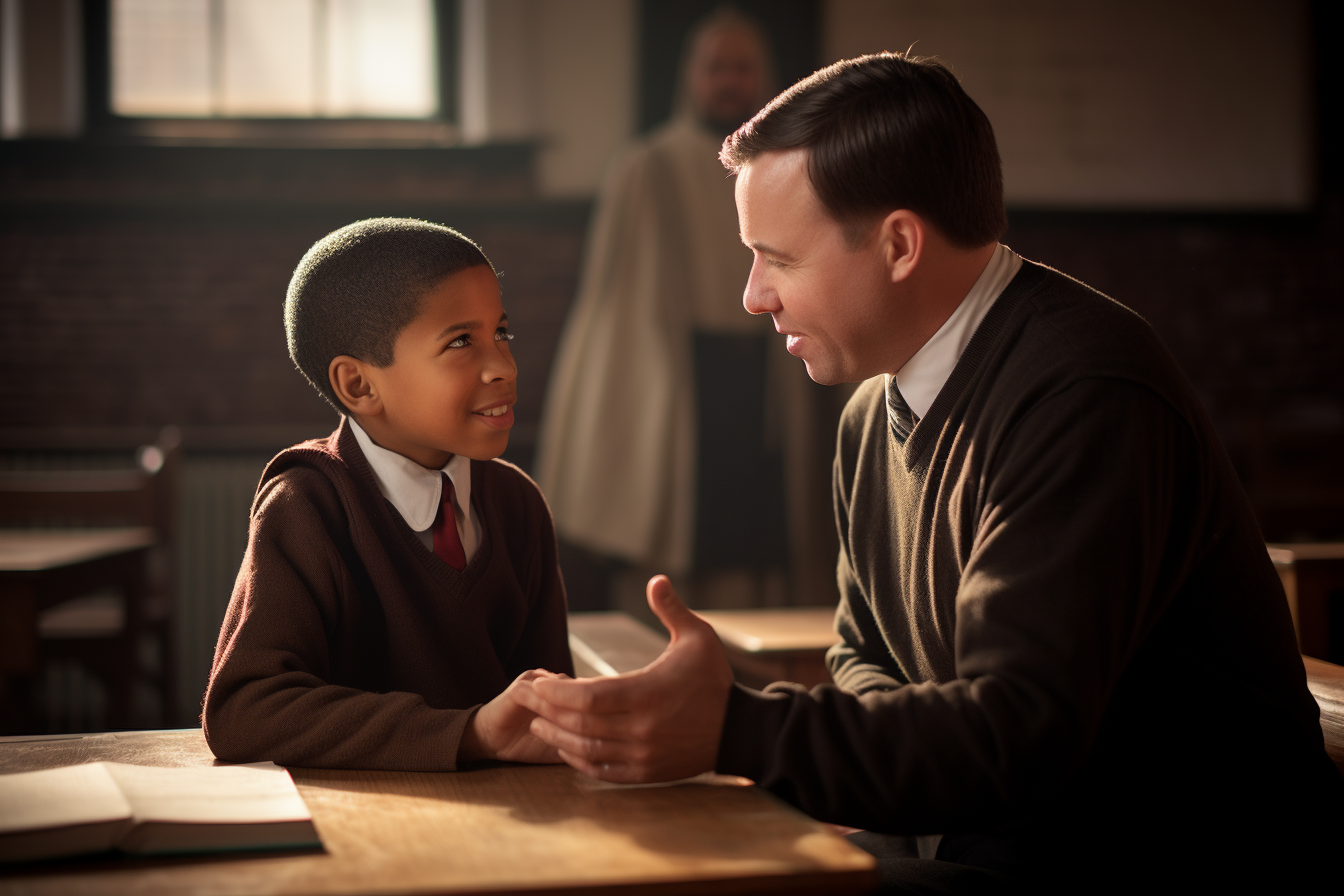
Bishop John Neumann had a substantial effect on religious life in America. He founded Catholic schools and encouraged devotion to the Eucharist. He was also the founder of the ‘Third Order of Saint Francis of Glen Riddle’ religious institute. He is also regarded by the School Sisters of Notre Dame as their secondary founder and their “Father in America.”St. John Neumann teaching an eager you boy, while his deacon impatiently waits for him to prepare for mass

Bishop John Neumann built over 70 churches, several orphanages, and hospitals in just seven years. Sadly, he passed away suddenly at the age of 48 on January 5, 1860. His death was caused by a heart attack.

Death and Canonization

St. John Neumann was beatified on October 13, 1963, and canonized on June 19, 1977. The miracle cited in support of his beatification is the case of Eva Benassi, an eleven-year-old who was diagnosed with acute diffuse peritonitis. Eva woke up one morning, totally cured of the disease, after praying to Neumann for intercession.

His remains are interred at St. Peter the Apostle Church in Philadelphia.

5 Interesting Facts About St. John Neumann

  • Did you know St. Neumann was fluent in several languages, including
    German, Italian, Czech, Latin, French, Greek, and English?
  • St. John Neumann was the first ecclesiastic to set up a diocesan
    school system in the United States.
  • Did you know St. Neumann is the first and presently the only
    an American male citizen to be canonized?
  • St. Neumann is called upon as a patron of sick children and of
    immigrants.
  • Saint John Neumann is the Patron Saint of educators and teachers.

Prayer to St. John Neumann

O Saint John Neumann, your ardent desire to bring all souls to Christ impelled you to leave home and country; teach us to live worthily in the spirit of our baptism, which makes us all children of the one Heavenly Father and brothers of Jesus Christ, the firstborn of the family of God. Obtain for us that complete dedication in the service of the needy, the weak, the afflicted, and the abandoned that so characterized your life. Help us to walk perseveringly in the difficult and, at times, painful paths of duty, strengthened by the Body and Blood of our Savior and under the watchful protection of Mary, our Mother. May death still find us on the sure road to our Father’s house with the light of living Faith in our hearts. Amen.

Source:[https://www.catholicculture.org/culture/liturgicalyear/prayers/view.cfm?id=984]{.ul}

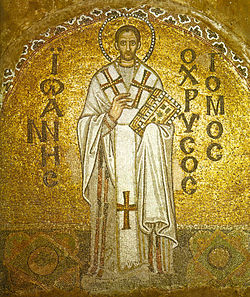
St. John Chrysostom

When They Lived:

St. John Chrysostom, also known as John of Antioch, lived during the late 4th and early 5th centuries. He was born around 349 AD and died in 407 AD.

Where They Lived:

St. John Chrysostom was associated primarily with the city of Antioch, which was a significant center of early Christianity located in present-day Turkey. He later became the Archbishop of Constantinople, which is modern-day Istanbul in Turkey.

Notable World Events During Their Time:

  • The Sack of Rome (410 AD): In 410 AD, the Visigoths, led by King Alaric, sacked Rome. This event shook the Roman world and marked a symbolic decline of the Western Roman Empire.
  • The Council of Nicaea (325 AD): This significant ecumenical council shaped early Christian doctrine and defined important aspects of the faith.
  • The Fall of the Western Roman Empire (476 AD): After Chrysostom’s death, the Western Roman Empire finally fell, marking the end of ancient times.
  • The Writing of the Codex Theodosianus (438 AD): This compilation of Roman laws had a lasting impact on legal systems and governance in the later Roman Empire.
  • The Completion of the Hagia Sophia (360 AD): The Hagia Sophia’s construction was a remarkable architectural achievement in Constantinople during his lifetime.
  • The Arrival of the Huns (4th-5th century): The migration of the Huns influenced the geopolitical landscape of Chrysostom’s time.
  • The Writings of Augustine of Hippo (354-430 AD): Augustine’s theological and philosophical works greatly shaped Western Christianity.

Their Patronage:

St. John Chrysostom is recognized as the patron saint of preachers, speakers, and educators. His eloquent and passionate style of preaching earned him the title “Chrysostom,” which means “golden-mouthed.”

The Sickly Hermit

St. John Chrysostom was born in Antioch around the year 347. His father died when he was still young, and his mother guided his education. John was an excellent student of his time. He studied classical Greek education and rhetoric. When he was 18 years old, upon meeting the holy Bishop Meletus, he experienced a religious conversion and started to study the Scriptures.

Three years after his studies, John was baptized. He joined a group of monks in the mountains. He left them and lived in a cave as a hermit. There, he stayed for prolonged hours of prayer and practiced extreme mortifications. However, these practices left him in poor health. Thus, he returned to Antioch and devoted himself to studying for the priesthood. In 386, John was ordained a priest.

The Great Preacher

John served the Cathedral of Antioch for 12 years. He gained widespread popularity due to his intelligence, but most especially his gift of preaching. In 398, he was elevated to the rank of Patriarch of the See of Constantinople. Though with much hesitation, John accepted the responsibility.

As the bishop-patriarch, John was very different from other bishops in his time. He lived a life of simplicity. He gave his wealth to build hospitals. He set about reforming the clergy and the city. He deposed bishops for buying their way into office. He attacked wealthy people for the misuse of their money and possessions. John exerted a lot of effort to reform the lax clergy, correct the badly managed budget, and eradicate the land of violence.

The bishop-patriarch became very popular with the people through his outstanding example of preaching and courage in front of the imperial power. He never avoided publicly criticizing the corruption and luxurious indulgence of those in power. He was not afraid to preach justice in the light of the Gospel. In matters of justice and charity, John acknowledged no double standards.

Condemned and Banished

His attitude and zeal for charity and justice naturally made him an adversary of the Empress Eudoxia and provoked the jealousy of Theophilus, the Patriarch of Alexandria. Fearing the growing importance of John, Theophilus took the occasion to charge him with fostering heresy. Theophilus and other exasperated bishops were supported by the empress. In 403, false charges were thrown against John. He was impeached, condemned, and sentenced to be exiled in Armenia. He continued to be a great presence in the Church of the East through his numerous letters.

Pope Innocent I supported John. However, despite the pontiff’s support, John was exiled even farther away. His enemies were not satisfied with the sufferings he had already endured, and they banished him still further to the very extremity of the empire. From Armenia, John was exiled to an isolated place along the Black Sea. Due to his failing health and inability to endure the rigors, John died during the journey in 407 in Pontus. His feast day is September 13.

Five Interesting Facts About St. John Chrysostom

  1. “Chrysostom” in St. John Chrysostom comes from the Greek “chrysostomos”, which means “golden-mouthed”. This was because of his eloquence in preaching.
  2. St. John Chrysostom is the patron saint of preachers and orators.
  3. In 438, Emperor Theodosius II of Constantinople had St. John Chrysostom’s body returned to Constantinople and did penance for the sins of Eudoxia, his mother.
  4. St. John Chrysostom was declared a Doctor of the Church. Along with  St. Basil the Great, Gregory of Nazianzus, and Athanasius, St. John Chrysostom is considered one of the greatest of the early Eastern Church fathers.
  5. Aside from the Roman Catholic Church, the Orthodox Church, and Eastern Catholic Churches, the Church of England and the Lutheran Church also honor John Chrysostom as a saint.

Prayer to St. John Chrysostom

O God, strength of those who hope in you, who willed that the Bishop Saint John Chrysostom should be illustrious by his wonderful eloquence and his experience of suffering, grant us, we pray, that, instructed by his teachings, we may be strengthened through the example of his invincible patience. Through our Lord Jesus Christ, your Son, who lives and reigns with you in the unity of the Holy Spirit, one God, for ever and ever Amen.

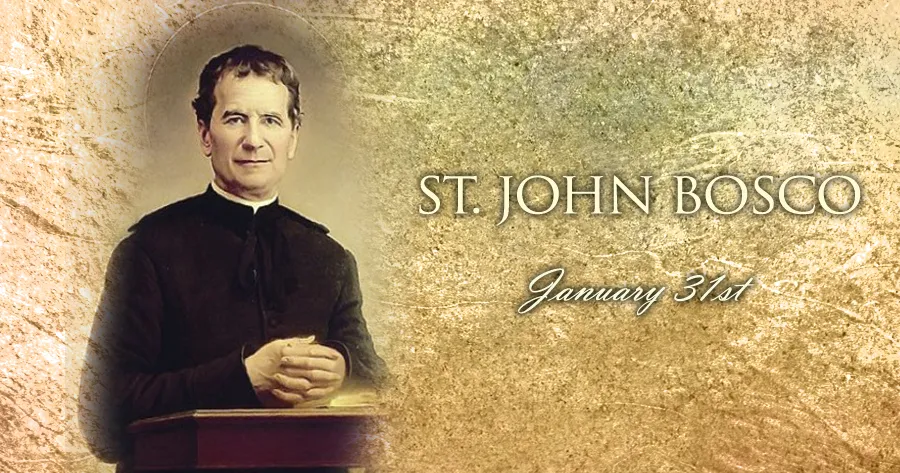
St. John Bosco

When They Lived:

St. John Bosco, also known as Don Bosco, lived from August 16, 1815, to January 31, 1888. He was born in a time when industrialization was transforming Europe, and his life straddled the 19th century.

Where They Lived:

St. John Bosco spent the majority of his life in Turin, Italy. He was born in a small hamlet called Becchi, near the town of Castelnuovo d’Asti, in the Piedmont region of northern Italy. However, his significant work and influence were centered in Turin, where he established his educational and charitable institutions.

Notable World Events During Their Time:

  • Industrial Revolution: Bosco’s lifetime coincided with the peak of the Industrial Revolution, a period marked by rapid technological advancements, urbanization, and significant social and economic changes.
  • California Gold Rush (1848-1855): Thousands of people from around the world flocked to California in search of gold, leading to population growth, cultural diversity, and economic shifts.
  • Italian Unification (Risorgimento): St. John Bosco lived through the turbulent times of Italian unification, marked by conflicts, revolutions, and the reconfiguration of political boundaries.
  • Publication of “On the Origin of Species” (1859): Charles Darwin’s groundbreaking work on evolution sparked debates about the relationship between science and religion.
  • American Civil War (1861-1865): The war over slavery and states’ rights had global repercussions beyond the United States.

Patronage:

St. John Bosco is the patron saint of several groups and causes, including:

  • Youth and Students
  • Apprentices and Laborers
  • Editors and Publishers
  • Magicians and Illusionists

Little John, the Dreamer

His birth happened just after the conclusion of the Napoleonic wars, which severely damaged the place. This situation was also a drought and a famine, a really unfortunate situation for the birth of this future saint.

From a Magician to a Priest

After some time, John encountered a traveling group of circus performers. He was so awed by their magic tricks and acrobatic performances that he realized if he, too, learned their tricks, he could attract many people and hold their attention. John patiently studied their tricks and later learned how to perform some of them himself.

On one Sunday evening, John initiated a show for the kinds he played with. He happily performed the tricks he learned and was heartily applauded by his audience. At the end of his little show, John began to recite the homily he had heard earlier that day. He concluded this by asking his audience to pray with him. He performed many other shows, and during this time, John was already discerning the call to the priesthood.

To be ordained a priest, John needed to study. However, because they were so poor, John had no means to support his studies. Motivated and passionate about fulfilling his dream, John left his family and looked for a job. He found a job at a vineyard and worked there for two years until he met Don Joseph Cafasso, a priest who was willing to help him.

In 1835, John entered the seminary and underwent six years of study and preparation. On June 5, 1841, John was ordained to the priesthood in Turin. The next day, Fr. Bosco celebrated his first Mass in the church of St. Francis of Assisi.

A Father to the Young

John, now known as Fr. Bosco, had his first assignment in the city of Turin. At that time, Turin was in these poor neighborhoods. The city was suffering from the effects of industrialization, which were marked by widespread poverty, especially in the slums. Fr. Bosco went to work with the children of the poor and made several visits to a large number of boys, between the ages of 12 and 18, who were imprisoned.

Fr. Bosco went into the streets and began to meet young boys where they played and worked. Again, he used his talents and tricks to catch the attention of the children and share with them his message. He tirelessly worked to find work for boys who were in need of it. He also searched for lodgings for others. “Mamma Margherita”, his mother, began to help him and became popularly known by this name. By the 1860s, Fr.Bosco and his mother were able to provide lodging for 800 boys. The little Dominic Savio, who later on also became a saint, stands out among the most outstanding fruits of Fr. Bosco’s work.

Because of his ardent desire to help the poor, Fr. Bosco asked for the aid of his best collaborators among his young people. This led him to establish the Society of St. Francis de Sales (Salesians). Together with Maria Domenica Mazzarello, who also became a saint, he founded the Institute of the Daughters of Mary Help of Christians (Salesian Sisters). Lastly, together with hard-working laymen and women, Fr.Bosco created the Salesian Cooperators to work alongside him and sustain the education of young people, thus anticipating new forms of apostolate in the Church.

The last years of Fr. Bosco’s life were difficult for him. He was old and tired, but he continued to work and keep up with all the activities of his salesmen. He did not stop inspiring them to pursue greater achievements for young people. On January 31, 1888, with the names of Jesus and Mary on his lips, the saintly Fr. Bosco breathed his last. He was raised to the altar of canonized saints on April 1, 1934.

5 Interesting Facts About St. John Bosco

  • St. John Bosco is the patron saint of young people, schoolchildren,
    magicians and juvenile delinquents.
  • St. John Bosco’s motto was “Da mihi animas cetera tolle” (“Give me
    souls, take all the rest”).
  • St. John Bosco’s mother, Margherita, was declared “Venerable” by the
    Church in 2006.
  • Fr. Joseph Cafasso, the priest who helped St. John Bosco in his
    studies, was also a canonized saint.
  • On the centenary of St. John Bosco’s death, January 31, 1988, Pope
    John Paul II proclaimed him “the Father and Teacher of the Youth.”

Prayer to St. John Bosco

Lord, You called John Bosco to be a teacher and father to the young. Fill us with love like his; may we give ourselves completely to Your service and to the salvation of mankind. We ask this through Christ, our Lord. Amen.

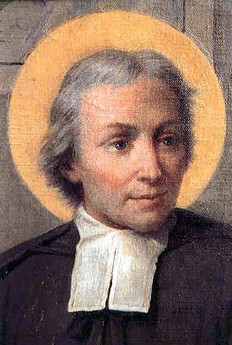
St. John Baptist de la Salle

When They Lived:

St. John Baptist de la Salle lived from April 30, 1651, to April 7, 1719.

Where They Lived:

St. John Baptist de la Salle was born in Reims, France, and spent most of his life in various cities in France, primarily in the city of Rouen where he founded the Institute of the Brothers of the Christian Schools (commonly known as the De La Salle Brothers).

Notable World Events During Their Time:

  • Scientific Revolution (17th century): St. John Baptist de la Salle’s lifetime coincided with the Scientific Revolution, a period marked by significant advancements in astronomy, physics, mathematics, and other fields.
  • Glorious Revolution (1688): The overthrow of King James II of England by a group of English Parliamentarians, leading to political and religious changes.
  • Age of Enlightenment: A cultural movement emphasizing reason, science, and individual rights, challenging traditional authorities.
  • Great Northern War (1700-1721): A war involving several European powers that reshaped the geopolitical landscape of Northern and Eastern Europe.

Their Patronage:

St. John Baptist de la Salle is the patron saint of teachers, educators, and the Institute of the Brothers of the Christian Schools. He is also considered a patron of those who work in the field of special education due to his innovative teaching methods that catered to the needs of all students, regardless of their background or abilities.

Road to Priesthood

La Selle was offered to God by his parents at the age of 11, and he grew up devoted to religion. At the age of sixteen, he was named canon of Rheims Cathedral. He later went on to join the seminary of Saint-Sulpice in Paris on October 18, 1670.

However, due to the deaths of his parents, with the mother passing away in 1671 and his father the following year, he had to leave the seminary so that he could assume the role of family head at the age of 21. Fortunately, he was able to complete his theological studies on April 9, 1678, at the age of 26.

He helped the Sisters of the Child Jesus take care of the sick and educate girls from poor backgrounds and later went on to be their chaplain and confessor. After his work in the school system, he began new religious systems, the first one being the Institute of the Brothers of the Christian Schools, also known as the De La Selle Brothers.

Teacher of the Youth

La Selle’s responsibility for the education of the youth began when he was responsible for the education of his six siblings after the death of his parents. It was further cultivated when he worked with the Sisters of the Child Jesus, as he was also helping in the education of girls from poor backgrounds.

In the year 1679, he helped Adrian Nyel open a school, and shortly afterward, they also got someone who also wanted to sponsor them in opening another school for the poor, and that is how it became his life’s work.

All his work was mostly motivated by his plight for the poor, and he strongly believed that education was the way to bring hope and opportunities to the poor. He strongly dedicated his life to advancing the education of the poor children in Reims, and he took steps to provide leadership and training to the struggling teachers.

The first training for the teachers was in 1680, when he invited them for formals at his home, taking that opportunity to teach them table manners and instruct them in their work. He went further to invite the teachers to live with him, something that did not sit well with his relatives as this crossed the social classes. All this resulted in scandals, and LaSelle ended up losing his family home, resulting in him having to rent the house in which he ended up staying with a handful of the teachers.

La Selle even resigned as Canon so that he could fully dedicate his life to establishing schools and training teachers. Another display of his heart for the poor was when he sold his inheritance and sent the money to the province of Champagne, where a famine was causing hardships.

He went on to be the founder of the De La Selle Brothers, which was a Roman Catholic teaching religious institute that did not include any priests. In 1658, he became the founder of the first school that trained teachers in Rheim, France.

Death and Legacy

  1. He was also proclaimed a saint on May 15, 1950, and that was after
    He was inserted in the General Roman Calendar in 1904 to be celebrated.
    on the 15th of May. He is known as the Patron Saint of all teachers of
    the Youth. His feast day was moved to April 7, 1969.

5 Interesting Facts About St. John Baptist de la Salle

  1. Originally, he had no intention of working with the youth until he met
    Monsieur Adrien Nyel
  2. He sold his inheritance and gave away the money.
  3. His mother was related to Claude Moet, who is the founder of Moet.
    and Chandon.
  4. He was surprised by his achievements, as he did not believe he
    could achieve much.
  5. His father was in the legal profession.

Prayer to St. John Baptist de la Salle

Father, You chose Saint John Baptist de la Salle to give young people a Christian education. Give your Church teachers, who will devote themselves to helping your children grow as Christian men and women, Through our Lord Jesus Christ, your Son, who lives and reigns with you in the unity of the Holy Spirit, one God, for ever and ever Amen.

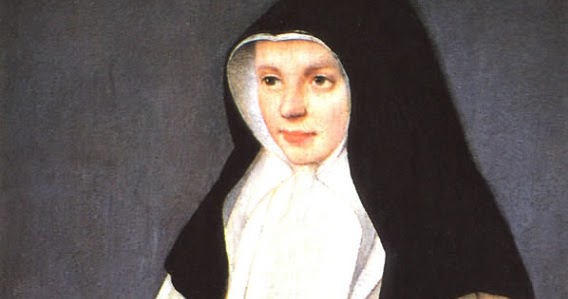
St. Joan of Valois

When they lived:

Saint Joan of Valois, also known as Saint Joan of France, lived from June 23, 1464, to February 4, 1505.

Where they lived:

Saint Joan of Valois was born in the royal Château de Nogent-le-Roi in Nogent-le-Roi, France. She spent most of her life in France.

Notable world events during the time of their life:

  • 1492 – Christopher Columbus’s First Voyage: In 1492, Christopher Columbus embarked on his historic voyage across the Atlantic Ocean, leading to the exploration and colonization of the Americas.
  • 1484 – Witch Hunts Begin: The late 15th century saw the beginning of witch hunts and trials, driven by fears of witchcraft and supernatural forces.
  • 1499 – Leonardo da Vinci’s “Last Supper” Completed: Leonardo da Vinci completed his masterpiece, “The Last Supper,” a significant example of Renaissance art.
  • 1483 – Birth of Martin Luther: In 1483, Martin Luther, a figure in the Protestant Reformation, was born.
  • 1503 – Michelangelo’s Statue of David: Michelangelo completed his renowned statue of David, a masterpiece of Renaissance sculpture.

Their patronage:

Saint Joan of Valois is the patron saint of prisoners, widows, and those ridiculed for piety. She is also venerated as a protector against sudden death and is invoked in times of mourning.

Early Life

Saint Joan of Valois, daughter of the king of France, was born on April 23, 1464. She had a sound mind but was physically deformed. Her love for the Lord was remarkable as a child; she dedicated her time to meditation and prayers. Her father wasn’t pleased with her devotion and lifestyle. While her father treated her harshly, she took everything with patience and total surrender to God. She told no one about her situation.

Dedication and Devotion

Because she always prayed and was fond of the Virgin Mary from an early age, she asked how she could best please her.

A reply came to her heart: “Before you die, you shall found the Order in my honor; this is the greatest pleasure that you can give to my son and myself.”

She didn’t know how it was going to come to pass.

At the age of 12, Joan’s father betrothed her to the Duke of Orleans. It was a forced marriage, and her suffering continued for 22 years. She lived a life of loneliness and humility in her marriage. Just like her father, her husband detested her so much that it reflected in the way he was treated, like a stranger.

In 1498, when Duke Louis ascended the throne as Louis XII, he decided to file for divorce. Given the condition of compulsion in marriage, the pope declared the marriage null and void. Joan accepted the situation and surrendered to God. She said,

“God has now detached me from the world and has made it possible for me to serve Him better than heretofore.”

Legacy

After the divorce, Joan left for Bourges, where she continued her devotion to God. By this time, the revelation she had had at a young age was about to come to pass. She gathered a group of women to create a religious community devoted to the special veneration of the Blessed Virgin Mary. Joan’s confessor, Father Gilbert, assisted her in bringing the revelation to pass. He drew up statutes in ten chapters, similar to the ten virtues of the Virgin Mary.

Pope Alexander VI approved the new institute in 1500 AD, and the young women were called Sisters of the Annunciation of Mary, or Annunciades.

In 1503, Joan of Valois took the veil in the convent of Bourges, where she made her solemn vows.

Death and Canonization

On February 4, 1505, Joan of Valois died and was canonized in 1950.

5 Interesting Facts About St. Joan of Valois

  1. Did you know that St. Joan of Valois became the Duchess of Berry
    after her divorce?
  2. Did you know that many miracles occurred at St. Joan of Valois’
    tomb?
  3. Did you know that St. Joan of Valois’ body was cut after 57 years of
    her death, and blood came out of the wounds?
  4. Did you know that St. Joan of Valois is the patron saint of those in
    difficult circumstances?
  5. Did you know that Pope Benedict XIV sanctioned public veneration
    of Jane in the year 1742?

Prayer to St. Joan of Valois

O Mary, Virgin and Mother of Jesus, Grant that I think, say, and do all that is most pleasing to God and to you.

Reference

[https://www.roman-catholic-saints.com/saint-jane-of-valois.html]{.ul}

https://www.marian.org/marians/saints/stjoan.php

St. Joan of Arc

When They Lived

St. Joan of Arc, also known as Jeanne d’Arc, lived from January 6, 1412, to May 30, 1431.

Where They Lived

Joan of Arc was born in Domrémy, a small village in northeastern France. She spent much of her life in the vicinity of her birthplace, but she became widely known for her actions in various parts of France, most notably in the city of Orléans.

Notable World Events During Their Time

  • Hundred Years’ War (1337-1453): The Hundred Years’ War was a long-running conflict between the kingdoms of England and France, marked by battles and political struggles. Joan of Arc’s involvement in this war is one of the most significant events of her life.
  • Fall of Constantinople (1453): While Joan of Arc did not live to witness this event, her lifetime was within the same era. The fall of Constantinople to the Ottoman Empire marked the end of the Byzantine Empire and had a profound impact on the balance of power in Europe and the Middle East.
  • Gutenberg’s Printing Press (1440s): Johannes Gutenberg’s invention of the movable-type printing press revolutionized the spread of information and played a crucial role in the dissemination of knowledge and ideas during Joan’s time.
  • Council of Constance (1414-1418): This major church council aimed to resolve various religious and political issues within the Catholic Church. Its decisions and outcomes influenced the religious and social landscape of Europe during Joan’s lifetime.
  • European Exploration: The 15th century was a period of exploration and discovery, with figures like Christopher Columbus setting the stage for European expansion into the New World. While this might not directly relate to Joan of Arc, it’s indicative of the changing global dynamics of her time.

Their Patronage

St. Joan of Arc is known as the patron saint of a variety of causes, individuals, and groups. These include soldiers, prisoners, women, France, and those who face ridicule for their faith. Her patronage is often associated with her unwavering determination, courage, and the way she defied societal norms to follow her calling. Joan’s story serves as an inspiration to people of various backgrounds, and her patronage reflects her diverse impact on different aspects of life.

Just Ordinary

Not all princesses lived in a castle, and Joan was proof of that. Bornto a peasant tenant farmer, Jacques d’Arc, and mother Isabelle Romeefrom Domremy northeastern France, in 1412.

Jeanne d’Arc, otherwise known as Joan of Arc, had a very humblebeginning. Like most children of peasant background of that era, Joanwasn’t taught how to read and write. However, her pious mother,Isabelle, instilled a deep love for catholicism and its practice in her.

Joan was born at a time when France was battled from internal leadershipand bruised from its war with England. In due course, England hadsignificant control of northern France. Joan witnessed regular raids ofher village growing up, and in one of these raids, her village wasburnt.

A Troubled France with No Leader

In 1415, England managed to get the support of Burgundians in France.This weakened the French throne. A peace treaty was signed in 1420, andEngland was granted the French throne. Henry V of England became aregent for the mentally disturbed King Charles V1 of France.

The unexpected occurred in 1422. Both King Henry V of England andCharles V1 of France died within a couple of months, leaving the twokingdoms to an infant Henry V1 of England.

The French supporters of King Charles V1 of France saw an opportunity torestore the throne to France. Therefore, Charles V11, the son of thelate King Charles V1, was hastily anointed to the throne of France asDauphin, heir to the throne.

Although Charles V11 was on the throne, he was a figurehead at best.France was still highly influenced by the English court with the supportof the Burgundians. France was in dire need of a true leader…

Born to Lead

At the age of thirteen, Joan began to hear voices. It was said that thevoices were of st. Michael, st Catherine, and st. Margaret. Joan’sdevotion to God increased as she receives more visions.

In May 1428, the voices instructed Joan to seek an audience with theDauphin (heir to the throne). She was to help him reconquer the Frenchterritories from the English and install him as the king of France.

Her attempt to meet with the Dauphin was met with opposition andridicule. Baudricout, the garrison commander, wouldn’t let her meet theDauphin. A 16-year-old peasant girl had no place or business with thethrone. But Joan would not give up.

One year later, in 1429, Bauricout finally agreed to arrange her meetingwith Charles V11 after seeing she was gaining the villagers’ approval.

Joan cropped her hair, dressed in men’s clothing, and in the company offew soldiers, she set off on an 11-day journey to Chinon to meet withCharles. This was a necessary precaution as she was to pass throughenemy borders before her arrival to the French court.

And Young Joan Led the Battle of the Orleans

On meeting Charles, she won him over after demonstrating her uniqueability in court. She was able to recognize him dressed in disguised ina crowd of members.

Charles provided Joan with armor and let her lead the French army toOrleans, where the English held sway. Between 4th May to 7th May 1429,the French army took over Orleans. By mid-June, the English army wasutterly defeated, and the French recovered all territories held by theEnglish under the leadership of Joan of Arc.

Consequently, on 17 July 1429, Charles V11 entered Reims, formerly underEnglish rule, and was crowned king of France. Joan was at his sideduring the ceremonies.

In 1430, on King Charles’s order, Joan traveled to Compiegne, a cityunder siege of the Burgundians, the English supporters. Sadly, Joan wasthrown off her horse, and the city gates were locked against her.

The Burgundians captured Joan and sold her off to the English for 10,000francs.

The Unjust Trial

The English and French clergymen supporters accused Joan of Heresy,Witchcraft, Crossdressing, and other charges. It was a politicallymotivated trial. The trial took place in public but seeing that Joancould defend herself, the trial was moved to close doors.

Joan was found guilty by the tribunal. On May 30,1431, in a marketplaceat Rouen, Joan was burned at stake in public view of about 10,000people. Her ashes were scattered in Seine ( a French River).

She was just 19 years old.

In 1456, king Charles V11 acquitted Joan of all accusations. She wascanonized as a saint on May 16, 1920.

5 Interesting Facts About St. Joan of Arc

  • Joan was only 17 years old when she led the battle against the
    English at Orleans. Can you beat that? That was a fearless young
    woman.
  • Who would have believed that Joan could took demoralized and
    defeated french soldiers to battle and won? But she did.
  • Heard the saying,” Pit to Palace”? For her exemplary leadership
    and exploits, Joan gained noble status in France for herself and
    her family.
  • She is honored as the patron of France. The reason is quite
    apparent.
  • Joan’s last words as the fire was lit were, ‘ Jesus! Jesus! Jesus!
    Calling on her savior. Do you trust in God even at the darkest
    moment of your life?

Prayer to St. Joan of Arc

In the face of your enemies,in the face of harassment, ridicule, and doubt, you held firm in your faith.Even in your abandonment, alone and without friends, you held firm in your faith.Even as you faced your own mortality, you held firm in your faith.I pray that I may be as boldin my beliefs as you, St. Joan.I ask that you ride alongside mehelp me be mindful that what isworthwhile can be won when I persist.Help me hold firm in my faith.Help me believe in my abilityto act well and wisely. Amen.

source:[https://www.catholicfaithstore.com/daily-bread/prayers-to-saint-joan-of-arc/]{.ul}