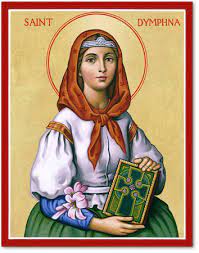
St. Francis of Assisi

When he lived: St. Francis of Assisi, also known as Francis Bernardone, was born in the year 1181 or 1182 (exact date uncertain) and died on October 3, 1226.

Where he lived: St. Francis was born in Assisi, a small town in Italy, and spent most of his life in and around this area.

Notable world events during the time of his life:

  • The Third Crusade (1189-1192): This major conflict involved European powers attempting to retake Jerusalem and the Holy Land from the Muslim forces. Although this event had a strong religious component, it also had significant political and cultural impacts on the world.
  • The Fourth Lateran Council (1215): A significant ecumenical council of the Catholic Church held in Rome, addressing various aspects of church doctrine, organization, and discipline.
  • Magna Carta (1215): This historic document, often considered one of the foundational principles of constitutional law, was signed by King John of England, establishing certain rights and limitations on the monarchy.
  • The rise of universities: The 13th century saw the rise of universities across Europe, such as the University of Paris. This period marked an important development in education and the pursuit of knowledge.

Patronage: St. Francis of Assisi is the patron saint of a wide range of causes, including animals, the environment, merchants, ecologists, and Italy. His love for animals and nature is particularly notable, as he is often depicted with animals and is the inspiration for many stories about his interactions with creatures.

Living the Dream—Really?

  1. His father, Pietro di Bernardone dei Moriconi, was a very wealthy
    cloth merchant. Francesco’s mother, Giovanna, who was also known as Pica
    Bourlemont, about whom little is known except that she is said to have
    belonged to a noble family in Provence, France. So, in general,
    Francesco belonged to the most well-off family in all of Assisi. Because
    of their immense wealth and the privileges that his father had from the
    authorities, Francesco obtained his education at the Catholic school of
    San Giorgio. He spoke fluent Latin and Provençal and was considered by
    his father, the natural successor of his family business.

From a Valiant Warrior to a Tame Sheep

But Francesco, with all the privileges and riches he enjoyed, dreamed of another thing. No, it is not about becoming holy! He wanted to become a knight. However, the best place to obtain the prestige and glory he longed for was through battle. Not long after, in 1202, he got his first opportunity when Assisi declared war on the nearby town of Perugia,their longtime enemy.

Most of Assisi’s soldiers were killed, while those who were wealthy were taken prisoners so that they would be ransomed. And yes, we are right that Francesco was one of those who were taken as prisoners. He was chained and thrown into a dark dungeon, and after a year, he was finally ransomed after his parents paid a substantial amount of money.

Francesco’s experience sparked a spiritual crisis. One day, while he was praying in the dilapidated church in San Damiano, Francesco heard Christ say three times from the crucifix: “Francesco, go repair my house,which, as you can see, is falling completely to ruin.” He understood that he was to repair the church he prayed in, though his followers later would realize that this was his call to reform the Church. So they went home and sold off their family goods to raise money for repairs. His father, Pietro, tried to bring him back to his senses, first with intimidation and threats, and then with corporal punishment. After a final interview in the presence of the bishop Guido II, Francis renounced his father and his wealth. He even laid aside the garments he had received from him. Seeing such a scene, the bishop clothed him with his mantle.

A Beggar Re-Building the House of God

Now stripped of wealth, Francesco lived as a beggar around Assisi. He embraced meditation, nursed lepers, and begged for the poor. Aside from the San Damiano Church, he restored several other ruined churches. Francesco’s way of life inspired other men, and so in 1209, he gathered a small group of 12 men who wished to share in his life and ministry. He wrote a Rule and set off for Rome to gain the pope’s approval for his work. This became the First Order of Franciscans, and Francesco was elected superior.

Francesco dedicated the rest of his life to helping the poor and preaching repentance. As he entered his mid-forties, illness afflicted his body, and he eventually became half blind. In his final years, Francesco composed his celebrated “Canticle of Brother Sun”, the poem that earned him his deserved reputation as one who marveled at God’s creation. He breathed his last on the evening of October 3, 1226, singing Psalm 141 while lying on the bare ground. His feast day is observed on October 4.

Five Interesting Facts About St. Francis of Assisi

  1. Two years before his death, St. Francis received the stigmata, the
    real and painful wounds of Christ in his hands, feet, and side.
  2. St. Francis attended the Fourth Lateran Council, where he met another
    prominent religious figure, St. Dominic de Guzman.
  3. There was a story about St. Francis and a wolf that had been eating
    human beings. When the townspeople wanted to slay the wolf, St. Francis
    intervened, and he talked the wolf into never killing again.
    Miraculously, the wolf became a pet of the townspeople, who made sure
    that he always had plenty to eat.
  4. St. Francis’ holiness inspired many men and women; one of them was
    St. Clare, who later founded the Order of Poor Ladies, now commonly
    known as the Poor Clares.
  5. St. Francis is the patron saint of ecology and animals.

Prayer to St. Francis of Assisi

Father, you helped Saint Francis reflect the image of Christ through a life of poverty and humility. May we follow Your Son by walking in the footsteps of Francis of Assisi and by imitating his joyful life. Grant this through Christ our Lord. Amen.
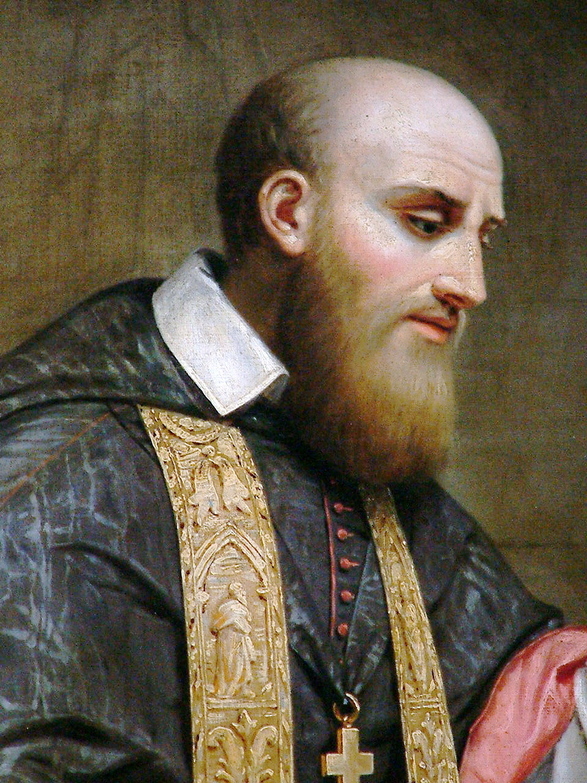
St. Francis de Sales

When they lived: St. Francis de Sales lived from August 21, 1567, to December 28, 1622.

Where they lived: St. Francis de Sales was born in Thorens-Glières, Duchy of Savoy, which is now part of France. He later became the Bishop of Geneva, which is in Switzerland.

Notable world events during the time of their life:

  • The European Renaissance (14th to 17th century): This period saw a flourishing of art, literature, and learning, with figures like Shakespeare, Galileo, and Michelangelo making significant contributions. St. Francis de Sales’ lifetime overlapped with the later part of this transformative era.
  • The Thirty Years’ War (1618-1648): This devastating conflict in Central Europe had profound political and religious implications. It’s important to note that St. Francis de Sales lived during the early years of this war, which was driven by religious and territorial disputes.
  • The beginnings of the Scientific Revolution: St. Francis de Sales was alive during a time when the foundations of modern science were being laid. Galileo’s observations with the telescope, Kepler’s laws of planetary motion, and the works of early modern scientists started shaping the way people viewed the universe.
  • The founding of Jamestown (1607): In the midst of St. Francis de Sales’ life, the first permanent English settlement in the Americas was established in Jamestown, Virginia, marking a significant moment in the colonization of North America.

Their patronage: St. Francis de Sales is the patron saint of writers, journalists, and the Catholic press, a fitting designation given his own prolific writings and his role in spiritual guidance through letters. He is also the patron of the deaf, due to his compassionate work with a young deaf man and his dedication to communication.

Early Life

Saint Francois Bonaventura De Sales, Also stylized as Francis Bonaventure De Sales, was born to a noble family in the Chateau DeSales, Duchy of Savoy. He was born on August 21st, 1567, to Francois de Sales and Françoise De Soinnaz.

His father was Lord of Sales, and his mother was the only child of Melchior de Sionnaz, one of the most distinguished Magistrates at that time. This couple, however, would go on to adopt the last name ‘De Boisy.

Saint Francis De Sales was born two months premature by his teenage mother, but this did nothing to deter his physical and mental growth. He was baptized as Francis Bonaventura in honor of two saints and after his godparents, François de la Fléchère and Damoiselle Bonaventure de Chevron-Villett, his grandmother.

Being one of the most respected families around, Saint Francis’ parents were rich enough to send him to the best schools in France. As the first of six children, his father wanted him to pursue a career in law, following in his footsteps.

As a young boy, Saint Francis was kind, gentle, and more interested in religion than anything else. He was devoted to his scriptures and was dedicated to supporting the poor and helpless. To please his father, however, he said nothing of his religious dedication and carried on with his education.

Saint Francis was sent to the best schools and got the best education at that time. His first introduction to formal education took place in La Roche-Sur-Foron. At the tender age of eight, he was sent to college in Annecy.

Now nurturing religious plans, Francis De Sales attended a Jesuit college in 1578. The institution was called the College De Clermont, and there he studied rhetoric and the humanities.

A quiet young man, he kept his quest for devotion a secret and continued to study. He also took up riding, dancing, and fencing training to please his father.

Saint Francis attended a theological seminary circa 1586, where he was convinced he was damned to hell. This thought made him depressed and physically ill until 1587, when he visited a Church Parish. He prayed to the Blessed Virgin and consecrated himself.

Dedication and Devotion

Saint Francis remained devout to God but carried on with his studies. After completing his education at Clermont, he went on to Italy to enroll at the University of Padua.

There he studied law and theology and sought Priest Antonio Possevino to be his spiritual guide.

He received his Doctorate at Padua in 1592 and had finally made up his mind to become a Priest.

Back at home, he started work as a lawyer while his father tried to pull strings in Francis’ political favor. He was also bequeathed to a rich heiress, whom he turned down to his father’s dismay. Finally, he let his father know that he had decided to pursue ecclesiastical duties instead of political ones.

His Father was very unimpressed, but his cousin supported him and helped him get the post of provost. Francis signed over his birthright to his younger brother and was ordained in 1593.

Legacy

Saint Francis De Sales carried out his religious duties with so much humility and patience. He ministered at the Cathedral of Annecy, which was 20 miles away from his residence.

He went around to preach the gospel and win souls for Christ. He was shunned and sent away by many, but he never gave up. At the young age of 27, he was elected Grand Penitentiary of the diocese.

In 1954, Saint Francis was asked to take on a rather difficult assignment. On the instruction of the Duke of Savoy, Francis was sent to Chamblais.

Accompanied by his cousin, Canon Louis, Saint Francis De Sales set off to spread the Good News all over Chamblais.

There, they were antagonized by Geneva ministers. He escaped death many times. It was during those times that he met and befriended a widow.

Saint Francis made it a point to always split his possessions with the poor. It didn’t matter if it was food, clothing, or money.

It was at Chablais that he started to use written pamphlets to minister to the townspeople. Where the door was shut in his face, he simply slipped pamphlets underneath and left.

Saint Francis was elected coadjutor bishop in 1599. Circa 1602, he was sent out to negotiate the re-establishment of a Catholic Church with Henry IV of France.

When Bishop Granier died in 1602, Saint Francis De Sales was ordained bishop. He was methodical and passionate, and a lot was achieved under his diocese. He began to grow in respect and popularity.

During his papacy, he worked with the Order of Friar Minor Capuchin and was made an official associate of the Order.

In his time, Saint Francis also wrote books that are acknowledged as important works on the human spiritual life. He was co-founder of the Order of the Visitation of Holy Mary, which was established in 1610.

Saint Francis De Sales also built The Oratory of Saint Philip Neri, which died out after his death.

Death and Canonization

Saint Francis De Sales died of a stroke on the 28th of December. He died in Lyon, France, during a Christmas tour.

Saint Francis was buried on the 24th of January 1623 in the Church of Annecy where he was venerated after death. His heart was kept in Lyon for some time before it was taken to Venice by the visitation nuns during the revolution.

He was beatified by Pope Alexander VII on January 8, 1661, and canonized by St. Francis de Sales on April 19, 1665.

Pope Pius IX proclaimed him Doctor of the Church in 1877.

Saint Francis de Sales is celebrated by the Roman Catholic Church on January 24. He is also honored in the Church of England on the same day.

5 Interesting Facts About St. Francis de Sales

  1. Did you know that Saint Francis is known as the patron saint of
    authors, journalists, and deaf people?
  2. Did you know that Saint Francis is considered the first preacher to
    use pamphlets to preach the word?
  3. Did you know that Saint Francis de Sales is called “The Gentleman?
    Saint” because of his patience and meekness?
  4. Did you know that Saint Francis gave spiritual guidance to people?
    through letters? He read and replied to all letters, regardless of
    their number.
  5. Did you know that Saint Francis wished to go into solitude but could
    not because the people demanded his presence?

Prayer of St. Francis de Sales

Be at peace. Do not look forward in fear to the changes of life; rather, look to them with full hope as they arise. God, whose very own you are, will deliver you from them. He has kept you hitherto, and He will lead you safely through all things. When you cannot stand it,God will bury you in his arms. Do not fear what may happen tomorrow; the same everlasting Father who cares for you today will take care of you then and every day. He will either shield you from suffering or  give you unfailing strength to bear it. Be at peace, and put aside all anxious thoughts and imagination.

Source:[https://www.catholic.org.au/prayers/the-prayer-of-st-francis-de-sales]{.ul}

St. Fina

When She Lived:

Saint Fina’s life is typically dated from 1238 to 1253. She was born on March 31, 1238, and passed away on March 12, 1253, at the tender age of 15. Her brief but impactful existence left a lasting legacy in her town and in the hearts of many believers.

Where She Lived:

Saint Fina spent her entire life in San Gimignano, a charming medieval hilltop town in Tuscany, Italy. San Gimignano was known for its well-preserved towers, and it provided the backdrop for the young saint’s life of sanctity.

Notable World Events During Her Life:

  • The Mongol Empire’s Expansion: During Saint Fina’s lifetime, the Mongol Empire, led by figures such as Kublai Khan, continued its expansion, significantly impacting vast regions of Asia and Europe.
  • The Albigensian Crusade: The Albigensian Crusade, a military campaign initiated by the Catholic Church against the Cathars in southern France, was ongoing during Saint Fina’s life. This event had significant religious and political implications.
  • The Development of Gothic Architecture: The construction of iconic Gothic cathedrals, such as Notre-Dame de Paris and Chartres Cathedral, was a remarkable architectural achievement of the time, reflecting the flourishing of medieval craftsmanship.
  • The Works of Thomas Aquinas: The influential theologian and philosopher Thomas Aquinas was active during Saint Fina’s era. His writings profoundly impacted medieval scholasticism and continue to be studied to this day.

Her Patronage:

Saint Fina is the patron saint of those who suffer from bodily ailments, particularly those related to physical disabilities and illness. She is also invoked by those facing financial difficulties, as her own life was marked by poverty, humility, and acceptance of God’s will.

Early Life

Saint Fina was known for her acts of perseverance. Even when faced with challenges, she remained calm and trusted the Lord.

Saint Fina, also called Serafina or Saraphina, was born in 1238 in San Gimignano, Italy. Her parents were Cambio and Imperiera Ciardi. Her family was said to have been of noble descent but had gone through a series of unfortunate events that had left them impoverished.

Saint Fina was said to have been a very beautiful and intelligible child while growing up. She had shown a special kind of love for God and had exhibited this love by giving to the needy even when she lacked.

Some historical accounts describe Saint Fina as a recluse. She was taught basic crafts and was said to have spent her day sewing.

Saint Fina only left her home to go to Mass. She was strongly devoted to the Blessed Virgin and spent most of her time praying, even as a child.

Circa 1248, when Saint Fina was around ten years old, she came down with a sudden illness. This illness ate her insides, deteriorating her body and paralyzing her limbs. Around this time, Fina’s father passed away ,leaving her and her mother all alone.

She was in constant pain but did not let that influence her attitude toward people or life in general. If anything, her faith in God deepened as she believed that she was going through this for a reason.

Dedication and Devotion

Saint Fina chose to do away with the little comfort that her mother could provide. Instead of a sickbed, she chose to lay on an oak plank.

Because of her illness, Saint Fina could only lay on one side of her body. This caused the sores on her body to fuse with the plank pallet. Her body was attacked by worms and insects, her flesh rotted, and still she did not complain.

Her mother managed to provide for both of them by working or begging on the streets. This caused her to leave Fina alone for long hours at Astra. Fina took this in good faith, remained joyful, and never grumbled.

Sometime after Fina’s affliction began, her mother passed away. Thus, the little care that Fina received was gone too.

Saint Fina remained devoted to God and spent her days praying, asking for the intercession of Saints. She thirsted for the day that her soul would be removed from her body.

It was during this period that she started to show immense reverence for Saint Gregory the Great. Gregory was also afflicted by illness during his time, and she took strength in the fact that, like her, he persevered.

Saint Fina survived on the off-hand attention shown to her by her neighbors. Although they cared, they were irritated by the sores on her destroyed body and refused to touch her. This caused her illness to progress severely.

Finda was taken care of by her friend and nurse, Beldia, though her sickness worsened.

On the 4th of March, 1253, while praying to God, Saint Gregory appeared to Fina and told her to rejoice because she would be joining the angels in eight days.

Death and Canonization

As predicted, Saint Fina died on March 12, 1253. She was 15 years old.

After her death, miracles were reported to have followed her. When her body was said to have been lifted off the pallet on which it had rested for five years, the people could see a growth of white violets. Her room also smelled like flowers.

When Saint Fina’s body was being transported, her nurse Beldia held onto her hand. It is reported that Beldia’s arm, which had become paralyzed from years of supporting Fina’s body, suddenly healed. This was one of the various miraculous healings around her body.

Saint Fina was never properly canonized. She is called Blessed Fina Bymany. However, she is celebrated on the 12th of March, which is her official feast day, and the 1st Sunday of August.

5 Interesting Facts About St. Fina

  1. Did you know that White Violets are sometimes called Saint Fina’s?
    flowers? The flowers still grow on the walls of San Gimignano.
    today.
  2. Did you know that church bells rang unattended while Saint Fina’s
    body was carried through the streets?
  3. Did you know that Saint Fina is the Patron Saint of disabled people?
    and spinners?
  4. Did you know that a sick person who visited Saint Fina’s grave even
    After many years, was cured?
  5. Did you know that there is a hospital dedicated to Saint Fina? It
    caters to the old, the poor, and even pilgrims.

Prayer to St. Fina

Glorious Saint Fina, beloved daughter of Mary and Jesus, although in great pain, you served God with humility and confidence. You persevered until death and gained the crown of eternal life. Now you can enjoy the glorious vision of God in Heaven. Dear Saint Fina, make my troubles your own. Speak a word for me to the Immaculate Heart of Mary to obtain by her powerful intercession the grace I yearn for so ardently. Please obtain for me from God the graces I hope for from the infinite goodness of our Blessed Lord, especially (mention your petition). Saint Fina, pray for me and for all who implore your assistance. Amen.

Source:[http://www.boldradish.com/2011/07/prayer-to-saint-seraphina-st-fina.html?m=1]{.ul}

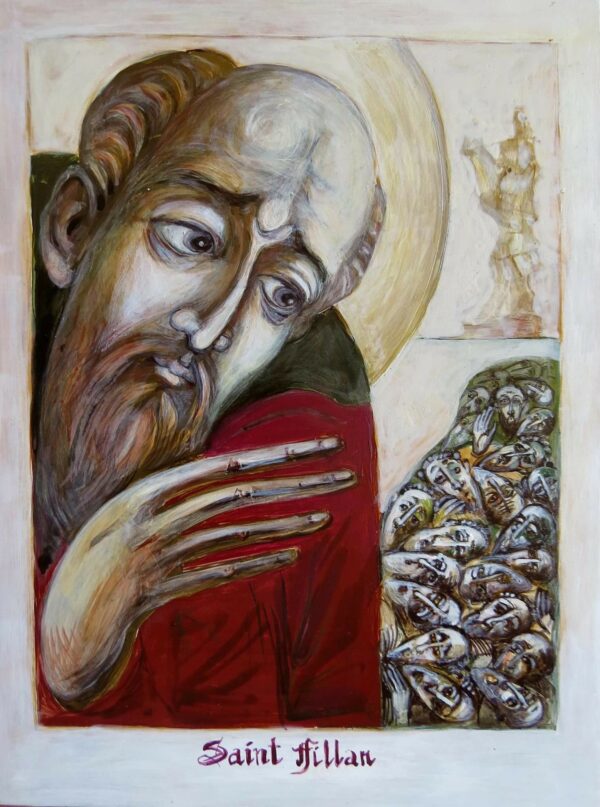
St. Fillan

When They Lived

St. Fillan, also known as St. Foelan, lived during the 8th century. His exact birth and death dates are not precisely documented, but it is generally believed that he was born around 750 AD.

Where They Lived

St. Fillan hailed from Ireland, a land known for its rich religious history and legendary saints. He later traveled to Scotland, where he left a lasting impact.

Notable World Events During Their Time

  1. The Viking Raids: The 8th century was marked by significant Viking raids and expansion, particularly in Northern Europe. These Viking incursions had far-reaching consequences, shaping the political and cultural landscape of the time.
  2. The Carolingian Renaissance: This period saw the revival of learning and culture across the Frankish Empire under the reign of Charlemagne. The Carolingian Renaissance laid the foundation for the development of medieval European civilization.
  3. The Tang Dynasty in China: During St. Fillan’s life, the Tang Dynasty (618-907 AD) in China was at its peak. This era is renowned for its advancements in art, science, and technology, making it one of the golden ages of Chinese civilization.
  4. The Iconoclastic Controversy: The Byzantine Empire was embroiled in the Iconoclastic Controversy during the 8th century. This theological and political dispute revolved around the use of religious images (icons) and had profound effects on the Eastern Christian Church.

Patronage

St. Fillan is primarily recognized as the patron saint of those with mental illnesses or emotional disorders. His intercession is sought by individuals facing psychological struggles or seeking inner peace. He is also invoked for the protection of crops and against diseases in both humans and animals.

Early Life

Saint Fillan was of Royal descent. Fillan, Also called Foelan in some literature, was born around 695 A.D. His Father was Feriach, who is said to be King Dalirada’s child, and his mother was Kentigerna, daughter of Cellach Cualann, who was King of Leinster.

He became a monk very early in his youth, getting inducted into the abbey of Saint Fintan Munnu. He continued to live in the Monastery until 717, when he accompanied his mother, who would later be named a saint, to Scotland.

Devotion and Dedication

There is no complete biography of Saint Fillan, and so what he did in Scotland is not recorded in Detail.

However, history agrees that Saint Fillan lived as a Hermit in Scotland. He settled down at Loch Duich with his mother, his uncle, Prince Saint-Comgan, and his unnamed siblings.

Later on, Saint Fillan moved on to Taghmon, where he served as a monk temporarily. There he lived a monastic life, although he spent time preaching the gospel with his mother.

In the 8th century, he moved on to Pittenweem, or the Place of the Cave. This place was located in the east of Scotland, somewhere named Fife. There, he resumed living his life in solitude.

In Pittenweem, Saint Fillan was elected and served as Abbot.

Although he spent most of his life living as a hermit in Glendochart, Saint Fillan built Churches in Galloway, Islay, and eventually Glendochart.

Legacy

Saint Fillan was also affiliated with a small village called Killin, where it is believed that he built a mill.

Although it was claimed that Saint Fillan performed miraculous healing on the sick, there is much folklore that circulates concerning this revered saint.

Some claim that Saint Fillan possessed a bright glow in his left arm, which he used to study the scriptures at night.

Other stories attribute more extreme types of miracles to him. One version claims that when Saint Fillan was plowing the fields near his home in Killin, a wolf killed the ox he was using to transport building materials for the church.

Because Fillan could not continue, he prayed, and the wolf took up his dead ox’s work.

Death

Saint Fillan died in Strathfillan in 770.

Even after his death, Saint Fillan is said to have still performed miracles. In the 19th century, mentally ill people were said to have been dunked in Saint Fillan’s Pool, tied to pews, and left overnight.

It was said that whoever’s bonds were loosened by morning was healed.

Saint Fillan’s relics are known to have performed some notable miracles. For example, King Robert the Bruce used The Mayne, Fillan’s arm bone, to win the Bannockburn battle. He then built a monastery to thank Saint Fillan.

Saint Fillan’s bell, The Bernane, rests in the Scottish National Museum in Edinburgh, and his staff is in the Museum of Scotland.

Saint Fillan was canonized Pre-congregationally. He is remembered by the Roman Catholic Church on January 19.

5 Interesting Facts About St. Fillan

  1. Did you know that Saint Fillan is the Patron Saint of the mentally
    ill?
  2. Did you know that there is a locality in New South Wales, Australia,
    named after Saint Fillan?
  3. Did you know that in Killin, there are stones claimed to have Saint
    Fillan’s power of healing
  4. Did you know that Saint Fillan’s cave in Pittenweem, which now
    belongs to St. John’s Episcopal Church and is a regular spot for
    pilgrims?
  5. Did you know that for some time, Saint Fillan’s cave fell out of
    favor as a shrine? It was used by smugglers and to store fishing
    nets. However, it was rededicated by the Bishop of St. Andrews in
    1935 and is now a place for worship.

Prayer to St. Fillan

Dear St. Fillan, Please pray for our family and friends who are being murdered by the Freemasons. Please intercede for them, and like you once had a wolf carry your boxload, ask our enemies to do the same for the Lord Jesus Christ. Amen.

Source:[http://www.praycentral.com/saints/st-fillan/]{.ul}

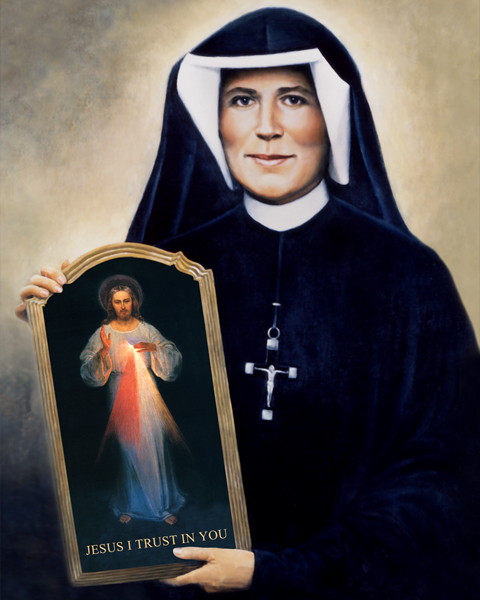
St. Faustina Kowalska

When she lived:

St. Faustina Kowalska was born on August 25, 1905, in Głogowiec, a small village in Poland. She lived a
relatively short but impactful life, passing away on October 5, 1938, in Krakow, Poland, at the age of 33.

Where she lived:

St. Faustina spent most of her life in Poland. She lived in various cities, including Warsaw and Krakow. Her
time in these cities was marked by her religious experiences and the formation of her spiritual mission.

Notable world events during the time of her life:

  1. World War I (1914-1918): This global conflict significantly impacted Europe and the world. It saw the rise of
    new nations, changes in political boundaries, and the beginning of modern warfare techniques.
  2. Russian Revolution (1917): The overthrow of the Russian monarchy and the subsequent establishment of the
    Soviet Union had profound geopolitical implications and shaped the course of the 20th century.
  3. Women’s Suffrage Movement: Throughout the early 20th century, women in various countries, including the United
    States and parts of Europe, were actively advocating for the right to vote, leading to significant social and
    political changes.
  4. Roaring Twenties: A period of cultural and social revolution, marked by significant advancements in technology,
    music, and the arts. Jazz, the flapper culture, and the rise of consumerism characterized this era.
  5. Great Depression (1929-1939): The global economic crisis had widespread consequences, causing widespread
    unemployment, poverty, and social upheaval.

Patronage:

St. Faustina Kowalska is widely known as the “Apostle of Divine Mercy.” Her deep devotion to the concept of Divine
Mercy, as well as her messages and experiences of Christ’s mercy, have made her the patron saint of mercy,
forgiveness, and compassionate love. She is also a patron saint for a world in need of hope, healing, and
reconciliation. Additionally, she is a patron for painters and artists, reflecting her own artistic talents and
the divine inspiration she received for creating the Divine Mercy image.


Her Desire to Be a Religious

Sister Faustina Kowalska was born on August 25, 1905, in the small Polish town of Glogowiec. She belonged to a poor yet religious family of peasants. She was the third of ten children. She was baptized with the name Helena in the parish church of Swinice Warckie.

From a very young age, Helena stood out because of her love of prayer, piety, work, and obedience. Above all, she had a deep love for and sensitivity for the poor. When she was seven, she had already felt the first indications of a vocation to religious life. She received First Holy Communion at nine, which she described as a very profound moment.

Helena attended school for only three semesters. She wanted to enter the convent. However, her parents would not grant her permission. At sixteen, she left home and worked as a housekeeper in Aleksandrów, Lodi, and Ostrówek in order to support herself and her parents. She was obedient to her parents, but the desire to enter the religious life never left her.

The Humble Sister Faustina

When she was nineteen, Helena claimed that she had a vision in which God told her to go to a vast city in Poland and enter the convent. It is said that she took the next train to Warsaw. She tried joining several religious orders. However, they turned her down because of her lack of education. Finally, the Mother Superior of the Servants of Our Lady of Mercy decided to give her a chance. Helena was given the name Sister Maria Faustina of the Blessed Sacrament.

Sister Faustina worked in menial jobs that did not require education, such as cooking, gardening, and housekeeping. Despite this, she was blessed by visions of Christ, who handed her a special mission. Jesus wanted her to spread devotion regarding the mercy of God. He wanted her to help people remember that the Father is merciful and loving to all, even those who have gone astray in sin.

The Secretary of Mercy

In another vision, Jesus asked the nun to have a portrait painted of the Lord as the King of Divine Mercy. He also asked Sister Faustina to be a living example of mercy for others and to make sacrifices for them in imitation of Christ. Sister Faustina did what Jesus asked. But when the other nuns made fun of her and said her visions were not true, she forgave them.

As advised by her spiritual director, Sister Faustina kept a diary of her experiences and visions. Because of her poor education, the diary was difficult to read. However, after Sister Faustina’s death, the spellings were corrected, and her diary was sent to the Vatican.

Consumed by tuberculosis and by numerous sufferings, which she unhesitatingly accepted as sacrifice for others, Sister Faustina died in Krakow on October 5, 1938, at the age of thirty-three. She had a reputation for spiritual maturity and a mystical union with God. Her reputation for holiness grew, as did her devotion to the Divine Mercy and the graces granted through her intercession. Pope John Paul II beatified Sister Faustina on April 18, 1993. On April 30, 2000, the same Pope canonized her. Her feast day is October 5.

Five Interesting Facts About St. Faustina Kowalska

  1. St. Faustina Kowalska is known as the Apostle of Divine Mercy.
  2. The remains of St. Faustina Kowalska rest at the Sanctuary of the Divine Mercy in Krakow-Lagiewniki.
  3. Other than her visions, St. Faustina Kowalska also experienced many extraordinary graces, such as ecstasies, the gift of bilocation, hidden stigmata, reading into human souls, and a mystical betrothal and nuptial.
  4. The original portrait of the Divine Mercy was painted by an artist by the name of Eugene Kazimirowski. St. Faustina described her vision and provided the details so that the portrait may be as accurate as possible.
  5. St. Faustina Kowalska saw visions of heaven, purgatory, and hell. These were all written in her Diary.

Prayer to St. Faustina Kowalska

O God, who in a wondrous manner revealed the inexhaustible riches of your mercy to Saint Maria Faustina, grant, we beseech you,that by looking with trust upon the pierced side of your Son, we may be strengthened to show mercy one to another and, at length, sing forever of your mercy in heaven. Through our Lord Jesus Christ, your Son, who lives and reigns with you in the unity of the Holy Spirit,God, forever and ever Amen.

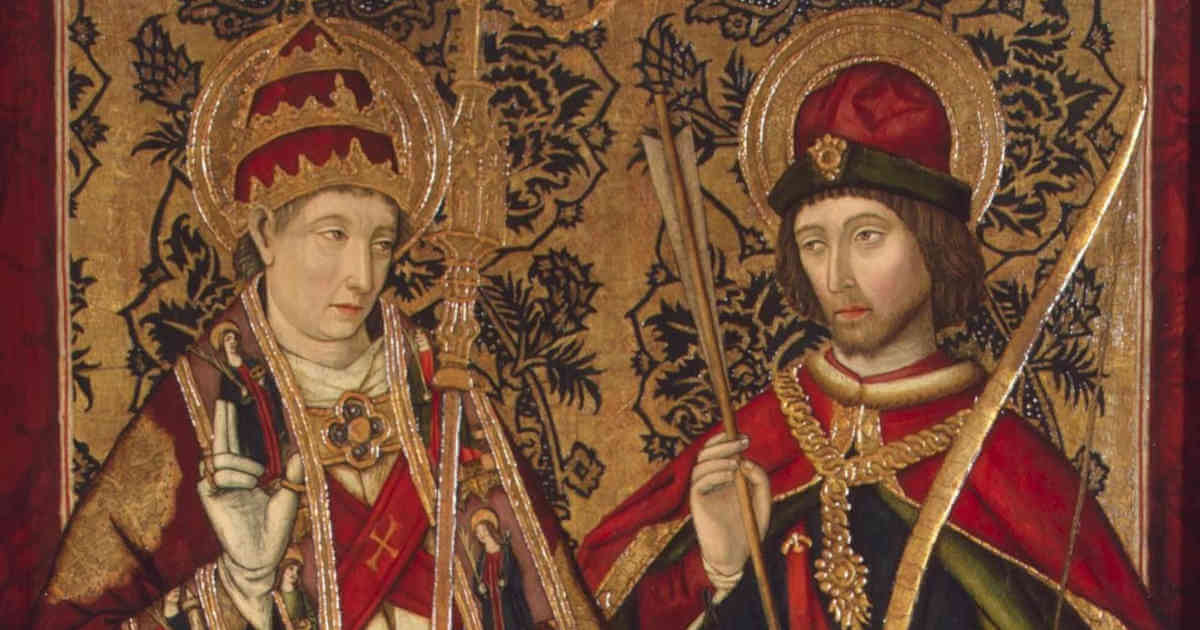
St. Fabian

When they lived:

St. Fabian lived during the late 2nd and early 3rd centuries, specifically from around 200 to 250 AD.

Where they lived:

St. Fabian lived primarily in Rome, Italy, which was the center of the early Christian church during that time.

Notable world events during the time of their life:

  • The Decian Persecution (250-251 AD): St. Fabian lived during a period of significant persecution against Christians under the Roman Emperor Decius. This event had a profound impact on the early Christian community and shaped its resilience.
  • Growth of the Roman Empire: The Roman Empire was at its peak during St. Fabian’s time. Its vast expanse, cultural influence, and political power created a dynamic backdrop for the spread of Christianity.
  • The Crisis of the Third Century: This was a period of political, economic, and military turmoil in the Roman Empire. It included frequent changes in leadership, civil wars, and external threats. The instability of this era affected various aspects of society, including religious communities.
  • The Great Persecution (303-311 AD): While St. Fabian did not live through this period, it’s important to note that shortly after his death, another major persecution of Christians occurred under the Roman Emperor Diocletian, which significantly impacted the Christian faith.
  • Scientific Progress: While not as well-documented as political events, there were scientific developments during this time, especially in fields like astronomy, mathematics, and engineering, that contributed to the foundation of later advancements.

Patronage:

St. Fabian is the patron saint of various important causes and groups, including:

  • Potters: This patronage highlights his connection to craftsmanship and creativity. It’s an interesting facet that adds depth to his symbolism.
  • Farmers: This underscores the importance of agriculture in the historical context and resonates with the simple and essential aspects of life that St. Fabian’s legacy embodies.
  • Agricultural workers: Again, this emphasizes his connection to the land, labor, and the fundamental aspects of sustaining communities.
  • People in authority: St. Fabian’s role as a pope and his commitment to the church’s mission can inspire those in positions of authority to lead with integrity and compassion.
  • Papal authority: Given that St. Fabian served as pope and contributed to the early development of the papal office, he is a significant figure in the history of the Catholic Church’s leadership.

Early Life

The history of Saint Fabian before his papacy cannot be told in detail. What is known about him is gleaned from the biography of the church, which was written by Eusebius of Caesarea.

Saint Fabian, also called Fabianus, was born in Rome to a man named Fabian. Nothing is known about his mother or the early years of his life.

Saint Fabian was a layperson. After Pope Anteros died in 236, Fabian came to the city of Rome to witness the election of a new Pope.

Although Saint Fabian was a Christian, he was not an important member of the congregation. This has become an important part of history as his inclusion into the papacy came as a surprise.

During the Papal elections, the names of several distinguished members of the church came up in a debate. While the choice for who was distinguished enough to hold the seat of the office was still being considered, a dove descended upon Saint Fabian’s head.

The Church was shocked. This miraculous sign rang a bell about how Jesus was shown to be God’s only son. To the people who assembled to welcome the new pope, this was a spiritual sign.

Saint Fabian was immediately acclaimed pope.

Dedication and Devotion

Saint Fabian ruled the diocese for 14 years. During these years, the church experienced peace, led by a lull in the troubles from religious antagonists.

Saint Fabian was tolerated by the Emperors, who had formally tormented the Christian world during his predecessors’ time. His influence and respect helped him command the return of the bodies of Christian martyrs from Sardinia.

The most notable story about Saint Fabian was how he led the baptism of Emperor Philip and his son. Emperor Philip remained friendly with Christians, and the Persecution of the Christian Church was put to rest.

History reports that Saint Fabian sent out several Apostles to preach the gospel across the nation. Some of the places Saint Fabian made an appointment to Christianize are Tours, Arlens, Paris, and Clermont.

In his era as Pope, Saint Fabian built up the structure of the Church of Rome. He divided Rome into seven districts and assigned seven deacons of the church to each district. For every seven deacons, he appointed subdeacons to help in the building of the church.

These deacons he sent to retrieve the Acts of the Apostles or the Acts of the Martyrs. These documents were records of court proceedings during the trials of the Martyrs.

A tradition also stands that Saint Fabian installed the four minor clerical orders, namely the porter, lector, exorcist, and acolyte. This is, however, debated by many as a tradition that has slowly evolved over the years and the growth of the Church.

Some parts of history state that Saint Fabian did extensive work on the catacombs. In the catacombs, several notable individuals would be buried.

Legacy

The peaceful reign of Saint Fabian went on until the death of Emperor Philip. When Philip died, he was succeeded by Emperor Decius.

Emperor Decius commanded all Christians in Rome to offer rituals to to pagan idols and debt Christ or face persecution.

This command was unacceptable to many Christians. Emperor Decius singled out Saint Fabian as a means of cutting off the head of the Church in order to wipe Christianity out.

Death

Saint Fabian was Martyred on the 20th of January, 250 A.D. He was one of the earliest Martyrs killed by Emperor Decius.

Several historical accounts think that Saint Fabian was not executed but instead died in Prison. Many people, however, claim he was beheaded at Emperor Decius’ command.

Saint Fabian was initially buried in the Catacombs he helped rebuild with the inscription “Fabian, Bishop, Martyr”. His body was later moved to San Sebastiano Fuori le Mura.

Saint Fabian was canonized Pre-Congregation and is celebrated every year on the day of his death.

5 Interesting Facts About St. Fabian

  1. Did you know that Rome adopted Saint Fabian as its Patron Saint?
  2. Did you know that The Coptic Orthodox Church teaches that Saint
    Fabian was martyred two times in one week.
  3. Did you know that Pope Fabian’s relics were transferred to the
    Church of Saint Sebastian in the early 1700s? They can still be
    found there today.
  4. Did you know that Saint Decius’ plan to end the Church by killing
    Saint Fabian failed? 65 years after Saint Fabian’s death,
    Constantine would legalize Christianity.
  5. Did you know that Saint Fabian and Saint Sebastian are celebrated on
    the same day?

Prayer to St. Fabian

God our Father, glory of Your priests, may the prayers of Your martyr Fabian help us to share his faith and offer you loving service. We ask this through Jesus Christ, Your Son, who lives and reigns with You in the unity of the Holy Spirit, one God, for ever and ever.

Source:[https://www.google.com/amp/s/prayers4reparation.wordpress.com/2013/01/01/short-prayer-to-st-fabian/amp/]{.ul}

St. Eugenia

When They Lived:

St. Eugenia is believed to have lived during the late 2nd century, around the year 258 AD.

Where They Lived:

St. Eugenia’s story originates in Rome, one of the most significant cities of the Roman Empire. However, her journey takes her across various regions, making her tale even more captivating.

Notable World Events During Their Time:

  1. The Decian Persecution (249-251 AD): St. Eugenia’s life unfolded during a period of intense persecution against Christians under the Roman Emperor Decius. This event had a significant impact on the Christian community, shaping their resilience and dedication.
  2. The Plague of Cyprian (251-266 AD): A devastating pandemic known as the Plague of Cyprian swept through the Roman Empire. This epidemic profoundly affected the social and religious dynamics of the time, leading to various interpretations and responses from different communities.
  3. Galen’s Medical Advancements: During St. Eugenia’s life, the renowned physician Galen was making significant contributions to the field of medicine. His works and discoveries influenced medical practices for centuries, showcasing the progress of human knowledge during this era.
  4. The Crisis of the Third Century: The Roman Empire faced a period of turmoil, known as the Crisis of the Third Century, marked by political instability, economic challenges, and frequent changes in leadership. This era had a profound impact on the empire’s structure and society.
  5. The Birth of Plotinus (c. 204-270 AD): The renowned philosopher Plotinus, a prominent figure in the development of Neoplatonism, was born during St. Eugenia’s lifetime. His philosophical ideas would later influence both Western and Eastern thought.

Their Patronage:

St. Eugenia is known as the patron saint of several diverse groups, adding to her intriguing legacy:

  • Protector of Converts: St. Eugenia’s own journey from noble Roman woman to devoted Christian convert makes her a symbol of strength and inspiration for those undergoing spiritual transformation.
  • Advocate for Gender Equality: Her story challenges gender norms, as she disguised herself as a man to study theology. This aspect of her life can inspire those advocating for gender equality and women’s rights.
  • Patron of Students: St. Eugenia’s pursuit of knowledge, even in the face of adversity, makes her a fitting patron for students, scholars, and those on a quest for enlightenment.
  • Intercessor against Epidemics: Given the historical context of the Plague of Cyprian during her lifetime, St. Eugenia can be invoked as an intercessor against epidemics, providing solace and hope during challenging times.

Born Rich

Eugenia was born in Rome into the noble house of Duke Philip and Claudia. She had two brothers. As a girl born into nobility, Eugenia had an excellent education for her time.

Her father, Philip, was sent to Alexandria, Egypt, as governor by emperor Commodus. As prefect of the city of Alexandria, her father governed all over the lands on the emperor’s behalf. Eugenia grew up in Alexandria with her family and enjoyed all the privileges due to her birth.

Most of what we know about Eugenia comes from legend. According to the story, Eugenia, born a pagan, chanced upon the Christian gospel at Alexandria. Her heart was particularly inflamed when she came across the Epistles of St. Paul. She yearned to know more about the faith.

Young Eugenia grew into a lovely and well-cultured young lady. Suitors fell over themselves, seeking her hand in marriage. Notably among her suitors was Aquilus, son of a consul. But Eugenia turned down all marriage requests. In the secret of her heart, she wants to remain a virgin.

Flight From Home

Eugenia sought the permission of her parents to visit a rural villa belonging to the family in the suburbs. But her true intention was to see the Christian area. On passing through the Christian territory, she heard a group of Christians singing hymns, and an undying passion for the new faith was enkindled in her.

This permission is granted because she goes with her servants and is carried on a litter.

One day, Eugenia decided to become a Christian. She confided in her servants, Protus and Hyacinthus, and they came up with an escape plan. Eugenia cut her hair and disguised herself as a man. With the help of her servants, she fled from home at the opportunity of a routine day out.

Dressed as a man and changing her name to Eugenius, she met Helenus, the bishop of Heliopolis, who baptized her and welcomed her into the Christian fold. She joined the monastery, still disguised as a man.

At the abbey, Eugenia was distinguished as a young, devoted, and pious abbot. She pursued a life of austerity and acquired the gift of healing. For a few years, she was hidden in the abbey, living as a monk.

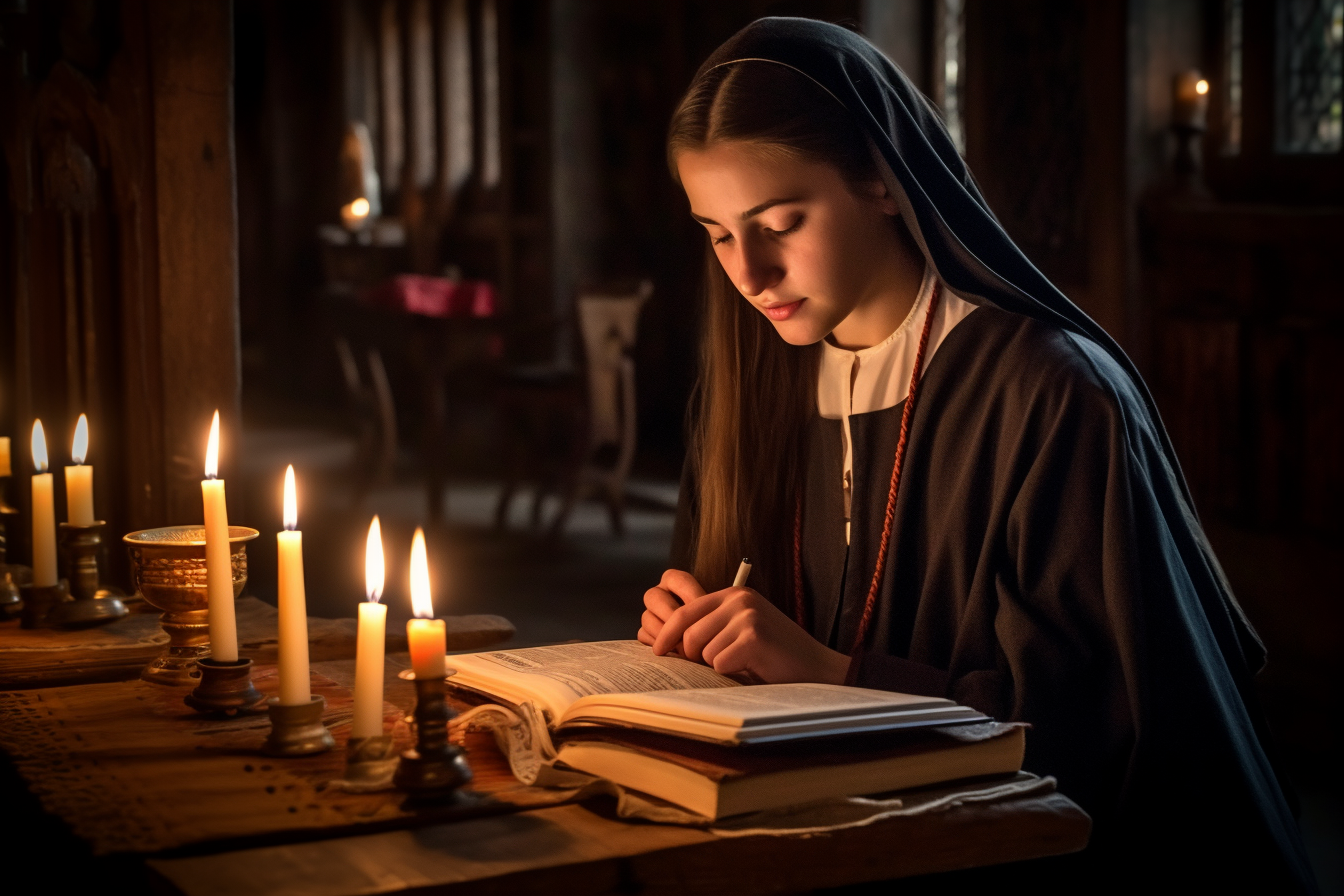
St. Eugenia reading in a monastery

The Temptress

Eugenia healed a wealthy noblewoman named Melanthia of her illness by praying and using anointed oil. Melanthia was burning with lust for the young and beautiful, and she assumed the young monk had made sexual advances on her,which Eugenia promptly rejected.

Pissed off by her rejection, Melanthia decided to play Potiphar’s wife. She raised the alarm, accusing Eugenia of sexual harassment. Eugenia was made to appear before a judge to answer the accusations against her. The judge was her father.

Facing the court, Eugenia boldly defended herself against all accusations. The highlight of her defense was when she confessed she was a lady and tore her clothes to prove it. She also revealed to her father who she was.

Her family’s joy knew no bounds when they found her again. They had searched and mourned her loss.

Martyrdom

Eugenia’s family converted to Christianity along with her. Christianity in that era was a forbidden faith under Roman rule. For becoming a Christian, her father, Philip, was assassinated on the order of the Emperor. The rest of the family went back to Rome.

In Rome, Eugenia converted many, especially young maidens. Her mother,Claudia, built a wanderer’s home and aided the poor.

Eugenia suffered martyrdom. She was first tied with a stone around her neck and thrown into the Tiber, but the stone untied, and she was unharmed. She was cast into a blazing fire but remained unscathed. Next, Eugenia was left in a dark cell for about 10 days without food,but Christ illuminated her cell and fed her with a shining white loaf.

Finally, on December 25, 258, Eugenia was beheaded with a sword.

5 Interesting Facts About St. Eugenia

  1. Eugenia was beheaded on a date that now hosts the most celebrated
    birthday in Christendom. 25 December, the birthday of Jesus
    Christ.
  2. Eugenia’s faith led her family to the path of sainthood. Her father,
    mother and her servants, Protus and Hyacinthus, who were martyred
    are also honored as saints.
  3. According to legend, Eugenia, after her death, appeared to her mother.
    in a dream to inform her of the day she will be killed.
  4. Eugenia is depicted in a church painting in the small village of
    Santa Eugenia in North Portugal, dressed in the Roman era
    attire.
  5. When Eugenia was led to the temple of Diana in Rome to be beheaded,
    Her prescence caused the temple to be shattered into ruins.

Prayer to St. Eugenia

There is no official prayer for Saint Eugenia.

St. Emily de Vialar

When They Lived

1797 to 1856

Where They Lived

Born in Gaillac, Tarn, France, and later lived in various locations due to her charitable work.

Notable World Events During Their Time

  • Industrial Revolution: This era marked significant technological advancements, urbanization, and changes in labor practices.
  • Revolutions of 1848: A series of democratic and nationalist revolutions swept through Europe, leading to changes in political landscapes in several countries.
  • Publication of Charles Darwin’s “On the Origin of Species” (1859): A significant scientific milestone that had a profound impact on biology and challenged traditional religious views.

Patronage

Known as the patron saint of abandoned children, orphans, and the sick. She founded the Congregation of the Sisters of Saint Joseph of the Apparition.

Émilie de Vialar’s life is a fascinating story of devotion and compassion, especially during a time of great social change and upheaval. Her dedication to helping the less fortunate, particularly children, and her contributions to establishing a religious order demonstrate the profound impact individuals can have on society, transcending their historical context.

Early Life

Emily’s mother taught her how to read at a young age. When she turned just 13 years old, Emily attended the Parisian college of the Abbaye-au-Bois, accompanied by her mother. On this long journey to Paris, Emily’s mother fell extremely ill.

Despite his best efforts, Emily’s father could not help her mother recover. On September 17, 1810, the mother of Emily de Vialar passed away at the age of 35. Her mother’s passing broke Emily’s heart, as she had a closer relationship with her.

At the age of 15, Emily returned to her childhood home to live with her father and two younger brothers. However, her father was overwhelmed with grief and was no longer managing the household. Instead, he handed over management of the household to an autocratic servant.

The Work of Emily de Vialar

Emily devoted her time to helping the poor and often offered them a roof over their heads by offering them a place to stay at her father’s residence. This, understandably, caused much tension in the household among the family. However, this inspired other young women to do the same.

In 1832, the maternal grandfather of Emily de Vialar left her a large sum of money as her inheritance. With this inheritance, Emily purchased a house, and her companions stayed with her to continue helping the poor.

Shortly after the purchase of the house, Emily and her companions, with the help of the bishop of Albi, established a congregation. This congregation was called the Sisters of St. Joseph of the Apparition. In 1835, the 18 sisters, including de Vialar, received approval for their congregation.

Furthermore, Emily and her first companions also opened several hospitals and schools in Boufarik. However, this came at a time of tragic cholera outbreaks in the area. Due to this, the Bishop of Alger called for the nuns to return to France in 1843.

Soon after her return to France, Emily left on her own accord. She continued her acts of kindness and service. She left France to open schools in Cyprus, Tripoli, and Beirut. While on her way from Tunisia to Algeria, her ship became shipwrecked for nine days due to a terrible storm. It was here that she opened one of the first schools for Catholic young ladies.

During this time, the local superior in Gaillac had a large amount of unpaid debt. As a result of this, Emily left the congregation and sued him for the return of his dowry. Due to this, Mother de Vialar endured faced slander and creditors, eventually being forced to leave her hometown.

The Death of Emily de Vialar

In 1852, Emily moved to Marseilles. Her inheritance was lost, and she felt hopeless. It was in Marseilles that Emily met Eugene de Mazenod, the founder of the Missionary Oblates of Mary Immaculate.

Eugene took Emily under his wing and helped her as much as he could. Emily found great hope and kindness in him. In 1856, Emily passed away peacefully in Marseilles.

Canonization

On June 24, 1951, Emily was canonized by Pope Pius XII. In the general calendar, her feast day is celebrated on August 24. The Sisters of St.Joseph the Apparition celebrate the life of Emily de Vialar on June 17.

5 Interesting Facts About St. Emily de Vialar

  1. Emily de Vialar’s father was a doctor.
  2. Her reliquary can still be seen today in Gaillac.
  3. She is also known by several other names. These names include Emilie.
    de Vialar and Anne Marguerite Adelaide Emilie de Vialar.
  4. In 1832, Emily de Vialar left her father’s house on Christmas Day.
  5. Emily was born in the same year that Pope Pius VI was taken prisoner.
    by French troops.

Prayer to St. Emily de Vialar

O St. Emilie, you who in the church wanted to continue to manifest the Father’s love, as realized through the Incarnation of the Son, grant us your docility to the Spirit, your audacity, and your apostolic courage. Amen.

St. Elizabeth of Portugal

When they lived:

St. Elizabeth of Portugal, also known as Queen Elizabeth or Isabel of Aragon, was born on July 4, 1271, and she passed away on July 4, 1336. She lived during the late 13th and early 14th centuries.

Where they lived:

St. Elizabeth of Portugal lived primarily in Portugal, where she served as the queen consort through her marriage to King Denis of Portugal. She resided in various royal residences across the kingdom, including the famous Palace of Sintra.

Notable world events during the time of their life:

  • The Mongol Empire’s Decline (1258-1335): During this period, the once-vast Mongol Empire experienced a gradual decline, leading to the fragmentation of their dominion and the emergence of various successor states.
  • The Hundred Years’ War (1337-1453): Although it started toward the end of St. Elizabeth’s life, the Hundred Years’ War between the kingdoms of England and France had significant geopolitical implications for Europe, shaping alliances, military strategies, and regional dynamics.
  • The Black Death (1347-1351): This devastating pandemic, caused by the bubonic plague, had far-reaching consequences across Europe, leading to massive loss of life, socio-economic disruptions, and changes in religious practices.
  • Rise of the Italian Renaissance: The 14th century marked the beginnings of the Italian Renaissance, a period of great cultural and artistic flourishing, which would later influence Europe profoundly.

Their patronage:

St. Elizabeth of Portugal is revered as the patron saint of several causes, including:

  • Peace and Reconciliation: Known for her efforts to mediate conflicts between her husband, King Denis, and their relatives, she symbolizes the virtues of diplomacy and peacemaking.
  • Charitable Work: St. Elizabeth dedicated her life to helping the poor and the sick. She is a patroness of charitable endeavors and a role model for those committed to serving the less fortunate.
  • Victims of Betrayal: Elizabeth faced betrayal from her own family during her life. As a result, she is considered a patron saint for those who have experienced betrayal and seek strength to overcome it.
  • Brides and Newlyweds: Due to her role as a queen and her own marital experiences, she is invoked by brides and newlyweds, seeking her intercession for a happy and harmonious marriage.

Amid Royalty

On January 4, 1271, a beautiful princess was born into the royal house of Aragon, Spain, to father Peter 111, king of Aragon, and mother Constance of Sicily. Elizabeth was named after her great-aunt, the famous Elizabeth of Hungary and Germany (saint).

Elizabeth was sister to three kings: Alfonso 11, James 11 of Aragon, and Frederick 111 of Sicily. She had a very pious education—the best there could be. For a princess, Elizabeth took early steps toward a strict, devout life.

Elizabeth would say the entire divine office daily, attend mass twice a day, fast, and indulge in penances.

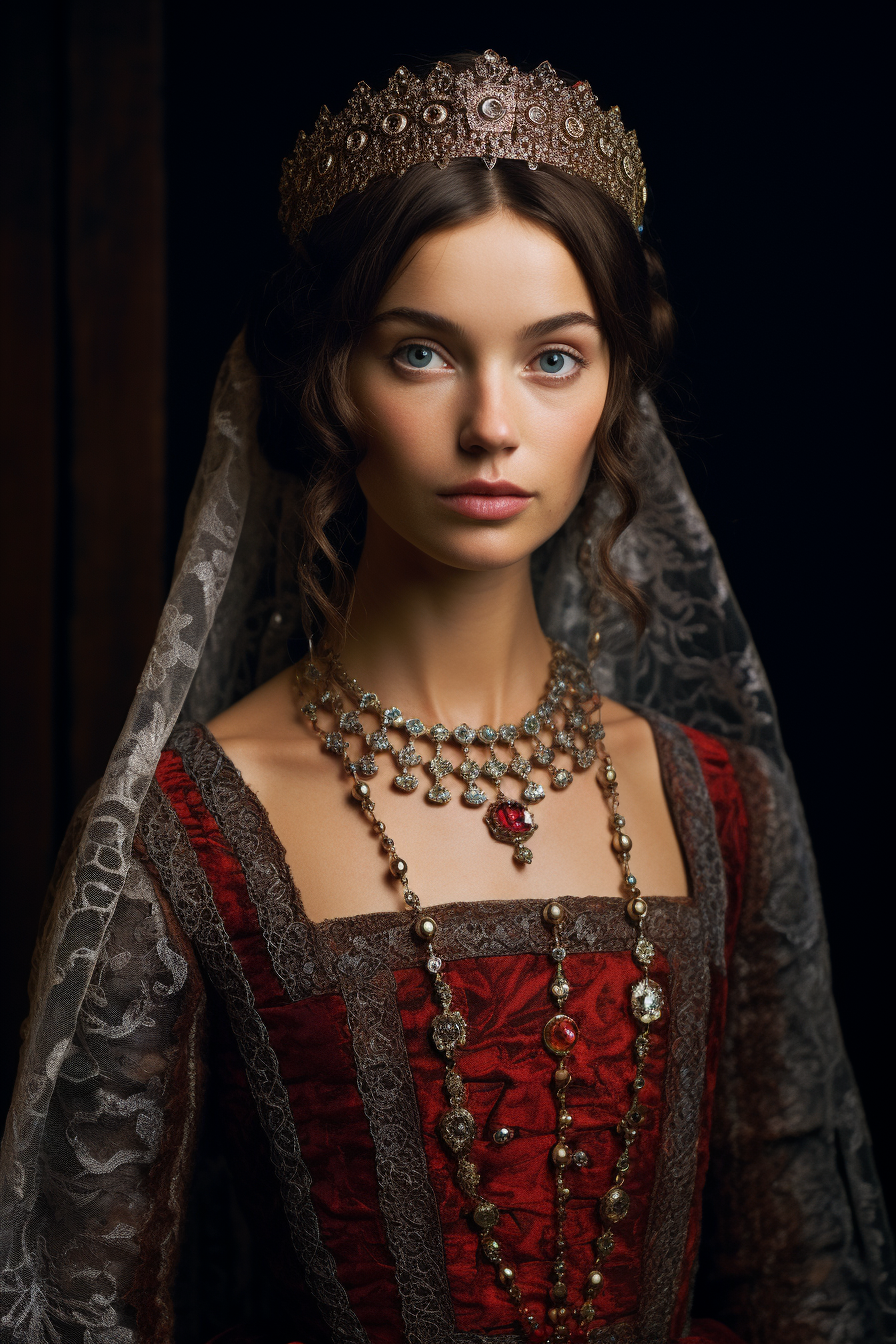
St. Elizabeth of Portugal

Becoming Elizabeth of Portugal

Royalty marries royalty; therefore, in 1281, at the age of 10, Elizabeth was arranged to be married to King Denis of Portugal. As part of her dowry, she received the towns of Obidos, Abrantes, and Porto de Mos. Since she was very young, the marriage was celebrated in 1288, when Elizabeth was 17 and Denis was 26. But it was not to be an easy marriage.

King Denis was regarded as Rei Lavrader (a working king to his people). Still, he was an unfaithful and abusive husband to Elizabeth. His morals were low, and his court was very corrupt. Elizabeth was loathed by some in the court. Her life of devotion and charity to the poor and sick was obviously different from many in the court.

Elizabeth’s marriage with Diniz was blessed with a son, Alfonso, and a daughter, Constance. Despite Diniz’s sinful ways and false accusations toward her, Elizabeth would always pray for him.

Between Her Husband and Son

Perhaps Elizabeth’s greatest trial in her marriage was between her husband and her son, Alfonso.

Alfonso resented his father, King Diniz, for favoring his illegitimate son, Afonso Sanches. He was to later rebel against his father, and in 1322, war was declared between the father and son.

What mother or wife will watch her husband and son go to war with each other and do nothing? Not Elizabeth of Portugal.

Elizabeth rode out by herself to the battlefront and was in between the two opposing armies. The war was averted. Peace returned later in 1324, when the illegitimate son was exiled and Alfonso swore loyalty to his father.

In his later years, King Diniz repented of his sins and apologized to his wife, Elizabeth. He took ill and died in 1325.

The Quiet Life of Charity and Penance

Elizabeth retired to a monastery after her husband’s death. She moved into the sanctuary of Santa Clara a Velha Coimbra, which she had founded in 1314. She took on a life of poverty and joined the Third Order of St.Francis of Assisi.

While in the monastery, she continued taking care of the poor and sick. She was a benefactor to many hospitals, paid the dowries of poor girls, educated the children of the poor, provided lodgings for pilgrims, and was always dressed modestly for a Queen.

The Last Act of Mercy

Only one situation could drag Elizabeth out of the monastery. To sue for peace. Alfonso IV of Portugal, her son, was drawn to battle with her grandson, Alfonso X1 of Castille. This was in the era when intermarriage between cousins, especially among royals, was a family tradition.

King Alfonso IV had given his daughter Maria in marriage to his sister’s (Constance’s) son. The younger Alfonso of Castille had mistreated her. In 1336, Alfonso IV was ready to go to war with his nephew.

Not minding her poor health and old age, Elizabeth moved to the battlefront to meditate for peace between her son and her grandson. She succeeded in brokering peace between the two.

Stressed from her journey, she came down with a fever. On July 4, 1336, Elizabeth of Portugal joined the Good Lord, the Eternal Peacemaker. She was buried at the convent of Santa Clara de Coimbra.

5 Interesting Facts About St. Elizabeth of Portugal

  • Elizabeth earned the title “Peacemaker” for her remarkable role in
    settling many royal disputes. To her credit, a peace treaty was
    signed between her husband and Fernanda IV of Castile, which fixed
    the two countries’ borders.
  • Her persistent prayer and patience converted her husband from his
    sinful life, and he died a holy death.
  • Her dedication to the poor and sick as a Queen was unheard of before.
    in Portugal.
  • She is honored as the co-patron of the diocese and cathedral of San
    Cristobal de La Laguna, Spain, since its inception in 1819.
  • Renowned for the miracle of roses In her troubled marriage, her
    Her husband once caught her on her way to feed the poor with bread.
    When he asked what she had hidden in her dress, she said roses.
    and, immediately, the bread turned to roses.

Prayer to St. Elizabeth of Portugal

Father of gift and love, You gave St. Elizabeth the gift of reconciling enemies. With the help of her prayers, give us the courage to work for peace among men, that we may be called the sons of God. Through our Lord Jesus Christ, your son, who lives and reigns with the holy spirit, one God forever and ever Amen

St. Dymphna

When she lived:

St. Dymphna is believed to have lived during the 7th century. The exact dates of her birth and death are uncertain, but her story has been passed down through the ages.

Where she lived:

St. Dymphna is associated with Gheel, a town in present-day Belgium. Gheel has a long history as a sanctuary for those with mental illness, and it is in this context that St. Dymphna’s story is often told.

Notable world events during her time:

  • The Rise of Islam: The 7th century saw the rapid expansion of the Islamic Empire under the leadership of Prophet Muhammad and his successors, leading to significant geopolitical changes in the Middle East and beyond.
  • The Tang Dynasty (618-907): was a golden age of Chinese civilization, known for its advancements in arts, science, and trade along the Silk Road, contributing to global cultural exchange.
  • The Migration Period: This era marked significant movements of various tribes and peoples in Europe, impacting the continent’s political landscape and cultural diversity.
  • The Decline of the Byzantine Empire: The Byzantine Empire faced multiple challenges during the 7th century, including military conflicts and territorial losses, leading to a gradual weakening of its dominance in the Eastern Mediterranean.
  • The Beginnings of the Heian Period in Japan: The Heian period (794-1185) began during the latter part of the 7th century, characterized by the flourishing of Japanese art, literature, and a unique court culture.

Her patronage:

St. Dymphna is widely recognized as the patron saint of those suffering from mental and emotional distress. She is invoked for protection against mental illness, anxiety, and neurological disorders. Additionally, she is also considered a patron of victims of incest and family conflict due to the tragic events in her own life.

Early Life

St. Dymphna was born around the seventh century in Ireland to the Damons. Her father, Damon, was a petty king in Oriel, and her mother was a strong Christian. Dymphna, like her mother, grew to desire the things of God wholeheartedly, and at age fourteen, she became consecrated to Christ, vowing chastity. Her mother died shortly afterward, and because her father, Damons, had been crazily in love with her, it was hard for him to bear the loss of a wife. A wife he so much treasured, so much admired, and so much fell in love with. This resulted in mental health deterioration. But then he had to be remarried if he wanted to keep being king of Oriel. His counselors persuaded him to pick on another wife, and he accepted, saying such would happen only if the new wife would carry on the beauty of his past wife. But all the searching for a new maiden that was as beautiful as his deceased wife was futile, as the king was never satisfied with all of the ladies that were presented to him. It was at that moment that he began to desire his own daughter, given that Dymphnaha had taken on the beauty and resemblance of her mother. Young Dymphna, in order to keep up her vows to Christ, on learning the intentions of her father, had eloped with her confessor and some other persons in order to prevent what was going to happen with her father. But then her hiding with the confessor was soon discovered when her father used the coins of her exchange, which she was using to do good to the people, to trace her whereabouts. Damons had ordered the death of Dymphna’s confessor, and when Dymphna refused to return home with him, he drew his sword and used it to chop off his daughter’s head. At this time, Dymphna is only fifteen years old.

Dedication and Devotion

Even with a pagan father and under difficult conditions, Dymphna remained committed and devoted to Christ and to carrying out his assignments. She had vowed chastity after her consecration to Christ, all to remain fit for the Master’s use. And this, she had upheld, even unto death.

In Gheel, present-day Belgium, where Dymphna had run to safety with her professor, it is on record that she had built a hospice that would cater to the needs of the poor and the sick. This is only an addition to any other good work that she has previously done. Dymphna had a concern for people who were suffering from mental health deterioration, and she’d been really instrumental towards their improvement, even at a very young age.

Legacy

During St. Dymphna’s lifetime, she was committed to overseeing the well-being of mentally ill persons, and this would earn her the patron saint of people with mental diseases. Decades after her death, a church was built in Gheel, dedicated to her honor. The house had served to provide treatment for people who had one form of psychological problem or another, especially around the mid-1400s. In the fifteenth century, another church was built in her honor, and this Church, up until now, still stands around the site where it is believed her body was first buried.

Death and Canonization

St. Dymphna died while on the run from her father. It was this same father who had discovered her and killed her because she wouldn’t return to Oriel with him to become his wife. What was most important for Dymphna at the moment was fulfilling her vow to Christ of staying celibate. She was canonized in the Catholic Church in 1247 as the patron saint of mentally deranged people.

Prayer to St. Dymphna

Good Saint Dymphna, great wonder-worker in every affliction of mind and body, I humbly implore your powerful intercession with Jesus through Mary, the Health of the Sick, in my present need. (Mention it.) Saint Dymphna, martyr of purity, patroness of those who suffer with nervous and mental afflictions, beloved child of Jesus and Mary, pray to them for me and obtain my request. (Pray one Our Father, one Hail Mary, and one Glory Be.) Saint Dymphna, Virgin and Martyr, pray for us.

Source:https://www.ourcatholicprayers.com/prayer-to-st-dymphna.html