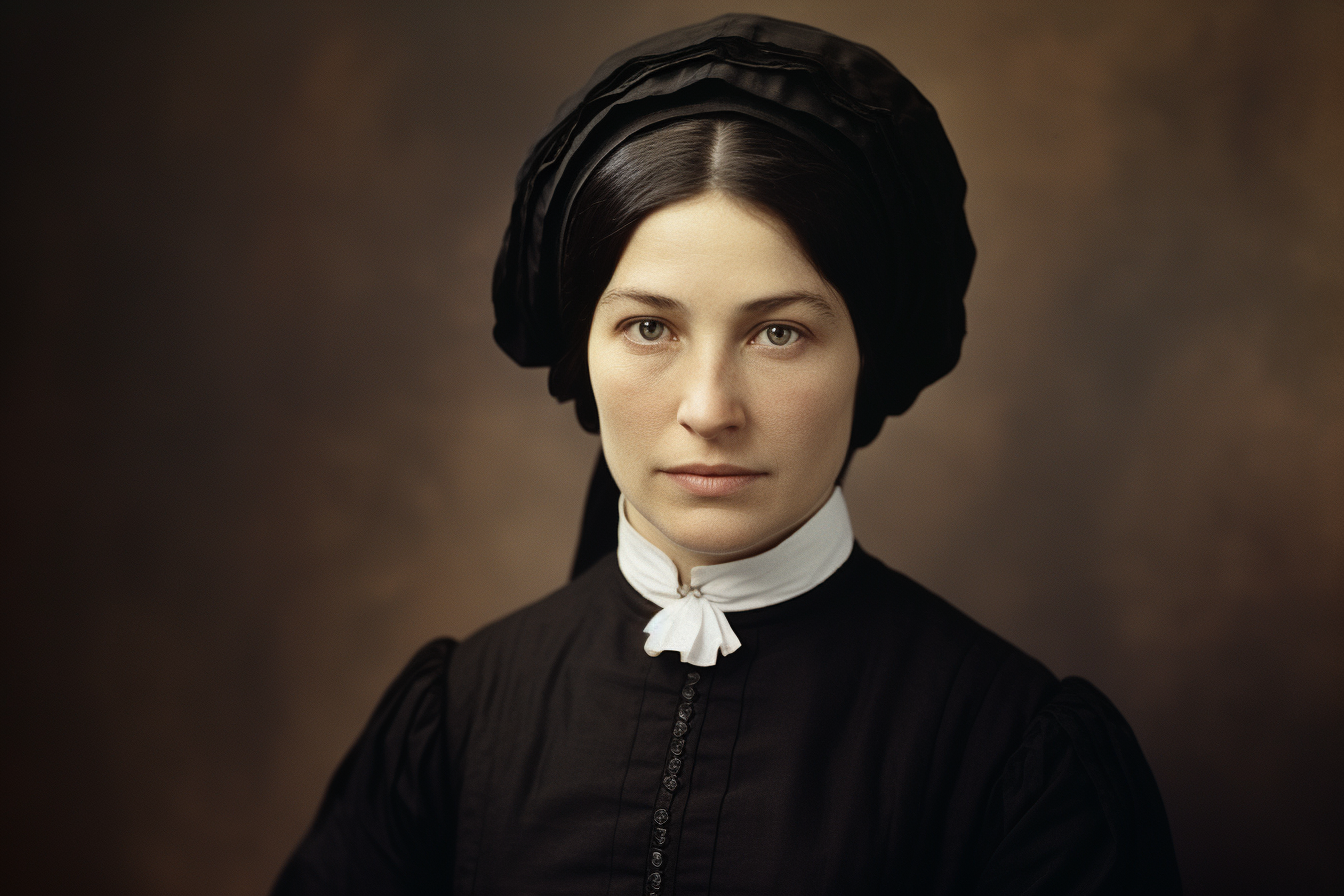
St. Elizabeth Ann Seton

When She Lived:

Saint Elizabeth Ann Seton was born on August 28, 1774, and she passed away on January 4, 1821.

Where She Lived:

Elizabeth Ann Seton lived primarily in the United States, with significant periods in New York and Maryland. She was born in New York City and later lived in Emmitsburg, Maryland, where she founded the first American congregation of religious sisters, the Sisters of Charity.

Notable World Events During Her Life:

  • American Revolution (1775-1783): Elizabeth Ann Seton was a young child during the American Revolution, a period marked by the Thirteen Colonies’ struggle for independence from British rule. The war had significant impacts on the social and political landscape of the United States.
  • Napoleonic Wars (1803-1815): Seton lived during the tumultuous Napoleonic Wars, which had far-reaching consequences across Europe and beyond. These conflicts reshaped the geopolitical landscape and had economic and social ramifications worldwide.
  • Lewis and Clark Expedition (1804-1806): While Elizabeth Ann Seton didn’t directly participate in this historic expedition, it’s worth noting that it occurred during her lifetime. Meriwether Lewis and William Clark’s exploration of the American West opened up new frontiers and expanded knowledge of the continent.
  • Industrial Revolution: Seton witnessed the early stages of the Industrial Revolution, a period of rapid industrialization, technological advancement, and urbanization. These changes brought both opportunities and challenges to society, transforming the way people lived and worked.

Her Patronage:

St. Elizabeth Ann Seton is the patron saint of several important causes:

  • Catholic Schools: She established the first Catholic parochial school in the United States, laying the foundation for Catholic education in the country.
  • Widows: Seton herself was a widow with five children when she converted to Catholicism and became a nun. Her life serves as an inspiration to widows and single parents.
  • Homeless People: She showed great compassion for the less fortunate, particularly the poor and the homeless. Her charitable work continues to inspire efforts to help those in need.
  • Loss of Parents: As someone who lost her mother at a young age, she is also considered a patron for those who have lost their parents.


Early Life

Elizabeth Ann Bayley Seton was born in New York on August 28th, 1774. She was the second child born to her parents. When Elizabeth’s mother died after giving birth to her third child, her stepmother often took Elizabeth along with her for charitable rounds. They visited the poor frequently and offered them food and other necessities.

Despite having a high social background, Elizabeth led a simple, quiet life. As she got a bit older, the Bible became her regular source of comfort, instruction, and guidance.

Marriage and Loss

In 1794, Elizabeth married William Seton. The first years of their marriage were blissful and full of good fortune. However, the bliss was abruptly cut short by a string of deaths and partings with loved ones.

Her father was the first to go, leaving the young couple alone to care for the family and its business. Then her husband fell ill, and his business failed. He had to file a bankruptcy petition, and as a final move to save William’s health, the couple left for Italy, where they had friends.

Sadly, William passed away in Italy from tuberculosis. The sole consolation Elizabeth held on to was that her beloved had found God just before his death.

Call to Dedication and Devotion

These numerous losses due to death and distance drew Elizabeth closer to God. The acquiescence and acceptance of God’s Will would become an essential and defining theme in her spiritual life. In due course, her profound concern for the spiritual wellbeing of her friends and family led her to the Catholic Church in Italy. Over a period of months, she was guided in the Catholic way by her Italian friends. Her courtesy, patience, and kindness endeared her to all.

Legacy

In 1805, Elizabeth became an official member of the Catholic Church. She founded the first free Catholic school in America with help from two women in her sisterhood, the Sisters of Charity. Then On March 25, 1809, Elizabeth Seton took her vows of chastity, obedience, and poverty. From then on, she was known as Mother Seton.

Even when she was stricken with tuberculosis, she kept on offering guidance to her children. In 1812, ‘The Rule of the Sisterhood’ was officially ratified. It followed the same rule St. Vincent de Paul had composed for his ‘Daughters of Charity’ in France.

By 1818, the sisters had established two orphanages and another school in addition to their first school. Today, there are six groups of sisters that can trace their origins to the first sisterhood formed by Mother Seton.
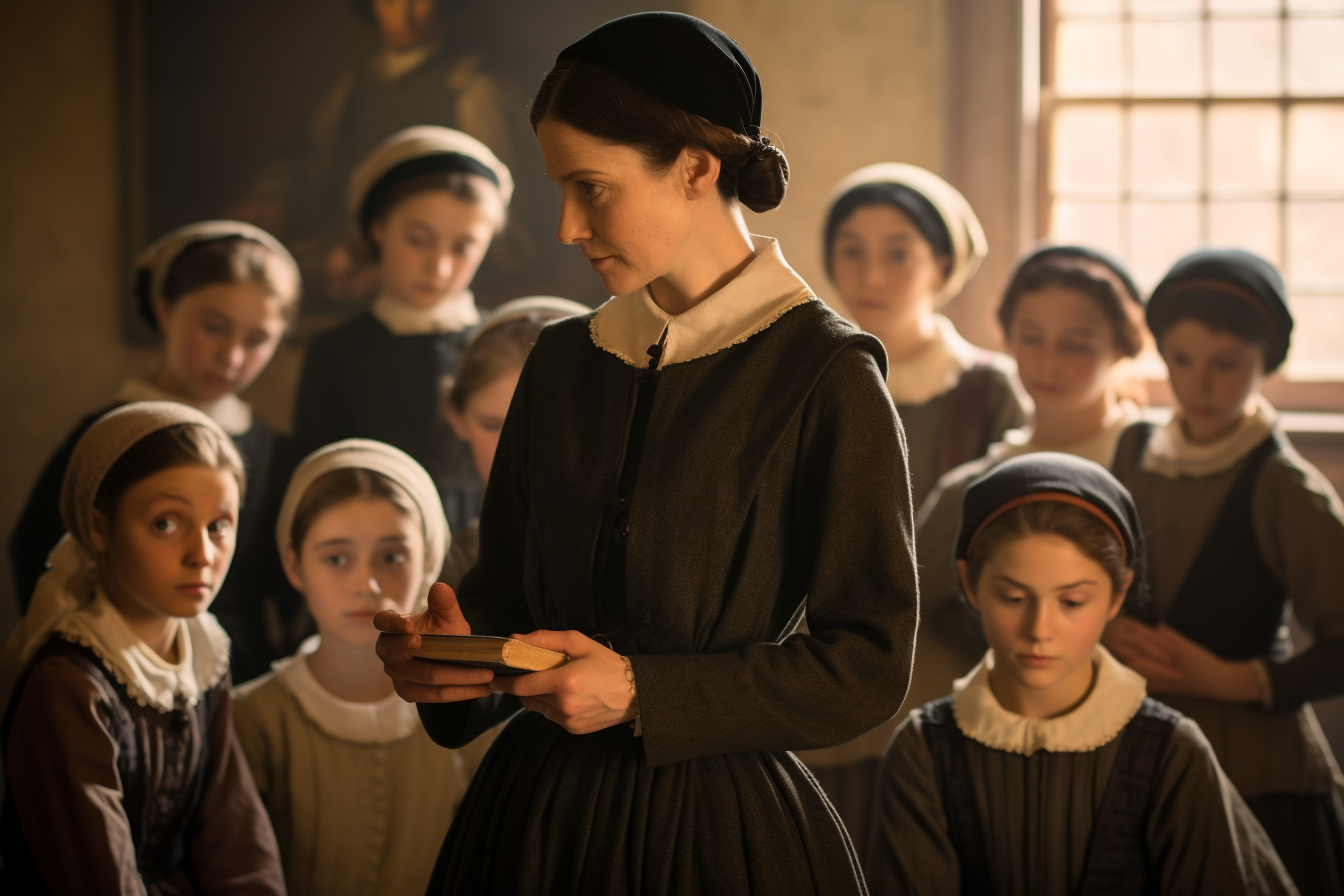
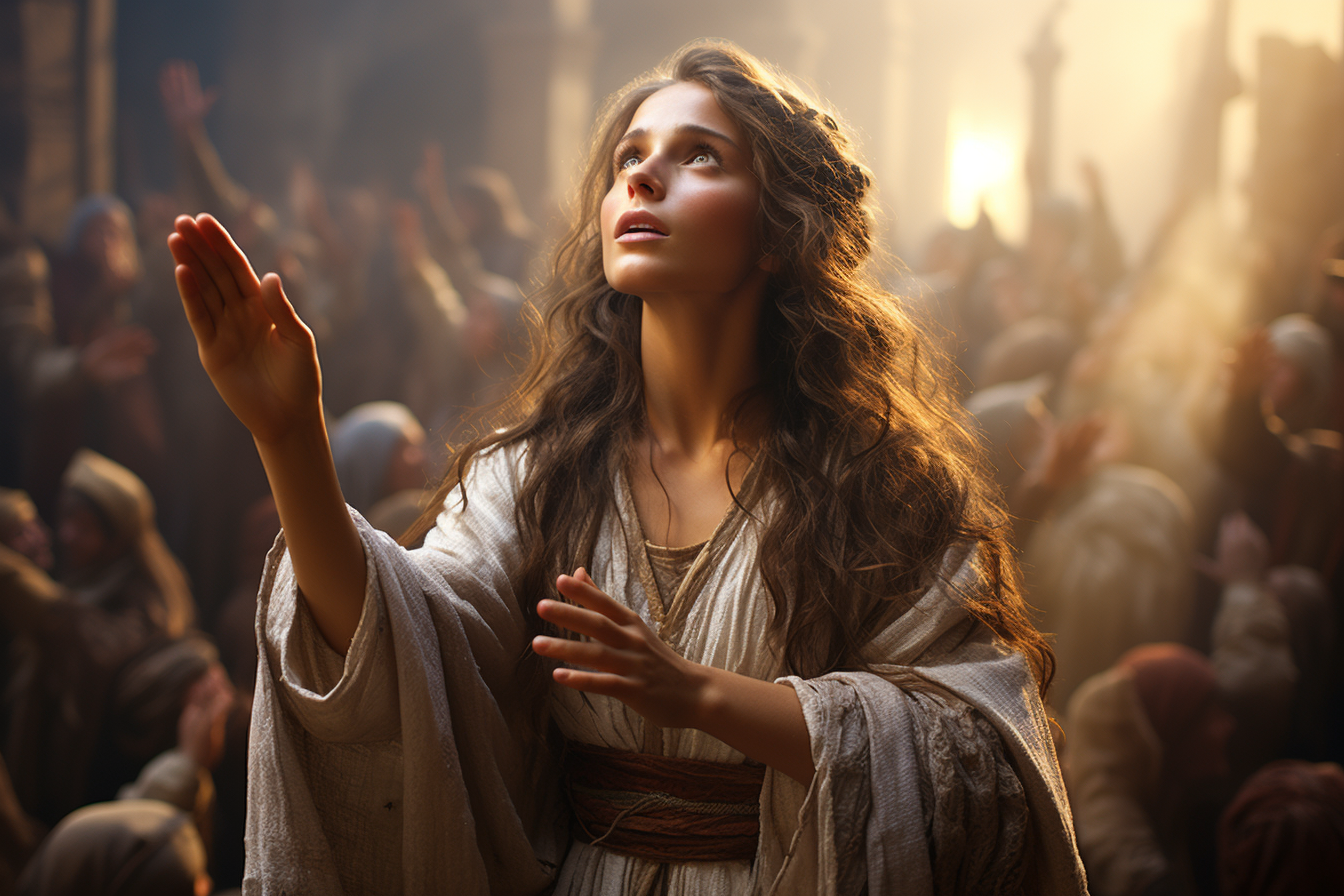
St. Elizabeth Ann Seton teaching to a group of Children

Death and Canonization

During the last three years of her life, Elizabeth was certain God was going to call her home, and this filled her with immense joy. Mother Seton passed away at the age of 46 on the 4th of January, 1821, in Emmitsburg, Maryland, United States. She is buried in the National Shrine of Saint Elizabeth Ann Seton in Emmitsburg, Maryland.

She was beatified by Pope John XXIII on March 17, 1963, and canonized on September 14, 1975, by Pope Paul VI.

5 Interesting Facts About St. Elizabeth Ann Seton

  1. Did you know the feast day of Mother Seton is January 4th?
    also coincides with the eleventh day of Christmastide as well as
    the anniversary of her death?
  2. While alive, Mother Seton’s favorite prayer was the 23rd Psalm.
  3. Did you know Saint Seton was inducted into the National Women’s
    Hall of Fame in 1979?
  4. Did you know there are over 40 churches named after St. Seton?
    states of the United States, as well as in Canada and Italy?
  5. Mother Seton is known as the patron saint of widows and seafarers.

A Prayer for St. Elizabeth Ann Seton

Lord God, thank you for blessing Saint Elizabeth Ann Seton with great faith, hope, joy, and charity. I pray that her timeless example will guide me. I look at her humility to help me accept your will for my life. Let her grateful heart remind me to thank you for the joys and challenges of life. May her courage and perseverance inspire me to serve others, our church, and our country. Thank you, God, for Elizabeth Bayley Seton ,a loving and glorious saint who is always by our side. Elizabeth Ann Seton, pray for us. Amen.

source:[http://www.srcharitycinti.org/news_events/EASprayer.htm]{.ul}
St. Angela of Foligno

When She Lived

St. Angela of Foligno, also known as Angela di Foligno, lived from 1248 to 1309.

Where She Lived

St. Angela of Foligno was born and spent most of her life in the town of Foligno, which is located in central Italy.

Notable World Events During Her Time

  • The Seventh Crusade (1248-1254): Angela was born during the Seventh Crusade, a series of military campaigns led by King Louis IX of France against the Muslim-controlled Holy Land.
  • The Mongol Empire’s Expansion (13th century): The Mongol Empire, under the leadership of figures like Genghis Khan and Kublai Khan, was expanding across Asia and Eastern Europe during Angela’s lifetime.
  • The Renaissance Emergence (14th-17th centuries): Angela’s life overlapped with the early stages of the Renaissance, a period marked by a revival of art, literature, and learning.
  • The Black Death (1347-1351): Although Angela had passed away before the outbreak of the Black Death, the devastation caused by this pandemic was felt across Europe during her lifetime.

Her Patronage

St. Angela of Foligno is revered as the patron saint of those seeking conversion, spiritual growth, and profound repentance. Her life is a testament to her personal transformation from a worldly existence to a deep spiritual connection with God.

Early Life

St. Angela of Foligno was born in the Holy Roman Empire town of Foligno in the year 1248, and she died on the 3rd of January in 1309. She was born into a wealthy Italian family, married at an early age, and had several children. It is reported that during the early stages of her life, she loved the pleasures of the world.

When she was about 40 years old, she had a vision of St. Francis of Assisi, and she reported that after this vision of St. Francis of Assisi, she recognized the emptiness in her life and began to live a life devoted to higher perfection. She decided to leave the pleasures of comfort and live in penance.

Three years after she had devoted her life to it, St. Frances’ mother died, and after a few months, her husband and children also died. St. Angela began depriving herself of her possessions and lived as a pertinent, devoted priestess and servant. She was in the company of a serving woman known as Masazoula. St. Angela joined the order of St. Francis in 1291, placing herself under the direction of a Franciscan friar named Arnoldo, who would serve as her confessor.

She was also a Franciscan tertiary who had extensive writings about her mystical revelations; hence, she is considered a great medieval mystic. She became known as the Mistress of Theologians because her writings earned respect in the Catholic Church. She dedicated her mystical revelations to a scribe in the late 13th century.

St. Angela recorded her conversation history in her book, titled Book of Visions and Instructions. In this book, she dictated an account of her spiritual progress, and this account is known as the Memoriale, which was transcribed by a Latin man known as Brother A. The Memoriale is the first part of the two sections of St. Angela of Foligno’s Liber. The second section, known as Instructions, consists of 36 instructional texts, a note about her death, and an epilogue.

The instructional texts reflect St. Angela’s teachings during that period, and they are rather in a more conventional tone, with differences in vocabulary and an emphasis on memorial. St. Angela emphasized prayer to reach the summit of perfection. She also encouraged prayer if someone wanted to receive divine light. Basically, she emphasized that to achieve anything, one has to pray. She also emphasized reading the book of life.

Brother A started his work with St. Angela in 1292, and he was with her until 1296. During that time, St. Angela completed the higher and more difficult ten stages of attaining perfection; however, these were impossible for him to understand, so he condensed them into seven supplementary stages, whose descriptions take up a large portion of the memorial. The work was completed in 1298, and Cardinal James and eight minor friars gave their approval; however, Brother A revised it in 1299–1300.

Between 1296 and her time of death, her sanctity gathered fame, and many women and men strove under her direction to advance in Holiness.

Besides her spiritual writings, St. Angela was also known for being the founder of a religious community that refused to be an enclosed religious order. This means this religious order did not subscribe to separating themselves from the rest of the world and had to continue with her vision of caring for those in need and devoting their lives to works of charity.

When St. Angela died in 1309, she was surrounded by a community of her disciples, and many people attributed miracles to her. Her whole doctrine was drawn from the Book of Life.

Legacy

St. Angela was venerated in the Roman Catholic Church, and she was beatified on July 11, 1701, by Pope Clement XI in St. Peter’s Basilica. Her feast day is on the 4th of January for the rest of the world, but it is on the 7th of January in the United States of America.

She was canonized in 2013.

Even though the community she founded was not recognized as a religious order, St. Angela is honored as a religious individual.

5 Interesting Facts About St. Angela of Foligno

  1. St. Angela’s canonization was an “equipollent canonization”,
    meaning there was no execution of the ordinary judicial process of
    canonization.
  2. St. Angela’s works are usually published under the title II Libro.
    della Angela da Foligno.
  3. The differences in tone in St. Angela’s instructional texts can be
    indicative of different writers.
  4. St. Angela told her companions on Christmas 1308 that she would
    die shortly, and she died in her sleep on the 3rd of January 1309.
  5. Many miracles attributed to her were accomplished at her tomb.

Prayer to St. Angela of Foligno

St. Angela, you were born into a wealthy family and married at a young age, having several children. You were a very worldly woman, enjoying fine clothes, jewelry, parties, and affairs. However, at the age of forty, you had a vision of St. Francis and turned your life around. Not long after your conversion, your mother, husband, and sons died. You became a Third Order Franciscan and obtained a Franciscan friar for your spiritual director. He wrote at your dictation about the visions you received from God. Your penitential life attracted followers, and you became the leader of a community without enclosures so that the group could perform acts of charity in the surrounding neighborhoods. Towards the end of your life, you saw Jesus, who promised to come for you shortly. You died in your sleep in early January. St. Angela, you led a life of selfishness and sin before making a confession that changed your life forever. Pray that more people may be led to the Sacrament of Reconciliation to receive God’s mercy and healing. St. Angela, you believed in a life spent in penance, prayer, and service to neighbors. Pray that we may devote ourselves to others with selfless generosity and out of love for God. St. Angela, you are called a “Teacher to the Theologians”. Intercede for us this day, that we may come to know Christ through the grace and wisdom of the Gospels. Amen.Amen.  Angela, obtain for me the favor that I seek through the pious exercise of this Novena. Mention your intention(s) here.

Say 1 [OurFather…]{.ul} Say 1 [HailMary…]{.ul} Say 1 [GloryBe…] {.ul}

St..t Angela of Foligno,Pray for us.St..t Angela of Foligno,Pray for us.St..t Angela of Foligno,Pray for us.

From[https://www.catholicdoors.com/prayers/novenas/p04079.htm]{.ul}

St. Genevieve

When She Lived:

Saint Genevieve was born around 422 AD and died in 512 AD. She lived during the late Roman Empire and the early years of the Frankish Kingdom.

Where She Lived:

Saint Genevieve lived in Paris, France. She is considered the patron saint of the city and is closely associated with its history.

Notable World Events During Her Time:

  • The Fall of the Western Roman Empire (476 AD): Saint Genevieve witnessed the decline and eventual fall of the Western Roman Empire, marking a significant shift in the political and cultural landscape of Europe.
  • The Clovis I Conversion (496 AD): Clovis I, the King of the Franks, converted to Christianity, marking a pivotal moment in the spread of Christianity among the Germanic tribes and the establishment of the Frankish Kingdom. This event had a profound impact on the religious and political developments in the region.
  • The Council of Ephesus (431 AD): This major ecumenical council of the early Christian Church addressed theological issues, including the nature of Christ. It had far-reaching consequences for the development of Christian doctrine and the shaping of the Church.
  • The Rule of Attila the Hun (434-453 AD): The time when Saint Genevieve lived saw the rise and fall of Attila the Hun, who led a series of invasions in Europe. This event impacted the political stability and migration patterns in the region.

Her Patronage:

Saint Genevieve is the patron saint of Paris, France. She is also invoked for her protection against disasters, plagues, and natural calamities. Additionally, she is recognized as the patron saint of women, students, and those in need.

Saint Genevieve is an intriguing historical figure, and her life intersected with a period of significant transformation in Europe, marked by the decline of the Roman Empire, the spread of Christianity among the Germanic tribes, and the formation of early medieval kingdoms. Her connection to Paris and her reputation as a protector against various challenges make her a compelling subject for exploration.

Life and Works

Saint Genevieve is one of the most respected and influential women in the history of Paris and Religion. Venerated a Patron Saint of Paris, A status promoted by Clotilde, Saint Genevieve is celebrated by the Roman Catholic and Eastern Orthodox religions.

She is most popularly revered for her role in saving her city, Paris, from the clutches of one of the evilest men in history, Attila the Hun.

A normal peasant girl, Saint Genevieve was born in 422 in Nanterre,Paris, where she led a normal life as a child. The first marked change for her began at the young age of 7 when she first met Saint Germanus, the Bishop of Auxerre, who was passing through on a sojourn to Britain. On sighting her amongst the crowd of people who gathered to listen to him, he foretold her future as a devotee, and she immediately communicated her wish to dedicate her life to God and the Christian religion.

Saint Genevieve was consecrated to God as a virgin, promising to avoid vanity. She immersed herself in prayers, intense fasts, teaching, and preaching. At the age of 15, after the death of her parents, Saint Genevieve went to live with their godmother, Lutetia, in Lutetia, Paris.

There, she began her charitable work by rendering help to the needy. Her piety, charity, and devotion to religion got her recognized and endeared her to lots of people.

Through it all, she remained dedicated to the mortification of the flesh by abstaining from various acts and breaking her long fasts only two days a week. She continued this over the years, getting both love and animosity from people in the city.

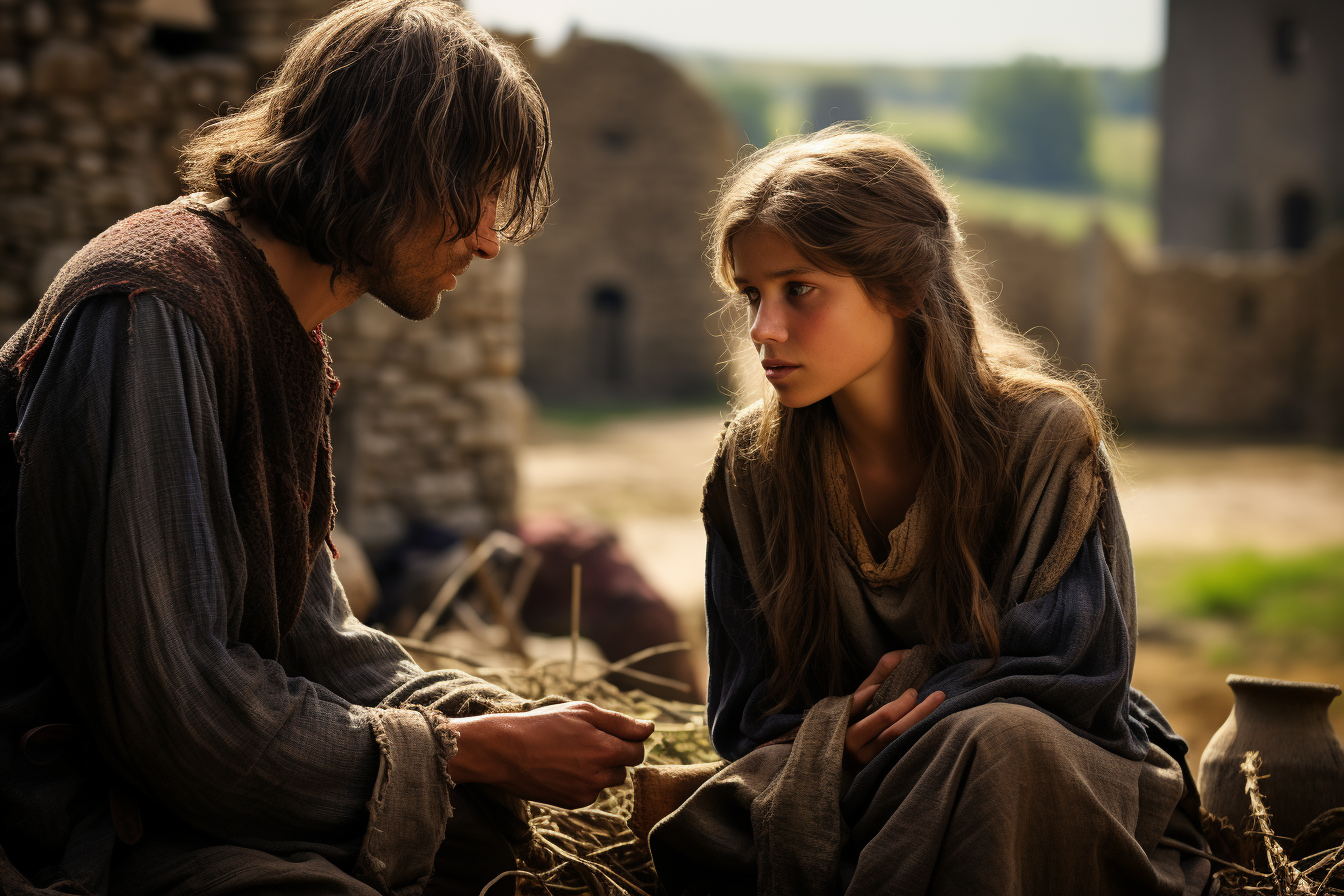
She loved God, and in return, she exhibited divine intervention. She was known to perform miracles and receive visions of angels and saints. This further caused her to be criticized until her enemies decided to end it all by drowning her in a lake. She was saved by the timely intervention of Saint Germanus, who then appointed her to lead all consecrated virgins in the church.St. Genevieve having a heartfelt conversation with St Germanus

It was in that period that Attila the Hun was on a rampage of seizing towns and waging war on every city he could reach. When he finally arrived in Paris to wage war, every Parisian was prepared to run for cover. Saint Genevieve, however, urged them all to stay behind, pray, and fast for God’s intervention. She told them to rest assured that they were going to be safe.

And they were. It is widely believed that it was Saint Genevieve’s prayers that saved the city from Attila’s scourge.

In 464, During Childeric’s siege and the Famine, Saint Genevieve was able to pass through blockades into Troyes, bringing back bags of corn to the people. She had a great effect on the Pagan Childeric, who respected her wish for him to release his prisoners of war.

Saint Genevieve adored Saint Denis, a Christian Martyr, and harbored a wish to build a chapel in his honor. She honored this wish, and the chapel became a favorite choice for pilgrims.

The year of Saint Genevieve’s death is stated to be between 502 and 512. Even after her death, her relics were cherished and claimed to have carried out miracles.

5 Interesting Facts About St. Genevieve

  • Did you know that Saint Genevieve is often depicted holding a lamp?
    candle? Apart from her being depicted holding a book, torch, or
    loaf of bread, Saint Genoese is often seen in artworks holding a
    lit candle with the devil leering at her from behind.
  • Did you know that Saint Germanus gifted Saint Genevieve a medal with
    a crucifix in remembrance of her consecration? It was most prized.
    possession, and she kept this medal until her death.
  • Saint Genevieve was instructed to never wear any other kind of
    jewelry. This instruction was given to her by Saint Germanus after
    her consecration so that she might do away with vanity.
  • Did you know that Saint Genevieve liked to go and pray in Church at
    night by the light of a candle? On one of such occasions, her
    candle was blown out. It is widely believed that the devil blew out
    her candle in order to scare her.
  • Did you know that Saint Genevieve was a vegetarian? She never ate.
    meat and only broke her fast on Sundays and Thursdays.

Prayer to St. Genevieve

Saint Genevieve, you who by the days before, through penance and prayer, ensured the protection of Paris, intercede near God for us, for our country, and for the devoted Christian hearts. You who cured the sick and fed the hungry, obtain the light of God and make us stronger to reject temptation. You who had the concern of the poor, protect the sick, the abandoned, and the unemployed. You who resisted the armies and encouraged the besieged, give us the direction for truth and justice. You, who through the centuries never ceased taking care of your people, help us to keep the teachings of our Lord Jesus Christ. May your example be an encouragement to always seek God and serve him through our brothers and sisters. Amen.

St. Seraphim of Sarov

When they lived:

St. Seraphim of Sarov, also known as Seraphim Sarovsky, lived from July 30, 1754, to January 14, 1833. His life spanned the latter part of the 18th century and the early 19th century.

Where they lived:

St. Seraphim of Sarov primarily lived in the Sarov Monastery, located in the Tambov region of Russia. This monastery, nestled in a dense forest, became his spiritual haven and the center of his ascetic life.

Notable world events during the time of their life:

  • American Revolution (1775-1783): While St. Seraphim lived far from the American colonies, the American Revolution had a significant impact on global politics and set the stage for the emergence of the United States as a world power.
  • French Revolution (1789-1799): The French Revolution, with its radical political and social upheavals, unfolded during St. Seraphim’s lifetime. This event marked a turning point in European history, influencing not only France but the entire continent.
  • Napoleonic Wars (1803-1815): St. Seraphim lived through the tumultuous era of the Napoleonic Wars. These conflicts reshaped the map of Europe and had a profound impact on Russia, where the Sarov Monastery was situated.
  • Industrial Revolution (late 18th to early 19th century): The Industrial Revolution transformed economies and societies across the Western world, ushering in a new era of technological progress and urbanization. This global shift had far-reaching consequences for humanity.
  • First Steam-Powered Locomotive (1804): During St. Seraphim’s lifetime, Richard Trevithick, a British engineer, built the first full-scale working steam locomotive. This innovation revolutionized transportation and played a pivotal role in the Industrial Revolution.
  • Publication of the Brothers Grimm Fairy Tales (1812): In 1812, the Brothers Grimm, Jacob and Wilhelm, published their famous collection of fairy tales. These stories continue to captivate readers worldwide and have left an enduring cultural legacy.
  • Simón Bolívar’s Liberation Movements (early 19th century): Simón Bolívar, known as “The Liberator,” was leading the struggle for independence in several South American countries during St. Seraphim’s lifetime. His efforts had a profound impact on the map of South America, leading to the creation of new nations.

Their patronage:

  • Spiritual Enlightenment: St. Seraphim is revered for his deep spirituality and the teachings he imparted. He is a patron saint for those seeking spiritual growth and enlightenment.
  • Reconciliation and Unity: St. Seraphim encouraged reconciliation and unity among people. He is often invoked by those seeking to mend relationships and promote harmony.
  • Mental and Emotional Health: Many turn to St. Seraphim for solace and healing of mental and emotional ailments. His life story, marked by a long period of isolation and prayer, offers inspiration to those facing mental struggles.
  • Nature and Conservation: Given his connection to the wilderness of Sarov, St. Seraphim is also considered a patron of nature and environmental conservation. People pray to him for the protection of the natural world.
  • Monastic Life: St. Seraphim’s life as a hermit and his dedication to monasticism make him a patron saint for monks, nuns, and those seeking a life of devotion and simplicity.

A Miracle Child

He was born on July 19, 1759 (some records say 1754), and he got baptized with the name Prokhor Moshnin by Isidore and Agathaia Moshnin in Kursk, Russian Empire. Just an ordinary boy, his father, Isidore, was a merchant.

History has it that when St. Seraphim was seven, he fell from the bell tower of the Kursk cathedral (about 3/4 stories tall), but contrary to expectations, he was unharmed. When he became gravely ill at the age of nine, Seraphim received a cure from the icon of the Blessed Virgin Mary. He would later experience some visions.

Seraphim was 19 in 1777 when he joined the Sarov monastery as a novice. In 1786, he took his monastic vows and took the religious name Seraphim. A year later, he became a deacon, and by 1793, Seraphim was ordained a priest at 34.

After his ordination as a priest, Seraphim took to the woods.

Life in Solitude and Confinement

Seraphim lived as a hermit (someone living separately from society for religious reasons) in a small hut in the woods for 25 years. He led an extreme ascetic life in the woods. It is stated that he only ate bread from the monastery and vegetables. At one time, he was said to have eaten only grass for three years.

While chopping wood one day, Seraphim was attacked by a gang of thieves hoping to steal money from him. Unfortunately, they found nothing of value with him except the icon of the Virgin Mary. They severely beat him up and left him dead.

Seraphim spent five months recovering in the monastery, after which he returned to the woods. He remained hunched for the rest of his life.

Devotion as a Way of Life

For every day he lived, St. Seraphim only sought a life of intense and personal devotion to God. He’s attributed to wearing peasant clothing, a crucifix around his neck, and having his hands over his chest.

Perhaps one of his most remarkable devotions, deemed a miracle by the Eastern Orthodox Church, was when he spent 1000 consecutive nights and days on a rock, kneeling with his hands upraised in prayer.

It is worth mentioning that, while in solitude, St. Seraphim welcomed everyone who visited him. Be it a man, woman, child, or animal.

In 1815, after a spiritual encounter he attributed to the blessed virgin Mary, seraphim returned to the monastery to help the pilgrims.

Notable Quotes of St. Seraphim

When St. Seraphim returned to the monastery, he taught the people about the life of prayer and meditation. Every pilgrim who met with him always left in joy, filled with the hope of the resurrection of Christ.

St.Seraphim served as a confessor to many of the faithful and pilgrims. Blessed with the gifts of healing and prophecy, a large number of people were drawn to him.

Let’s take a look at some of St. Seraphim’s quotes from his many teachings.

“Acquire a peaceful spirit, and around you, thousands will be saved.”

“A sign of spiritual life is the immersion of a person within himself and the hidden workings within his heart.”

“Those who have truly decided to serve the Lord God should practice the remembrance of God and uninterrupted prayer to Jesus Christ, mentally saying, Lord Jesus Christ, son of God, have mercy on me, a sinner.”

“Bear sorrows for the sake of the heavenly kingdom. Without sorrow, there is no salvation. The kingdom of God awaits those who have patiently endured. And all the glory of the world is nothing in comparison.”

“It is necessary that the Holy Spirit enter our hearts. Everything good that we do and do for Christ is given to us by the Holy Spirit, but prayer most of all, which is always available to us,

On Sin and Forgiveness, St. Seraphim has this to say: “The Lord sometimes allows people who are devoted to him to fall into such dreadful vices, and thus to prevent them from falling into a still greater sin, pride. Your temptations will pass, and you will spend the remaining days of your life in humility. Only do not forget your sin”.

The Journey to Glory

St. Seraphim died on January 14, 1833. He was canonized by the Russian Orthodox Church in 1903. Pope John Paul II, following his reverence in the Catholic Church, called him a saint.

References:[http://ww1.antiochian.org/learning-about-saint-st-seraphim-sarov]{.ul}

[St. Seraphim of Sarov on OrthodoxWiki] {.ul}

5 Interesting Facts About Saint Seraphim

  • He called everyone who came to him “My Joy” and greeted anyone
    He met with “Christ is Risen”.
  • He lived, taught, and preached forgiveness. How do we know this? When
    The thieves who attacked him were arrested, and St. Seraphim pleaded to
    the judge for mercy on their behalf.
  • Are you aware that St.Seraphim is a mystic? He was reputed to
    discern the thoughts and problems of people who visited him before
    They voiced out words.
  • A Saint with the desire to share with people the inner glory of God.
    He’s on record as being the first priest or monk to have taught lay
    people the traditional monastic method of contemplation, self-
    denial and prayer.
  • Strange as it sounds, St. Seraphim is known as the Patron Saint of
    Russia’s Nuclear weapons

Prayer to Saint Seraphim

O great Saint of God, our venerable and God-bearing Father, Seraphim! Look down from the glory that is above upon us, who are humble and weak, burdened with our many sins, and ask for your help and consolation. Bend down to us in thy loving kindness and help us to carry out God’s commandments without stain, firmly to keep the Catholic Faith, to approach God in heartfelt confession for all our sins, to make progress in Christian devotion, and to be worthy of thy prayers before God. Yea, O Saint of God, hearken unto us, who pray to thee in faith and love, and despise us not who seek thee as our defender:now, and at the hour of our departure, help us and defend us by thy prayers from the wicked assaults of the devil, lest evil powers should have dominion over us; but let us be granted, by thy help, to inherit the bliss of heavenly mansions. For we place our hope in thee, O kind-hearted father:be thou indeed our guide to salvation, and bring us to the unwaning light of eternal life, by thy good intercession before the throne of the Most Holy Trinity, so that we may glorify and hymn with all the Saints, the name worthy of adoration, of the Father, and of the Son, and of the Holy Spirit, for ages of ages. Amen.

source:[https://www.orthodox.net/trebnic/to-seraphim-of-sarov.html]{.ul}

St. Gregory Nazianzus

When they lived: St. Gregory Nazianzus, also known as Gregory the Theologian, was born around 329 AD and passed away on January 25, 390 AD. He lived during the latter part of the 4th century.

Where they lived: Gregory Nazianzus was born in Arianzus, a small village near Nazianzus (modern-day Nenizi in Turkey). He spent significant parts of his life in various cities of the Eastern Roman Empire, including Constantinople (modern-day Istanbul).

Notable world events during the time of their life:

  • Council of Nicaea (325 AD): The first ecumenical council that aimed to address various theological disputes, resulting in the Nicene Creed, which clarified the orthodox Christian beliefs about the nature of the Trinity and the divinity of Jesus Christ.
  • Emperor Constantine’s Conversion (312 AD): Constantine the Great’s conversion to Christianity and his Edict of Milan in 313 AD, which granted religious tolerance to Christians in the Roman Empire, significantly impacting the growth of Christianity.
  • Fall of the Western Roman Empire (476 AD): Although after Gregory’s death, this event marked a significant turning point in the history of the Roman Empire, leading to the ultimate decline of the Western Roman Empire.
  • Pagan Philosophical Revival: During Gregory’s time, there was a resurgence of interest in pagan philosophy, particularly Neoplatonism, which influenced intellectual discourse and challenged early Christian thinkers.

Their patronage: St. Gregory Nazianzus is renowned as one of the Cappadocian Fathers, along with St. Basil the Great and St. Gregory of Nyssa. He is a patron saint of theologians, preachers, and those seeking understanding of the deep theological aspects of the Christian faith. His profound contributions to the development of Trinitarian theology and his eloquent writings on faith and ethics continue to inspire scholars, clergy, and seekers of spiritual wisdom.

St. Gregory Nazianzus’ life journey, spanning a time of theological debates, the spread of Christianity, and the blending of diverse philosophical ideas, offers a fascinating glimpse into the rich tapestry of the early Christian Church amidst the complexities of the late Roman Empire. His dedication to faith, reason, and the pursuit of divine truths makes him a compelling figure in the history of Christian thought.

Early Life

Saint Gregory of Nazianzus is also called Gregory Nazianzen or Gregory the Theologian in some parts of history.

He was born in the year 328 A.D. in Arianzus, Cappadocia. His place of birth has been traced to a family estate in Karbala, on the outskirts of Arianzus.

His parents were Greek people named Nonna and Gregory. They were wealthy Christians who raised Gregory in the way of the Catholics.

However, It had not always been so. Gregory Senior had not always been a Christian. Nonna had converted her husband from Hypsistarii to Christianity. Hypsistarians were people in a sect that combined pagan views with Judaism.

After Gregory Senior became a Christian in 325 A.D., he was appointed bishop of Nazianzus around 329. After Saint Gregory was born, he was raised in Christian ways and sent to the best schools that his father could afford.

Gregory and his brother Caesarius received their initial education at home from their uncle Amphylokhios. After this, Saint Gregory continued to study advanced rhetoric and philosophy in cities like Nazianzus, Caesarea, Alexandria, and Athens.

In all these cities, he studied extensively.

While traveling to Athens by sea, Saint Gregory’s ship was hit by a storm. Afraid, Gregory went to his knees and prayed to God for safety. He promised that he would dedicate the rest of his life to him if he survived that ordeal.

Dedication and Devotion

He arrived in Athens safely. While there, he became friends with a fellow student and Saint, Saint Basil of Caesarea. He also met Flavius Claudius Julianus, who would go on to become Emperor Julian.

In Athens, Saint Gregory took an interest not only in theology but also in writings that concerned rhetoricians like Himerius and Proaeresius.

It is also debated whether Saint Gregory might have been baptized in Athens.

Saint Gregory traveled back to Nazianzus circa 361. Back in Nazianzus, he was appointed a minister upon his father’s wish. It is said that Saint Gregory was skeptical, but in a bid to assist his father, who was bishop, and the people, he agreed.

Saint Gregory was said to have traveled to Annesi for the preparation of this new authority. There, he learned about asceticism and spent his time praying and meditating.

The next year, Saint Gregory returned to take up the seat. While in power, he was put in the middle of a clash between local Christian communities. His father had been accused of heresy.

Saint Gregory was instrumental in settling the theological differences. It was at this time that Gregory’s acquaintance, Emperor Julius, had proclaimed war on Christianity.

This caused Gregory to pen letters that he called Invectives Against Julian between the years 362 and 363. Seeing his rebel, Emperor Julian began to actively seek to persecute Gregory.

Before he could act on his threats, the Emperor passed away.

In the years to come, Saint Gregory invested his time and energy in not only preaching the gospel but also fighting the Arian heresy.

In 370, Saint Gregory was appointed Bishop of Caesarea in Cappadocia. Two years later, he was made Bishop of Sasima by Saint Basil.

Some parts of history claim that Saint Gregory accepted this bishopric once again due to the insistence of his father. Due to this behavior, Saint Gregory might have been uninterested in his diocese.

Towards the end of 372, Saint Gregory got his wish and traveled back down to Nazianzus to help his father with his diocese. After his father died, he donated his property to the needy.

Legacy

Around 379, Saint Gregory was sent to Constantinople to start a campaign to make the Nicene theory popular. There, his cousin Theodosia provides him with a residence.

The residence was made into a church named Anastasia. From this little space, Saint Gregory touched a lot of lives and converted many.

Anastasia grew in size and popularity. This caused Saint Gregory’s enemies to get agitated. On the Easter vigil of the year 379 A.D., the Arians attacked the church. This was a plan helped by Gregory’s close alliance with Maximus the Cynic.

The attack left Saint Gregory injured and some ministers killed. Afraid, Gregory fled his seat, which was then taken over by Maximus.

Bewildered by the betrayal, Saint Gregory resigned office. This led to a chain of events that left Gregory criticized and Maximus impeached.

Around 380, Saint Gregory was once again made Bishop.

Not only was he a devout Christian, but Saint Gregory also made huge contributions to theology through his books. His books, letters, epitaphs, and poems are all recognized as big parts of theology.

Death and Canonization

Although his life was marred by challenges and tough decisions, Saint Gregory was a highly respected man. He was instrumental in the fight for religion and the health of the Catholic Church.

Saint Gregory retired to Arianzus for six years. He spent his time in solitude, writing about his spiritual journey and the sickness that awaited him.

While the exact date of his death is unknown, it is guessed that Saint Gregory died on the 25th of January, 390 A.D.

He is celebrated by the Roman Catholic Church on January 2.

5 Interesting Facts About St. Gregory Nazianzus

  • Did you know that Saint Gregory is remembered as the “Trinitarian Theologian”?
  • Did you know that Saint Gregory was initially bullied into being registered by his Father? He was forced to become a minister to take up solitude.
  • Did you know that Saint Gregory refused to be called a bishop while serving his dying father in Nazianzus?
  • Did you know that after Saint Basil died, Saint Gregory wrote a series of condolence letters in his memory? The letters survived until today.
  • Did you know that Saint Gregory not only supported the Nicene Creed but also cataphatic theology and Pneumatology?

Prayer to St. Gregory Nazianzus

O All-Transcendent God (and what other name could describe you? ), what words can hymn Your praises? No word does You justice. What mind can probe Your secret? No mind can encompass You. You are alone beyond the power of speech, yet all that we say stems from You. You are alone beyond the power of thought, yet all that we can conceive springs from You. All things proclaim you—those endowed with reason and those bereft of it. All the expectations and pain of the world coalesce in You. All things utter a prayer to You—a silent hymn composed by You. You sustain everything that exists, and all things move together according to Your orders. You are the goal of all that exists. You are one and You are all, yet You are none of the things that exist, neither a part nor the whole. You can avail Yourself of any name; how shall I call you the only unnameable? All-transcendent God!

Source: https://www.catholicdoors.com/prayers/novenas/p03975.htm

St. Basil the Great

When They Lived:

St. Basil the Great, also known as Basil of Caesarea, lived during the latter part of the 4th century. He was born around 329 AD and passed away on January 1, 379 AD.

Where They Lived:

Basil the Great spent the majority of his life in Caesarea, which was located in the Roman province of Cappadocia, in present-day Turkey. This region was renowned for its rich cultural and intellectual atmosphere.

Notable World Events During Their Life:

  • Council of Nicaea (325 AD): Basil’s early years were marked by the aftermath of the First Council of Nicaea, where the nature of Christ’s divinity was debated and established as a foundational doctrine of Christianity.
  • Death of Emperor Constantine the Great (337 AD): The passing of Emperor Constantine brought political changes to the Roman Empire, which had a lasting impact on the Christian Church’s relationship with the state.
  • Fall of the Western Roman Empire (476 AD): Though after Basil’s time, the eventual fall of the Western Roman Empire marked a significant transition in the geopolitical landscape of Europe.
  • Founding of Constantinople (330 AD): Emperor Constantine established Constantinople (modern-day Istanbul) as the new capital of the Roman Empire, altering the centers of power and influencing the spread of Christianity.
  • Life of St. Augustine (354–430 AD): The life of Augustine of Hippo, a contemporaneous figure, was marked by his profound philosophical and theological writings, which significantly shaped Christian thought.

Their Patronage:

St. Basil the Great is celebrated as the patron saint of a wide range of causes and groups, making his influence remarkably diverse and enduring. His patronage includes:

  • Hospital Administrators and Nurses: Basil’s efforts to care for the sick and destitute have linked him to those in the medical field, emphasizing the importance of compassion and care.
  • Theologians and Scholars: Basil’s intellectual pursuits and profound theological contributions have made him a guiding figure for those who seek wisdom and understanding.
  • Poverty Relief Organizations: His dedication to serving the less fortunate makes him a patron of charitable organizations, inspiring acts of kindness and generosity.
  • Educators and Students: Basil’s establishment of the first organized Christian educational system highlights his influence on learning and the dissemination of knowledge.
  • Monastics and Ascetics: Basil’s monastic writings and disciplined lifestyle have earned him the respect of those in the monastic and contemplative traditions.
  • Cappadocia and Greece: He is also venerated as a patron of his homeland and its people.

Life and Legacy

Saint Basil The Great was born in the year 330 to a distinguished Christian Cappadocian Greek family known for their devotion. He was tutored formally and received extensive education in Caesarea Mazaca in Cappadocia where he became acquainted with Gregory of Nazianzus who would go on to become a revered Saint and a key player in Basil’s quest for Monasticism.

Basil the Great left for Constantinople to further his studies, where he once again met with Gregory and became fast friends with him. In 356, Basil traveled to Egypt and Syria, where he gained further extensive knowledge of law like his father, Basil the Elder. He was on his way to becoming a great scholar when things took a rather unexpected turn.

Basil’s legal learning was interrupted when he met Eustathius of Sebaste,who would become his mentor. He was so deeply influenced by their relationship that he abandoned his career as a legal orator and became a devout believer in God and religion.

The beginning of this Godly relationship marked a turning point for Basil. He began to travel far and wide through Palestine, Egypt, Syria, and Mesopotamia to study and begin his practice of monasticism and asceticism. He pursued theological missions, took solitude, and heeded the needs of the poor, distributing his riches amongst them.

While he remained dedicated to asceticism, he realized he was not one to live in solitude. He began to see the beauty in communal relationships and eventually realized he bore different convictions from his mentor,Gregory of Nazianzus.

By 358, Basil had departed from Gregory and began to gather disciples with whom he shared the same views. He went on to write about and teach monastic communal life. These early writings would make up the documents of Saint Basil’s legacy.

Just before being ordained Deacon in 362, Saint Basil attended the Council of Constantinople, where he renounced his alliance with the Homoiousians. He considered the Homoiousians’ semi-Arian views unacceptable and instead stood in support of the Nicene Creed.

Arianism threatened to tear the Christians of Cappadocia apart. Led by Emperor Valens, the Arian heresy interpreted Jesus as an entity that did not always exist as God. This explanation of Christ’s divinity was not accepted by the many Christian orthodox, causing Emperor Valens to persecute Christians who dared to speak against or debate this heresy.

Saint Basil continued to fight against the wild spread of Arianism even after being made Bishop in 370. Striking a perfect balance between political power and his religious beliefs, Basil was strict but always showed mercy on the needy. He built the Basiliad, which was a poorhouse, hospice, and hospital and is described as one of the greatest monuments in Christian history.

Saint Basil the Great continued to preach his belief that God the Father and Son are one. He continued his passionate quest against Arianism, prayed tirelessly, and reformed prostitutes and thieves until his death.

Works

Saint Basil the Great wrote several books and documented several real-life accounts that would stand as a legacy. Among these letters, valuable books on history and teachings have appeared in the 20th century. Some of Saint Basil’s works include the Sermon to the Lazicians, Moralia, and Asketika.

Saint Basil has a strong influence on Christian Liturgy. He is also mentioned and preserved in specific prayers, like the litany of saints used for exorcism.

5 Interesting Facts About St. Basil the Great

  1. Did you know Saint Basil is the patron saint of Turkey? He is the
    patron saint for the region of Cappadocia, where he originated from.
  2. Did you know that Saint Basil is buried in Saint George’s Cathedral?
    in Istanbul, Turkey? Before being renamed, Istanbul was called
    Constantinople.
  3. Did you know that Saint Basil’s modern place of birth is Kayseri?
    Turkey? Keysari is the modern-day Ceaserea Mazaca.
  4. Did you know that Saint Basil had nine siblings, four of whom are
    venerated saints like him? These are Macrina the Younger,
    Naucratius, Peter of Sebaste, and Gregory of Nyssa
  5. Did you know that Basil the Great’s books still guide monks today?
    today? Some of his books, like Moralia, act as ethical manuals.
    for monks.

Prayer to St. Basil the Great

Saint Basil, o great follower of God, help all as well as me. Defender of orthodoxy, defend us too, that follow your faith and stand beside you. Great follower of God, pray to him for all your people, as well as for unworthy me. Strong knight and leader of Ostrog, save us from the seen and unseen. Raised on Serbian soil, be the light in front of God, be our light, light up our road, and make darkness disappear. With prayer and tears, you have warmed the cold cliffs of Ostrog; please warm our hearts with God’s spirit so we can be saved. From all corners of the world to your grave came the weak and the ill, and you helped them, got rid of their demons as well as the devil, and healed their souls and bodies. Please continue to help the baptized and the non-baptized, everybody, and me as well. You brought peace to fighting brothers; please continue to bring peace, help the divided, make the sad happy, calm the stubborn, and heal the sick. Saint Basil, miracle worker, father of our spirits, listen and hear your children’s spirits in the name of Jesus Christ.

St. Aspasius

There is not enough information available to tell us in detail who Saint Aspasius was in his time.

Saint Aspasius is also known as Aspasius of Auc, Aspasius of Meaux, Aspasius of Melun, or Aspasius of Éauze.

There is no available data that records what he did earlier in his life. There are no records of parents, siblings, or the type of education received.

Saint Aspasius is said to have been born in France, in Europe. He was made Bishop of Auch. As part of his responsibilities, he was ordered by Bishop Lupus of Sens to go and spread the word in Brie.

Saint Aspasius was also a member of councils that took place between 533 and 549 A.D. He was said to have hosted a provincial council around 551 A.D.

Saint Aspasius died in the year 560. The cause of death was said to have been natural.

Saint Aspasius is venerated in Meaux and Merlin, both of which are located in France. His relics are said to be held at the Church of Aspasius, which is dedicated to him. The Church is located in Melun, France.

Saint Aspasius was Canonized Pre-Congregation. He was named a Saint by popular acclamation.

Saint Aspasius is named the patron saint of abscesses and headaches. He has also been claimed as the patron saint of Melun, France.

St. Adelard

St. Adelard of Corbie

When they lived: St. Adelard of Corbie, also known as Adalard the Younger, lived from around 751 to 826 AD.

Where they lived: St. Adelard was born in the Frankish Kingdom, which is now modern-day France. He spent most of his life in the region of Picardy and later became the abbot of the renowned monastery of Corbie, situated near the Somme River.

Notable world events during the time of their life:

  • Carolingian Renaissance (8th and 9th centuries): St. Adelard lived during the period known as the Carolingian Renaissance, which was a revival of learning and culture in the Frankish Kingdom under the rule of Charlemagne and his successors. This era witnessed significant advancements in arts, literature, and education.
  • Viking Raids and Invasions: During St. Adelard’s lifetime, Europe faced the threat of Viking raids and invasions. Norse seafarers launched plundering attacks on various coastal areas, causing widespread fear and instability.
  • Charlemagne’s Reign (768-814 AD): St. Adelard lived during the reign of Charlemagne, also known as Charles the Great. Charlemagne was a prominent ruler of the Carolingian Empire and played a vital role in the unification and expansion of Western Europe.
  • Islamic Golden Age (8th to 14th centuries): While St. Adelard resided in Europe, the Islamic world experienced its golden age, characterized by remarkable achievements in science, mathematics, medicine, philosophy, and the arts. Scholars from the Islamic empire made significant contributions to human knowledge during this time.
  • The Great Schism (1054 AD): Although St. Adelard did not live to see it, one of the significant events that occurred after his lifetime was the Great Schism in 1054 AD. This event marked the formal split between the Eastern Orthodox Church and the Roman Catholic Church, resulting in the formation of two distinct Christian traditions.

Their patronage: St. Adelard is considered the patron saint of gardeners and agricultural workers. According to legend, he was known for his deep reverence for nature and gardens, and it is said that his prayers were particularly effective in ensuring bountiful harvests and protection against crop failures. As such, farmers and those who work the land often seek his intercession for blessings on their crops and livelihoods.

St. Adelard gardening in the monastery

Early Life

Saint Adelard, sometimes called Saint Adalard of Corbie, was born in Huise around 751 A.D.

He was said to be of noble descent. Saint Adelard was the son of Charles Martel, and King Pepin the Short was his uncle. He was also called the first cousin of Charlemagne.

Saint Adelard grew up amidst royalty. As a child, he received the finest things in life.

Adelard received his primary education at the Court of Charlemagne, which was located in Aachen. After his initial education, at a very young age, he was appointed Count of the Palace.

Saint Adelard was 20 when he joined the monastery in Corbie, Picardy, around 772 A.D. The monastery had been pioneered by Queen Bathild in 662.

While he enjoyed serving at the monastery, he continued to crave seclusion. This caused him to travel to Monte Cassino.

After living in Monte Cassino for a while, his cousin Charlemagne ordered him to return home to Corbie. At Corbie, he was made Abbot.

Dedication and Devotion

While still serving as abbot, Saint Adelard was appointed prime minister by Charlemagne’s son, Lord Pepin. Pepin was at that time the King of Italy in the Carolingian Empire.

Saint Adelard continued to shuffle between serving as Abbot of his monastery and Prime minister. While in power, he took part in sittings to discuss the state of the military and the government. He wasn’t just passionate about the church; he loved his city as a whole.

Before Lord Pepin died in Milan in the year 810, he put his son Bernardin Adelard in his trust. Bernard, at that time, was just 12 years old.

Seven years later, in 817, Bernard got ready to take the throne. Emperor Louis the Debonair, also called Louis the Pious at that time, was Lord Bernard’s rival.

Suspecting that Saint Adelard was in alliance with Bernard, Emperor Louis had Adelard banished to an island in modern Noirmoutier. As a result, Wala, who was Adelard’s brother, became a monk at Corbie.

Saint Adelard was in exile for five years before Emperor Louis realized that he had made a mistake. Sorry for the costly mistake, he had Saint-Adelard found, brought bark to Corbie, and made him one of his chief executive officers.

Legacy

Back in good graces with the Emperor, Saint Adelard established several hospitals. These went a long way in ensuring that the occurringsicknesses were controlled in Corbie.

In 822, Adelarde cofounded Corvey Abbey in Westphalia.

Death and Canonization

Saint Adelard spent his days establishing health institutions and monasteries. He was a highly respected man who put the needs of the people before his own.

In the year 826, Saint Adelard was said to have been traveling to Corbie when he fell sick around the 22nd of December. He continued to fight for his health, but he died on the 2nd of January of the following year.

Saint Adelard was said to have died around 3 p.m. He was said to have been about 73 years old.

Even in death, Saint Adelard was said to have been a bearer of miracles. His relics were claimed to have healed the sick, the blind, and the deaf. The relics were, however, transported to an unknown location in 1026.

Saint Adelarde was canonized in 1026 by Pope John XIX. He is celebrated in the Roman Catholic Church on January 2.

5 Interesting Facts About St. Adelard

  1. Did you know that Saint Adelard is the patron Saint of churches and
    towns in France?
  2. Did you know that Saint Adelard’s abbey extends across the bishopric?
    of Paderborn and the duchy of Brunswick?
  3. Did you know that Saint Adelard is considered the patron saint of
    against fever and typhoid?
  4. Did you know that Saint Adelard is depicted as an abbot gardening?
    with his crown on the floor near him?
  5. Did you know some of Saint Adelard’s writings are considered
    important for the Church?

St. Celestine V

When they lived:

Saint Celestine V, also known as Pope Celestine V, lived during the 13th century. He was born on October 1215 in Isernia, Kingdom of Sicily (modern-day Italy), and he passed away on May 19, 1296, in Ferentino, Italy.

Where they lived:

Saint Celestine V spent much of his life in Italy, primarily in the regions of Apulia and Lazio. His humble origins in a small Italian village contrasted sharply with the grandeur of the Vatican, where he briefly served as pope.

Notable world events during the time of their life:

  • The Mongol Empire’s Expansion: During Celestine V’s lifetime, the Mongol Empire, under the leadership of figures like Kublai Khan, continued its expansion. This had significant global consequences, as it influenced trade, diplomacy, and cultural exchange across Eurasia.
  • The Crusades: The ongoing Crusades, aimed at reclaiming the Holy Land, were a prominent feature of the 13th century. These military campaigns impacted the political landscape of Europe and the Middle East.
  • The Magna Carta (1215): Although this event predates Celestine V’s birth, its impact continued to reverberate throughout his life. The Magna Carta laid the groundwork for modern constitutional principles and the limitation of royal authority, contributing to the development of democratic ideals.
  • The Emergence of Gothic Architecture: The 13th century witnessed the flourishing of Gothic architecture, with iconic cathedrals and structures like Notre-Dame de Paris being constructed. This artistic and engineering marvel influenced the culture and spirituality of the time.
  • The Works of Thomas Aquinas: The philosophical and theological contributions of Saint Thomas Aquinas, a contemporary of Celestine V, greatly influenced the Catholic Church. Aquinas’ Summa Theologica remains a fundamental text in Christian thought.

Their patronage:

Saint Celestine V is notably associated with patronage over several aspects:

  • Spiritual Renewal: As a hermit before his papacy, he symbolizes the importance of spiritual solitude and reflection.
  • Innocence: Celestine V’s humility and innocence, even during his short papacy, serve as a reminder of the value of simplicity and purity.
  • Leadership Transitions: His decision to abdicate the papacy emphasizes the importance of discernment and making difficult decisions, especially in positions of leadership.
  • Protection Against Earthquakes: Due to a tradition regarding his prayers for the safety of the faithful during earthquakes, he is considered a patron against such natural disasters.

The Early Life of St. Celestine

St. Celestine was born in the year 1215 to Angelo Angelerio and Maria Leone in Sant’Angelo, Limosano, in the Kingdom of Sicilia (Sicily). He was the sixth child of the eleven children his parents had. He was named Peter Angelerio. At the age of 17, he joined the Benedictine order and was quite devoted.

Stories have it that his mother wanted one of her children to become a saint, and she would regularly ask which one would become a saint. This was among the many things that got the young Peter interested in the pursuit of a holy life.

The Priestly Life of St. Celestine V

The young Peter, having developed an interest in living a holy life, joined the Benedictine order at the very young age of 17. He would later become a hermit at the age of 20 and spend his time praying and reading the Holy Book.

Whenever he wasn’t praying or studying the Bible, he would be found copying books or doing other complex tasks. This was to ensure that his mind was not idle and did not become the devil’s workshop, as the saying goes.

Due to his straightforward and pious lifestyle and his great devotion, a lot of hermits always came to him seeking his guidance on their mission to become better hermits. This led him to start another order, a branch of the Benedictine order known as the Celestine order.

He eventually became the Superior General of that order and committed himself even more to prayer and contemplation of the scriptures after the formation of the monasteries. He later handed the order over to a certain Robert, as vicar, to enable him to concentrate more on the life of solitude, prayer, and the scriptures.

The Papacy of St. Celestine V

Peter was in his 80s when he became a pope in the Catholic Church. His journey to the papacy was a very unusual one, however. It came about when, after two years, the cardinals were unable to decide on whom to choose as the next See of the church after the passing of Nicholas IV.

Sending them a message, Peter advised them to decide as soon as possible, as God was not pleased with the overlong delay. When the message was received by the school of cardinals, they quickly decided on Peter becoming the Pope.

Upon hearing that he had been chosen as the new Pope, Peter was not pleased. He wept but sorrowfully accepted the position and chose the name Clement V. A name no other pope has taken since his resignation and demise.

Being extremely simple and humble and having difficulty refusing people, the people around him took advantage of him. Due to such situations, great confusion arose in the affairs of the church.

Understanding that the state of confusion was due to his inability to govern strictly and authoritatively, he voluntarily gave up the papal seat on December 13, 1294, a week after issuing the decree allowing the Pope the right to abdicate.

Works of St. Celestine V

Due to his short stay on the Papal seat and the fact that his successor, Boniface VIII, nullified most of his works after succeeding him, not many records of his works are available.

Recorded amongst his works are the founding of the Celestine Order in 1244, the reinstitution of the Conclave System of Papal Ordinations instituted by Gregory X, and the Confirmation of the Right of the Pope to Abdicate.

Death and Canonization of St. Celestine

Upon his resignation from the papal seat, St. Celestine sought to return to his life as a hermit, but this was not granted to him by his successor, Boniface VIII. This was because he feared that St. Celestine would be ordained as the antipope.

On two occasions, he tried, albeit unsuccessfully, to escape from Boniface. He was imprisoned in a cell in the castle of Fumone, Lazio Region, where he met his death on May 19, 1296.

He was canonized by Clement the V on May 5, 1313. His remains were transferred some years after his canonization from Ferrentino to the church of his order at Aquila. His feast is celebrated on May 19.

5 Interesting Facts About St. Celestine V

  1. His mother inspired in him the zeal for a saintly life, as she was fond of
    of asking which one of them would become a saint.
  2. St. Celestine V stated that he would become a saint in response to
    his mother’s regular question to him and his siblings.
  3. He was the 192nd Pope of the Catholic Church and had one of the
    shortest stays in the papacy
  4. He was simple and humble and had difficulty saying “no” to people.
  5. St. Celestine V is the Patron saint of bookbinders and the papal
    resignations, and Aquila.

Prayer to St. Celestine V

St. Celestine, you were pope for only five months, for in that short amount of time it was apparent that although you were very holy, you were not a natural leader, as you could not say no to anyone. You went again to the cardinals and begged that the position be taken away from you. They were deeply impressed by your humility. They chose a new pope, who decided to keep you in a cell so that no one could take advantage of you and make you into an anti-pope. In this prison, you lived out the rest of your days in prayer. St. Celestine, you were not the slightest bit ambitious for clerical power. Please pray that we may grow in humility as you did and not yearn for worldly honors. St. Celestine, you realized you were incapable of governing the people through the duties of a pope and resigned. The next pope to resign of his own accord was Benedict XVI. Please pray for all our popes, for you know how terribly burdensome and stressful this position is. We thank you for your gentle intercession. Amen.

St. Simon Stock

When they lived:

St. Simon Stock is believed to have lived in the 12th and 13th centuries.

Where they lived:

St. Simon Stock is most famously associated with the town of Aylesford in Kent, England. He is believed to have spent a significant portion of his life as a hermit in the nearby wilderness of Mount Carmel in the Holy Land.

Notable world events during the time of their life:

  • The Third Crusade (1189-1192): St. Simon Stock lived during the tumultuous era of the Crusades. The Third Crusade, which aimed to recapture Jerusalem from Saladin, was a significant international event during his time. This event had far-reaching political and religious consequences.
  • Magna Carta (1215): St. Simon Stock’s life overlapped with the sealing of the Magna Carta, a foundational document in the development of constitutional and legal principles. Although this event primarily affected England, its principles would later influence legal systems worldwide.
  • The University of Paris (Founded in 1150): During St. Simon Stock’s lifetime, the University of Paris, one of the earliest and most influential universities in Europe, was flourishing. This institution played a pivotal role in the spread of knowledge and the development of medieval education.
  • Invention of the Magnetic Compass (12th Century): The 12th century saw the invention and widespread use of the magnetic compass for navigation. This technological advancement greatly influenced exploration and trade during St. Simon Stock’s era.

Patronage:

St. Simon Stock is most famously known as the patron saint of the Carmelite Order. His vision of the Virgin Mary and the scapular, a piece of clothing worn as a devotional object, is central to his patronage. He is also the patron saint of several towns, including Aylesford in England and Bordeaux in France.

When they lived:

St. Simon Stock is believed to have lived in the 12th and 13th centuries.

Where they lived:

St. Simon Stock is most famously associated with the town of Aylesford in Kent, England. He is believed to have spent a significant portion of his life as a hermit in the nearby wilderness of Mount Carmel in the Holy Land.

Notable world events during the time of their life:

  • The Third Crusade (1189-1192): St. Simon Stock lived during the tumultuous era of the Crusades. The Third Crusade, which aimed to recapture Jerusalem from Saladin, was a significant international event during his time. This event had far-reaching political and religious consequences.
  • Magna Carta (1215): St. Simon Stock’s life overlapped with the sealing of the Magna Carta, a foundational document in the development of constitutional and legal principles. Although this event primarily affected England, its principles would later influence legal systems worldwide.
  • The University of Paris (Founded in 1150): During St. Simon Stock’s lifetime, the University of Paris, one of the earliest and most influential universities in Europe, was flourishing. This institution played a pivotal role in the spread of knowledge and the development of medieval education.
  • Invention of the Magnetic Compass (12th Century): The 12th century saw the invention and widespread use of the magnetic compass for navigation. This technological advancement greatly influenced exploration and trade during St. Simon Stock’s era.

Patronage:

St. Simon Stock is most famously known as the patron saint of the Carmelite Order. His vision of the Virgin Mary and the scapular, a piece of clothing worn as a devotional object, is central to his patronage. He is also the patron saint of several towns, including Aylesford in England and Bordeaux in France.

St. Simon Stock’s life is a fascinating blend of religious devotion and historical context. His vision of the Virgin Mary and the scapular is a significant aspect of Catholic tradition, while the events of his time, such as the Crusades and the emergence of universities, add depth to his historical significance. This combination of spirituality and the broader historical landscape makes his story an intriguing subject for exploration.

St. Sabas was a monk and priest who was born in 439 AD and is known for his contributions to the early Christian monastic movement. He is also known by his Greek name, Saint Sabbas the Sanctified, and is venerated as a saint in the Eastern Orthodox Church. In this article, we will explore the life of St. Sabas and his impact on the development of monasticism.

Early Life

St. Sabas was a monk and priest who was born in 439 AD and is known for his contributions to the early Christian monastic movement. He is also known by his Greek name, Saint Sabbas the Sanctified, and is venerated as a saint in the Eastern Orthodox Church. In this article, we will explore the life of St. Sabas and his impact on the development of monasticism.

Founding of the Mar Saba Monastery

In 483 AD, St. Sabas founded the Mar Saba Monastery, which was located in the Kidron Valley near Jerusalem. The monastery was built on a site that had been used for hermitages for centuries, and it quickly became an important center of monastic life. St. Sabas is credited with establishing a strict set of rules for the monastery, which were based on the principles of prayer, hard work, and self-denial.

Contributions to Monasticism

St. Sabas is known for his contributions to the development of monasticism, which is the practice of living a solitary life devoted to religious practices such as prayer and contemplation. He is considered one of the “fathers” of Eastern monasticism, along with St. Anthony the Great and St. Pachomius.

St. Sabas is also known for his efforts to reform and revitalize monasticism in Palestine, which had become lax and corrupt. He was a strong advocate for the solitary life of the hermit, and he encouraged monks to live in small, isolated communities rather than in large, urban monasteries. He believed that this type of monasticism was more conducive to a life of prayer and contemplation.St. Simon Stock praying in the monastary

Later Life and Legacy

St. Sabas spent the latter part of his life traveling throughout Palestine and the surrounding region, preaching and establishing monasteries. He is said to have visited many of the holy places in Palestine, including Bethlehem, the Jordan River, and the Mount of Olives.

St. Sabas died in 532 AD at the age of 93. He was canonized as a saint by the Eastern Orthodox Church, and his feast day is celebrated on December 5th.

Today, the Mar Saba Monastery still stands and is considered one of the oldest and most important monasteries in the world. It is a popular site for pilgrims and tourists, and it continues to be a center of monastic life.

Conclusion

St. Sabas was a monk and priest who is known for his contributions to the early Christian monastic movement. He is considered one of the “fathers” of Eastern monasticism, and he is credited with founding the Mar Saba Monastery, which is one of the oldest and most important monasteries in the world. His legacy continues to be celebrated in the Eastern Orthodox Church, and his teachings continue to inspire monastic communities today.