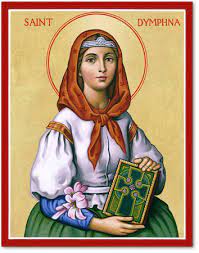
St. Dymphna

When she lived:

St. Dymphna is believed to have lived during the 7th century. The exact dates of her birth and death are uncertain, but her story has been passed down through the ages.

Where she lived:

St. Dymphna is associated with Gheel, a town in present-day Belgium. Gheel has a long history as a sanctuary for those with mental illness, and it is in this context that St. Dymphna’s story is often told.

Notable world events during her time:

  • The Rise of Islam: The 7th century saw the rapid expansion of the Islamic Empire under the leadership of Prophet Muhammad and his successors, leading to significant geopolitical changes in the Middle East and beyond.
  • The Tang Dynasty (618-907): was a golden age of Chinese civilization, known for its advancements in arts, science, and trade along the Silk Road, contributing to global cultural exchange.
  • The Migration Period: This era marked significant movements of various tribes and peoples in Europe, impacting the continent’s political landscape and cultural diversity.
  • The Decline of the Byzantine Empire: The Byzantine Empire faced multiple challenges during the 7th century, including military conflicts and territorial losses, leading to a gradual weakening of its dominance in the Eastern Mediterranean.
  • The Beginnings of the Heian Period in Japan: The Heian period (794-1185) began during the latter part of the 7th century, characterized by the flourishing of Japanese art, literature, and a unique court culture.

Her patronage:

St. Dymphna is widely recognized as the patron saint of those suffering from mental and emotional distress. She is invoked for protection against mental illness, anxiety, and neurological disorders. Additionally, she is also considered a patron of victims of incest and family conflict due to the tragic events in her own life.

Early Life

St. Dymphna was born around the seventh century in Ireland to the Damons. Her father, Damon, was a petty king in Oriel, and her mother was a strong Christian. Dymphna, like her mother, grew to desire the things of God wholeheartedly, and at age fourteen, she became consecrated to Christ, vowing chastity. Her mother died shortly afterward, and because her father, Damons, had been crazily in love with her, it was hard for him to bear the loss of a wife. A wife he so much treasured, so much admired, and so much fell in love with. This resulted in mental health deterioration. But then he had to be remarried if he wanted to keep being king of Oriel. His counselors persuaded him to pick on another wife, and he accepted, saying such would happen only if the new wife would carry on the beauty of his past wife. But all the searching for a new maiden that was as beautiful as his deceased wife was futile, as the king was never satisfied with all of the ladies that were presented to him. It was at that moment that he began to desire his own daughter, given that Dymphnaha had taken on the beauty and resemblance of her mother. Young Dymphna, in order to keep up her vows to Christ, on learning the intentions of her father, had eloped with her confessor and some other persons in order to prevent what was going to happen with her father. But then her hiding with the confessor was soon discovered when her father used the coins of her exchange, which she was using to do good to the people, to trace her whereabouts. Damons had ordered the death of Dymphna’s confessor, and when Dymphna refused to return home with him, he drew his sword and used it to chop off his daughter’s head. At this time, Dymphna is only fifteen years old.

Dedication and Devotion

Even with a pagan father and under difficult conditions, Dymphna remained committed and devoted to Christ and to carrying out his assignments. She had vowed chastity after her consecration to Christ, all to remain fit for the Master’s use. And this, she had upheld, even unto death.

In Gheel, present-day Belgium, where Dymphna had run to safety with her professor, it is on record that she had built a hospice that would cater to the needs of the poor and the sick. This is only an addition to any other good work that she has previously done. Dymphna had a concern for people who were suffering from mental health deterioration, and she’d been really instrumental towards their improvement, even at a very young age.

Legacy

During St. Dymphna’s lifetime, she was committed to overseeing the well-being of mentally ill persons, and this would earn her the patron saint of people with mental diseases. Decades after her death, a church was built in Gheel, dedicated to her honor. The house had served to provide treatment for people who had one form of psychological problem or another, especially around the mid-1400s. In the fifteenth century, another church was built in her honor, and this Church, up until now, still stands around the site where it is believed her body was first buried.

Death and Canonization

St. Dymphna died while on the run from her father. It was this same father who had discovered her and killed her because she wouldn’t return to Oriel with him to become his wife. What was most important for Dymphna at the moment was fulfilling her vow to Christ of staying celibate. She was canonized in the Catholic Church in 1247 as the patron saint of mentally deranged people.

Prayer to St. Dymphna

Good Saint Dymphna, great wonder-worker in every affliction of mind and body, I humbly implore your powerful intercession with Jesus through Mary, the Health of the Sick, in my present need. (Mention it.) Saint Dymphna, martyr of purity, patroness of those who suffer with nervous and mental afflictions, beloved child of Jesus and Mary, pray to them for me and obtain my request. (Pray one Our Father, one Hail Mary, and one Glory Be.) Saint Dymphna, Virgin and Martyr, pray for us.

Source:https://www.ourcatholicprayers.com/prayer-to-st-dymphna.html
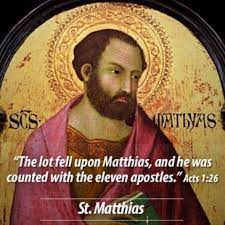
St. Matthias

When They Lived

St. Matthias is believed to have lived during the 1st century AD. His exact birth and death dates are not
precisely known, but he is often associated with the time of Jesus Christ and the early days of the Christian
Church.

Where They Lived

St. Matthias is traditionally associated with various locations in the Eastern Mediterranean region, particularly
in the areas around Jerusalem and Judea. He is often mentioned in the context of the early Christian community
in Jerusalem.

Notable World Events During Their Time

  • Roman Occupation: St. Matthias lived during a time of Roman rule over a significant
    portion of the known world. The influence of the Roman Empire was felt in various aspects of daily life, from
    politics and governance to culture and trade.
  • Death of Jesus Christ: St. Matthias was said to have been chosen as an apostle to replace
    Judas Iscariot after Judas betrayed Jesus Christ. This event is significant not only in Christian theology
    but also in the broader context of the early Christian movement.
  • Spread of Christianity: St. Matthias was a witness to the rapid expansion of Christianity
    from its humble beginnings in Jerusalem to other parts of the Roman Empire. This period marked the initial
    stages of a religious movement that would have profound historical implications.
  • Nero’s Persecution: St. Matthias lived during a time when early Christians faced sporadic
    but intense persecution. The most infamous of these persecutions was carried out by the Roman Emperor Nero,
    who blamed Christians for the Great Fire of Rome in 64 AD.
  • Pax Romana: St. Matthias lived during a period known as the Pax Romana, a relatively
    peaceful and stable era within the Roman Empire. This stability facilitated the movement of people, ideas,
    and goods across vast distances.
  • Emergence of Rabbinic Judaism: During St. Matthias’s lifetime, Judaism was undergoing
    transformations following the destruction of the Second Temple in 70 AD. The emergence of Rabbinic Judaism as
    a central form of Jewish religious expression was an important development during this time.
  • Early Scientific Progress: While not directly related to St. Matthias, the 1st century AD
    saw some scientific advancements, including progress in the fields of astronomy, mathematics, and medicine.
    These advancements laid the groundwork for future discoveries.

Patronage

St. Matthias is commonly recognized as the patron saint of tailors, carpenters, and those who work with
alcohol. His patronage of these diverse professions reflects his role as an apostle and his association with
various aspects of daily life and work. The choice of patronage also serves as a reminder of the
interconnectedness of faith, vocation, and the everyday activities of people.

The Life of St. Matthias

Matthias, whose name means gift of God, was born in the 1st Century in Judea, in the Roman Empire. According to the book of Acts in the Bible,Matthias had been with Jesus from his baptism by John until his ascension, even though he was not mentioned in the list of Jesus disciples.

The appointment of Matthias as an Apostle was made after Jesus had ascended into heaven and before the descent of the Holy Spirit upon the early church. Peter had proposed to the disciples the nomination of two men to replace Judas Iscariot, and they chose Joseph, called Barnabas, and Matthias.

After praying to God for guidance in choosing an Apostle, they cast lots. The lot fell to Matthias, signaling that he was now the 12th apostle of Jesus Christ. Soon after his election, Matthias received the Holy Spirit with other apostles, as stated in Acts 2:1–4.

Ministry

The Acts of the Apostles state that Matthias ministered in Judaea and then carried missions to foreign places. According to Greek tradition, he Christianized Cappadocia, a mountain district in central Turkey.

He also preached in Aethiopia, in the region of Colchis, which is now modern-day Georgia. That is the place where Matthias was stoned, according to Nicephorus, the Greek historian.

The Synopsis of Dorotheus states that Matthias preached the Gospel to barbarians and meat-eaters in the interior of Ethiopia, where the sea harbor of Hyssus is located.

As he was preaching the Gospel message, Matthias emphasized the importance of self-control. For people to experience the peace and joy that God intends, Matthias said, they must subordinate their physical desires to their spiritual desires.

He used to teach people that the physical body is only temporary and is subject to many temptations to sin and illnesses. However, the spiritual soul is permanent and able to discipline the body for good purposes. Matthias preached that the Holy Spirit would empower people to exercise self-control over their unhealthy physical desires so that they could experience good health in their bodies and souls.

Death of Matthias

Matthias died in the year 80 AD. However, there is conflicting information about the place of death and burial site of Matthias. The Synopsis of Dorotheus tradition claims that Matthias died at Sebastopolis and was buried near the Temple of the Sun. Another tradition maintains that he was stoned in Jerusalem by the local people and beheaded.

The Hippolytus of Rome tradition states that Matthias died of old age in Jerusalem. According to Nicephorus, a marker placed in the ruins of the Roman fortress at Gonio in the modern Georgian region of Adjara claims that Matthias is buried at that site.

There is a claim that the remains of St. Matthias were taken to Italy by Empress Helena, the mother of Emperor Constantine the Great. The other part of these remains is said to have been taken to the Abbey of Santa Giustina in Padua, and the other part is in the Abbey of St. Matthias in Trier, Germany.

Feast Day

St. Matthias’ feast day is celebrated on May 14. Initially, in the 11th-century Roman Calendar, the feast was celebrated on February 24, and during leap years, it was celebrated on February 25. When the General Roman calendar was revised in 1969, the day of the feast was transferred to May 14 to avoid celebrating it in Lent.

However, the Eastern Rites of the Eastern Orthodox Church celebrate the feast on August 9. The Western Rite parishes of the Orthodox Church are still following the Old Roman Rite of February 24 and 25 in leap years.

The Church of England’s Book of Common Prayer, as well as other older common prayer books in the Anglican Communion, celebrate Feast Day on February 24. The same applies to the Episcopal Church, the Lutheran Church of Missouri Synod, and the Lutheran Church of Canada.

Patronage

St. Matthias is the Patron saint of alcoholics, carpenters, and tailors; Gary, Indiana; Great Falls-Billings, Montana; smallpox; hope; and perseverance.

3 Interesting Facts About St. Matthias

  1. He was an Apostle who replaced Judas Iscariot.
  2. Even as an Apostle of Jesus, St. Matthias is only mentioned in the
    book of Acts and nowhere else in the New Testament.
  3. He was one of the 72 disciples whom Jesus sent out to preach the gospel.
    News.

Prayer to St. Matthias

O Glorious Saint Matthias, in God’s design it fell upon you to take the place of the unfortunate Judas who betrayed his Master. You were selected by the twofold sign of the uprightness of your life and the call of the Holy Spirit. Obtain for us the grace to practice the same uprightness of life and to be called by that same Spirit to the wholehearted service of the Church. Then, after a life of zeal and good works, let us be ushered into your company in heaven to sing forever the praises of Father, Son, and Holy Spirit. Amen.

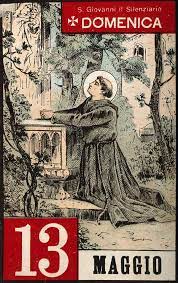
St. John the Silent

When They Lived

St. John the Silent, also known as St. John the Hesychast, lived from 800 AD to 880 AD.

Where They Lived

St. John the Silent lived in various regions, primarily in Egypt and Palestine. He spent a significant portion of his life in the desert of Wadi Natrun in Egypt, where he pursued a life of solitude and contemplation.

Notable World Events During Their Time

  • Charlemagne’s Empire: Charlemagne’s reign marked the Carolingian Renaissance, a revival of learning and culture in Europe.
  • Great Heathen Army and Viking Invasions: The Viking Age saw the formation of the Great Heathen Army and Viking activities across Europe.
  • Arab-Byzantine Wars: Ongoing conflicts between the Byzantine Empire and Arab Caliphates, with implications for the Holy Land.
  • Photios I and the East-West Schism: Tensions between the Eastern Orthodox Church and Roman Catholic Church that eventually led to the East-West Schism in 1054.

Patronage

St. John the Silent is revered as a patron saint of contemplatives, hermits, and those seeking inner peace. His life of solitude and dedication to silent prayer makes him a symbol of the importance of finding stillness and communion with the divine in a noisy world. He also serves as an inspiration for those striving for spiritual growth and seeking a deeper connection with their faith.

St. John’s journey from a prominent position in society to a life of solitude in the desert, where he focused on silence and prayer, offers a unique perspective on the human quest for meaning and connection. His story can be seen as a timeless example of how individuals navigate the complexities of their world to find a higher purpose, regardless of the events that unfold around them.

Early Childhood

John was born in 454 in Nicopolis, Armenia. He came from a noble family consisting of Generals and Governors. However, John was a devout Christian at a very young age and did not follow the careers popular in his family. After the death of his parents when he was 18 years old, he built a monastery where he lived with ten other monks. Their lifestyle was one of hard work and devotion.

John’s leadership and lifestyle of devotion impressed the Archbishop of Sebaste, who promptly anointed John as Bishop of Colonia in Armenia. At the age of 21, John felt that he was not yet ready and worthy of the office, but he accepted the position. He led his diocese for nine years with honor, love, and humility. He resigned from his position and went to Jerusalem, where he lived in isolation.

John in the Monastery of St. Sabas

As he was praying one night, John had a vision of a bright cross forming in the air and heard a voice telling him to follow the light if he wanted salvation. That light moved and pointed to the monastery of St. Sabas. This prompted him to join the monastery, which had 150 monks, at the age of 38. After passing the tests, he was given a separate hermitage, where he lived in seclusion uninterrupted.

John fasted for five days a week while confined in his cell. He only left his cell on Saturdays and Sundays when attending the public Mass. After three years of dedicated devotion, John was made the steward of the monastery.

After four years, St. Sabas decided to make John a priest. However, he did not know that John was a bishop in Armenia. John had kept the secret to himself. Upon his arrival at Calvary for the ordination, John requested a private meeting with the patriarch Elias of Jerusalem. He confessed to the patriarch that he was a bishop who fled from his duties in Armenia.

This startled the patriarch, who stopped the ordaining and immediately informed St. Sabas about his decision but did not reveal John’s secret. St. Sabas panicked and thought that John had committed a crime, but after praying, God revealed the truth to him.

He confronted John about his secret and expressed his disappointment. This forced John to decide to leave the monastery, but Sabas managed to convince him to stay. He also promised that he would keep the secret safe. For the next four years, John lived in his cell, secluded, not speaking to anyone except the person who brought him essentials.

In the year 503, trouble and divisions perpetrated by rogue disciples forced St. Sabas to leave his monastery. John also left and moved to the nearby wilderness, where he spent six years in silence. He communicated with God, and he only ate wild roots, together with herbs.

When St. Sabas returned to the monastery, he convinced John to return with him, and he agreed. However, John was accustomed to conversing with God alone, and he found anything else empty. He returned to his old solitary cell and pursued his obscurity and humility. He lived there for forty more years and never turned away anyone seeking counsel or instruction.

Miracles

Cyril of Scythopolis was one of the people who benefited from John’s counsel. He later wrote about John’s life. John was 90 years old when he met 16-year-old Cyril, who came seeking advice about his life. John advised him to join the Laura of St. Euthymius monastery, but Cyril did not listen to the advice. Instead, he went to a small monastery on the banks of the Jordan River. He fell sick and regretted not listening to John.

John appeared to Cyril in a dream, rebuking him for not obeying simple instructions. He told him that if he returned to St. Euthymius monastery, he would get well and find his salvation. Cyril obeyed the instruction by going to St. Euthymius’ monastery, and upon arrival, he miraculously regained his good health.

Another miracle witnessed by Cyril is that of a man named George, who brought his demon-possessed son to John. John immediately understood the distressing condition of the child without being told. He made the sign of the cross on the child’s forehead with blessed oil, and instantly the child was delivered from the evil spirit.

Death and Patronage

John died in 558 at the age of 104 due to natural causes. He lived a life of solitude for 76 years, interrupted by the nine years he spent as abbot of Colonia. His Feast Day is on the 13th of May.

St. John is the Patron Saint of the love of Silence. A Christian silence, or silence of virtue, gives a person time to meditate and converse with God.

5 Interesting Facts About St. John the Silent

  • When John was in the wilderness, legend has it that he was protected.
    by a lion that lived nearby.
  • When John was in the desert, a man mysteriously appeared and gave
    He had hot white loaves, wine, oil, fresh cheeses, eggs, and a jar of honey.
  • St. John’s Feast Day is on the 13th of May.

Prayer to St. John the Silent

Father, you called St. John to the solitary life in which he prayed for others. Grant us the signs we seek for discerning Your will and purifying our hearts, dear Lord, so that we may serve You more perfectly. In Christ’s name, we pray. Amen.

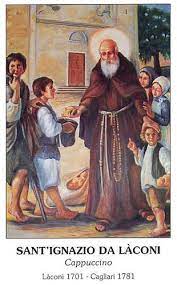
St. Ignatius of Laconi

When they lived:

St. Ignatius of Laconi, born on December 17, 1701, lived during the late Baroque period in Europe. He entered
eternal life on May 11, 1781.

Where they lived:

St. Ignatius of Laconi spent his entire life in Sardinia, particularly in the town of Laconi. Nestled amidst the
picturesque landscapes of the Mediterranean island, Laconi was the backdrop to his remarkable journey of faith
and devotion.

Notable world events during the time of their life:

  • Enlightenment Era (17th-18th century): As Ignatius grew up, the Enlightenment was sweeping
    across Europe. Intellectual and cultural transformations were underway, challenging traditional beliefs and
    advocating for reason, science, and individualism.
  • Seven Years’ War (1756-1763): Ignatius lived through the tumultuous years of the Seven
    Years’ War, a global conflict involving major powers of Europe and their colonies. This war had significant
    political, economic, and social repercussions worldwide.
  • Industrial Revolution (18th century): While the Industrial Revolution primarily gained
    momentum in Britain, its effects rippled across Europe during Ignatius’s lifetime. Advances in
    manufacturing, agriculture, and transportation transformed societies and economies.
  • American Revolution (1775-1783): The American colonies’ struggle for independence from
    British rule was a pivotal event during Ignatius’s later years. The revolutionary ideas of liberty and
    self-governance resonated far beyond the Atlantic, influencing political discussions worldwide.
  • Mozart and Beethoven: Ignatius’s lifetime overlapped with the lives of two musical giants,
    Wolfgang Amadeus Mozart and Ludwig van Beethoven. Their compositions revolutionized classical music and left
    an indelible mark on cultural history.
  • Halley’s Comet (1758): Halley’s Comet made a prominent appearance in the skies in 1758,
    during Ignatius’s lifetime. This celestial event fascinated people and spurred scientific curiosity.

Their patronage:

St. Ignatius of Laconi is known as the patron saint of agricultural workers, particularly shepherds and farmers.
His life as a humble shepherd before joining the Capuchin Franciscan Order resonates with those who toil in the
fields and care for animals. Ignatius’s journey from rural simplicity to spiritual significance serves as a
reminder that holiness can be found in the most ordinary of lives.

The Call to Duty

At one point, he conquered a serious illness when he was working in the fields at the age of seventeen, and this prompted him to dedicate his life to God; hence, he entered the religious life, though not as a priest.

He, however, did not join the order of Friars Minor Capuchin as soon as he got well because his father convinced him to wait, as the father was anxious since he depended on St. Ignatius to help in the fields.

In 1721, the horse he was riding panicked, and he was almost thrown off, but he called upon the assistance of Francis of Assisi and renewed the vow that he had made during the initial illness. This time his parents gave him the blessing, and he joined the order.

He was admitted to the convent in Cagliari as per his request only after a friend interceded for him because the superiors there were hesitant because of his health. He then made his profession on November 10, 1722.

He attended the spiritual exercises and excelled. From 1722 up until 1737, he worked at the house’s weaving shed, and his duties involved manual work. From 1737 on, he was an alms beggar, and he assumed that role for forty years.

He was later appointed as the quester of alms based on his modest conduct and humility. He maintained good relationships with people as they realized that as he was begging for alms, he was also spiritually giving back to them. Because of the love people had for him, even those who had barely enough for themselves would also give to him.

He was a notable figure just based on how he conducted himself with such meekness, and his life was quite a sermon. He rarely spoke, and when he did, it was with great affection.

He also instructed the children and the uneducated that he came across. He is also said to have been strict and displayed total obedience to his superiors at all costs. Notably, his sister often wrote to him, asking him to visit her, and he had no intention of honoring that, but when his superiors ordered him to, he visited her.

St. Ignatius had a humble demeanor and had huge concern for the poor, and he mingled with all the people he met. He was also generous towards the sick, and he went out to comfort the sick and urge the sinners to convert.

Even though he had poor health and other infirmities, he continued to work, even though it seemed difficult. He lost his eyesight in 1779, but he continued for the benefit of those around him.

His Legacy

St. Ignatius became known as a wonder worker.

St. Ignatius was beatified on June 16, 1940; he was canonized in 1951, and his remains were entered in Cagliari.

There are two miracles attributed to him that occurred after his death.

St. Ignatius is known as the Patron saint of beggars and students.

On May 11, 2014, a statue dedicated to him was unveiled in Sestu.

5 Interesting Facts About St. Ignatius of Laconi

  1. It is claimed that he performed 121 miracles during his life.
  2. His grave became a place where miracles flourished.
  3. St. Ignatius’ body is still incorrupt.
  4. St. Ignatius was born of a difficult pregnancy, such that his mother
    received the intercession of Francis of Assisi
  5. During his childhood, he referred to the church as his home.

Prayer to St. Ignatius of Laconi

O God, who led Saint Ignatius to the height of holiness along paths of humility, innocence, and charity toward others, grant that, by imitating his virtues, we may put charity on earth into practice, in deeds and in truth. Through our Lord Jesus Christ, your Son, who lives and reigns with you in the unity of the Holy Spirit, one God, forever and ever Amen.

St. Dominic Savio

When they lived: St. Dominic Savio was born on April 2, 1842, in the village of Riva di Chieri, near Turin, Italy. He lived a short but impactful life, passing away at the tender age of 14 on March 9, 1857.

Where they lived: St. Dominic Savio spent the majority of his life in the beautiful and picturesque Piedmont region of Italy. He grew up in a humble and devout family in a time when industrialization was beginning to reshape the landscape of Europe.

Notable world events during the time of their life:

  1. 1851 Great Exhibition: This groundbreaking event in London showcased the advancements of the Industrial Revolution, with innovative technologies, cultural displays, and architectural marvels. It symbolized the dawn of a new era and had a significant impact on how people viewed progress.
  2. 1848 Revolutions: The year 1848 witnessed a series of revolutionary uprisings across Europe, often called the “Spring of Nations.” These movements aimed for political and social change, advocating for democratic principles. Although not directly related to Catholicism, these events shaped the political landscape of the time.
  3. Charles Darwin’s “On the Origin of Species” (1859): Published a couple of years after St. Dominic Savio’s passing, Darwin’s groundbreaking work laid the foundation for the theory of evolution. This scientific revelation stirred discussions about the relationship between science and religion.

Their patronage: St. Dominic Savio is best known as the patron saint of youth, students, and choirboys. His dedication to holiness from a young age makes him an inspirational figure for the youth of today. He is also a patron for those seeking purity and a model of virtue, reminding us that even in a brief life, one can make a lasting impact on the world through faith, kindness, and devotion.

Holiness Knows No age.

Dominic Savio was born on April 2, 1842, in the village of Riva in northern Italy. His father, Carlo Savio, was a blacksmith, and his mother, Brigida Gaiato, was a seamstress. He had nine siblings. Dominic’s family was poor but hardworking, but most of all, they were devout and pious Catholics.

As a small boy, Dominic loved the Lord and the Church. He showed exceptional piety and devotion in practicing his faith as a Catholic. Dominic never missed attending Mass in their church with his mother. He was often seen kneeling and praying before the Tabernacle. Aside from his prayerfulness, young Dominic was also quickly recognized as an excellent student, studying hard and performing well in school.

Desiring to serve God, he became an altar server. He attended the daily Mass and regularly went to confession. He requested that he receive his first communion at the age of seven, which was not a practice in Italy at the time. However, Dominic’s parish priest was so impressed with the boy’s intelligence on the faith and his piety and love for the Lord that he made an exception to Dominic’s case. The day of his First Communion, said Dominic, was the happiest day of his life. On that day, he wrote four promises in a little book: I will go to Confession often and as frequently to Holy Communion as my confessor allows; I wish to sanctify the Sundays and festivals in a special manner; My friends shall be Jesus and Mary; and Death rather than sin.

Dominic Meets His Guide

Dominic’s teacher spoke highly of him and brought him to Don Bosco‘s attention. In October of 1854, together with his father, young Dominic was personally introduced to Fr. Bosco. At their meeting, Fr. Bosco wanted to test Dominic’s intelligence and understanding of the Catholic faith. He gave him a pamphlet containing apologetics. Fr. Bosco expected him to report the next day, but to the priest’s surprise, Dominic returned to him just ten minutes later, recited the text, and explained its significance.

When asked what he wanted to be, Dominic expressed his desire to become a priest. He asked Fr. Bosco to take him to Turin to attend the Oratory of St. Francis de Sales, to which Fr. Bosco happily agreed. At the Oratory, Dominic studied directly under Fr. Bosco. He worked diligently and asked questions when he did not understand something.

After six months in the Oratory, Dominic delivered a speech about the path to sainthood. However, Dominic’s desire to become a saint deeply troubled him. He wondered how a young person like him would become a saint. Because of his ardent desire, he tried voluntary mortification and penances, with the hope that these would help him grow closer to Jesus and be less concerned with his own desires and needs. When Fr. Bosco learned about this, he quickly corrected Dominic, explaining to him that what he should do instead was devote himself to studies and be cheerful. And so Dominic stopped his physical punishments, and his happy disposition quickly returned.

Holiness Until the End

While he was developing his reputation as an excellent student,Dominic’s health started to fail. Fr. Bosco became concerned about the boy’s situation, so he took him to the doctor, who recommended that the boy be sent home to recover. However, Dominic wanted to stay at the oratory, but Fr. Bosco insisted that he go home. Before he departed, Dominic performed the “Exercise of a Happy Death”, predicting that this would be his final devotion.

After four days in their home, Dominic’s health worsened. He showed little sign of recovery, but Dominic was sure of his impending death. He asked his parents to bring the parish priest so he could make his last confession and be given the last sacrament. He asked his father to read him the prayers for the “Exercise of a Happy Death.” Then Dominic fell asleep. Hours later, he awoke and said to his father, “Goodbye,Dad, goodbye… Oh, what wonderful things I see!” Dominic fell asleep and died within minutes. The day was March 9, 1857.

Detractors argued that Dominic was too young to be canonized and pointed out that he was not a martyr. However, Pope Pius XII beatified him on March 5, 1950, and the same Pope canonized him on June 12, 1954. St.Dominic Savio’s feast day is May 6.

5 Interesting Facts About St. Dominic Savio

  1. St. Dominic Savio is the patron saint of choirboys, the falsely
    accused, and juvenile delinquents.
  2. Pope Pius XII described St. Dominic Savio as “small in size, but a
    towering giant in spirit.”
  3. St. Dominic Savio founded a group at the Oratory called the Company.
    of the Immaculate Conception”, which devoted itself to the then-novel
    idea that Mary was born without original sin, and encouraged added
    devotional focus among its members.
  4. Deeply touched by St. Dominic Savio’s life, St. John Bosco himself
    wrote the young saint’s biography, “The Life of Dominic Savio”, which
    was a major element of his canonization.
  5. St. Dominic Savio’s tomb is located at the Basilica of Mary Help of
    Christians in Turin, Italy

Prayer to St. Dominic Savio

O Saint Dominic Savio, a model of purity, piety, penance, and apostolic zeal for youth, grant that, through your intercession, we may serve God in our ordinary duties with fervent devotion and attain the grace of holy joy on earth, that we may one day love God forever in Heaven. Amen.

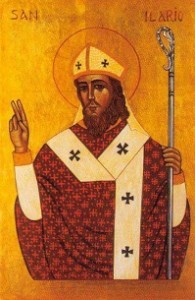
St. Hilary of Arles

When they lived: St. Hilary of Arles, also known as Saint Hilarius, lived during the late 4th century. He was born around 401 AD and died in 449 AD.

Where they lived: St. Hilary of Arles lived in the city of Arles, which was an important center in the Roman province of Gallia Narbonensis (modern-day southern France).

Notable world events during the time of their life:

  • The Fall of the Western Roman Empire (476 AD): St. Hilary lived through the declining years of the Western Roman Empire, which eventually fell in 476 AD. This event marked the end of ancient Roman rule in the western part of the empire.
  • The Council of Ephesus (431 AD): The Council of Ephesus was a significant event in early Christian history, dealing with the theological issues of the nature of Christ. St. Hilary, being a bishop, would have been aware of the debates and implications of this council.
  • The Life and Teachings of St. Augustine (354-430 AD): St. Augustine of Hippo, one of the most influential early Christian theologians, lived during a significant portion of St. Hilary’s life. Augustine’s works on theology and philosophy had a lasting impact on the Christian Church.
  • The Decline of the Western Roman Empire and Barbarian Invasions: The late 4th and early 5th centuries were marked by the decline of the Western Roman Empire, with various barbarian tribes, such as the Visigoths and Vandals, invading Roman territories.
  • The Development of Early Christian Monasticism: During St. Hilary’s lifetime, the practice of Christian monasticism was gaining traction. Monastic communities were being established, contributing to the spread of Christianity and the development of spiritual practices.

Their patronage: St. Hilary of Arles is the patron saint of the city of Arles and is venerated as a protector against snake bites. His feast day is celebrated on January 14th.

St. Hilary’s life is fascinating due to his presence during a period of significant transition in both the Roman Empire and early Christianity. His role as a bishop in Arles allowed him to witness and participate in important ecclesiastical discussions, and his association with the city and his patronage against snake bites adds unique and intriguing facets to his story.

Young Hilary

Hilary was born probably in 401 AD, in the early fifth century, into an an aristocratic family in Gaul, Lorraine, today’s present-day France. The name Hilary means cheerful.’

As per a boy born into a household of standing like his, he had an excellent education. His study covered liberal arts, polite learning, eloquence, and philosophy.

We could all agree that he had the good things of life that nobility could provide. At an early stage of his life, he wasn’t interested in religion. He had yet to encounter God or his faithfulness. It appeared he would be pursuing a path in the secular profession.

This was until his path crossed with that of his kinsman, Honoratus.

The God-Experience

Honoratus had abandoned the country in search of Christ in solitude. He had founded a great monastery on the Isle of Lerins. He had loved Hilary as his friend and strongly wanted to help his friend break the chains and charms of the deceitful world into which he was deeply plunged.

Honoratus sought out Hilary to show him the light of Jesus, but Hilary had a rebellious soul toward the gospel. Therefore, Honoratus went to God in prayer. It was stated that he had said to him, “I will obtain of God what you will not grant me.”

Internal conflict arose in Hilary after Honoratus, his friend, had departed. He felt God’s mercy calling out to him. Three days later, he went searching for his friend, a changed man.

No doubt was left in anyone who met him that the young man had decided to save his soul. Everything about him was different, inward and outward. His words, looks, character, humility, and patience reflect the virtues of purity.

Hilary went home and sold his estate and assets to his brother. He distributed all he had made from the sale to charity and made his way to the Abbey of Lerins, where he joined the monastic life of prayer and contemplation.

Bishop of Arles

Honoratus was appointed Bishop of Arles in 426, while Hilary remained at the monastery in Lerins. Honoratus himself went to fetch Hilary when she refused to join him at Arles, preferring the solitude of life as an amonk.

Honoratus passed on in 429, and Hilary set out on his way back to the Abbey of Lerins. He was apprehended by the local faithful in Arles to succeed his kinsman. Many have heard and seen his devotion to God and helping the poor.

Just at 29, Hilary became the Bishop of Arles. The youthful bishop worked with so much vigor. He introduced many reforms in the church, assisted in many councils, strengthened discipline in local churches, continued in his work for the poor, built many monasteries, and lived with few possessions.

Too Hasty?

His zeal to get things done correctly got the young bishop into trouble. He had deposed the bishop of Besancon, Chelidonus, for neglecting his priorities. Also, on the accusation that the bishop had married a widow and sentenced people to death while he was a magistrate before his ordination, These irregularities were grounds for disqualification from the holy order.

His action was said to be outside his jurisdiction. He had also replaced Projectus, a sick bishop in his province, with another, while the former was not dead.

His intentions might have been right, but his actions were hasty. Following an appeal to Pope Leo, the Pope reversed his actions. He further denied him his metropolitan rights but did not remove him from his position as a bishop.

Throughout his ordeal, Hilary exhibited great humility and was patient. He never stopped working for the common good.

Call to Glory

Exhausted by the life of austerity and constant labor, Hilary, the bishop of Arles, joined the good Lord on the 5th of May, 449. He was 48.

Hillary’s name later entered the Roman Martyrology.

5 Interesting Facts About St. Hilary of Arles

  1. Are you aware that Hilary did manual labor to earn money for the
    poor, even as a Bishop? He was compassionate, even to a fault.
  2. His methods of ecclesiastical decision-making were questioned but never
    his faith or holiness.
  3. Hilary traveled everywhere on foot and was always dressed simply. He
    was very detached from material concerns.
  4. He was obedient while facing sanctions from the Pope and never
    neglected his duties.
  5. Mercy or keeping the rule—which do you think should come first?
    Hilary sold sacred vessels and church properties for ransom.
    captives. He chose mercy.

Prayer to St. Hilary of Arles

There is no official prayer for Saint Hilary of Arles.

St. James the Lesser

When they lived:

St. James the Lesser, also known as James the Just, is believed to have lived during the first century AD. His exact birth and death dates are not definitively known, but he is thought to have been born around 1 AD and died around 62 AD.

Where they lived:

St. James the Lesser lived in Jerusalem, a city of immense historical and religious significance, nestled in the heart of the Holy Land. As a central hub of trade, culture, and spirituality, Jerusalem provided the backdrop for many key events in his life.

Notable world events during the time of their life:

  • Roman-Jewish War (66-73 AD): St. James lived during a tumultuous period marked by conflicts between the Jewish population and Roman authorities. The Roman-Jewish War, which started a few years after his death, resulted in the destruction of the Second Temple in 70 AD and had a profound impact on the Jewish diaspora.
  • Great Fire of Rome (64 AD): A devastating fire swept through Rome, destroying a significant portion of the city. The blame for the fire was shifted onto the Christian community, leading to the persecution of Christians and further shaping the early Christian narrative.
  • Nero’s Persecution (64-68 AD): St. James witnessed the brutal persecution of Christians under the Roman Emperor Nero. This period of hostility towards Christians contributed to the strengthening of their faith and the spread of the Christian message.
  • Development of Early Christianity: St. James the Lesser played a vital role in the early Christian Church, participating in the Jerusalem Council around 50 AD. This council addressed the integration of non-Jewish believers into the Christian community, emphasizing the inclusivity and universality of the faith.
  • Hellenistic Influence: During St. James’ lifetime, the influence of Greek culture and philosophy was prominent in the Mediterranean world. This cultural backdrop likely influenced the ways in which early Christians articulated and defended their faith.

Their patronage:

St. James the Lesser is often recognized as the patron saint of various causes and professions. His patronage includes:

  • Laborers and Workers: St. James is a symbol of dedication and hard work, reflecting his role as a carpenter and his commitment to spreading the teachings of Christ.
  • Pharmacists: He is also considered a patron of pharmacists due to his symbol being a staff entwined with serpents, resembling the Rod of Asclepius, an ancient symbol associated with healing.
  • Social Justice: As a figure known for his commitment to justice and equity, St. James’ life of advocating for the marginalized and vulnerable has made him a patron of social justice causes.

The Other James

Besides James, son of Zebedee and brother of John, there is another James who appears in the Gospels. James is also included in the lists of the Twelve Apostles personally chosen by Jesus Himself. This James is always specified as “the son of Alphaeus” (Matthew 10:3; Mark 3:18; Luke 5; Acts 1:13). Oftentimes, he has been identified with another James who is called “the Younger”, the son of a particular Mary (see Mark 15:40), the same “Mary the wife of Clopas”, who according to the Gospel of John stood at the foot of Jesus’ cross with the Blessed Mother (see John 19:25).

To distinguish this other James, he was given the nickname “the Lesser”. This means that he was younger than the other James, who was called “the Greater.” He also came from Nazareth, and was probably a relative of Jesus (see Matthew 13: 55; Mark 6: 3). According to Jewish custom, he was called one of Jesus’ “brothers” (see Mark 6:3 and Galatians 1:19).St. James the Lesser telling his parents that he is going to follow Christ

His Significant Role in Jerusalem

The Acts of the Apostles emphasized the prominent role of this latter James in the Church of Jerusalem. In the so-called Council of Jerusalem, James the Lesser declared, together with the others who were present, that non-Jews could be accepted into the Church without submitting themselves first to circumcision (see Acts 15:13). Paul attributed a specific appearance of the Risen Jesus to James in 1 Corinthians 15:7. He even named James before Cephas or Peter during his visit to Jerusalem. He described him as a “pillar” of that community on par with Peter (see Galatians 2:9).

Judeo-Christians considered James the Lesser as their major reference point. The Epistle that bears the name “James” is attributed to him and is included in the canon of the New Testament. In its opening verse, he is not presented as a “brother of the Lord”. Rather, he is referred to as a “servant of God and of the Lord Jesus Christ” (James 1:1).

Apostle of Judeo-Christians and Gentile Christians

James the Lesser’s most important act was his intervention in the matter of the unpleasant relations between Christians of Jewish origin and those of Gentile origin. Together with Peter, he made a massive contribution to integrating the original Jewish dimension of Christianity with the need not to impose upon the pagans who were converted the obligation to submit to all the stipulations of the Torah. This decision resulted in complementary results: the inseparable relationship that binds Christianity to Judaism and the retention of the Christians sociological identity, which they would have lost had they been coerced to follow the precepts of the Mosaic Law.

The Jewish historian Flavius gives the oldest information about the death of James the Lesser. In his Jewish Antiquities, written in Rome around the end of the first century, he said that James the Lesser’s death was decided on an illegal initiative by Ananus the High Priest, son of the Ananias mentioned in the Gospels. In the year 62, he took advantage of the growing gap between the deposition of Festus, a Roman Procurator, and the arrival of Albinus, his successor. James was handed over for stoning and was beaten with clubs. His feast day is observed on May 3.

5 Interesting Facts About St. James the Lesser

  • Along with St. Joseph, St. James the Lesser is the patron saint of the dying. He is also the patron saint of fullers, those who clean, shrink, and thicken cloth, hatters, and druggists.
  • St. James the Lesser is depicted in Christian art holding a fuller’s club, the instrument used to deliver the blow that killed him.
  • St. James the Lesser and St. Philip, another Apostle, have the same feast day.
  • St. James the Lesser is believed to have preached in Palestine and Egypt.
  • The apocryphal Proto-Gospel of James, which exalts the holiness and virginity of Mary, Mother of Jesus, is particularly associated with the name of St. James the Lesser.

Prayer to St. James the Lesser

O Glorious Saint James, you were our Lord’s cousin and, at the same time, his friend and follower. You wrote that every good and perfect gift comes to us from the Father of Light and that faith without works is useless. You preached the divinity of Jesus until your death as a martyr. Obtain for us from the Father of Light the great gift of a living faith in Jesus’ divinity, which will inspire us to unstinting labor in the service of God and our fellow human beings and enable us to reach our heavenly destiny. Amen.

St. Catherine of Siena

When She Lived

St. Catherine of Siena was born on March 25, 1347, and she passed away on April 29, 1380.

Where She Lived

Catherine was born and spent most of her life in Siena, a picturesque city in Tuscany, Italy. She was deeply
connected to her hometown and had a significant impact on the religious and political affairs of the region.

Notable World Events During Her Time

  1. The Black Death (1347-1351): One of the deadliest pandemics in human history, the Black Death, also known as
    the Bubonic Plague, swept through Europe during Catherine’s early years. This catastrophic event had profound
    socio-economic and cultural consequences, leaving a lasting mark on the collective psyche of the time.
  2. The Hundred Years’ War (1337-1453): This long-lasting conflict between the Kingdom of England and the Kingdom
    of France had a significant impact on European politics, diplomacy, and warfare. It influenced alliances, power
    dynamics, and the rise of influential leaders, shaping the course of history.
  3. The Western Schism (1378-1417): A major crisis within the Catholic Church, also known as the Papal Schism,
    where multiple claimants to the papacy resulted in a split in the allegiance of European nations. This event
    profoundly affected the religious and political landscape, leading to debates about authority and the need for
    reform.
  4. The Renaissance (14th-17th centuries): A period of profound cultural and intellectual growth, the Renaissance
    saw the resurgence of arts, literature, and scientific exploration. It was a time of humanist ideals,
    rediscovery of classical works, and the contributions of figures like Leonardo da Vinci and Michelangelo.

Her Patronage

St. Catherine of Siena is the patron saint of a wide range of causes, making her an incredibly versatile and
influential figure in Catholicism. Some of her notable patronages include:

  • Against Fire: Catherine is invoked for protection against fire, which could symbolize her
    burning devotion and passion for her faith.
  • Italy: As a prominent Italian saint, she is considered a patron of her home country, reflecting
    her profound impact on its spiritual and cultural history.
  • Nurses: Catherine’s compassion and care for the sick during times of plague have made her a
    patron of nurses and healthcare providers, highlighting her dedication to helping others.
  • The Sick and Suffering: Catherine’s selflessness in tending to those afflicted by disease and
    hardship makes her a beloved patron for those facing illness and adversity.

For Christ Alone

St. Catherine of Siena, born Caterina Benincasa, was born in Siena, Italy, on March 25, 1347, to a very large family. At a very young age, Catherine experienced her first vision of Christ. Just a year later, at the age of 7, she is said to have consecrated her virginity to Christ and experienced mystical visions. When she was 12, she told her parents that she did not wish to be married. She wanted to devote her life to God.

However, when her parents tried to force her to marry her sister’s widower, Catherine responded by fasting and cutting her hair in an attempt to make herself as unattractive as possible. Despite Catherine’s religious nature, she did not choose to enter a convent; instead, she joined the Third Order of St. Dominic, which allowed her to associate with a religious society while living at home. At 15, in 1363, Catherine joined the “Mantellate”, a group of Dominican laywomen in Siena. They were devoted to offering service to their neighbors with generosity rather than out of obligation.

Marriage with Christ

Catherine was the first young woman ever to join the Mantellate. All of the other members were widowed, and some did not wish to accept a member at such a young age. Many believed that the Mantellate taught Catherine to read and write. Catherine began to attract people who were drawn by her humility, piety and generosity to the poor.

When she was 21, Catherine had an experience of what she referred to as her “mystical marriage to Christ”. Such a mystical experience changed Catherine’s life. In her vision, she was told to return to public life and to help the sick and the poor. And so, she was moved to immediately pursue her mission. In the process, she attracted followers who helped her serve the poor.

Admonishing the Pope

Her ministry eventually moved beyond the confines of her local community. Catherine began to travel and called for reform of the Church and for people to confess and to love God totally. She involved herself in politics and worked to keep the city states loyal to the Pope.

In 1376, Catherine worked to repair the breach between Pope Gregory XI and a league of northern Italian states led by Florence. Since 1305, the papacy has been a cause of division among the Italians and the French. The conflict with the emperor and the turmoil in Rome forced the popes to retreat to Avignon. It became clear to Catherine that Pope Gregory XI’s return to Rome from Avignon was the only way to bring peace to Italy. Catherine shared the popular Italian desire to restore the papacy to Rome. Pope Gregory XI was willing, but his influential French advisers resisted.

And so, Catherine conducted a campaign of letters to all sides and even offered to mediate directly. She wrote to Pope Gregory XI six times, admonishing him to return to Rome. Encouraged by the people of Florence, Catherine went to Avignon on a peacemaking mission, where she met with Pope Gregory XI. Not long after the encounter, Pope Gregory XI returned the papacy to Rome. Catherine’s efforts to reconcile the pope and the Italian states finally succeeded during the reign of Pope Urban VI, Gregory XI’s successor.

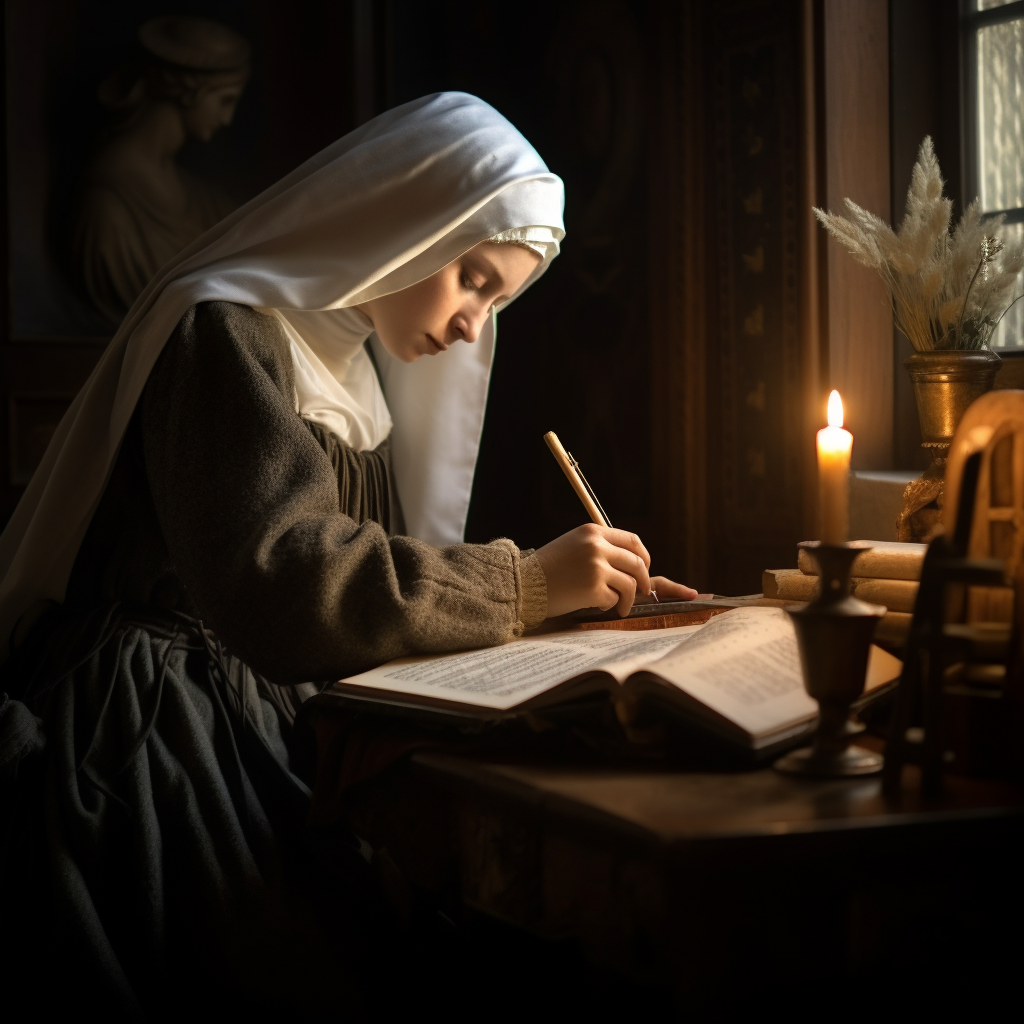
St. Catherine of Siena writing a letter to the pope at her desk

Her Last Years

In the year 1375, Catherine started to dictate letters to scribes. In 1377, Catherine established a monastery for women outside of Siena. She is credited with composing about 380 letters, 26 prayers, and her definitive work, the Dialogue.

Catherine spent the last two years of her life in Rome, in prayer and pleading on behalf of the cause of Pope Urban VI and the unity of the Church. She offered herself as a victim for the Church in its agony. In 1380, Catherine died in Rome at the age of 33. She was canonized by Pope Pius II in 1461. Her feast day is April 29.

5 Interesting Facts About St. Catherine of Siena

  1. St. Catherine of Siena is the patroness of fire, illness, the United States, Italy, miscarriages, people ridiculed for their faith, sexual temptation, and nurses.
  2. St. Catherine of Siena is one of only four female Doctors of the Church. The other three are Teresa of Avila, Thérèse of Lisieux, and Hildegard of Bingen. She was conferred this title in 1970 by Pope Paul VI.
  3. St. Catherine of Siena was made co-patroness of Rome in 1866 by Pope Pius IX, co-patroness of Italy in 1939 by Pope Pius XII, and co-patroness of Europe in 1999 by Pope John Paul II.
  4. St. Catherine of Siena was so joyful as a child that her family called her “Euphrosyne,” Greek for “joy.”
  5. In 1375, St. Catherine of Siena received the stigmata, which, according to the biography written by her confessor, was only visible to herself per her request to God.

Prayer to St. Catherine of Siena

O God, who set Saint Catherine of Siena on fire with divine love in her contemplation of the Lord’s Passion and her service of your Church, grant, through her intercession, that your people, participating in the mystery of Christ, may ever exult in the revelation of his glory. Who lives and reigns with you in the unity of the Holy Spirit, one God, for ever and ever. Amen.

St. Zita

When they lived: St. Zita, also known as Santa Zita, lived from 1212 to April 27, 1272.

Where they lived: St. Zita lived in the city of Lucca in Tuscany, Italy, for most of her life.

Notable world events during the time of their life:

  • 1215 – The Fourth Lateran Council: This significant Catholic Church council addressed various aspects of church organization and doctrine, including the doctrine of transubstantiation and regulations for clergy conduct.
  • 1248 – Building of Cologne Cathedral Begins: The construction of Cologne Cathedral, a masterpiece of Gothic architecture, began in this year. This cathedral would go on to be a lasting symbol of medieval craftsmanship and engineering prowess.
  • 1265 – Birth of Dante Alighieri: One of Italy’s most celebrated poets, Dante Alighieri, was born in this year. His epic poem “Divine Comedy” would later become a cornerstone of Italian literature.
  • 1271 – Marco Polo’s Travels Begin: The Venetian merchant and explorer Marco Polo embarked on his famous journey to the East, introducing Europe to the wonders and cultures of the Far East.
  • 1271 – The Eighth Crusade: Led by Louis IX of France, the Eighth Crusade aimed to recapture the Holy Land. Although it ultimately did not achieve its objectives, it marked a significant event in the ongoing series of Crusades.

Patronage: St. Zita is widely recognized as the patron saint of housekeepers, domestic servants, and lost keys. Her life story is particularly associated with her unwavering dedication to her work as a domestic servant. Despite her humble status, she demonstrated remarkable compassion and charity toward the poor, often sharing her own meals and belongings with those less fortunate. Her story serves as an inspiration for those in similar professions and for anyone seeking to find holiness in their daily tasks.

Early Life

Zita was born in the year 1218 in Monsagrati, a village in Tuscany. This village was very close to Lucca. At the very tender age of twelve, she went on to become a servant in the Fatinelli household, about eight miles away from her home. The Fatinelli family was into the wool and cotton business and was prosperous in it. She worked for the Fatinelli household for forty-eight years until her death at the age of sixty.

Zita was from a poor family, but her parents were very devoted Christians. Her sister later became a nun, while her uncle, Graziano, became a saintly hermit.

Servanthood and Lifestyle

She served the Fatinelli household devotedly and did it with religious dedication. She believed that her genuine service was an act of worship to God and should be done well.

Despite her hectic schedule, Zita was still very prayerful. She maintained a life of prayer and fasting. She attended mass regularly at the church of San Frediano. Zita gave out all the good food she received as her ration to the poor and hungry. She had no care for what she wore. She gave out most of her clothes and was always seen with tattered clothes. Even in the wintertime, she didn’t care about footwear.

Because of her lifestyle, she was greatly despised by her fellow servants. They constantly insulted her and persecuted her for her uprightness. She was also humiliated by her employers despite her diligence and loyalty. For a while, they maltreated her, but Zita was not affected by this. She remained patient and didn’t complain on any occasion. She saw all her suffering as an opportunity to endure, just as Christ had endured. She remained patient and never once lost her peace.

One time there was famine, and many people had no food to eat and no means to survive. St. Zita was moved by the afflictions of the poor in society. She decided to give out beans from her master’s store without informing him. She gave out the beans to the poor and hungry. Not long after, her master, after seeing that the price for the beans had gone higher, decided that it was time to sell and make a huge profit. Zita was scared that he would find out that the quantity of beans had reduced in size. Much to her amazement, when the master went into the store, there was no decrease in the quantity of the beans. The bag showed no sign as though something had been taken from it. This was indeed a miracle.

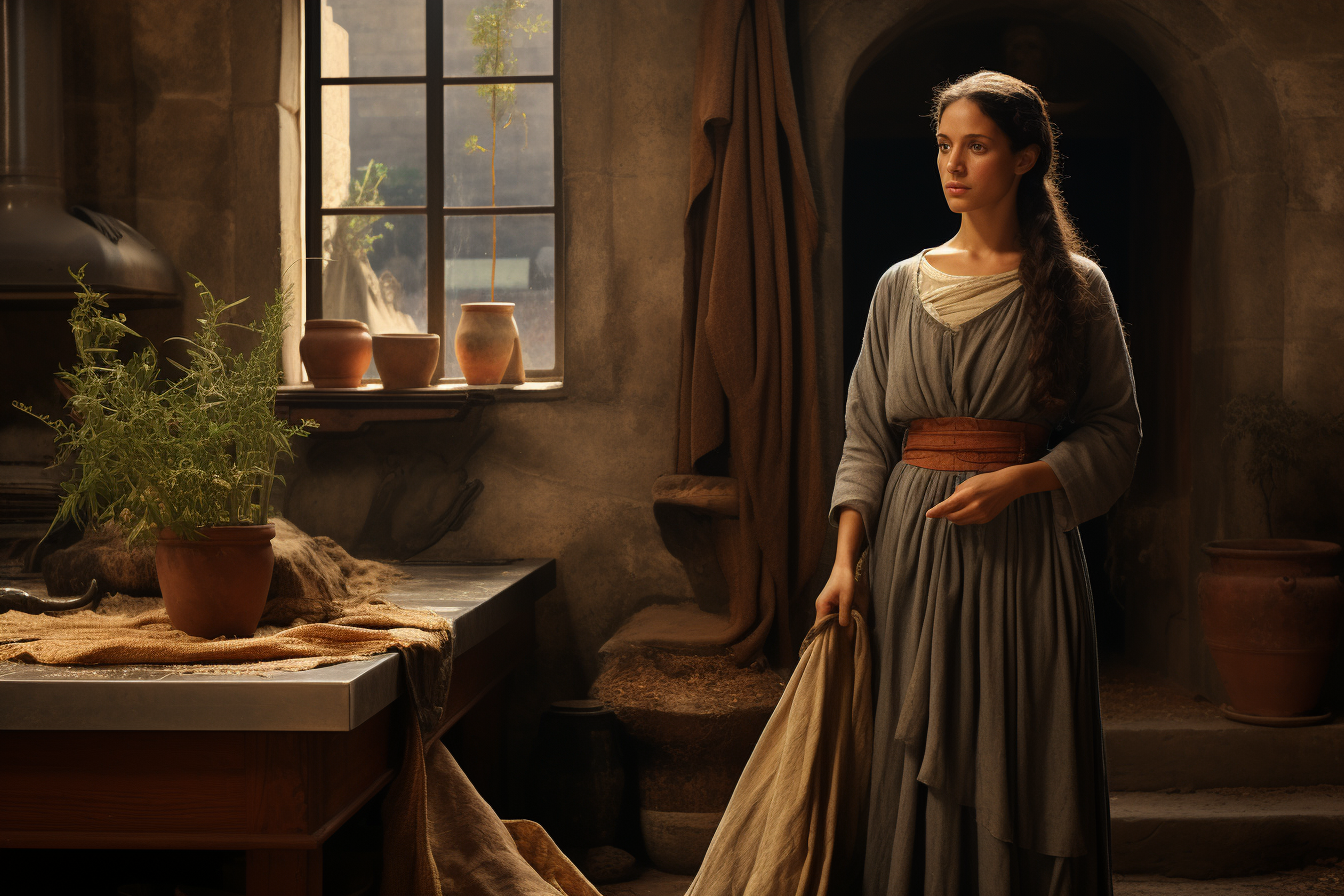
Not long after, Zita became loved by every member of the household. Soon, she was made the chief housekeeper. Despite this, she still carried out her duty with vigor and dedication.St. Zita about to clean a room

Death and Canonization

Zita lived a fulfilled life. She served the Fatinelli household until her death on April 12, 1272. On the night she died, a star rose above her room in the attic. She died at the age of 60. She was dearly loved and adored by the Fatinelli family.

Her body was exhumed in 1580 and found to be incorruptible. The body is displayed in the Basilica di San Frediano for public veneration.

Zita was canonized in 1696 after more than 150 miracles were reported to have taken place due to her intercession.

Veneration

A cult grew in her name after her death. The cult was centered at the Basilica of San Frediano in Lucca. Pope Innocent XII formally approved this cult in 1696. She is known as the patron Saint of domestic workers.

Her feast day is observed on April 27.

Prayer to St. Zita

St. Zita inspires us to take pride in our daily work and do it to the best of our abilities out of Love for God. May we find Jesus in the most menial of tasks. May we always embrace a spirit of obedience and charity, as you did. Pray for us, St. Zita, that we may have a generous heart that gives even when we have little. Place a trust in Jesus deep in our hearts so that we may never experience despair or loss of hope. Please carry the petitions we hold in our hearts to Jesus on our behalf. Mention your intentions here. Amen.

Source: https://www.catholicdoors.com/prayers/novenas/p03684.html

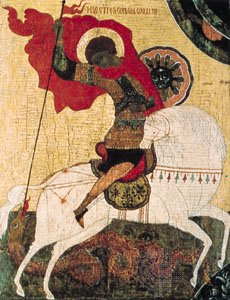
St. George

When They Lived

St. George is believed to have lived during the late 3rd century to early 4th century, around 270–303 AD. The exact dates are uncertain due to the historical nature of the figure.

Where They Lived

St. George’s traditional association is with the city of Lydda in Roman Palestine, which is modern-day Lod in Israel. However, his veneration spread throughout the Christian world.

Notable World Events During Their Time

  • Diocletian’s Persecution: St. George lived during a time when the Roman Empire, under Emperor Diocletian, launched one of the most severe persecutions against Christians, known as the Diocletianic Persecution (303–311 AD).
  • Battle of Milvian Bridge: In 312 AD, Constantine the Great, who later converted to Christianity, won a crucial battle at the Milvian Bridge, which marked a turning point in the history of the Roman Empire and had significant implications for the spread of Christianity.
  • Edict of Milan: In 313 AD, the Edict of Milan, issued by Constantine and his co-emperor Licinius, granted religious tolerance to all religions within the Roman Empire, effectively ending the persecution of Christians.
  • Development of Early Christian Doctrine: During St. George’s time, significant theological debates and the development of early Christian doctrine were taking place, laying the foundation for the future structure of the Christian Church.

Their Patronage

St. George is the legendary dragon-slaying saint and is widely known as the patron saint of several things, including:

  • Soldiers: St. George’s legendary courage and chivalry have made him a symbol of bravery and protection for soldiers.
  • England: St. George is the patron saint of England, and his emblem, a red cross on a white background (St. George’s Cross), is a prominent symbol in English culture.
  • Scouts: Many scouting organizations around the world have adopted St. George as their patron saint, emphasizing the values of honor and service.
  • Farmers and Agricultural Workers: In some regions, St. George’s feast day is associated with the beginning of the agricultural season.

The Saint of Legends and Stories

One of the objects of a vast amount of imagination is St. George. The life of this saint is surrounded by various stories and legends. The Catholic Church adheres to this saint’s memory and the inspiration and lessons he brings.

St. George was born around the 3rd century in Cappadocia, modern-day Turkey, to a Cappadocian father and a Palestinian mother of noble rank. After the death of his father, he moved to Palestine with his mother. Popular legends say that he was a knight. However, it is more likely that he was an officer in the Roman army. By his late 20s, he had become a Tribunus and served as an imperial guard for the Emperor at Nicomedia.

A Brave Soldier of Christ

During George’s service in the Roman army, Diocletian became emperor. In 303, Emperor Diocletian, who hated Christians, issued a decree that every Christian the army passed would be arrested. He also ordered that every other soldier offer a sacrifice to the Roman gods. George, who was a faithful Christian then, refused to obey the emperor’s order. He even told Diocletian about his firm conviction. The emperor was enraged; however, he greatly valued his friendship with George’s father.

In an effort to save George, the Emperor Diocletian tried to convert him and persuade him to believe in the Roman gods. He also offered him money, land, and slaves in exchange for offering a sacrifice to the Roman gods. These and many other offers were refused by George.

After exhausting all possible options, the Emperor ordered the execution of George. George gave his money to the poor in view of his death. He was sent to undergo several sessions of cruel torture. He was lacerated on a wheel of swords and required resuscitation three times. Despite the painful torture, George did not turn from God. Finally, after many tortures he endured, George was decapitated before Nicomedia’s outer wall.

Another Story of His Martyrdom

Another account of the martyrdom of St. George is in Eusebius´ Ecclesiastical History, which relates that when the emperor Diocletian issued an edict “to tear down the churches to the foundations and to destroy the Sacred Scriptures by fire… a certain man, of no mean origin, but highly esteemed for his temporal dignities, stimulated by a divine zeal, and excited by an ardent faith, took it as it was openly placed and posted up for public inspection, and tore it to shreds as a most profane and wicked act.” This act of intransigence and holy audacity enraged the emperor, who had the man tortured and killed. This man “of no mean origin”, i.e., of nobility, has been identified by more than one ancient source, including Eusebius, as St. George, though most modern historians of the period state that this is unlikely.

George’s body was sent to Lydda, her mother’s native land, for burial. Many other Christians went to honor George as a martyr. His feast day is April 23.

5 Interesting Facts About St. George

  • St. George is commonly depicted in art slaying a dragon, a story that made him popular. A dragon (most probably a crocodile) was terrorizing the land, and to appease the dragon, the townspeople fed it sheep and then human beings chosen by lot. Unfortunately, the king’s daughter was chosen to be served to the dragon, but St. George came along and slew the dragon, and he was offered anything he wanted for killing it. He refused all the king’s offers, but George made him promise to build churches, honor the priests, and help the poor.
  • St. George is the patron saint of England and Georgia and is venerated as one of the 14 Auxiliary Saints or Holy Helpers. With him were Saints Blase, Erasmus, Pantaleon, Vitus, Christopher, Denis, Cyriacus, Acacius, Eustace, Giles, Margaret, Barbara, and Catherine.
  • St. George stands out among other saints and legends because he is known and revered by both Muslims and Christians.
  • In Egypt, the Coptic Orthodox Church of Alexandria calls St. George the “Prince of Martyrs” and celebrates him on May 1. There is a second celebration on November 17 in honor of the first church dedicated to him.
  • In Bulgaria, St. George’s feast day is celebrated on May 6 with the slaughter and roasting of a lamb.

Prayer to St. George

Extolling Your might, O Lord, we humbly implore You that, as Saint George imitated the Passion of the Lord, he may lend us ready help in our weakness. Through our Lord Jesus Christ, Your Son, who lives and reigns with You in the unity of the Holy Spirit,God, for ever and ever Amen.