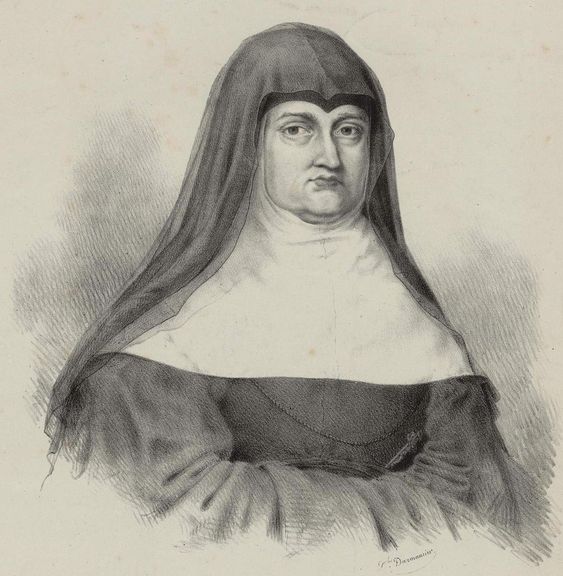
St. Joan de Lestonnac

When they lived: St. Joan de Lestonnac lived from November 27, 1556, to February 2, 1640.

Where they lived: St. Joan de Lestonnac primarily lived in Bordeaux, France. She was born in Bordeaux and spent much of her life there.

Notable world events during the time of their life:

  • The Age of Exploration (late 15th to 17th centuries): This era saw significant voyages of exploration and discovery, including Christopher Columbus’ journey to the Americas, Magellan’s circumnavigation of the globe, and the opening of new trade routes. These events reshaped the known world and led to the exchange of cultures, ideas, and goods.
  • The Thirty Years’ War (1618-1648): A devastating conflict that engulfed Europe, the Thirty Years’ War had profound political and religious implications. It was a complex web of conflicts involving various European powers and resulted in significant shifts in territorial boundaries and the balance of power.
  • The Scientific Revolution (16th to 17th centuries): During St. Joan de Lestonnac’s lifetime, the Scientific Revolution was underway. Figures like Galileo Galilei, Johannes Kepler, and Isaac Newton were making groundbreaking discoveries in astronomy, physics, and mathematics, challenging traditional views and laying the foundation for modern science.
  • The English Civil War (1642-1651): This conflict between the monarchy and Parliament in England had repercussions not only for English society but also for the development of constitutional monarchy and democratic principles.

Their patronage: St. Joan de Lestonnac is known as the patron saint of widows, abused women, and those who suffer from in-law problems. She also holds patronage over the victims of broken marriages, reflecting her dedication to supporting women in challenging circumstances.

Early Life

Despite the political and religious climate into which she was born,Saint Joan de Lestonnac led a devout Catholic life.

Saint Joan was born in Bordeaux, France, on the 27th of December, 1556. Her family was a distinguished and rich member of the Kingdom of France.

Her father was said to be a Catholic named Richard de Lestonnac, who was a respected member of the Legislative Arm of Bordeaux. Her mother was Jeanne Eyquem.

Saint Joan’s mother was a Calvinist and tried to convince Joan to share her faith. Joan vehemently refused and instead pursued her devotion to the Catholic faith.

Her mother was unimpressed, but she was supported by her father and uncles.

Saint Joan was 17 when she became betrothed to Gaston de Montferrant, who was at that time Baron of Landiras.

The marriage was a very happy one, and Saint Joan had seven children with Gaston de Montferrant. Unfortunately, only four of the seven children survived.

Life continued as usual until tragedy struck again.

In 1597, when Saint Joan de Lestonnac was 41 years old, her husband passed away.

She was shattered. They had been together most of her life, and without him, she felt alone. Seven months after the death of Gaston de Montferrant, her father and uncle passed away.

Regardless of her pain, she made sure that she raised her surviving children properly. She made sure to provide for them, and by the time they were old enough to handle responsibilities, she decided to pursue a religious life.

Dedication and Devotion

At the age of 46 in 1602, Saint Joan de Lestonnac went to Toulouse and joined the Cistercian Monastery. There, she was given the Christian name Jeanne of Saint Bernard and dedicated her life to working for God.

At Toulouse, she prayed fervently, fasted constantly, and took a vow of poverty, making it a point to restrain herself from vanity. This went on for six months, until her body could no longer withstand the strain.

Saint Joan fell ill and had to leave the monastery to recuperate. She traveled back to her estate, where she lived for some time.

At her estate, she continued to pursue religion, but in a different way. Saint Joan focused on providing for the poor and sick.

She began to set up meetings with other young women, whom she taught about religion. As much as she was interested in teaching others and being a source of hope for them, she also needed mentors of her own. This caused her to adopt the lives of Saints like Saint Scholastica.

When Saint Joan was 49, Bordeaux was struck by the plague. Many died, and many were left seriously ill.

Touched by the misery that had touched the land, she set out back to her hometown. Risking her life, she went around preaching, praying, and providing for the sick.

Legacy

Saint Joan’s brother, who was a Jesuit, introduced her to Jean de Bordes and François de Raymond. These two elderly men were Jesuit fathers and were interested in setting up a school.

They invited Saint Joan de Lestonnac to establish a female-only school for the daughters in the area. Saint Joan set up a cloistered community of sisters who doubled as teachers for the children.

This Benedictine cloistered community was named the Compagnie de Notre-Dame and authorized in 1607 by Pope Paul V.

The establishment had initially been placed near the a priori but was later moved to an empty monastery on rue du Hâ.

The monastery continued to grow, and soon there were different schools for girls in different towns.

Death and Canonization

Saint Joan de Lestonnac died at the age of 84 in France in 1640.

At the time of her death, there were said to be about 30 schools in total.

Saint Joan de Lestonnac was canonized on May 15, 1949. She is celebrated by the Catholic Church on the same date as her canonization.

5 Interesting Facts About St. Joan de Lestonnac

  1. Did you know that Saint Joan Lestonnac is the patron saint of abuse?
    victims and widows?
  2. Did you know that Saint Joan Lestonnac was chased out of the
    monastery as a conspiracy by one of the sisters? The sister wanted
    to wield authority. She later repented, but Joan refused to become
    superior once again.
  3. Did you know that Saint Joan Lestonnac had a vision of Saint Mary?
    Saint Mary showed her that she was going to help lost children.
  4. Did you know that Saint Joan Lestonnac’s community now has over 3000
    sisters in more than 17 countries?
  5. Did you know that Saint Joan thought she was going to die from her
    illness?

Prayer to St. Joan de Lestonnac

Dear God, when life is not going my way, I want other people to make it right again. I sometimes choose to shower my unhappiness on whomever I meet. Help me to concentrate on your blessings this day so that I can be an inspiration to others and reflect my faith in you.

Source:[https://www.smp.org/resourcecenter/resource/7472/]{.ul}
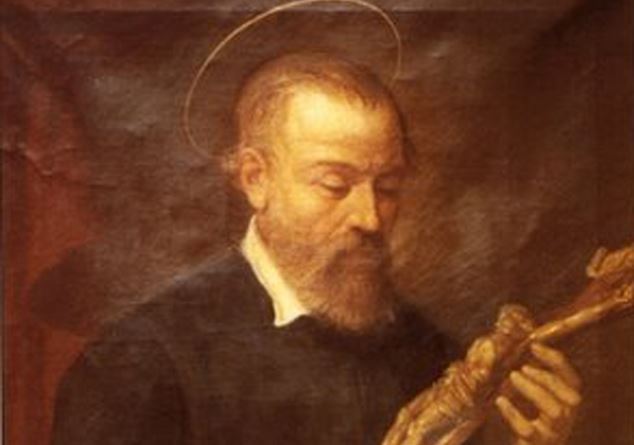
St. Jerome Emiliani

When They Lived:

St. Jerome Emiliani, also known as St. Jerome Aemilianus, lived from 1486 to 1537.

Where They Lived:

St. Jerome Emiliani was born in Venice, Italy, and spent most of his life in various parts of Italy, including Venice, Treviso, and Somasca.

Notable World Events During Their Time:

  • 1492 – Columbus’s First Voyage: Christopher Columbus embarked on his first voyage to the Americas, opening up new horizons for exploration and discovery.
  • 1517 – Martin Luther’s Ninety-Five Theses: Martin Luther’s posting of the Ninety-Five Theses marked the beginning of the Protestant Reformation.
  • 1520s – Renaissance and Scientific Advancements: The Renaissance witnessed a flourishing of art, culture, and science, with figures like Leonardo da Vinci, Michelangelo, and Copernicus challenging conventional thinking.
  • 1521 – Magellan’s Circumnavigation: Ferdinand Magellan’s expedition completed the first circumnavigation of the globe.
  • 1529 – Ottoman Siege of Vienna: The Ottoman Empire’s failed siege of Vienna marked a significant event in the struggle between Christian Europe and the Ottoman Empire.
  • 1534 – Act of Supremacy: King Henry VIII’s Act of Supremacy declared the English monarch as the supreme head of the Church of England.

Their Patronage:

St. Jerome Emiliani is recognized as the patron saint of orphans and abandoned children. His life’s work was dedicated to providing care and education to these vulnerable youngsters. St. Jerome Emiliani’s story is particularly intriguing due to his transformation from a soldier and a wealthy socialite to a compassionate humanitarian. After his conversion, he founded orphanages and educational institutions, contributing to the well-being of countless children. His legacy serves as a reminder of the transformative power of compassion and the potential for individuals to make a positive impact on society, regardless of their background.

Freed From the Chains

Jerome Emiliani was born in 1486 in Venice, Italy. He belonged to a wealthy and noble family. He became an outstanding soldier and was put in command of a fortress high in the mountains. While he was defending the post given to his authority, some troops of Maximilian I invaded Jerome’s jurisdiction. Eventually, he was taken prisoner and thrown into a dungeon.

Jerome was kept chained in a miserable prison. In that dark prison, Jerome had a lot of time to think. While he was in pitiful seclusion, Jerome began to regret the careless and irreligious life he had been living. He was remorseful for wasting several years living an immoral life. He was sorry that he had thought almost nothing about God. In his misery, Jerome gradually learned how to pray.

Jerome prayed to the Blessed Virgin Mary. He made a vow that he would change his life if she would help him. Not long after, his prayers were answered. Jerome was able to escape to safety. It is said that, with a heart filled with gratitude, Jerome went straight to church. There, he hung his prison chains in front of the Blessed Mother’s altar.

A New Life

Jerome returned to Venice, where he took charge of the education of his nephews. At the same time, he began studying for the priesthood. After his ordination to the priesthood, he devoted himself to works of charity. His special concern was for the many homeless and poor orphans, mostly children, he found living in the streets. Moved by their pitiful situation, Fr. Emiliani rented a house for them. He fed them and gave them clothes. He also devoted his time to instructing and teaching them about the truths of the Catholic faith.

In the years after his ordination to the priesthood, circumstances called Fr. Emiliani to a decision and a new mission. Famine and plague broke out in the northern regions of Italy. He began caring for the sick and feeding the hungry at his own expense. While he was serving the poor and the sick, Fr. Emiliani resolved to devote himself and even his property solely to others, most especially abandoned children. Driven by such a noble desire to serve, he founded three orphanages, a shelter for penitent prostitutes, and a hospital.

Apostle of the Poor

Later on, around the year 1532, Fr. Emiliani and two other priests started a religious congregation of men that he called the Company of the Servants of the Poor. Their charism was to care for the poor, especially the orphans, and to teach the young. He also did all he could for the poor peasants. He even worked with them in the fields. While working by their side, Fr. Emiliani would talk to them about God’s goodness and share with them the Gospel of Christ.

Fr. Emiliani was a gift to the people of his time and an inspiration to all. While caring for the victims of the plague, Fr. Emiliani himself fell ill. He died in 1537. He was canonized as a saint by Pope Benedict XIV in 1767. His feast day is February 8.

Five Interesting Facts About St. Jerome Emiliani

  1. In 1928, Pope Pius XI named St. Jerome Emiliani the patron saint of orphans and homeless children.
  2. St. Jerome Emiliani became the mayor of Treviso while studying for the priesthood.
  3. St. Jerome Emiliani is believed to have developed the question-and-answer catechism technique for teaching children religion.
  4. The Company of the Servants of the Poor, founded by St. Jerome Emiliani, is now known as the Clerks Regular of Somasca, named after the town of Somasca, where they started and where they founded a seminary.
  5. St. Jerome Emiliani shares the celebration of his liturgical feast with St. Josephine Bakhita on February 8.

Prayer to St. Jerome Emiliani

O God, Father of mercies ,who sent Saint Jerome Emiliani as a helper and father to orphans, grant, through his intercession, that we may preserve faithfully the spirit of adoption, by which we are called, and truly are, your children. Through our Lord Jesus Christ, your Son, who lives and reigns with you in the unity of the Holy Spirit,God, for ever and ever Amen.

St. James the Lesser

When they lived:

St. James the Lesser, also known as James the Just, is believed to have lived during the first century AD. His exact birth and death dates are not definitively known, but he is thought to have been born around 1 AD and died around 62 AD.

Where they lived:

St. James the Lesser lived in Jerusalem, a city of immense historical and religious significance, nestled in the heart of the Holy Land. As a central hub of trade, culture, and spirituality, Jerusalem provided the backdrop for many key events in his life.

Notable world events during the time of their life:

  • Roman-Jewish War (66-73 AD): St. James lived during a tumultuous period marked by conflicts between the Jewish population and Roman authorities. The Roman-Jewish War, which started a few years after his death, resulted in the destruction of the Second Temple in 70 AD and had a profound impact on the Jewish diaspora.
  • Great Fire of Rome (64 AD): A devastating fire swept through Rome, destroying a significant portion of the city. The blame for the fire was shifted onto the Christian community, leading to the persecution of Christians and further shaping the early Christian narrative.
  • Nero’s Persecution (64-68 AD): St. James witnessed the brutal persecution of Christians under the Roman Emperor Nero. This period of hostility towards Christians contributed to the strengthening of their faith and the spread of the Christian message.
  • Development of Early Christianity: St. James the Lesser played a vital role in the early Christian Church, participating in the Jerusalem Council around 50 AD. This council addressed the integration of non-Jewish believers into the Christian community, emphasizing the inclusivity and universality of the faith.
  • Hellenistic Influence: During St. James’ lifetime, the influence of Greek culture and philosophy was prominent in the Mediterranean world. This cultural backdrop likely influenced the ways in which early Christians articulated and defended their faith.

Their patronage:

St. James the Lesser is often recognized as the patron saint of various causes and professions. His patronage includes:

  • Laborers and Workers: St. James is a symbol of dedication and hard work, reflecting his role as a carpenter and his commitment to spreading the teachings of Christ.
  • Pharmacists: He is also considered a patron of pharmacists due to his symbol being a staff entwined with serpents, resembling the Rod of Asclepius, an ancient symbol associated with healing.
  • Social Justice: As a figure known for his commitment to justice and equity, St. James’ life of advocating for the marginalized and vulnerable has made him a patron of social justice causes.

The Other James

Besides James, son of Zebedee and brother of John, there is another James who appears in the Gospels. James is also included in the lists of the Twelve Apostles personally chosen by Jesus Himself. This James is always specified as “the son of Alphaeus” (Matthew 10:3; Mark 3:18; Luke 5; Acts 1:13). Oftentimes, he has been identified with another James who is called “the Younger”, the son of a particular Mary (see Mark 15:40), the same “Mary the wife of Clopas”, who according to the Gospel of John stood at the foot of Jesus’ cross with the Blessed Mother (see John 19:25).

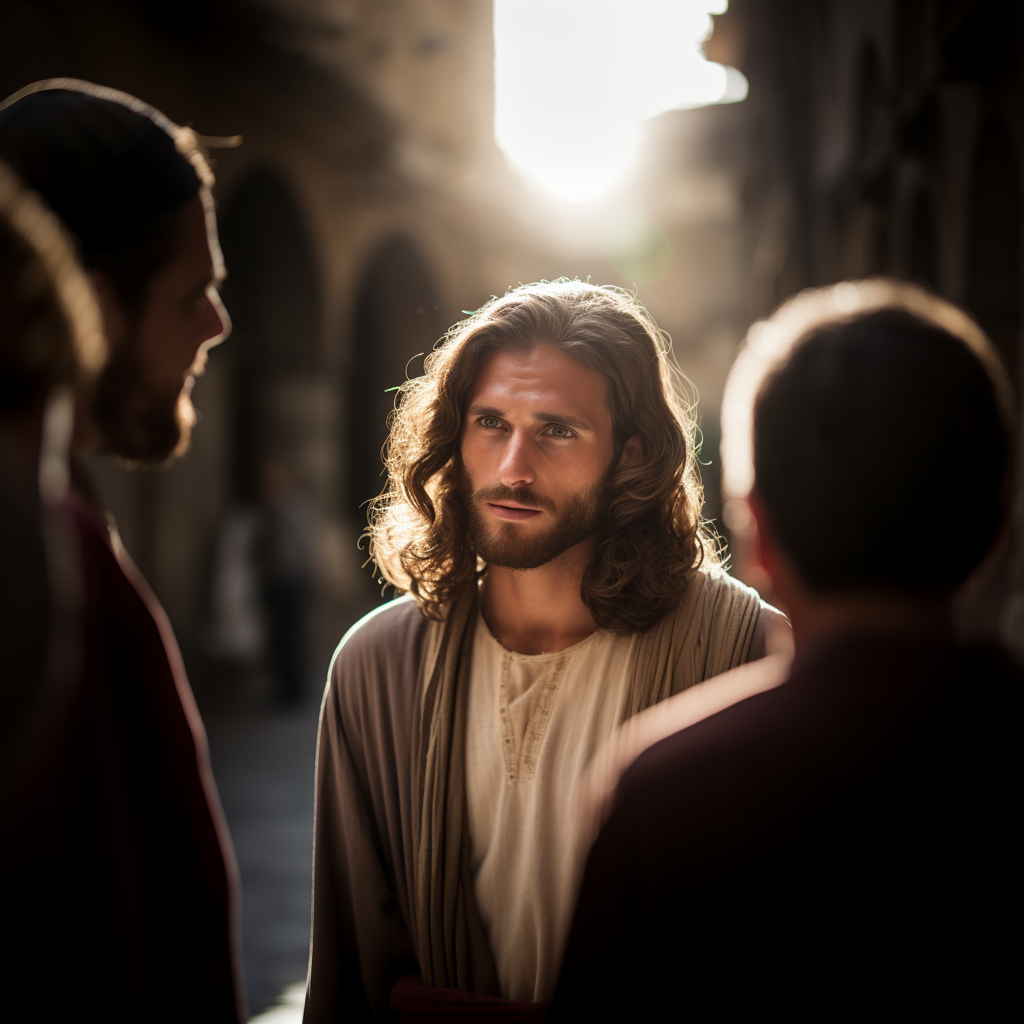
To distinguish this other James, he was given the nickname “the Lesser”. This means that he was younger than the other James, who was called “the Greater.” He also came from Nazareth, and was probably a relative of Jesus (see Matthew 13: 55; Mark 6: 3). According to Jewish custom, he was called one of Jesus’ “brothers” (see Mark 6:3 and Galatians 1:19).St. James the Lesser telling his parents that he is going to follow Christ

His Significant Role in Jerusalem

The Acts of the Apostles emphasized the prominent role of this latter James in the Church of Jerusalem. In the so-called Council of Jerusalem, James the Lesser declared, together with the others who were present, that non-Jews could be accepted into the Church without submitting themselves first to circumcision (see Acts 15:13). Paul attributed a specific appearance of the Risen Jesus to James in 1 Corinthians 15:7. He even named James before Cephas or Peter during his visit to Jerusalem. He described him as a “pillar” of that community on par with Peter (see Galatians 2:9).

Judeo-Christians considered James the Lesser as their major reference point. The Epistle that bears the name “James” is attributed to him and is included in the canon of the New Testament. In its opening verse, he is not presented as a “brother of the Lord”. Rather, he is referred to as a “servant of God and of the Lord Jesus Christ” (James 1:1).

Apostle of Judeo-Christians and Gentile Christians

James the Lesser’s most important act was his intervention in the matter of the unpleasant relations between Christians of Jewish origin and those of Gentile origin. Together with Peter, he made a massive contribution to integrating the original Jewish dimension of Christianity with the need not to impose upon the pagans who were converted the obligation to submit to all the stipulations of the Torah. This decision resulted in complementary results: the inseparable relationship that binds Christianity to Judaism and the retention of the Christians sociological identity, which they would have lost had they been coerced to follow the precepts of the Mosaic Law.

The Jewish historian Flavius gives the oldest information about the death of James the Lesser. In his Jewish Antiquities, written in Rome around the end of the first century, he said that James the Lesser’s death was decided on an illegal initiative by Ananus the High Priest, son of the Ananias mentioned in the Gospels. In the year 62, he took advantage of the growing gap between the deposition of Festus, a Roman Procurator, and the arrival of Albinus, his successor. James was handed over for stoning and was beaten with clubs. His feast day is observed on May 3.

5 Interesting Facts About St. James the Lesser

  • Along with St. Joseph, St. James the Lesser is the patron saint of the dying. He is also the patron saint of fullers, those who clean, shrink, and thicken cloth, hatters, and druggists.
  • St. James the Lesser is depicted in Christian art holding a fuller’s club, the instrument used to deliver the blow that killed him.
  • St. James the Lesser and St. Philip, another Apostle, have the same feast day.
  • St. James the Lesser is believed to have preached in Palestine and Egypt.
  • The apocryphal Proto-Gospel of James, which exalts the holiness and virginity of Mary, Mother of Jesus, is particularly associated with the name of St. James the Lesser.

Prayer to St. James the Lesser

O Glorious Saint James, you were our Lord’s cousin and, at the same time, his friend and follower. You wrote that every good and perfect gift comes to us from the Father of Light and that faith without works is useless. You preached the divinity of Jesus until your death as a martyr. Obtain for us from the Father of Light the great gift of a living faith in Jesus’ divinity, which will inspire us to unstinting labor in the service of God and our fellow human beings and enable us to reach our heavenly destiny. Amen.

St. James the Greater

When They Lived

Saint James the Greater, also known as James, son of Zebedee, is believed to have lived during the 1st century AD. His exact birth and death dates are not definitively known, but he is generally thought to have been born around 1-6 AD and died around 44-48 AD.

Where They Lived

Saint James the Greater lived in Galilee, a region in ancient Palestine. He was born in the fishing village of Bethsaida and later resided in Capernaum.

Notable World Events During Their Time

  • The Roman Empire’s Expansion: During Saint James the Greater’s lifetime, the Roman Empire continued its expansion and consolidation of power, leading to significant political and cultural changes across Europe, the Mediterranean, and parts of Asia.
  • The Crucifixion of Jesus Christ: Saint James was one of the twelve apostles of Jesus Christ and witnessed the crucifixion and resurrection of Jesus, which had profound spiritual and religious implications for the emerging Christian faith.
  • Great Fire of Rome (64 AD): A devastating fire swept through the city of Rome during the reign of Emperor Nero. The fire’s aftermath led to significant urban planning changes and accusations against Christians for causing the fire, resulting in persecutions.
  • Martyrdom of Stephen: Saint Stephen, one of the early Christian deacons, was stoned to death for his faith in Jerusalem. This event marked one of the earliest recorded instances of Christian martyrdom.
  • Boudica’s Revolt (60-61 AD): In Roman Britain, the Iceni tribe, led by Queen Boudica, revolted against Roman rule. The rebellion had socio-political implications for the region and highlighted the complexities of Roman colonization.
  • Hellenistic and Jewish Influences: The blending of Hellenistic culture and Jewish traditions during this time influenced the philosophical, religious, and cultural landscapes of the Mediterranean world.
  • Ptolemaic Legacy in Egypt: Although the Ptolemaic dynasty had ended with the death of Cleopatra in 30 BC, the impact of Greek culture and administration in Egypt still left its mark on the region during Saint James the Greater’s lifetime.

Patronage

Saint James the Greater is the patron saint of various groups and causes, including pilgrims, laborers, equestrians, and veterinarians. He is particularly venerated as the patron saint of Spain, where the famous pilgrimage route known as the Camino de Santiago attracts thousands of pilgrims each year to his shrine in Santiago de Compostela. The Camino holds historical, spiritual, and cultural significance, drawing people from all walks of life to embark on this transformative journey.

Little Details of James the Greater

Nothing is known about the early life of St. James the Greater. However, it was already established that he was one of the Apostles of Jesus Christ. He was thought to be the cousin of Jesus Himself, as the son of the Blessed Virgin Mary’s sister and the brother of Jude Thaddeus. He was a fisherman with his brother John, Zebedee, their father, and their partner, Simon. John and James were followers of John the Baptist. Later on, they became disciples of Jesus.

One of Jesus’ Close apostles

In the Gospels, James, along with his brother John, were called by Jesus (see Matthew 4:18–22; Mark 1:19–20; Luke 5:1–11). They left their work as fishermen and became “fishers of men”. James, John, and Peter were present at Jesus’ events recorded in the Gospels, such as:

  1. Healing of Jairus’ daughter: “He did not allow anyone to accompany him inside except Peter, James, and John, the brother of James. When they arrived at the house of the synagogue official, he caught sight of a commotion with people weeping and wailing loudly. So he went in and said to them, “Why this commotion and weeping? The child is not dead but asleep.” And they ridiculed him. Then he put them all out. He took along the child’s father and mother and those who were with him and entered the room where the child was. He took the child by the hand and said to her, ‘Talitha koum,’ which means, ‘Little girl, I say to you, arise!’ The girl, a child of twelve, arose immediately and walked around.” (Mark 5:37-42)
  2.  The transfiguration: “After six days, Jesus took Peter, James, and John his brother and led them up a high mountain by themselves. And he was transfigured before them; his face shone like the sun, and his clothes became white as light.” (Matthew 17:1-2)
  3.  and His agony in the Garden of Gethsemane: “Then they came to a place named Gethsemane, and he said to his disciples, ‘Sit here while I pray.’ He took with him Peter, James, and John and began to be troubled and distressed. Then he said to them, ‘My soul is sorrowful even to death. Remain here and keep watch.’” (Mark 14:32-34)

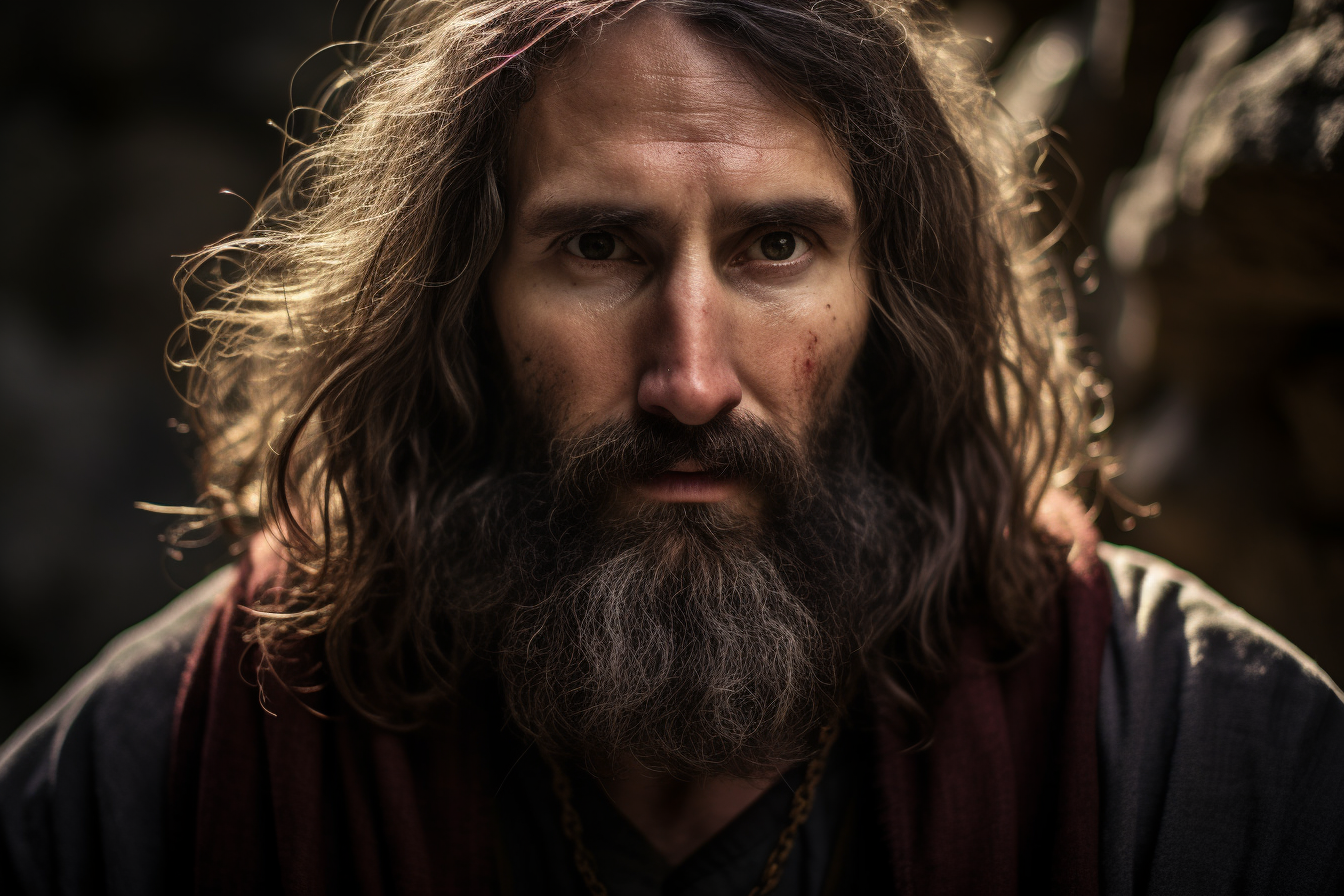
St. James the Greater sitting in field with Jesus

Jesus called the two brothers James and John Boanerges,” which means “sons of thunder” (see Mark 3:17). This was because they sometimes lost their tempers. On their journey, the people of a village turned them away. Upset with this, James and John grew angry that the villagers would not welcome Jesus. They asked Jesus if He wanted to call down fire to destroy the place. Jesus had to correct them.

James’ Mission and Martyrdom

After the crucifixion and resurrection of Jesus Christ, James made a pilgrimage to the Iberian Peninsula to proclaim the Gospel. However, when he returned to Judea, he was arrested. In the year 44, he was beheaded by King Herod Agrippa I. His execution was detailed in Acts of the Apostles (chapter 12:1-3): “About that time, King Herod laid hands upon some members of the church to harm them. He had James, the brother of John, killed by the sword, and when he saw that this was pleasing to the Jews, he proceeded to arrest Peter also.”

According to tradition, as he was not allowed to be buried following his martyrdom, James’ remains were transported to the Iberian Peninsula (modern-day Galicia) and were said to be buried in Compostela, Spain, by some of his followers. His remains were discovered and moved to a tomb in the ninth century. Today, his relics are found in the Cathedral of Santiago. Because Santiago de Compostela is the most frequently visited place pilgrims migrate to after Rome and Jerusalem, Pope Leo declared it a shrine. His feast day is July 25.

Five Interesting Facts About St. James the Greater

  • St. James the Greater was the first Apostle to be martyred.
  • St. James the Greater was called “the Greater” because he was either older or taller than the other apostle named James, son of Alphaeus.
  • St. James the Greater is the patron saint of pilgrims, laborers, rheumatism, several Latin American countries, and Spain.
  • In Christian art, St. James the Greater is represented in the garb of a pilgrim, with a staff, gourd, and scallop shell.
  • St. James the Greater is often also depicted riding a white horse into battle. According to legend, during the battle of Clavijo, he suddenly appeared on a white horse, waving aloft a white standard, and leading the Christians to victory.

Prayer to St. James the Greater

Almighty, ever-living God,  who consecrated the first fruits of your Apostles by the blood of Saint James, grant, we pray, that your Church may be strengthened by his confession of faith and constantly sustained by his protection. Through our Lord Jesus Christ, your Son, who lives and reigns with you in the unity of the Holy Spirit, one God, for ever and ever Amen.

St. Isidore of Seville

When they lived: St. Isidore of Seville, also known as Isidore the Elder, lived from around 560 AD to April 4, 636 AD. He was a prominent scholar, theologian, and archbishop during the Visigothic period in Spain.

Where they lived: St. Isidore lived in the city of Seville, located in present-day Spain. During his time, Seville was a thriving cultural and religious center in the Visigothic Kingdom.

Notable world events during the time of their life:

  • Justinian’s Plague (541-542 AD): This devastating pandemic, also known as the Plague of Justinian, swept through the Eastern Roman Empire, including parts of Spain. It is estimated to have killed a significant portion of the population, altering the course of history.
  • Rise of Islam (7th century AD): The birth of Islam and the rapid expansion of the Islamic Empire had a profound impact on the geopolitical landscape of the Mediterranean world. While St. Isidore lived a few decades before Islam’s emergence, its influence would soon reach Spain.
  • Byzantine-Sassanid Wars (602-628 AD): A series of conflicts between the Eastern Roman (Byzantine) Empire and the Sassanian Persian Empire that led to significant territorial changes in the Middle East. These wars had repercussions throughout the Mediterranean region.
  • First Council of Toledo (589 AD): This council was a significant event in the history of the Visigothic Church. It aimed to unify religious practices, address heresies, and establish canons that would shape the development of the Spanish Church.
  • Gregory the Great’s Papacy (590-604 AD): Pope Gregory I, known for his theological contributions and efforts to consolidate papal authority, had a lasting impact on the Western Church. His works and teachings influenced scholars like St. Isidore.

Patronage:

  • Internet and Computers: In the modern age, St. Isidore’s association with knowledge and learning has led to his designation as the patron saint of the internet and computers. This symbolic connection highlights his historical role in preserving and advancing knowledge.
  • Students and Scholars: St. Isidore’s prolific writings, including his influential “Etymologies” (also known as “Origins”), earned him the reputation of a great scholar. He is invoked by students and scholars seeking guidance in their academic pursuits.
  • Farmers and Rural Life: St. Isidore’s deep connection to rural life comes from his upbringing in a farming family. He is seen as a protector of crops and animals, reflecting his humble origins and his devotion to the well-being of rural communities.
  • Archivists and Libraries: Given his extensive literary contributions and efforts to collect and organize knowledge, St. Isidore’s patronage extends to archivists, librarians, and anyone involved in preserving and managing information.
  • Historians: St. Isidore’s writings provide valuable insights into the history, culture, and religious practices of his time, making him an inspiring figure for historians and those interested in the past.

The Two Brother Bishops of Seville

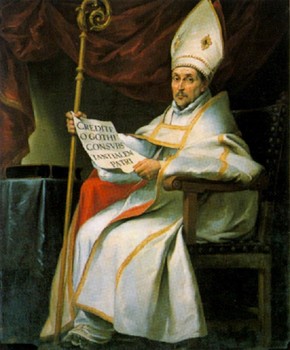
St. Isidore of Seville was born in Cartagena, Spain, around the year 560. His brother, Leander, the Archbishop of Seville, was an important influence on him. Isidore developed a commitment to study, prayer, and intense work for the good of the Church. In turn, Isidore joined his brother’s mission to convert the generally heretical Visigoths who had invaded Spain.

When Leander died around the year 599, Isidore succeeded him as Seville’s archbishop. Isidore inherited his brother’s responsibility for Church affairs during an intense period of change as the institutions of the Western Roman Empire gave way to the culture of the barbarian tribes. For thirty-seven years, he led the Spanish Church through a period of intense religious development and renewal. He also organized representative councils that established the structure and discipline of the Church in Spain.

Preserver of Knowledge and Civilization

In 633, at the Council of Toledo, Archbishop Isidore obtained a decree that required the establishment of a school in every diocese. These schools taught almost every branch of knowledge, which includes the liberal arts, law, medicine, Hebrew, and Greek. This reflected the bishop’s broad interest. Isidore’s establishment of cathedral schools laid the foundation for medieval universities and for education in the West.

For the welfare of the Church and civilization, the archbishop was determined to preserve the wisdom and knowledge of the past. He carefully maintained the fruitful synthesis of classical Roman culture and the Christian faith. He was also serious about preventing false teachings from destroying the unity of the Church in Spain.

Lover of the Poor

With Isidore leading, a series of local councils reinforced the orthodoxy of the Church of Spain against the erroneous teachings about Jesus Christ and the Holy Trinity. He firmly emphasized that the systematic and extensive education of the clergy was a necessary means of guarding the faithful against many heresies. Isidore was known as a prolific writer and a diligent leader of the Church. Above all, he did not neglect the poor. He served and helped them. Throughout his life, Isidore lived alone so that he could help the poor.

His writings attest to this love and compassion he had for the poor: “Indeed, just as we must love God in contemplation, so we must love our neighbor with action. It is therefore impossible to live without the presence of both the one and the other form of life, nor can we live without experiencing both the one and the other.” In the last months of his life, Isidore offered a moving testament to these words. He intensified his charitable outreach to the less fortunate. Many people from various places who were in need flocked to his residence as he offered his last works of mercy on earth.

On April 4, 636, the holy Archbishop Isidore died in peace. His feast day is April 4. He was canonized as a saint by the Roman Catholic Church in 1598 and declared a Doctor of the Church in 1722.

5 Interesting Facts About St. Isidore of Seville

  • St. Isidore of Seville had three siblings: Leander, Fulgentius (both of whom became bishops), and Florentina, who became a nun. They were also canonized as saints.
  • St. Isidore of Seville compiled the Etymologiae, the first encyclopedia written from a Catholic perspective.
  • St. Isidore of Seville is sometimes called “the schoolmaster of the Middle Ages” because his books and schools helped shape the education and culture of medieval Europe.
  • Shortly before his death, St. Isidore of Seville had two friends clothe him in sackcloth and rub ashes on his head so that he could come before God as a poor penitent.
  • Pope John Paul II named St. Isidore of Seville the patron saint of internet users.

Prayer to St. Isidore of Seville

Graciously hear the prayers, O Lord, which we make in commemoration of Saint Isidore, that your Church may be aided by his intercession, just as she has been instructed by his heavenly teaching. Through our Lord Jesus Christ, your Son, who lives and reigns with you in the unity of the Holy Spirit,God, for ever and ever Amen.

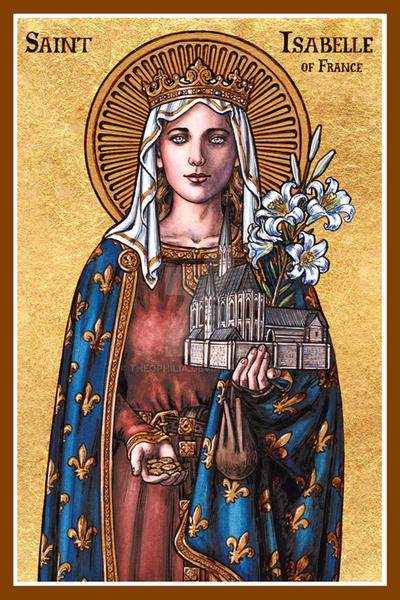
St. Isabel of France

When they lived:

St. Isabel of France, also known as Saint Elizabeth of Portugal, lived from July 4, 1271 – July 4, 1336.

Where they lived:

Isabel was born in the Kingdom of Aragon (modern-day Spain) and later became the Queen Consort of Portugal through her marriage to King Denis.

Notable world events during the time of their life:

  • The Hundred Years’ War (1337-1453): This conflict between the Kingdom of England and the Kingdom of France spanned over a century and had a significant impact on Europe, shaping alliances, borders, and power dynamics.
  • The Black Death (1347-1351): The bubonic plague swept across Europe, Asia, and Africa, resulting in an estimated 75-200 million deaths. This devastating pandemic led to social, economic, and cultural upheavals.
  • The Renaissance (14th-17th centuries): A period of profound cultural, artistic, and intellectual transformation, the Renaissance marked the revival of classical learning, exploration, and advancements in various fields, including science, art, and literature.
  • The Avignon Papacy (1309-1376): Also known as the Babylonian Captivity, this period saw the papal seat moved from Rome to Avignon, France, leading to a series of events that affected the Catholic Church’s authority and organization.
  • Marco Polo’s Travels (1271-1295): The renowned explorer’s journey along the Silk Road to China opened up new avenues of trade, cultural exchange, and geographical knowledge between Europe and Asia.
  • The Invention of the Printing Press (c. 1440): Although slightly after Isabel’s time, Johannes Gutenberg’s invention revolutionized the spread of information and contributed to the democratization of knowledge.

Their patronage:

St. Isabel of France is widely venerated as the patron saint of peace, brides, and victims of adultery. She is also considered a protector against jealousy and death of children. Isabel’s life is particularly fascinating due to her dedication to charitable works, her commitment to peacekeeping efforts, and her personal piety.

Early Life

She was born a French Princess to Louis VII and Blanche of Castile. Her father died when she was only two years old, resulting in her mother being solely responsible for her education.

Marriage, or Was It?

She was later betrothed to Hugh X of Lusignan, and the marriage contract was to be signed a few years later. This was by virtue of the treaty of Vendome; hence, she refused to celebrate the formal wedding as she was determined to remain a virgin.

Her Faith and Works

As expected of her, she pursued traditional feminine interests such as embroidery, but she also had an interest in working in priestly investments and requested spiritual direction from the Franciscans. All this resulted in her becoming more devoted to the Lord.

Even as a young girl, she was known for being fervent in prayer and fasting. Her study of Latin enabled her to pray the liturgy of the hours, which was in Latin.

Every day when she would eat her dinner, she would seat poor people at her table and serve them. She would visit the sick and the poor. She also experienced ecstasies at several points in her life, including near the end of her life.

St. Isabel had a great understanding of humility and sought forgiveness; therefore, every time she received communion herself, she would get on her knees and beg for forgiveness of the few servants that she retained.

St. Isabel refused to live a life of luxury and refused the lavish meals that were offered to her; instead, she preferred meager rations and donated what she saved to the poor. However, she was often ill with stomach ailments that were worsened by her regular fasting.

In May 1254, she was allowed to retain some Franciscan friars as her special confessors, and she was very devoted to them.

Longchamp

She is the founder of the nunnery of Longchamp, which was established in 1256 in the west of Paris. In 1255, her brother King Louis began acquiring access to the necessary land after learning about his sister’s desire to form a community of sorores minors. The building was completed at the beginning of the year 1259.

The monastery was named the Convent of the Humility of the Blessed Virgin Mary, and the nuns were known as Sisters of the Humble Order of Servants of the Most Blessed Virgin Mary.

Even though she never became a nun herself, Saint Isabelle lived at the convent in a separate room from the nuns, and she observed their rules in her own home.

She kept a discipline of silence for most of her days, and she retained her wealth because she was not a nun. This allowed her to continue supporting the poor and carrying out her duties as the superior of the nuns.

During the French Revolution, Longchamp Abbey was suppressed, and the building was up for sale in 1794, but no one was interested. This resulted in the empty building being demolished, and in 1857, the remaining walls were pulled down except for a single tower.

St. Isabelle died at Longchamp on February 23, 1270, and was buried in the Abbey church; however, her body was exhumed nine days after her burial, and apparently it showed no signs of decay. When she died, she was only 45 years old. Pope Leo X beatified her in 1521.

Her Legacy

Saint Isabelle is known as the Patroness of the sick. Her feast day is February 26, and she was declared a saint by Pope Innocent XII in 1696.

5 Interesting Facts About St. Isabel of France

  • She was the younger sister of St. Louis of France.
  • St. Isabelle consecrated her virginity and entire life to God.
    alone.
  • She enjoyed tales of chivalry as well as devotional texts.
  • Once, the Pope wrote to her directly to encourage her to marry the
    king of Jerusalem for the good of Christendom, but her refusal to
    was so humble and wise that he acknowledged her desire to dedicate her
    life to God alone.
  • Even though she consecrated her virginity, she never actually
    became a nun.

Prayer to St. Isabel of France

Dear Lord, we thank You for giving us St. Isabel of France as an example of holiness. Help us to imitate the virtue she showed in her life from the time she was a young girl. St. Isabel of France, you were known to be pious and virtuous by others at court during your childhood. Though you were surrounded by the worldly concerns of courtly life, you were eager to dedicate your life to God. Please bring my petitions before God, Whom you served so eagerly! You grew in devotion and piety as you got older. You longed to devote yourself entirely to God as a consecrated virgin. Pray for me that I may grow in virtue each day of my life. Pray that I may be as eager to devote myself to God as you were. Please also pray for (mention your intentions here). St. Isabel of France, pray for us! In the name of the Father, and of the Son, and of the Holy Spirit. Amen.

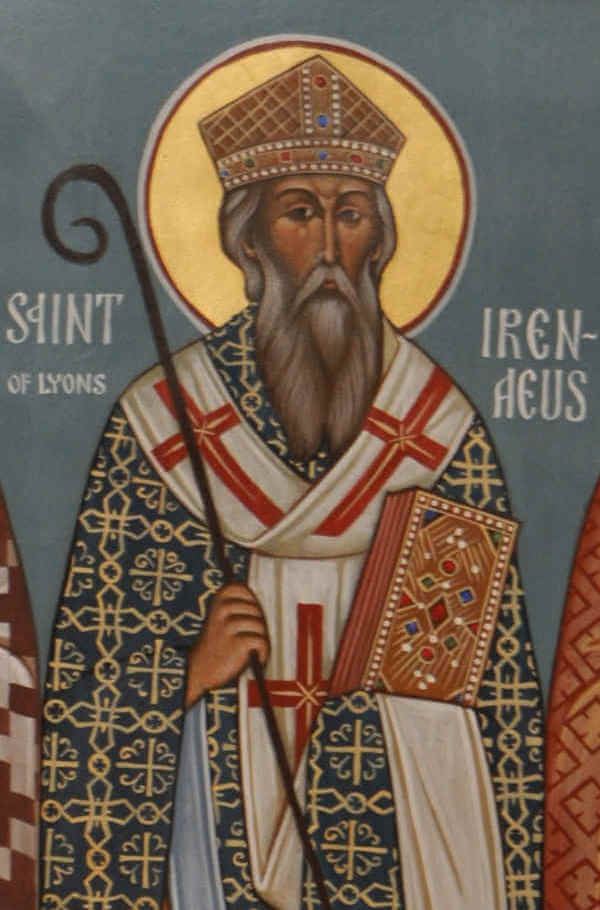
St. Irenaeus

When They Lived

St. Irenaeus lived in the late 2nd century, from approximately 130 AD to 202 AD.

Where They Lived

St. Irenaeus resided primarily in Lugdunum (modern-day Lyon, France), which was a significant center of early Christianity in the Roman Empire.

Notable World Events During Their Time

  • Roman Empire at its Height: St. Irenaeus lived during the Pax Romana, a period of relative peace and stability within the Roman Empire. This allowed for the spread of ideas and culture, including the growth of Christianity.
  • Bar Kokhba Revolt (132-136 AD): A Jewish rebellion against Roman rule in Judea, led by Simon Bar Kokhba. This event had implications for both Judaism and the broader Roman Empire.
  • Antonine Plague (165-180 AD): A pandemic believed to be either smallpox or measles, which devastated the Roman Empire during this time. It had significant socio-economic and demographic impacts.
  • Persecutions of Christians: St. Irenaeus lived during a period of sporadic persecutions of Christians under various Roman emperors, including Marcus Aurelius. These persecutions shaped the early Christian experience and theology.
  • Han Dynasty Collapse (220 AD): The end of the Han Dynasty in China marked a major political and cultural shift in East Asia, impacting trade routes and global dynamics.
  • Claudius Ptolemy’s Works: During St. Irenaeus’ time, the influential astronomer and mathematician Claudius Ptolemy was active, producing works that would shape scientific understanding for centuries.

Patronage

St. Irenaeus is known as the patron saint of theologians and bookbinders. His significant contributions to Christian theology, especially through his defense of orthodoxy against heretical movements, have earned him a place of honor among theologians. As the author of “Against Heresies,” he tackled various theological controversies of his time, asserting the importance of apostolic tradition and the authority of the four Gospels. St. Irenaeus’ emphasis on the unity of faith and his engagement with diverse theological perspectives make him a compelling figure for those interested in the development of Christian doctrine.

A Mission to Rome Saved him.

Little is known about the early life of St. Irenaeus. The facts about him are not extremely clear or plentiful. He was born in Asia, most probably in the city of Smyrna, modern-day Izmir, in Turkey. He was born around 135–140. In his younger years, Irenaeus attended the school of the bishop of Smyrna, St. Polycarp, a disciple in his turn of the Apostle and Evangelist John.

Nothing is known about the exact date of his journey from Asia Minor to Gaul. However, Irenaeus must have moved, coinciding with the first development of the Christian community in Lyons. In 177, Irenaeus was listed in the college of presbyters. That same year, he was sent to Rome with a letter from the community in Lyons, which was given to Pope Eleutherius.

Iranaeus’ mission to Rome spared him from the persecution under Emperor Marcus Aurelius, which resulted in the deaths of at least 48 martyrs, including Pontinus of Lyons, the 90-year-old bishop, who died from mistreatment in prison. Thus, on his return to Lyons around 178, Irenaeus was appointed bishop of the city.

A Zealous Bishop for Lyons

Irenaeus learned the languages of the people in order to evangelize and teach the Germanic and Celtic tribes, whom the Romans considered barbarians. The new shepherd devoted himself to his episcopal ministry, distinguished on account of his missionary zeal and the theological richness of his doctrines. He had a good sense of proportion, a wealth of doctrine, and missionary enthusiasm.

As a writer, Irenaeus pursued a twofold goal: to defend the true and authentic doctrine from the attacks of heretics and to explain the truth of the faith clearly. His works testified to this and exactly corresponded with these aims. The second-century Church was threatened by the so-called Gnosis, a doctrine or movement that believed the faith taught in the Church was only symbolic. The Gnostics claimed they were the ones who could understand what was behind these symbols, thus creating an elitist and intellectualist Christianity. He bravely and intelligently fought the heresy of Gnosticism.

Irenaeus’ term as the Bishop of Lyons came to an end around 202–203. There is a later tradition that he was martyred under the persecution of Septimus Severus. The bodily remains of St. Irenaeus were buried in a crypt under the altar of what was then called the church of St. John but was later known by the name of St. Irenaeus himself. This tomb or shrine was destroyed by the Calvinists in 1562, and all traces of his relics seem to have perished. His feast day is June 28.

Five Interesting Facts About St. Irenaeus

  1. Two of St. Irenaeus’ major writings are still existing today: Against Heresies and The Demonstration of the Apostolic Preaching.
  2. In the course of his writings, St. Irenaeus advanced the development of an authoritative canon of Scriptures, the Creed, and the authority of the episcopal office.
  3. St. Irenaeus is the patron saint of apologists and catechists.
  4. The name “Irenaeus” means “Peacemaker”.
  5. Some sources claim that when he was in Rome, St. Irenaeus studied under St. Justin Martyr, another apologist and philosopher.

Prayer to St. Irenaeus

O God, who called the Bishop Saint Irenaeus to confirm true doctrine and the peace of the Church, grant, we pray, through his intercession, that, being renewed in faith and charity, we may always be intent on fostering unity and concord. Through our Lord Jesus Christ, your Son, who lives and reigns with you in the unity of the Holy Spirit, one God, for ever and ever Amen.

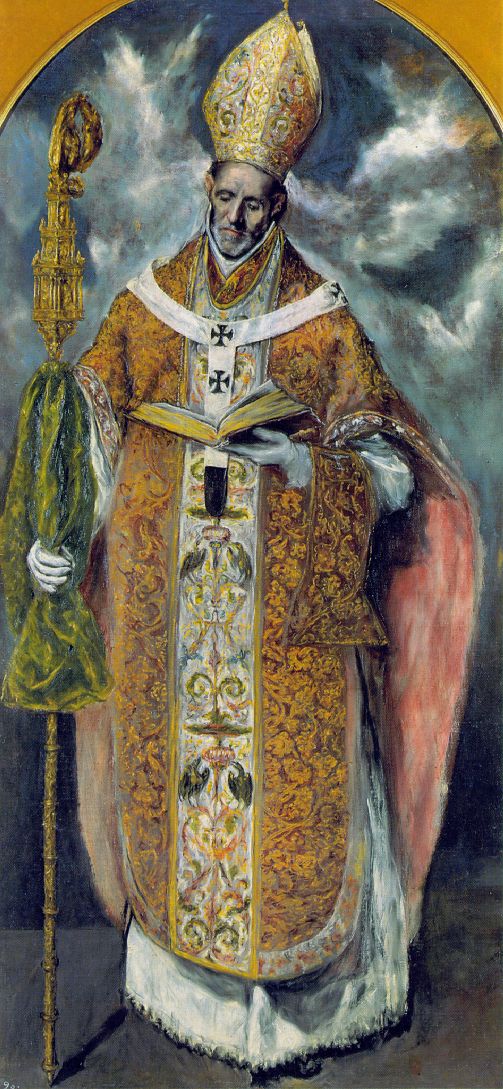
St. Ildephonsus

When they lived: St. Ildephonsus of Toledo, also known as Ildefonso or Ildefonzo, lived during the 7th century. He was born around the year 607 and died in 667.

Where they lived: St. Ildephonsus lived in Toledo, a prominent city in the Kingdom of the Visigoths, located in what is now modern-day Spain.

Notable world events during the time of their life:

  • Islamic Expansion: During St. Ildephonsus’ lifetime, the Islamic expansion into the Iberian Peninsula was underway. The Muslims conquered Hispania in 711, just a few decades after his death, leading to significant changes in the region’s cultural and religious landscape.
  • Byzantine-Sassanian War: The Byzantine-Sassanian War (602-628) occurred during St. Ildephonsus’ early years. This conflict between the Byzantine Empire and the Sassanian Empire had far-reaching effects on the Eastern Mediterranean and the broader geopolitics of the time.
  • Death of Muhammad: The death of the Islamic prophet Muhammad in 632 had a profound impact on the development of Islam and its subsequent expansion beyond the Arabian Peninsula.
  • Synod of Whitby: In 664, the Synod of Whitby took place in England. This synod played a significant role in determining the religious practices and traditions of the Christian Church in England, particularly regarding the calculation of Easter.
  • Plague of Justinian: While the Plague of Justinian primarily occurred before St. Ildephonsus’ birth, its lingering effects and occasional outbreaks continued to shape societies in the Mediterranean region during his lifetime.
  • Development of the Gregorian Chant: The period in which St. Ildephonsus lived saw the gradual development and codification of the Gregorian Chant, which would go on to become a cornerstone of Western liturgical music.

Patronage: St. Ildephonsus is the patron saint of Toledo, Spain, which was his hometown. He is also considered the patron saint of the city’s cathedral. His intercession is often sought for protection against floods and other water-related disasters, which is attributed to a legendary story where the Virgin Mary saved him from drowning. Additionally, he is invoked as a patron of theologians and scholars due to his contributions to theological writings.

Early Life

Saint Ildephonsus, also characterized as Ildefonsus or Ildephonse in some literature, was born in Toledo around 607. His gothic name was Hildefuns, and his parents were noble members of the Visigothic kingdom.

His uncle was Saint Eugenius, An Archbishop at Toledo at that time.

Ildephonsus grew up in a challenging time characterized by wars and diseases. That, however, did not deter the devout young man from focusing on his religion and spirituality.

Saint Ildephonsus was trained and taught by his uncle Eugenius at the start of his religious journey.

After a while, Ildephonsus made it known that he was interested in joining the monastery. His father disagreed, but nothing could convince Ildephonsus otherwise.

He joined the Agali Monastery and became a monk. While serving in the monastery, he established a monastery for nuns.

His first formal religious career began in approximately 632, when he was ordained deacon by Bishop Eladius. By the year 650, Saint Ildephonsus was elected Abbot of the Abbey, where he spent his early life.

While serving as Abbot, his place of power gave him a ticket to attend synods at the 8th and 9th councils of Toledo at the Iberian church. The synods took place around 653 and 655.

After his Uncle passed away in 657, Saint Ildephonsus was considered eligible to fill the empty seat and was thus elected as his successor. He was encouraged by King Reccesvinth to accept the post, and he became Archbishop of Toledo, governing over all the churches.

Dedication and Devotion

In the history of Saint Ildephonsus’ biography, it is mentioned that he had spiritual connections to saints, especially the Virgin Mary.

Archbishop Cixila, the successor of Saint Ildephonsus, wrote about an instance where Saint Ildephonsus had an encounter with Saint Leocadia. He wrote that as Ildephonsus was praying in the presence of Saint Leocadia’s relics, She appeared to him and thanked him for the commitment he showed to the Virgin Mary.

It was also written in history that he had an experience with the Blessed Virgin on the 18th of December, Circa 665. She appeared to him and presented him with a robe as a reward for his devotion.

It is reported that as Saint Ildephonsus and the brethren sang the Hail Mary hymns, the Church was lit up with a bright light, causing most of the congregation to flee with fear. Ildephonsus and the few members and deacons left in the church suddenly saw the Blessed Mother come down from the heavens upon the bishop’s chair.

She applauded his devotion and rewarded him with a chasuble. She injuncted him to only wear the robe during the Marian festival. She then bid him goodbye and disappeared.

In awe of the vision, the authorities promoted Saint Ildephonsus to the metropolitan see, thereby awarding him power over the Iberian Peninsula.

Legacy

Saint Ildephonsus and his writings are highly revered in Spain. He was a prolific writer and was named as one of the first people to address the Mother of Jesus as the Virgin’ as opposed to our Lady’.

His writings are considered monumental, and one of the important works is De Perpetua virginitate Mariae contra tres infideles, which became an extremely important part of religion in Spain. Most of his works spoke of Marian teachings.

It is speculated that Saint Ildephonsus probably wrote the Visigothic Mass of Ascension. He was also a supporter of the Nicene Creed and considered the creed sufficientem scientiam salutarem, meaning sufficient knowledge for salvation.

His writings were extensive and explained by many future writers. Unfortunately, only a few of his writings survived until recent times.

Death and Canonization

Saint Ildephonsus spent nine years serving the Church. He died in office on January 23, 667, after living a life of piety and sanctity.

He was buried in the city’s basilica, the Church of Santa Leocadia.

Saint Ildephonsus’ vision of the Virgin was considered so sacred that even when the Toledo Basilica was transformed into a Mosque, the part where the vision occurred was kept sacred. Many pilgrims came from far and wide to pray to the stone on which The Virgin reportedly stepped during the vision.

Saint Ildephonsus was canonized Pre-Congregation and is celebrated every year on the day of his death, January 23.

5 Interesting Facts About St. Ildephonsus

  1. Did you know that Saint Ildephonsus is considered the patron saint?
    of Toledo?
  2. Did you know that there is more information about Saint Ildephonsus’
    writing than of his personal life?
  3. Did you know that Saint Ildephonsus inaugurated a feast to celebrate
    the vision he had of Mary? The feast was called the Feast of the
    Expectation of the Blessed Virgin Mary and is still honored by
    some people on the 18th of December.
  4. Did you know that the Chasuble Virgin Mary bequeathed unto Saint
    Ildephonsus was said to be from Jesus’ treasury.
  5. Did you know that Saint Ildephonsus is also called Alfonso by some?

Prayer of St. Ildephonsus

Virgin Mary, hear my prayer: Through the Holy Spirit, you became the Mother of Jesus; from the Holy Spirit, may I too have Jesus. Through the Holy Spirit, your flesh conceived Jesus; through the same Spirit, may my soul receive Jesus. Through the Holy Spirit, you were able to know Jesus, to possess him, and to bring him into the world. Through the Holy Spirit, may I too come to know your Jesus. Imbued with the Spirit, Mary, you could say, I am the handmaid of the Lord; be it done unto me according to your word. In the Holy Spirit, lowly as I am, let me proclaim the great truths about Jesus. In the Spirit, you now adore Jesus as Lord and look on Him as Son; in the same spirit,Mary, let me love your Jesus.

[Source:https://www.vaticansite.com/prayer-of-saint-ildephonsus/]{.ul}

St. Ignatius of Laconi

When they lived:

St. Ignatius of Laconi, born on December 17, 1701, lived during the late Baroque period in Europe. He entered
eternal life on May 11, 1781.

Where they lived:

St. Ignatius of Laconi spent his entire life in Sardinia, particularly in the town of Laconi. Nestled amidst the
picturesque landscapes of the Mediterranean island, Laconi was the backdrop to his remarkable journey of faith
and devotion.

Notable world events during the time of their life:

  • Enlightenment Era (17th-18th century): As Ignatius grew up, the Enlightenment was sweeping
    across Europe. Intellectual and cultural transformations were underway, challenging traditional beliefs and
    advocating for reason, science, and individualism.
  • Seven Years’ War (1756-1763): Ignatius lived through the tumultuous years of the Seven
    Years’ War, a global conflict involving major powers of Europe and their colonies. This war had significant
    political, economic, and social repercussions worldwide.
  • Industrial Revolution (18th century): While the Industrial Revolution primarily gained
    momentum in Britain, its effects rippled across Europe during Ignatius’s lifetime. Advances in
    manufacturing, agriculture, and transportation transformed societies and economies.
  • American Revolution (1775-1783): The American colonies’ struggle for independence from
    British rule was a pivotal event during Ignatius’s later years. The revolutionary ideas of liberty and
    self-governance resonated far beyond the Atlantic, influencing political discussions worldwide.
  • Mozart and Beethoven: Ignatius’s lifetime overlapped with the lives of two musical giants,
    Wolfgang Amadeus Mozart and Ludwig van Beethoven. Their compositions revolutionized classical music and left
    an indelible mark on cultural history.
  • Halley’s Comet (1758): Halley’s Comet made a prominent appearance in the skies in 1758,
    during Ignatius’s lifetime. This celestial event fascinated people and spurred scientific curiosity.

Their patronage:

St. Ignatius of Laconi is known as the patron saint of agricultural workers, particularly shepherds and farmers.
His life as a humble shepherd before joining the Capuchin Franciscan Order resonates with those who toil in the
fields and care for animals. Ignatius’s journey from rural simplicity to spiritual significance serves as a
reminder that holiness can be found in the most ordinary of lives.

The Call to Duty

At one point, he conquered a serious illness when he was working in the fields at the age of seventeen, and this prompted him to dedicate his life to God; hence, he entered the religious life, though not as a priest.

He, however, did not join the order of Friars Minor Capuchin as soon as he got well because his father convinced him to wait, as the father was anxious since he depended on St. Ignatius to help in the fields.

In 1721, the horse he was riding panicked, and he was almost thrown off, but he called upon the assistance of Francis of Assisi and renewed the vow that he had made during the initial illness. This time his parents gave him the blessing, and he joined the order.

He was admitted to the convent in Cagliari as per his request only after a friend interceded for him because the superiors there were hesitant because of his health. He then made his profession on November 10, 1722.

He attended the spiritual exercises and excelled. From 1722 up until 1737, he worked at the house’s weaving shed, and his duties involved manual work. From 1737 on, he was an alms beggar, and he assumed that role for forty years.

He was later appointed as the quester of alms based on his modest conduct and humility. He maintained good relationships with people as they realized that as he was begging for alms, he was also spiritually giving back to them. Because of the love people had for him, even those who had barely enough for themselves would also give to him.

He was a notable figure just based on how he conducted himself with such meekness, and his life was quite a sermon. He rarely spoke, and when he did, it was with great affection.

He also instructed the children and the uneducated that he came across. He is also said to have been strict and displayed total obedience to his superiors at all costs. Notably, his sister often wrote to him, asking him to visit her, and he had no intention of honoring that, but when his superiors ordered him to, he visited her.

St. Ignatius had a humble demeanor and had huge concern for the poor, and he mingled with all the people he met. He was also generous towards the sick, and he went out to comfort the sick and urge the sinners to convert.

Even though he had poor health and other infirmities, he continued to work, even though it seemed difficult. He lost his eyesight in 1779, but he continued for the benefit of those around him.

His Legacy

St. Ignatius became known as a wonder worker.

St. Ignatius was beatified on June 16, 1940; he was canonized in 1951, and his remains were entered in Cagliari.

There are two miracles attributed to him that occurred after his death.

St. Ignatius is known as the Patron saint of beggars and students.

On May 11, 2014, a statue dedicated to him was unveiled in Sestu.

5 Interesting Facts About St. Ignatius of Laconi

  1. It is claimed that he performed 121 miracles during his life.
  2. His grave became a place where miracles flourished.
  3. St. Ignatius’ body is still incorrupt.
  4. St. Ignatius was born of a difficult pregnancy, such that his mother
    received the intercession of Francis of Assisi
  5. During his childhood, he referred to the church as his home.

Prayer to St. Ignatius of Laconi

O God, who led Saint Ignatius to the height of holiness along paths of humility, innocence, and charity toward others, grant that, by imitating his virtues, we may put charity on earth into practice, in deeds and in truth. Through our Lord Jesus Christ, your Son, who lives and reigns with you in the unity of the Holy Spirit, one God, forever and ever Amen.

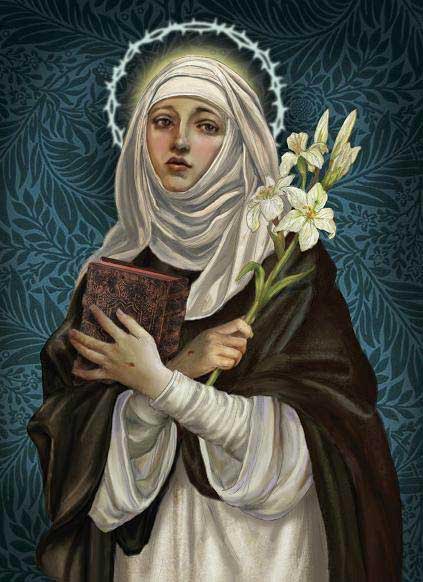
St. Catherine de Ricci

When They Lived:

St. Catherine de Ricci lived from April 23, 1522, to February 2, 1590.

Where They Lived:

St. Catherine de Ricci spent her life primarily in Florence, Italy. She was born and lived in the city, and she eventually joined the Dominican Convent of San Vincent in Prato, a town near Florence, where she spent most of her religious life.

Notable World Events During Their Time:

  • Scientific Revolution (16th-17th century): St. Catherine de Ricci’s lifetime coincided with the beginnings of the Scientific Revolution, a period marked by significant advancements in science and mathematics. Scholars like Copernicus, Galileo, and Kepler were making groundbreaking discoveries that reshaped humanity’s understanding of the universe.
  • Council of Trent (1545-1563): The Council of Trent was a crucial event in the history of the Catholic Church. It addressed various issues raised by the Protestant Reformation and led to reforms within the Catholic Church, as well as the reaffirmation of its doctrines and teachings.
  • Exploration and Colonization: The 16th century saw European exploration and colonization on a global scale. Explorers like Christopher Columbus, Ferdinand Magellan, and Vasco da Gama were undertaking journeys that expanded the known world and had far-reaching cultural, economic, and political consequences.
  • Elizabethan Era: St. Catherine de Ricci’s life also overlapped with the Elizabethan Era in England. Queen Elizabeth I’s reign (1558-1603) was marked by cultural achievements in literature, theater (with the works of Shakespeare), and the arts, contributing to the English Renaissance.

Their Patronage:

St. Catherine de Ricci is known as the patron saint of artists and against temptations. Her life story, deep spirituality, and connection with the Dominican Order make her a source of inspiration for those in creative fields. As a Dominican nun, she dedicated her life to prayer, self-discipline, and a profound connection with God. Her ability to resist personal temptations and maintain unwavering faith serves as a beacon for individuals striving to overcome their own challenges.

St. Catherine de Ricci’s unique experiences as a contemplative nun in Renaissance Italy make her a fascinating figure to explore, bridging the worlds of faith, art, and science during a transformative period in human history. Her story reminds us that even in the midst of societal changes and intellectual advancements, personal devotion and spiritual resilience can leave a lasting impact on the world.

When She Lived:

St. Catherine de’ Ricci, also known as Catherine de’ Ricci, was born on April 23, 1522, and she lived during the Renaissance period, which was a time of great cultural and intellectual growth in Europe.

Where She Lived:

She spent most of her life in Prato, a picturesque town in Tuscany, Italy. This location was significant as it was not only a hub of artistic and cultural activities during the Renaissance but also the setting for many of Catherine’s spiritual experiences.

Notable World Events During Her Life:

  1. The Council of Trent (1545-1563): One of the most significant events in the history of the Catholic Church, the Council of Trent aimed to address the challenges posed by the Protestant Reformation. It led to important reforms within the Catholic Church and shaped the course of Christianity.
  2. The Scientific Revolution (16th-17th centuries): During Catherine’s lifetime, the Scientific Revolution was unfolding, challenging traditional beliefs and paving the way for modern science. This period saw breakthroughs in astronomy, physics, and other fields, leading to a profound change in humanity’s understanding of the universe.
  3. The Age of Exploration: The 16th century was marked by European exploration and colonization of new lands. This era brought about encounters with new cultures, significant navigational advancements, and the expansion of global trade networks.
  4. The Life of Galileo Galilei (1564-1642): Galileo, a renowned astronomer and physicist, lived during Catherine’s time. His discoveries, such as the moons of Jupiter and his support for the heliocentric model of the solar system, had a profound impact on science, even though they also brought him into conflict with the Catholic Church.

Her Patronage:

St. Catherine de’ Ricci is the patron saint of artists and against temptations. This is intriguing as she herself lived during a time of artistic flourishing in Italy, and her devotion to resisting worldly temptations exemplifies her spiritual strength. Her life is an inspiration not just for those in the Catholic faith but for anyone seeking to balance a pursuit of beauty and creativity with a strong moral compass. Her story is a reminder that even in the midst of significant historical events, individuals with unwavering faith can make a lasting impact.

Call to Duty

She began attending a school run by nuns at the age of 6 or 7 after she was enrolled by her father, who was from a family of known bankers and merchants. It is there where her zeal for the devotion towards the passion of Christ was developed. Her aunt was a nun there, and she watched over her and administered her catechesis with the help of other sisters.

She went on to join the Convent of St. Vincent at the age of 14, which is a community of sisters who have separated themselves from the rest of society known as the Third Order of St. Dominic. This community had a strict way of life, and that is what was appealing to St. Catherine.

Life as a Sister

During her training, she faced a lot of challenges, as she would have ecstasies and seem like she was sleeping. All this resulted in her dropping plates and food, resulting in members of the community wondering if she was competent enough to be a sister. They also questioned her sanity. These episodes of ecstasies often happened from Thursday noon to Friday 4 p.m.

By the age of 30, St. Catherine had risen in the ranks to become a prioress; this was because other sisters now had an understanding of her behavior spiritually. She is believed to have miraculously held baby Jesus during some of her visions.

St. Catherine engaged in extreme forms of fasting and other forms of sacrifice for the souls in purgatory. She was reported at one point to have appeared hundreds of miles away from where she was physically. She appeared in a vision to Philip Neri, whom she had maintained a long correspondence with.

In her position as a prioress, St. Catherine was an effective and greatly admired administrator. She was also corresponding with three people who were destined to become Popes. St. Catherine also had an advisory role on different topics for bishops, cardinals, and princes, and her advice was greatly sought after.

St. Catherine gave advice through letters as well as in person, and she was very effective in her work with her priorities in place. She was able to provide her services to all social classes, and there are thousands of letters available that are evidence of that.

All these celestial experiences began when she was 20 and continued for the next 20 years. She served as a prioress for 36 years, and she was known as a kind and considerate superior who was very gentle with the sick. She is also known for always being cheerful and merry, with a friendly personality.

Like a Holy person, many people wanted to be close with her, as she received much attention due to her holiness. She received a lot of visitors.

St. Catherine was able to leave the Catholic church with a hymn of passion. That hymn is sung slowly, and it used to be sung in Dominican houses every Friday of Lent, and it is still being sung in many places.

5 Interesting Facts About St. Catherine de Ricci

  • St. Catherine is believed to have had miraculous visions and
    corporeal encounters with Jesus, both the infant and the adult Jesus.
  • She is believed to have spontaneously bled from the wounds of the
    crucified Christ.
  • A coral ring is reported to have appeared on her finger during
    times of deep prayer, and this ring represented her marriage to Christ.
  • St. Catherine is believed to have been mystically married and
    united with an adult Jesus.
  • St. Catherine had stigmata, which are wounds on those areas that
    Jesus had the nails drilled through during his crucifixion.

Prayer to St. Catherine de Ricci

Father, we pray that St. Catherine will continue to influence people on earth to be great spiritual leaders, just as she did while here among us. She inspired many people, who in turn inspired many others. Give us the grace to die to ourselves, Lord, that we may be vessels, like Catherine, through whom you reach many. In Christ’s name, we pray. Amen.