St. Dominic Savio

When they lived: St. Dominic Savio was born on April 2, 1842, in the village of Riva di Chieri, near Turin, Italy. He lived a short but impactful life, passing away at the tender age of 14 on March 9, 1857.

Where they lived: St. Dominic Savio spent the majority of his life in the beautiful and picturesque Piedmont region of Italy. He grew up in a humble and devout family in a time when industrialization was beginning to reshape the landscape of Europe.

Notable world events during the time of their life:

  1. 1851 Great Exhibition: This groundbreaking event in London showcased the advancements of the Industrial Revolution, with innovative technologies, cultural displays, and architectural marvels. It symbolized the dawn of a new era and had a significant impact on how people viewed progress.
  2. 1848 Revolutions: The year 1848 witnessed a series of revolutionary uprisings across Europe, often called the “Spring of Nations.” These movements aimed for political and social change, advocating for democratic principles. Although not directly related to Catholicism, these events shaped the political landscape of the time.
  3. Charles Darwin’s “On the Origin of Species” (1859): Published a couple of years after St. Dominic Savio’s passing, Darwin’s groundbreaking work laid the foundation for the theory of evolution. This scientific revelation stirred discussions about the relationship between science and religion.

Their patronage: St. Dominic Savio is best known as the patron saint of youth, students, and choirboys. His dedication to holiness from a young age makes him an inspirational figure for the youth of today. He is also a patron for those seeking purity and a model of virtue, reminding us that even in a brief life, one can make a lasting impact on the world through faith, kindness, and devotion.

Holiness Knows No age.

Dominic Savio was born on April 2, 1842, in the village of Riva in northern Italy. His father, Carlo Savio, was a blacksmith, and his mother, Brigida Gaiato, was a seamstress. He had nine siblings. Dominic’s family was poor but hardworking, but most of all, they were devout and pious Catholics.

As a small boy, Dominic loved the Lord and the Church. He showed exceptional piety and devotion in practicing his faith as a Catholic. Dominic never missed attending Mass in their church with his mother. He was often seen kneeling and praying before the Tabernacle. Aside from his prayerfulness, young Dominic was also quickly recognized as an excellent student, studying hard and performing well in school.

Desiring to serve God, he became an altar server. He attended the daily Mass and regularly went to confession. He requested that he receive his first communion at the age of seven, which was not a practice in Italy at the time. However, Dominic’s parish priest was so impressed with the boy’s intelligence on the faith and his piety and love for the Lord that he made an exception to Dominic’s case. The day of his First Communion, said Dominic, was the happiest day of his life. On that day, he wrote four promises in a little book: I will go to Confession often and as frequently to Holy Communion as my confessor allows; I wish to sanctify the Sundays and festivals in a special manner; My friends shall be Jesus and Mary; and Death rather than sin.

Dominic Meets His Guide

Dominic’s teacher spoke highly of him and brought him to Don Bosco‘s attention. In October of 1854, together with his father, young Dominic was personally introduced to Fr. Bosco. At their meeting, Fr. Bosco wanted to test Dominic’s intelligence and understanding of the Catholic faith. He gave him a pamphlet containing apologetics. Fr. Bosco expected him to report the next day, but to the priest’s surprise, Dominic returned to him just ten minutes later, recited the text, and explained its significance.

When asked what he wanted to be, Dominic expressed his desire to become a priest. He asked Fr. Bosco to take him to Turin to attend the Oratory of St. Francis de Sales, to which Fr. Bosco happily agreed. At the Oratory, Dominic studied directly under Fr. Bosco. He worked diligently and asked questions when he did not understand something.

After six months in the Oratory, Dominic delivered a speech about the path to sainthood. However, Dominic’s desire to become a saint deeply troubled him. He wondered how a young person like him would become a saint. Because of his ardent desire, he tried voluntary mortification and penances, with the hope that these would help him grow closer to Jesus and be less concerned with his own desires and needs. When Fr. Bosco learned about this, he quickly corrected Dominic, explaining to him that what he should do instead was devote himself to studies and be cheerful. And so Dominic stopped his physical punishments, and his happy disposition quickly returned.

Holiness Until the End

While he was developing his reputation as an excellent student,Dominic’s health started to fail. Fr. Bosco became concerned about the boy’s situation, so he took him to the doctor, who recommended that the boy be sent home to recover. However, Dominic wanted to stay at the oratory, but Fr. Bosco insisted that he go home. Before he departed, Dominic performed the “Exercise of a Happy Death”, predicting that this would be his final devotion.

After four days in their home, Dominic’s health worsened. He showed little sign of recovery, but Dominic was sure of his impending death. He asked his parents to bring the parish priest so he could make his last confession and be given the last sacrament. He asked his father to read him the prayers for the “Exercise of a Happy Death.” Then Dominic fell asleep. Hours later, he awoke and said to his father, “Goodbye,Dad, goodbye… Oh, what wonderful things I see!” Dominic fell asleep and died within minutes. The day was March 9, 1857.

Detractors argued that Dominic was too young to be canonized and pointed out that he was not a martyr. However, Pope Pius XII beatified him on March 5, 1950, and the same Pope canonized him on June 12, 1954. St.Dominic Savio’s feast day is May 6.

5 Interesting Facts About St. Dominic Savio

  1. St. Dominic Savio is the patron saint of choirboys, the falsely
    accused, and juvenile delinquents.
  2. Pope Pius XII described St. Dominic Savio as “small in size, but a
    towering giant in spirit.”
  3. St. Dominic Savio founded a group at the Oratory called the Company.
    of the Immaculate Conception”, which devoted itself to the then-novel
    idea that Mary was born without original sin, and encouraged added
    devotional focus among its members.
  4. Deeply touched by St. Dominic Savio’s life, St. John Bosco himself
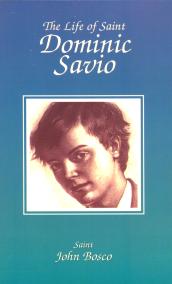
    wrote the young saint’s biography, “The Life of Dominic Savio”, which
    was a major element of his canonization.
  5. St. Dominic Savio’s tomb is located at the Basilica of Mary Help of
    Christians in Turin, Italy

Prayer to St. Dominic Savio

O Saint Dominic Savio, a model of purity, piety, penance, and apostolic zeal for youth, grant that, through your intercession, we may serve God in our ordinary duties with fervent devotion and attain the grace of holy joy on earth, that we may one day love God forever in Heaven. Amen.
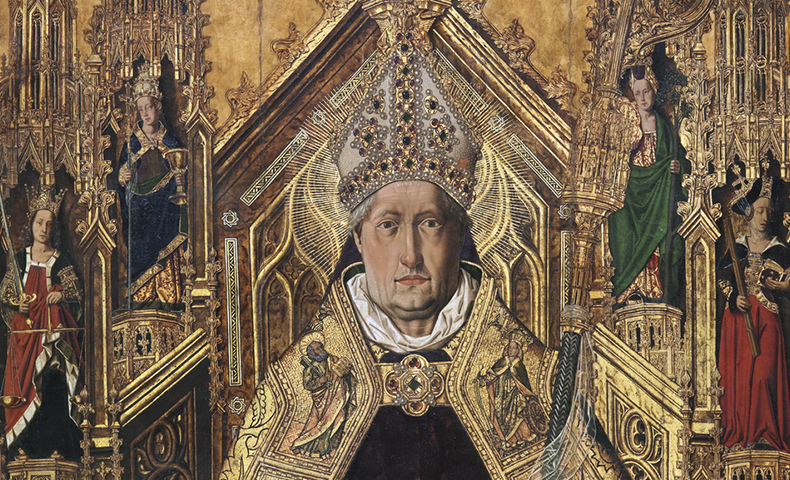
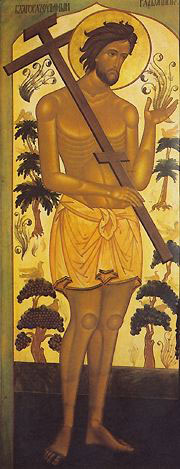
St. Dominic of Silos

When They Lived:

St. Dominic of Silos lived from around 1000 AD to 1073 AD. His life spanned a crucial period in European history, the late 10th and early 11th centuries.

Where They Lived:

St. Dominic lived primarily in the Kingdom of León, which is now part of modern-day Spain. His primary connection is with the town of Silos, where he founded the famous Silos Monastery.

Notable World Events During Their Time:

  • The Reconquista: This was a significant historical process during Dominic’s life. It involved the gradual Christian reconquest of the Iberian Peninsula from the Muslim Moors. The battle for control of various territories in Spain was a defining event during this time.
  • The Investiture Controversy: A major conflict between the Catholic Church and secular rulers over the appointment of church officials. This had significant political and religious implications throughout Europe, highlighting the power struggle between the papacy and various monarchs.
  • The Norman Conquest of England: In 1066, William the Conqueror, a Norman noble, successfully invaded England, leading to the Battle of Hastings. This event reshaped the political and cultural landscape of England and had repercussions across Europe.

Patronage:

St. Dominic of Silos is the patron saint of several causes, including shepherds, pregnant women, prisoners, and the falsely accused. He is also invoked for protection against harmful insects, especially locusts, which were a significant concern for agricultural societies of his time.

Lover of Solitude and Prayer

St. Dominic of Silos was born around the year 1000 in Caas, Navarre, Spain, into a peasant family. As a young boy, he spent much of his time in the fields as a shepherd. This led him to love solitude, silence, and prayer. Later on, he entered the monastery of the Benedictines in Navarre, where he grew in holiness and stature. Years later, he was ordained to the priesthood.

A New Mission

As a priest, Dominic held various leadership positions. He was eventually elected abbot of the Order. However, he and the King of Navarre had a terrible dispute over the Order’s property. Dominic refused to hand over the monastery lands at the king’s demands. As a consequence, he and his two fellow monks were forced to leave the house. They fled to Old Castile and were welcomed by the king there.

In what at first seemed an unpromising location, Dominic and his companions entered the monastery of San Sebastian in Silos. The monastery was an almost dilapidated abbey with weak physical and spiritual administration. It only had six monks and was in terrible shape. Within a brief period of time, Dominic was elected abbot of the monastery. He renewed the spirit of the monastery. He rebuilt its structure, managed its finances, and augmented its works of charity. Under Dominic’s leadership, it became one of the most famous houses in Spain.

Another Saint Named After Him

Dominic died in 1073 in Silos, Spain. He was known for miracles of healing. It was said that there was no illness that could not be cured through his intercession. About 100 years after Dominic’s death, a young woman made a pilgrimage to his tomb. There, St. Dominic of Silos appeared to her and assured her that she would bear another son. The woman was Joan of Aza, and the son she bore grew up to be the “other” Dominic, Dominic de Guzman, the one who founded the Order of Preachers or the Dominicans. St. Dominic of Silos’ feast day is December 20.

Five Interesting Facts About St. Dominic of Silos

  1. St. Dominic of Silos is the patron saint of prisoners, pregnant women, and shepherds.
  2. St. Dominic of Silos was known for miracles of healing that he obtained through prayer. He was also known for his work in ransoming a group of 300 Christian prisoners from the Moors.
  3. The staff used by St. Dominic of Silos was used to bless the queens of Spain. It was also brought to the royal palace whenever a queen of Spain was in labor. This practice ended in 1931.
  4. Today, the monastery rebuilt by St. Dominic of Silos is an abbey of the Benedictine Congregation of Solesmes, housing a library of ancient and rare manuscripts. One of whose products was the magnificent Apocalypse, now found in the British Library.
  5. St. Dominic of Silos preserved the Mozarbic Rite, one of the variants of the Latin Rite, at his monastery. The monastery became one of the centers of the Mozarbic liturgy.

Prayer to St. Dominic of Silos

Heavenly Father, let me turn to You in good times and in bad. Grant that I may always remain in loving union with you, no matter what adversity or goodness should befall me. As St. Dominic de Silos lived his life, when he was exiled, he found another way to give You honor, and through this adversity, You filled his work with miracles. So, too, may it be in my life. Amen.

St. Dismas

When They Lived:

St. Dismas, also known as the “Good Thief,” is believed to have lived during the 1st century AD, around the time of Jesus Christ. His exact birth and death dates are not recorded, but his significant encounter with Jesus occurred during the crucifixion, making him a contemporary of Jesus.

Where They Lived:

St. Dismas’ life is associated with the region of Judea, which was part of the Roman province of Palestine. He is most famously known for his presence on Golgotha, the hill where Jesus was crucified, which is traditionally believed to be located near Jerusalem.

Notable World Events During Their Time:

  1. The Crucifixion of Jesus (c. 30-33 AD): This event is pivotal in St. Dismas’ story as he is one of the two thieves crucified alongside Jesus. The crucifixion itself is one of the most significant events in Christian history.
  2. The Roman Occupation of Judea: During this period, the Roman Empire exerted control over the region, leading to various conflicts and tensions. This political backdrop provides context to the events surrounding Jesus’ crucifixion.
  3. The Zealot Uprising (6-66 AD): The Zealots, a Jewish resistance movement, began their struggle against the Roman occupation in Judea. This uprising started a few years after the crucifixion and shaped the political atmosphere in the region.
  4. The Great Fire of Rome (64 AD): A devastating fire swept through Rome during the reign of Emperor Nero. This event led to significant changes in the city’s architecture, urban planning, and even influenced the early Christian community’s perception.
  5. The Destruction of the Second Temple (70 AD): The Second Temple in Jerusalem, a central religious and cultural symbol for the Jewish people, was destroyed by the Romans, marking a critical moment in Jewish history and impacting the development of Christianity.

Their Patronage:

St. Dismas is most notably recognized as the patron saint of repentant criminals, prisoners, and those facing a death sentence. His life serves as a powerful example of redemption and the transformative impact of genuine repentance, reminding us of the boundless mercy and forgiveness that can be obtained even at the eleventh hour. His story offers hope to individuals facing difficult circumstances and serves as a reminder of the profound love and forgiveness offered by Christianity. St. Dismas’ unique position as the “Good Thief” at the crucifixion makes him an extraordinary figure, transcending traditional sainthood in a way that captures the essence of compassion, forgiveness, and the promise of salvation.

Difficulty to Track

Writing a biography about a saint requires thorough research, reading, and cross-referencing with other sources. What if there are no existing sources for us to know about a saint’s life? That sure is a very difficult task! This is the case with St. Dismas.

The only valid information that we could get about Dismas comes from the Gospels. All four Gospels recount that when the Lord Jesus Christ was condemned and crucified, there were two others who were crucified with Him:

“Two revolutionaries were crucified with him, one on his right and the other on his left.” (Matthew 27:38)

“With him, they crucified two revolutionaries, one on his right and one on his left.” (Mark 15:27)

“Now two others, both criminals, were led away with him to be executed. When they came to the place called the Skull, they crucified him and the criminals there, one on his right, the other on his left.” (Luke 23:32-33)

“There they crucified him, and with him two others, one on either side, with Jesus in the middle.” (John 19:18)

The Gospels all agree that there were two others who were crucified with Jesus. However, all of the Gospels did not indicate the names of these two. Instead, they were called “criminals” or “revolutionaries”. So, the name “Dismas” was given by writers or from stories and legends. The name first appeared in the 4th-century Gospel of Nicodemus, an apocryphal work. The same document also gave a name to the other criminal. He was named Gestas.

Contrition Brought Him redemption.

The Gospel of Luke dedicates some verses that recount the conversation between Jesus and Dismas (see Luke 23:39–43). Dismas became quite sober during their crucifixion. In the midst of his agony, he had recognized both his wrongdoings and who Jesus was. He was filled with regret and humility. This brought him  new hope and faith. After Gestas reviled and mocked Jesus, even demanding that He do something about their situation, it was Dismas who stepped in and defended Jesus. It was him who reminded Gestas that they had done evil and that they deserved the punishment they were suffering. Clearly, Dismas pointed out that Jesus was innocent and therefore undeserving of the gruesome punishment of crucifixion.

“Stealing” Heaven

As his heart and mind transformed, Dismas came to know that he was beside a Man of love, forgiveness, and power. Though undeserving and ashamed, Dismas decided to risk a request to Jesus: that He remember him when Jesus comes to His kingdom. Jesus responded with much assurance: “Amen, I say to you, today you will be with me in Paradise.” (Luke 23:43). The next thing that we know about Dismas and his fellow criminals is that their legs were broken to hasten their deaths (see John 19:32).

Dismas’ example reminds us that despite being a great sinner, with humility and contrition, there is still hope and encouragement for all. The Memorial of St. Dismas falls on March 25, coinciding with the Feast of the Annunciation of the Lord.

5 Interesting Facts About St. Dismas

  1. St. Dismas is the patron saint of condemned prisoners, death row prisoners, dying people, funeral directors, penitent criminals, prison chaplains, prisoners, prisoners on death row, prisons, and reformed thieves.
  2. St. Dismas is also referred to as “The Good Thief” or “The Repentant Thief”.
  3. The name “Dismas” in Greek means “sunset”, “to the west” or simply “dying”.
  4. A legend from the Arabic Gospel of the Infancy says that Dismas and Gestas actually had a run-in with the Holy Family when they were fleeing to Egypt. Apparently, according to the story, Dismas bribed Gestas with forty drachmas to not harm the Holy Family. The story continued that the Child Jesus prophesied that Dismas and Gestas would be crucified with Him in Jerusalem someday and that Dismas would accompany Him to Paradise.
  5. The majority of Bible scholars agree that Dismas and Gestas were revolutionaries or rebels, not mere thieves. The capital punishment of crucifixion was reserved for the most horrible crimes of the time, one of which was rebellion and treason.

Prayer to St. Dismas

Lord Jesus, help us to be merciful as You are merciful. Let us see that all are Your children, and remember that we are not to judge. When we look at one such as Dismas, let us see an opportunity to offer hope and salvation. Let us witness the good news of salvation to the sinner and never judge anyone as unworthy or hopeless. Just as Dismas repented at the last moments of his life on earth, let us see that this is great hope for all and grant that we never grow weary in our efforts to bring the light of salvation to all. Amen.

St. David I of Scotland

When They Lived:

St. David I of Scotland, also known as David the Saint, lived from around 1084 to 1153.

Where They Lived:

David I primarily resided in Scotland during his reign, with a focus on expanding his influence and establishing a strong foundation for the Scottish monarchy.

Notable World Events During Their Life:

  1. The First Crusade (1096-1099): The First Crusade was a significant event that occurred during David I’s lifetime. It was a series of military campaigns by Western European Christians to recapture the Holy Land from Muslim control. Although David I himself did not directly participate, the Crusade had profound effects on the political and religious landscape of Europe, including Scotland.
  2. The Investiture Controversy (1075-1122): This was a major conflict between the papacy and secular rulers, particularly Holy Roman Emperor Henry IV, over the appointment of bishops and the authority of the Pope. While primarily centered in the Holy Roman Empire, the controversy had implications across Europe and influenced the relationship between church and state during David I’s reign.
  3. The Anarchy (1135-1154): This was a civil war in England and Normandy, a period of political instability and conflict over the English throne between supporters of Matilda, daughter of Henry I, and her cousin Stephen of Blois. This tumultuous period had implications for Scotland as well, as it affected the broader geopolitical dynamics in the British Isles.
  4. Birth of Universities: During David I’s reign, the first European universities were established, marking a significant advancement in education and scholarship. While not a single event, this development significantly impacted the intellectual landscape of the time.

Their Patronage:

St. David I of Scotland was a patron of religious reform and cultural advancement.

Escape to England

At some point, he was temporarily exiled in England in 1093, after his father and brother were killed during an invasion and his mother passed away shortly afterwards. St. David’s paternal uncle besieged them and took over the reins to become the king of Scotland, which resulted in David being exiled.

During his stay in England, the King of England, Henry, married David’s sister, and due to the fact that he was now the brother-in-law to the king, St. David became a dependent at the court of King Henry I. It was during this time that he was influenced by the Anglo-French culture of the court.

David’s brother, who had now become the King, Edward of Scotland, died in 1107; his younger brother Alexander took over, and it was only then that St. David returned to Scotland. It was also after his return that he was able to possess his inheritance with the backing of King Henry. There was no bloodshed, but it came through threats.

His Way to Becoming the King

When David’s brother, King Alexander, died in 1124, David decided to take the kingdom of Scotland for himself, and he had the support of King Henry. It was, however, not a simple task, as he had to engage in warfare against his rival and nephew for the throne. This was fuelled by the fact that St. David’s legitimacy to the throne was questionable, but he had the great advantage of having the support of King Henry.

It took St. David ten years to finally defeat his rival, and the struggle involved the destruction of some cities. During his coronation, there were some rituals that were part of the usual coronation that were unchristian,” and it took a lot of effort from the bishops to convince St. David to engage in them.

Due to the fact that St. David spent most of his childhood in England, he initially had little connection with the culture and society of the Scots. He, however, was able to familiarize himself with the culture and practices of the Scots during the later stages of his reign.

St. David as the King

When St. David finally took over, he expanded his control over more distant regions. He was able to expand his powers into northern England.

The new territories that were now under St. David’s control were a valuable supplement to his income and manpower. This increased his status as he became known as one of the most powerful in the kingdom of England. After the year 1114, St. David spent most of his time outside his kingdom, as he would be in England or Normandy.

There is the term Davidian Revolution, which is used by some scholars to summarize the changes that took place in Scotland during the time when St. David was king. Some of the changes that happened include the foundation of regional markets, the implementation of the ideals of the Gregorian Reform, and the foundation of monasteries.

Throughout his time as King of Scotland, St. David faced a lot of uprisings against him, but he managed to conquer them. He fought a lot of wars with those who believed that they were the rightful heirs to the throne. King Henry’s support for St. David was a great asset for him to be able to have those victories.

Even though he was the king of Scotland, St. David had strong ties with England, and he put efforts into upholding the intended inheritance of Henry I, the succession of his daughter Empress Matilda. He even went to great lengths to engage in wars in the efforts of protecting Empress Matilda’s interests.

His Contribution to the Church

St. David is known for having a pioneering role as the instrument of diocesan reorganization. He was the defender of the Scottish Church’s independence from the claims of lordship by the Archbishop of York and the Archbishop of Canterbury.

During his time as king, he restored bishops as well as erected new ones so that they could lead those churches that were wavering without a pastor. He also restored some bishoprics.

5 Interesting Facts About St. David I of Scotland

  1. St. David’s mother is also a saint.
  2. When St. David claimed his inheritance, it inspired some resentment.
    amongst some native Scots, as they viewed him as being aggressive.
  3. Even after the death of St. David’s sister, King Henry continued to
    support him.
  4. St. David served as a judge at Woodstock for the treason trial of
    Geoffrey de Clinton.
  5. St. David is known as King Henry’s greatest protégé.

Prayer to St. David I of Scotland

Almighty God, You called your servant David to be a faithful and wise steward of your mysteries for the people of Wales. Mercifully grant that, following his purity of life and zeal for the gospel of Christ, we may with him receive our heavenly reward through Jesus Christ our Lord, who lives and reigns with you and the Holy Spirit, God, forever and ever. Amen

St. David

When He Lived:

Saint David was born around the year 500 AD and passed away on March 1, 589 AD. His exact birthdate is not known, but he is believed to have lived during the 6th century.

Where He Lived:

Saint David spent much of his life in what is now Pembrokeshire, Wales. He founded a monastery known as “Ty Ddewi” or “St. David’s” in the western part of Wales, near the beautiful Pembrokeshire coast.

Notable World Events During His Life:

  1. The Fall of the Western Roman Empire (476 AD): During Saint David’s lifetime, the Western Roman Empire, which had been a major force in the Mediterranean world, fell. This event marked the transition from ancient times to the medieval period in Europe.
  2. The Life of King Arthur: While the exact historical nature of King Arthur is debated, he is believed to have lived during the same general period as Saint David. The legends and stories about King Arthur and the Knights of the Round Table were part of the cultural backdrop of Saint David’s time.
  3. Spread of Christianity: Saint David played a significant role in spreading Christianity in Wales, and his life coincided with the broader spread of the Christian faith throughout Europe during the early medieval period.
  4. Anglo-Saxon Migration and Kingdoms: In England, during Saint David’s time, the Anglo-Saxons were establishing their own kingdoms, leading to cultural and political changes in the region.

Patronage:

Saint David is the patron saint of Wales and is highly revered by the Welsh people. He is also the patron saint of poets, as he was known for his eloquent preaching, and his feast day, St. David’s Day, is celebrated annually on March 1st.

Saint David’s life is filled with rich history and is intertwined with the cultural and religious development of Wales. His legacy continues to be celebrated, not only by the Welsh but by all those who appreciate his contributions to Christianity and the poetic arts.

Early Life

St.David, one of the most celebrated British saints, was born in 520 AD. It is said that his birth was foretold by an angel to Saint Patrick around 373 AD.

The circumstances surrounding the birth of David are sketchy. His mother was called Non, who might have been a nun at the cloister in Ty Gwyn at the time. Non, who later became Saint Non, was also the daughter of a king in Pembrokeshire.

It was also said that his father, Sant, also known as Xantus, was a local king who was related to King Arthur. It is stated that Sant raped Non because she was very beautiful.

Another legend has it that Sant and Non were married, and Non became a nun later in her life. She conceived a child and gave birth to David at a place close to St. Bride’s Bay.

Saint David was baptized around Porth Clais by Saint Ailbhe. It is said that miracles happened on that day, one of which involved a monk who was blind regaining his sight.

Dedication and Devotion

St. David began schooling at Hen Vynywa monastery in Cardigan. It is said that David learned Latin, astronomy, and Mathematics there. Upon completing his studies at Hen Vynyw, it is said that David went on to continue his studies on the Isle of Wight to become a priest. Saint Paulinus was his teacher.

St. David was a vegetarian and ate only vegetables, herbs, and bread. He only drank water, no wine. Sometimes he went to the cold lake, his body dipping up to his neck as he recited scriptures. This was his penance.

News spread about St.David and the monks. Their dedication was unrivaled. They worked under difficult circumstances. They limited their food to vegetables and bread and tilled the land themselves without the use of animals.

Life at the monastery was strict. The monks ate once a day, in the evening, after which they prayed for three hours before going to sleep. Speech was limited; they were to pray at all times.

The monks fed themselves and the visitors that came around. They also learned bookkeeping and fed the poor.

Legacy

  1. He insisted on this path, following the moral decadence he observed.
    at the time.

Death and Canonization

David died in his monastery at an old age. The year he died is not known, but it is said to be between 560 and 601.

In 1120, Pope Callactus II canonized David as a Saint.

5 Interesting Facts About St. David

  1. Did you know that St. David is the patron saint of doves, poets, and
    Wales?
  2. Did you know that St. David was known as Aquaticus (which means the
    water drinker) in Welsh?
  3. Did you know that anyone who wanted to join Saint David’s monastery
    has to wait outside for 10 days?
  4. Did you know that St. David’s Cathedral is Wales’s largest
    cathedral?
  5. Did you know that more than fifty churches in South Wales were
    dedicated to St. David in pre-reformation days?

Prayer to St. David

God our Father, you gave the bishop David to the Welsh Church to uphold the faith and be an example of Christian perfection. In this changing world, may he help us to hold fast to the values that bring eternal life. Through our Lord Jesus Christ, your Son, who lives and reigns with you in the unity of the Holy Spirit, one God, for ever and ever Amen.

Reference

[https://www.historic-uk.com/HistoryUK/HistoryofWales/St-David-Patron-Saint-of-Wales/]{.ul}

https://www.franciscanmedia.org/saint-of-the-day/saint-david-of-wales

St. Cyril of Jerusalem

When They Lived:

St. Cyril of Jerusalem, also known as Cyril of Jerusalem, lived during the late 4th century. He was born around the year 313 and passed away in 386.

Where They Lived:

Cyril of Jerusalem was a prominent theologian and bishop in the city of Jerusalem. He spent most of his life in the Holy Land, which held immense significance in early Christianity.

Notable World Events During Their Life:

  1. Council of Nicaea (325 AD): This significant ecumenical council was convened by Emperor Constantine the Great, aimed at addressing theological disputes within Christianity. It led to the formulation of the Nicene Creed, which remains a fundamental statement of Christian faith.
  2. Conversion of Constantine (312 AD): The Roman Emperor Constantine’s conversion to Christianity was a pivotal moment in the history of the Roman Empire. It not only led to the toleration of Christianity but also profoundly shaped its future.
  3. Roman Empire Divided (395 AD): The death of Theodosius the Great marked the final division of the Roman Empire into the Eastern and Western Roman Empires, having significant political and cultural consequences.
  4. Paganism Decline: Cyril lived during a period of transition when Christianity was gaining prominence, and paganism was gradually declining in the Roman Empire, leading to the eventual establishment of Christianity as the state religion.
  5. Early Christian Schisms: The 4th century witnessed various theological controversies and schisms within Christianity, including the Arian controversy, which Cyril addressed in his teachings.

Patronage:

St. Cyril of Jerusalem is known as the patron saint of a few significant aspects:

  • Catechists and Teachers: Cyril’s notable contributions include his catechetical lectures, which became essential teachings for new converts to Christianity. He’s revered as a patron for catechists and teachers.
  • Theologians: Cyril’s profound theological insights, especially in his defense of the divinity of Jesus Christ, make him a patron saint for theologians and scholars in the Christian tradition.
  • Holy Land: Cyril’s strong connection to Jerusalem and his significant role in preserving the Christian identity in the Holy Land have made him a symbol of the region’s Christian heritage, making him a patron saint for the Holy Land.
  • Unity in the Church: Cyril worked towards unity within the early Christian Church, and his efforts to resolve theological disputes make him a patron for Christian unity.

Early Life

Not much is known about Saint Cyril’s early life. The proper documentation of his life and works began with his first notable experience with religion.

Saint Cyril was said to have been born around 313 A.D. Given the lack of a means of confirmation, this date might have been chosen as an assumption.

His place of birth was said to have been somewhere around Caesarea Maritima, Syria, Palaestina, or what is now called the blessed country of Israel.

Some accounts claim that Saint Cyril was born around the city of Jerusalem.

Saint Cyril was thought to have been a devout young man growing up. Some biographers believe that he must have been educated in the writings of theologians and Philosophers.

Saint Cyril was a Church layman until he was ordained as a deacon by Bishop Macarius circa 335. This placed him at about 22 years old.

He was dedicated to the church, and his piety and fiery passion caused him to be appointed a priest in 343 by Bishop Maximus.

Some documents accuse Saint Cyril of being a supporter of the Arian heresy at this time.

This was partly due to the supposed Alliance between Cyril and Acacius of Caesarea. Acacius and the rest of the Arian bishops had promised Cyril authority over the church if he dissociated himself from Maximus.

Dedication and Devotion

When he wasn’t studying liturgies, Saint Cyril spent his time praying and preaching.

It was at this time that a dispute arose between Acacius and Saint Cyril. It is widely believed that Acacius was envious of the respect that Saint Cyril received and despised him for it.

Saint Cyril was accused of selling Church properties. In truth,Jerusalem had been gripped by such a deadly famine that people were starving to death. Some historians have recorded that Saint Cyrilhad sold Church adornments to cater for his people.

Saint Cyril refused to go to the hearings he was invited to and fled his office. In his absence in 357, he was impeached and Acacius was elected. This led to a string of complicated political sagas.

Saint Cyril hid with Bishop Silanus of Seleucia. Two years later, Acacius was impeached and Cyril was replaced. In 360, Emperor Constantine once again impeached and exiled Saint Cyril.

When Julian became Emperor in 361, he allowed the return of Saint Cyril.

In 367, Saint Cyril was again exiled on the order of the Arian Emperor Valentin. After Valens died in 367, Saint Cyril returned home.

Legacy

Although Saint Cyril lived in a time with challenging political climates, he never stopped preaching the gospel.

Saint Cyril might have been a part of the Arian heresy, but he was also a believer in the Nicene Orthodox. He expressed this in some of his theological writings.

Saint Cyril was not only a reader but also a writer. Some of his writings managed to survive until recent years.

It is also worth knowing that Saint Cyrill practiced forgiveness because he believed the gospel taught people to. Although exiled from his church and land many times, he never held a grudge against his antagonists.

An example of the famous work of the saints includes the twenty-three catechetical lectures, a book of lectures for the layman.

Death and Canonization

Saint Cyril died in Jerusalem at the supposed age of 73 in 386 A.D.

He is respected by the Roman Catholic Church, the Eastern Catholic Church, the Eastern Orthodox Church, Oriental Orthodoxy, the Anglican Communion, and the Lutheran Church.

In 1883, Saint Cyril was venerated as a Doctor of the Church by Pope Leo XIII. He was canonized Pre-Congregation and is celebrated on the 18th of March.

5 Interesting Facts About St. Cyril of Jerusalem

  1. Did you know that Saint Cyril is mostly called St. Cyril of
    Jerusalem to avoid confusion with St. Cyril of Alexandria?
  2. Did you know that Saint Cyril had a nephew called Gelasius who
    became a Saint?
  3. Did you know that Saint Cyril’s catechetical lectures were said to
    have been jotted down by a member of the brethren?
  4. Did you know that Saint Cyril appointed his nephew as his successor?
  5. Did you know that Saint Cyril is said to have caused Jerusalem to be
    a favorite pilgrimage place?

Prayer to St. Cyril of Jerusalem

Father, through Cyril of Jerusalem, you led your Church to a deeper understanding of the mysteries of salvation. Let his prayers help us to know your Son better and to have eternal life in all its fullness. Through our Lord Jesus Christ, your Son, who lives and reigns with you in the unity of the Holy Spirit, one God, for ever and ever Amen.

Source:[https://www.google.com/amp/s/prayers4reparation.wordpress.com/2013/02/19/prayer-to-st-cyril-of-jerusalem/amp/]{.ul}

St. Colette

When they lived: St. Colette the hermit, also known as Saint Colette of Corbie, lived from January 13, 1381, to March 6, 1447.

Where they lived: St. Colette was born in Corbie, a small town in the Picardy region of France. She spent much of her life as a wandering hermit, traversing various regions in Europe.

Notable world events during the time of their life:

  1. Hundred Years’ War (1337-1453): This prolonged conflict between the Kingdom of England and the Kingdom of France had significant repercussions across Europe, including political and social upheaval, and it directly impacted the region where St. Colette lived.
  2. The Council of Constance (1414-1418): This was a major church council that aimed to resolve the Western Schism, a period when the Catholic Church had multiple rival popes. The council played a crucial role in church reform and the election of Pope Martin V.
  3. Renaissance: The 15th century marked the early stages of the Renaissance, a cultural and intellectual movement that brought about significant advancements in art, literature, and science. While St. Colette’s life as a hermit might not have been directly involved in these developments, the Renaissance was shaping the world around her.
  4. Invention of the Printing Press: Although St. Colette did not witness the invention itself (Johannes Gutenberg invented the printing press around 1440), this innovation rapidly transformed Europe, revolutionizing the spread of knowledge and religious texts.

Patronage: St. Colette is the patron saint of expectant mothers, women seeking to conceive, and sick children.

Early Life

Saint Colette was born in a village called Corbie, a part of the region of Picardie in France. She was said to be a miracle child born to an old couple.

Her father was a Carpenter at the Benedictine monastery called the Abbey of Corbie. Her mother was named Marguerite Moyon.

Her parents were said to have prayed to Saint Nicolas for a child after being barren most of their lives. The answer to their prayer came on January 13, 1381, and she was named Nicolette after the Saint.

Nicolette, fondly called Colette by her parents, was a bubbly child. She showed an interest in devotion at a very young age.

When she was around eighteen, in the year 1399, her parents died. This motivated her to join the Beguines, a group of women who practiced spirituality. Saint Colette ended up not liking their methods and moved on to a Benedictine order.

At the Benedictine order, she decided to join the Third Order of Saint Francis. She did so and began to live in a hermitage that was provided by the Abbot of Corbie.

She lived as a hermit for four years and had several visions. These visions convinced her that her path would reform the Poor Clares, the Second Order of Saint Francis’ Franciscan Nuns.

Dedication and Devotion

Saint Colette did what the visions showed her, and in October of 1406, she visited the Antipope Benedict XIII in Nice, France. There, she received his blessings and went to join the order.

This reform was further hastened by the papal edict she was later armed with.

Supported by the Countess of Geneva and a man called Henry de Beaume,she resumed at the Diocese of Geneva in Beaune. Circa 1410, she established an abbey at Besançon.

That proved to be her starting point. From then on, she set up monasteries in Auxonne, Poligny, and even Heidelberg, among other places. This reform swept through places like France, Savoy, Spain, and Burgundy.

Saint Colette set up over seventeen monasteries in her lifetime. She was devoted to God and practiced extreme poverty, depriving herself of things that she considered vanity.

In all the monasteries that she established, she created an injunction of poverty and obedience, of fasting, and of chastity.

Legacy

In her lifetime, Saint Colette was said to have performed several miracles. Some of these miracles involved an increase in food and wine, and some involved healing the sick from diseases.

Saint Colette was said to have visited a friend whose wife was in painful labor. Afraid that the mother and child would both die, she was said to have hurried to a nearby church and prayed for the woman.

Her prayers were said to have saved the woman, who later gave birth to a girl. The child was named Petronilla and would later become a part of Saint Colette’s monastery.

Saint Colette was also reported to have raised a stillborn child from death. Refusing to baptize the dead child at the request of his desperate father, a local priest sent the stillborn to Colette. Colette had given her veil to the father of the child, instructed him to wrap the baby in it, and sent him back to the priest.

On returning to the priest, the baby was found conscious.

Saint Colette was highly revered. Her Colettine Friars and nuns are widespread and found in Germany, Belgium, Ireland, Japan, and a host of other countries.

Death and Canonization

Saint Colette died in March of 1447. She died in Ghent, Belgium.

Even in death, she was associated with various miracles, and her reform continued to spread.

Saint Colette was canonized on May 24, 1807, by Pope Pius VII.

She is celebrated by the Roman Catholic Church on March 6.

5 Interesting Facts About Saint Colette

  1. Did you know that Saint Colette was said to have joined the
    Benedictines to avoid forced marriage?
  2. Did you know that Saint Colette is the patron saint of the childless?
    couples, expectant mothers, and sick babies?
  3. Did you know that Saint Colette was said to have been attacked by
    the devil? He is recorded to have come in the form of insects that
    stung her.
  4. Did you know that Saint Colette was said to have died in a walk of
    intercession for sinners?
  5. Did you know that Saint Colette was revered for her intellect?

Prayer of Saint Colette

Blessed Jesus, I dedicate myself to Your health in illness, in life, in death,in all my desires, and in all my deeds. So that I may never work henceforth except for Thy glory, for the salvation of souls, and for that for which Thou hast chosen me. From this moment on, oh dearest Lord,there is nothing that I am not prepared to undertake for the love of Thee. Amen.

Source:[https://www.catholicdoors.com/prayers/novenas/p03892.htm]{.ul}

Early Life

Saint Colette was born in a village called Corbie, a part of the region of Picardie in France. She was said to be a miracle child born to an old couple.

Her father was a Carpenter at the Benedictine monastery called the Abbey of Corbie. Her mother was named Marguerite Moyon.

Her parents were said to have prayed to Saint Nicolas for a child after being barren most of their lives. The answer to their prayer came on January 13, 1381, and she was named Nicolette after the Saint.

Nicolette, fondly called Colette by her parents, was a bubbly child. She showed an interest in devotion at a very young age.

When she was around eighteen, in the year 1399, her parents died. This motivated her to join the Beguines, a group of women who practiced spirituality. Saint Colette ended up not liking their methods and moved on to a Benedictine order.

At the Benedictine order, she decided to join the Third Order of Saint Francis. She did so and began to live in a hermitage that was provided by the Abbot of Corbie.

She lived as a hermit for four years and had several visions. These visions convinced her that her path would reform the Poor Clares, the Second Order of Saint Francis’ Franciscan Nuns.

Dedication and Devotion

Saint Colette did what the visions showed her, and in October of 1406, she visited the Antipope Benedict XIII in Nice, France. There, she received his blessings and went to join the order.

This reform was further hastened by the papal edict she was later armed with.

Supported by the Countess of Geneva and a man called Henry de Beaume,she resumed at the Diocese of Geneva in Beaune. Circa 1410, she established an abbey at Besançon.

That proved to be her starting point. From then on, she set up monasteries in Auxonne, Poligny, and even Heidelberg, among other places. This reform swept through places like France, Savoy, Spain, and Burgundy.

Saint Colette set up over seventeen monasteries in her lifetime. She was devoted to God and practiced extreme poverty, depriving herself of things that she considered vanity.

In all the monasteries that she established, she created an injunction of poverty and obedience, of fasting, and of chastity.

Legacy

In her lifetime, Saint Colette was said to have performed several miracles. Some of these miracles involved an increase in food and wine, and some involved healing the sick from diseases.

Saint Colette was said to have visited a friend whose wife was in painful labor. Afraid that the mother and child would both die, she was said to have hurried to a nearby church and prayed for the woman.

Her prayers were said to have saved the woman, who later gave birth to a girl. The child was named Petronilla and would later become a part of Saint Colette’s monastery.

Saint Colette was also reported to have raised a stillborn child from death. Refusing to baptize the dead child at the request of his desperate father, a local priest sent the stillborn to Colette. Colette had given her veil to the father of the child, instructed him to wrap the baby in it, and sent him back to the priest.

On returning to the priest, the baby was found conscious.

Saint Colette was highly revered. Her Colettine Friars and nuns are widespread and found in Germany, Belgium, Ireland, Japan, and a host of other countries.

Death and Canonization

Saint Colette died in March of 1447. She died in Ghent, Belgium.

Even in death, she was associated with various miracles, and her reform continued to spread.

Saint Colette was canonized on May 24, 1807, by Pope Pius VII.

She is celebrated by the Roman Catholic Church on March 6.

5 Interesting Facts About Saint Colette

  1. Did you know that Saint Colette was said to have joined the
    Benedictines to avoid forced marriage?
  2. Did you know that Saint Colette is the patron saint of the childless?
    couples, expectant mothers, and sick babies?
  3. Did you know that Saint Colette was said to have been attacked by
    the devil? He is recorded to have come in the form of insects that
    stung her.
  4. Did you know that Saint Colette was said to have died in a walk of
    intercession for sinners?
  5. Did you know that Saint Colette was revered for her intellect?

Prayer of Saint Colette

Blessed Jesus, I dedicate myself to Your health in illness, in life, in death, in all my desires, and in all my deeds. So that I may never work henceforth except for Thy glory, for the salvation of souls, and for that for which Thou hast chosen me. From this moment on, oh dearest Lord, there is nothing that I am not prepared to undertake for the love of Thee. Amen.

Source:[https://www.catholicdoors.com/prayers/novenas/p03892.htm]{.ul}

St. Charles Lwanga and Companions

  • When he lived: St. Charles Lwanga lived from 1860 to 1886.
  • Where he lived: St. Charles Lwanga lived in the Buganda Kingdom, which is modern-day Uganda in East Africa.
  • Notable world events during the time of his life:
    1. The American Civil War (1861–1865): One of the deadliest conflicts in the history of the United States, this war was fought over issues of slavery, states’ rights, and political power.
    2. The Completion of the Suez Canal (1869): This canal is a man-made waterway in Egypt connecting the Mediterranean Sea to the Red Sea, significantly reducing the maritime travel distance between Europe and Asia.
    3. Franco-Prussian War (1870–1871): This conflict led to the unification of Germany under Prussian King Wilhelm I and the downfall of Napoleon III.
    4. Alexander Graham Bell Invented the Telephone (1876): This invention revolutionized communication, eventually leading to the interconnected world we live in today.
    5. Thomas Edison Invented the Phonograph (1877): This was the first device capable of recording and replaying sound, marking a significant breakthrough in technology.
    6. Eruption of Krakatoa (1883): This volcanic event in Indonesia was one of the deadliest and most destructive volcanic eruptions in recorded history, affecting global weather patterns for years after the eruption.
    7. The Berlin Conference (1884–1885): Known as the “Scramble for Africa”, this meeting between European powers marked the start of a period of heightened colonial activity in Africa, dramatically impacting the continent’s future.
  • His patronage: St. Charles Lwanga is recognized as a patron of youth and Catholic action in Uganda. He is also considered a patron of converts and torture victims due to his experiences.

Planting the Seed

It began in 1879 when the Society of Missionaries of Africa, known as the White Fathers, entered a country in Sub-Saharan Africa. They had only two missions: to educate the children of the region and to spread the Christian faith.

Fortunately for the White Fathers, they met a willing ally in King Mutesa of Uganda. King Mutesa treated the missionaries with kindness.

In six years, the fathers had raised a community of Christian converts, educating and baptizing the new faithful. The converts were groomed to take on new converts. Many page boys in the king’s court converted to Catholicism.

When King Mutesa passed away and his corrupt son Mwanga replaced him, the White Fathers were expelled from Uganda. Unknown to the new king, the Catholic faith (seed) had already been planted, never to be uprooted.

In secret, Uganda witnessed a growing number of Christians, Catholics, and Anglicans alike.

Battle for the Soul of the Church

Proverbs 29:2: But when the wicked man rules, the people groan. Under King Mwanga, the Christian community in Uganda groaned.

King Mwanga engaged in rituals. He also sexually forced himself on the young ladies in his court. To refuse the king means to die. Threatened by the authority the Christian faith poses and teaches, King Mwanga began persecuting the believers and promoters of Christ.

The first casualty was a visiting Anglican bishop in Uganda. Joseph Mukasa, chief steward and friend to the king, had condemned the killing of the bishop.

Joseph served as a Catholic community leader for about 200 faithful. He had always protected the pages under his care from the king’s lust. On November 15, 1885, he was beheaded for speaking the truth to the king.

The king ordered that Charles Lwanga, the top page, quickly take over Joseph’s position as the chief steward.

Who Was Charles Lwanga?

Born Kaloli Lwanga on January 1, 1860, of the Baganda tribe, today in central and southern Uganda, He became a Catholic convert upon encountering the White Fathers and has never looked back.

Lwanga was one of the page boys in King Mwanga’s court. When he was 25, he became a chief page and used his position to shield the boys (13–30) under his protection from the King’s sexual exploitation.

On the night of Joseph Mukasa’s death, Lwanga took with him some page boys and sought the White Fathers in secret for baptism, fearing their own death without baptism.

He was baptized by Pere Giraud and took the name Charles. In the next week, Charles helped 100 more get baptized. He took over the role of organizing and teaching the Catholic community. Charles strengthened the boys’ faith by remaining chaste and faithful to God.

We Live and Die for Christ.

When King Mwanga found that some of the page boys were being taught the catechism, he called for a general assembly on May 25, 1886, while at Munyonyo. He sentenced two boys to death.

The following day, Charles secretly baptized two of the boys under him who were still catechumens.

King Mwanga called for all the page boys and attendants in his court. He asked that the Christians be separated from the pagans and promised to spare anyone ready to renounce the Christian faith.

A total of 15 boys stepped forward as Christians, led by Charles. Infuriated by their courage, he condemned them to death. The boys were tied up and marched to Namugongo, the place of execution.

Pontian Ngondwe, Athanasius Bazzekuketta, and Gonzaga Gonza were murdered on their way to the execution site. Arriving at the execution camp, they were left for 7 days while the stake was prepared.

Martyrs of Uganda
Pope Paul VI canonized them as saints and martyrs.
5 Interesting Facts About St. Charles Lwanga and His Companions
What a fantastic day to die! Charles Lwanga was killed on the morning of the Feast of Ascension, and his companions later in the evening. They died to rise with Christ.
St. Charles Lwanga and his companions became the first martyrs of Sub-Saharan Africa. Brave young men, they faced death.
To honor the sacrifice of these courageous martyrs, Pope Paul VI became the first Pope to visit Uganda. He made a pilgrimage to the site of their martyrdom.
Cheerful in death? The last words of Charles Lwanga as the fire burned him alive were KATOUNDA!, which means My God.
Tertullian said, ‘The blood of the martyrs is the seed of the church.’ These words couldn’t be more true for the martyrs of Uganda. Today, the Basilica of Uganda stands on the site where the martyrs’ blood was shed.

Prayer To St. Charles Lwanga and Companions

O God, who has made the blood of Martyrs the seed of Christians, mercifully grant that the field that is your Church, watered by the blood shed by Saints Charles Lwanga and his companions, may be fertile and always yield you an abundant harvest. Through our Lord Jesus Christ, your Son, who lives and reigns with you in the unity of the Holy Spirit, one God, forever and ever Amen.

(from The Roman Missal)

St. Celestine V

When they lived:

Saint Celestine V, also known as Pope Celestine V, lived during the 13th century. He was born on October 1215 in Isernia, Kingdom of Sicily (modern-day Italy), and he passed away on May 19, 1296, in Ferentino, Italy.

Where they lived:

Saint Celestine V spent much of his life in Italy, primarily in the regions of Apulia and Lazio. His humble origins in a small Italian village contrasted sharply with the grandeur of the Vatican, where he briefly served as pope.

Notable world events during the time of their life:

  • The Mongol Empire’s Expansion: During Celestine V’s lifetime, the Mongol Empire, under the leadership of figures like Kublai Khan, continued its expansion. This had significant global consequences, as it influenced trade, diplomacy, and cultural exchange across Eurasia.
  • The Crusades: The ongoing Crusades, aimed at reclaiming the Holy Land, were a prominent feature of the 13th century. These military campaigns impacted the political landscape of Europe and the Middle East.
  • The Magna Carta (1215): Although this event predates Celestine V’s birth, its impact continued to reverberate throughout his life. The Magna Carta laid the groundwork for modern constitutional principles and the limitation of royal authority, contributing to the development of democratic ideals.
  • The Emergence of Gothic Architecture: The 13th century witnessed the flourishing of Gothic architecture, with iconic cathedrals and structures like Notre-Dame de Paris being constructed. This artistic and engineering marvel influenced the culture and spirituality of the time.
  • The Works of Thomas Aquinas: The philosophical and theological contributions of Saint Thomas Aquinas, a contemporary of Celestine V, greatly influenced the Catholic Church. Aquinas’ Summa Theologica remains a fundamental text in Christian thought.

Their patronage:

Saint Celestine V is notably associated with patronage over several aspects:

  • Spiritual Renewal: As a hermit before his papacy, he symbolizes the importance of spiritual solitude and reflection.
  • Innocence: Celestine V’s humility and innocence, even during his short papacy, serve as a reminder of the value of simplicity and purity.
  • Leadership Transitions: His decision to abdicate the papacy emphasizes the importance of discernment and making difficult decisions, especially in positions of leadership.
  • Protection Against Earthquakes: Due to a tradition regarding his prayers for the safety of the faithful during earthquakes, he is considered a patron against such natural disasters.

The Early Life of St. Celestine

St. Celestine was born in the year 1215 to Angelo Angelerio and Maria Leone in Sant’Angelo, Limosano, in the Kingdom of Sicilia (Sicily). He was the sixth child of the eleven children his parents had. He was named Peter Angelerio. At the age of 17, he joined the Benedictine order and was quite devoted.

Stories have it that his mother wanted one of her children to become a saint, and she would regularly ask which one would become a saint. This was among the many things that got the young Peter interested in the pursuit of a holy life.

The Priestly Life of St. Celestine V

The young Peter, having developed an interest in living a holy life, joined the Benedictine order at the very young age of 17. He would later become a hermit at the age of 20 and spend his time praying and reading the Holy Book.

Whenever he wasn’t praying or studying the Bible, he would be found copying books or doing other complex tasks. This was to ensure that his mind was not idle and did not become the devil’s workshop, as the saying goes.

Due to his straightforward and pious lifestyle and his great devotion, a lot of hermits always came to him seeking his guidance on their mission to become better hermits. This led him to start another order, a branch of the Benedictine order known as the Celestine order.

He eventually became the Superior General of that order and committed himself even more to prayer and contemplation of the scriptures after the formation of the monasteries. He later handed the order over to a certain Robert, as vicar, to enable him to concentrate more on the life of solitude, prayer, and the scriptures.

The Papacy of St. Celestine V

Peter was in his 80s when he became a pope in the Catholic Church. His journey to the papacy was a very unusual one, however. It came about when, after two years, the cardinals were unable to decide on whom to choose as the next See of the church after the passing of Nicholas IV.

Sending them a message, Peter advised them to decide as soon as possible, as God was not pleased with the overlong delay. When the message was received by the school of cardinals, they quickly decided on Peter becoming the Pope.

Upon hearing that he had been chosen as the new Pope, Peter was not pleased. He wept but sorrowfully accepted the position and chose the name Clement V. A name no other pope has taken since his resignation and demise.

Being extremely simple and humble and having difficulty refusing people, the people around him took advantage of him. Due to such situations, great confusion arose in the affairs of the church.

Understanding that the state of confusion was due to his inability to govern strictly and authoritatively, he voluntarily gave up the papal seat on December 13, 1294, a week after issuing the decree allowing the Pope the right to abdicate.

Works of St. Celestine V

Due to his short stay on the Papal seat and the fact that his successor, Boniface VIII, nullified most of his works after succeeding him, not many records of his works are available.

Recorded amongst his works are the founding of the Celestine Order in 1244, the reinstitution of the Conclave System of Papal Ordinations instituted by Gregory X, and the Confirmation of the Right of the Pope to Abdicate.

Death and Canonization of St. Celestine

Upon his resignation from the papal seat, St. Celestine sought to return to his life as a hermit, but this was not granted to him by his successor, Boniface VIII. This was because he feared that St. Celestine would be ordained as the antipope.

On two occasions, he tried, albeit unsuccessfully, to escape from Boniface. He was imprisoned in a cell in the castle of Fumone, Lazio Region, where he met his death on May 19, 1296.

He was canonized by Clement the V on May 5, 1313. His remains were transferred some years after his canonization from Ferrentino to the church of his order at Aquila. His feast is celebrated on May 19.

5 Interesting Facts About St. Celestine V

  1. His mother inspired in him the zeal for a saintly life, as she was fond of
    of asking which one of them would become a saint.
  2. St. Celestine V stated that he would become a saint in response to
    his mother’s regular question to him and his siblings.
  3. He was the 192nd Pope of the Catholic Church and had one of the
    shortest stays in the papacy
  4. He was simple and humble and had difficulty saying “no” to people.
  5. St. Celestine V is the Patron saint of bookbinders and the papal
    resignations, and Aquila.

Prayer to St. Celestine V

St. Celestine, you were pope for only five months, for in that short amount of time it was apparent that although you were very holy, you were not a natural leader, as you could not say no to anyone. You went again to the cardinals and begged that the position be taken away from you. They were deeply impressed by your humility. They chose a new pope, who decided to keep you in a cell so that no one could take advantage of you and make you into an anti-pope. In this prison, you lived out the rest of your days in prayer. St. Celestine, you were not the slightest bit ambitious for clerical power. Please pray that we may grow in humility as you did and not yearn for worldly honors. St. Celestine, you realized you were incapable of governing the people through the duties of a pope and resigned. The next pope to resign of his own accord was Benedict XVI. Please pray for all our popes, for you know how terribly burdensome and stressful this position is. We thank you for your gentle intercession. Amen.

St. Catherine of Siena

When She Lived

St. Catherine of Siena was born on March 25, 1347, and she passed away on April 29, 1380.

Where She Lived

Catherine was born and spent most of her life in Siena, a picturesque city in Tuscany, Italy. She was deeply
connected to her hometown and had a significant impact on the religious and political affairs of the region.

Notable World Events During Her Time

  1. The Black Death (1347-1351): One of the deadliest pandemics in human history, the Black Death, also known as
    the Bubonic Plague, swept through Europe during Catherine’s early years. This catastrophic event had profound
    socio-economic and cultural consequences, leaving a lasting mark on the collective psyche of the time.
  2. The Hundred Years’ War (1337-1453): This long-lasting conflict between the Kingdom of England and the Kingdom
    of France had a significant impact on European politics, diplomacy, and warfare. It influenced alliances, power
    dynamics, and the rise of influential leaders, shaping the course of history.
  3. The Western Schism (1378-1417): A major crisis within the Catholic Church, also known as the Papal Schism,
    where multiple claimants to the papacy resulted in a split in the allegiance of European nations. This event
    profoundly affected the religious and political landscape, leading to debates about authority and the need for
    reform.
  4. The Renaissance (14th-17th centuries): A period of profound cultural and intellectual growth, the Renaissance
    saw the resurgence of arts, literature, and scientific exploration. It was a time of humanist ideals,
    rediscovery of classical works, and the contributions of figures like Leonardo da Vinci and Michelangelo.

Her Patronage

St. Catherine of Siena is the patron saint of a wide range of causes, making her an incredibly versatile and
influential figure in Catholicism. Some of her notable patronages include:

  • Against Fire: Catherine is invoked for protection against fire, which could symbolize her
    burning devotion and passion for her faith.
  • Italy: As a prominent Italian saint, she is considered a patron of her home country, reflecting
    her profound impact on its spiritual and cultural history.
  • Nurses: Catherine’s compassion and care for the sick during times of plague have made her a
    patron of nurses and healthcare providers, highlighting her dedication to helping others.
  • The Sick and Suffering: Catherine’s selflessness in tending to those afflicted by disease and
    hardship makes her a beloved patron for those facing illness and adversity.

For Christ Alone

St. Catherine of Siena, born Caterina Benincasa, was born in Siena, Italy, on March 25, 1347, to a very large family. At a very young age, Catherine experienced her first vision of Christ. Just a year later, at the age of 7, she is said to have consecrated her virginity to Christ and experienced mystical visions. When she was 12, she told her parents that she did not wish to be married. She wanted to devote her life to God.

However, when her parents tried to force her to marry her sister’s widower, Catherine responded by fasting and cutting her hair in an attempt to make herself as unattractive as possible. Despite Catherine’s religious nature, she did not choose to enter a convent; instead, she joined the Third Order of St. Dominic, which allowed her to associate with a religious society while living at home. At 15, in 1363, Catherine joined the “Mantellate”, a group of Dominican laywomen in Siena. They were devoted to offering service to their neighbors with generosity rather than out of obligation.

Marriage with Christ

Catherine was the first young woman ever to join the Mantellate. All of the other members were widowed, and some did not wish to accept a member at such a young age. Many believed that the Mantellate taught Catherine to read and write. Catherine began to attract people who were drawn by her humility, piety and generosity to the poor.

When she was 21, Catherine had an experience of what she referred to as her “mystical marriage to Christ”. Such a mystical experience changed Catherine’s life. In her vision, she was told to return to public life and to help the sick and the poor. And so, she was moved to immediately pursue her mission. In the process, she attracted followers who helped her serve the poor.

Admonishing the Pope

Her ministry eventually moved beyond the confines of her local community. Catherine began to travel and called for reform of the Church and for people to confess and to love God totally. She involved herself in politics and worked to keep the city states loyal to the Pope.

In 1376, Catherine worked to repair the breach between Pope Gregory XI and a league of northern Italian states led by Florence. Since 1305, the papacy has been a cause of division among the Italians and the French. The conflict with the emperor and the turmoil in Rome forced the popes to retreat to Avignon. It became clear to Catherine that Pope Gregory XI’s return to Rome from Avignon was the only way to bring peace to Italy. Catherine shared the popular Italian desire to restore the papacy to Rome. Pope Gregory XI was willing, but his influential French advisers resisted.

And so, Catherine conducted a campaign of letters to all sides and even offered to mediate directly. She wrote to Pope Gregory XI six times, admonishing him to return to Rome. Encouraged by the people of Florence, Catherine went to Avignon on a peacemaking mission, where she met with Pope Gregory XI. Not long after the encounter, Pope Gregory XI returned the papacy to Rome. Catherine’s efforts to reconcile the pope and the Italian states finally succeeded during the reign of Pope Urban VI, Gregory XI’s successor.

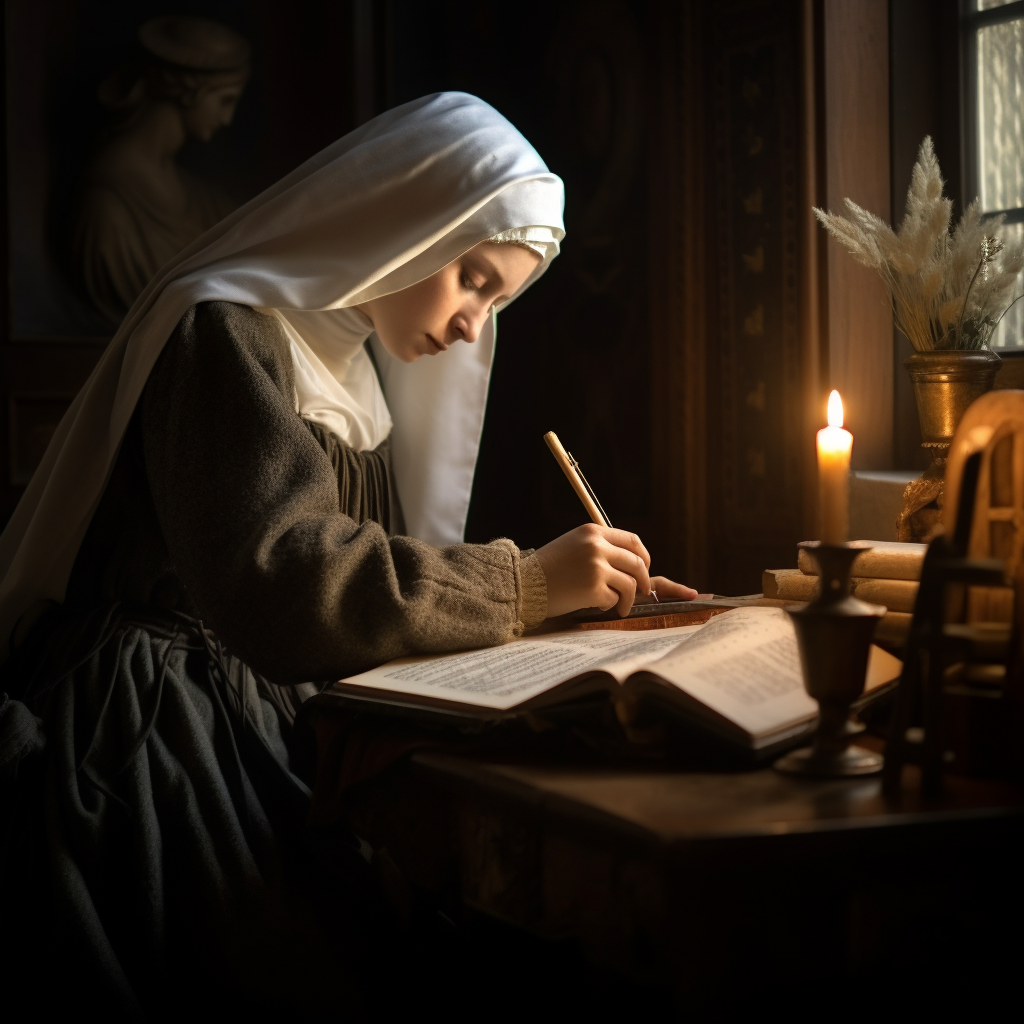
St. Catherine of Siena writing a letter to the pope at her desk

Her Last Years

In the year 1375, Catherine started to dictate letters to scribes. In 1377, Catherine established a monastery for women outside of Siena. She is credited with composing about 380 letters, 26 prayers, and her definitive work, the Dialogue.

Catherine spent the last two years of her life in Rome, in prayer and pleading on behalf of the cause of Pope Urban VI and the unity of the Church. She offered herself as a victim for the Church in its agony. In 1380, Catherine died in Rome at the age of 33. She was canonized by Pope Pius II in 1461. Her feast day is April 29.

5 Interesting Facts About St. Catherine of Siena

  1. St. Catherine of Siena is the patroness of fire, illness, the United States, Italy, miscarriages, people ridiculed for their faith, sexual temptation, and nurses.
  2. St. Catherine of Siena is one of only four female Doctors of the Church. The other three are Teresa of Avila, Thérèse of Lisieux, and Hildegard of Bingen. She was conferred this title in 1970 by Pope Paul VI.
  3. St. Catherine of Siena was made co-patroness of Rome in 1866 by Pope Pius IX, co-patroness of Italy in 1939 by Pope Pius XII, and co-patroness of Europe in 1999 by Pope John Paul II.
  4. St. Catherine of Siena was so joyful as a child that her family called her “Euphrosyne,” Greek for “joy.”
  5. In 1375, St. Catherine of Siena received the stigmata, which, according to the biography written by her confessor, was only visible to herself per her request to God.

Prayer to St. Catherine of Siena

O God, who set Saint Catherine of Siena on fire with divine love in her contemplation of the Lord’s Passion and her service of your Church, grant, through her intercession, that your people, participating in the mystery of Christ, may ever exult in the revelation of his glory. Who lives and reigns with you in the unity of the Holy Spirit, one God, for ever and ever. Amen.