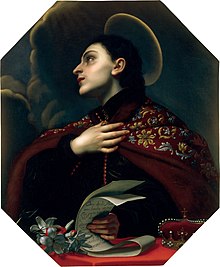
St. Casimir

When He Lived

Saint Casimir, also known as Saint Casimir Jagiellon, was born on October 3, 1458, in Wawel Castle, Kraków, Poland. He lived during the late 15th century, specifically during the years 1458-1484.

Where He Lived

Saint Casimir lived primarily in the Kingdom of Poland, which was a powerful and culturally significant country during that period. He spent much of his time in Kraków, the royal capital of Poland, which was a vibrant center of arts, culture, and politics.

Notable World Events during His Life

  • The Renaissance: Saint Casimir’s era witnessed the peak of the Renaissance in Europe. This intellectual and artistic movement transformed the continent, leading to the revival of classical learning, scientific advancements, and innovative artistic expressions.
  • The Age of Discovery: During Casimir’s lifetime, explorers like Christopher Columbus, Vasco da Gama, and John Cabot embarked on monumental voyages, which expanded the known world and connected different civilizations through trade and exploration.
  • The Invention of the Printing Press: Johannes Gutenberg’s invention of the movable-type printing press around 1440 revolutionized communication and knowledge dissemination, contributing to the spread of ideas, literature, and education.
  • The Ottoman Empire’s Expansion: The Ottoman Empire, a significant geopolitical power at the time, was expanding into Europe, influencing political dynamics and leading to conflicts, particularly in Eastern Europe.
  • The End of the Hundred Years’ War: The Hundred Years’ War between France and England concluded in 1453, which reshaped the political landscape of Europe, leading to the emergence of strong nation-states.

Patronage

Saint Casimir is the patron saint of Poland and Lithuania. He is also venerated as the patron saint of youth, bachelors, students, and people of good moral character. His devotion to faith, his compassion, and his commitment to justice make him an inspiring figure for those seeking guidance in leading virtuous lives.

Casimir’s life was marked by his dedication to his faith, his concern for the well-being of his subjects, and his commitment to upholding Christian values. Despite being a prince, he lived a humble and pious life, demonstrating compassion towards the less fortunate and promoting religious tolerance. His legacy continues to inspire people to this day, reminding us of the importance of kindness, integrity, and devotion to one’s beliefs.

Early Life

He was the son of Poland’s King Casimir IV and Elizabeth of
Austria. He was the third son of thirteen children.

Dedication and Devotion

He began his studies alongside his brothers with Priest John Dlugosz. Casimir would go on to learn about devotion and politics from him.

Casimir wasn’t like a typical royal son. He didn’t subscribe to the luxurious lifestyle that came with being a prince; instead, he dedicated his life to God. He wore plain clothes and refused to sleep on royal beds. He slept on the floor; he denied himself comfort.

He had great values and was remarkable in his self-discipline, even as an adolescent. He was always calm in the face of pressure.

He was so dedicated to God that he spent most of his nights praying and meditating. He was devoted to the Blessed Sacrament.

He gave heartily to the poor and needy in the land. Casimir was empathetic and compassionate when relating to people. He lived his life as a common man.

Legacy

At 13, he would have become the king of Hungary, as the Hungarians asked his father, the king, to offer him to them as their new king. While he went to lead the Hungarians to war out of obedience to his father, his heart was not there. He felt deeply that God didn’t want that to happen. He eventually had to return to Poland when the plan went south.

The army he was to lead was outnumbered by the Turks (the enemy), and some of his soldiers left the mission as they were owed. His officers advised him to return home, and he did.

His father was mad at the situation and had him punished for failing on the mission. While serving his punishment, he made up his mind to never be involved in anything that had to do with war again. He continued in his devotion to God.

He returned to his studies with Dlugosz, as he learned by observing his father’s rule. To form an alliance with the emperor, Casimir was asked to marry the Emperor’s daughter. He vehemently refused and chose a life of celibacy to honor God.

He was pressured on every side, but he stood firm in his beliefs and devotion to God. Luxuries became a temptation to him, and he was unwavering in his loyalty to God.

In 1471, his father went on a journey. He was away from 1479 to 1483 to attend to the state’s business in Lithuania. Casimir was in charge of Poland while his father was away, from 1481 to 1483.

Casimir became sick and knew the end was drawing closer; hence, he drew closer to God in his devotion.

500 years after his death, [Pope John Paul II mentioned how St. Casimir embraced a life of celibacy, submitted himself humbly to God’s will in all things, devoted himself with tender love to the Blessed Virgin Mary, and developed a fervent practice of adoring Christ present in the Blessed Sacrament.”]

[“To all,” the Pope said, “he was a shining example of poverty and of sacrificial love for the poor and needy.”]

Death and Canonization

Casimir died at a young age. He died at 25 of lung disease on March 4, 1484. He was buried in Vilnius, Lithuania.

He was canonized in 1522 by Pope Adrian VI.

5 Interesting Facts About St. Casimir

  • Did you know that Casimir is also patron of the Knights of St. John?
  • Did you know that “Daily, Daily Sing to Mary” was Casmir’s
    favorite hymn?
  • Did you know that Casimir was the Grand Duke of Lithuania?
  • Did you know that 15-year-old Casimir was held in confinement for three
    months when he failed his father?
  • Did you know that Casimir served as regent of the nation while his
    father was away?

Prayer to St. Casimir

All-powerful God, to serve you is to reign. By the prayers of Saint Casimir, help us to serve you in holiness and justice. Through our Lord Jesus Christ, your Son, who lives and reigns with you in the unity of the Holy Spirit, one God, for ever and ever Amen.

Reference

[https://www.franciscanmedia.org/saint-of-the-day/saint-casimir]{.ul}

https://www.catholicnewsagency.com/saint/st-casimir-of-poland-167
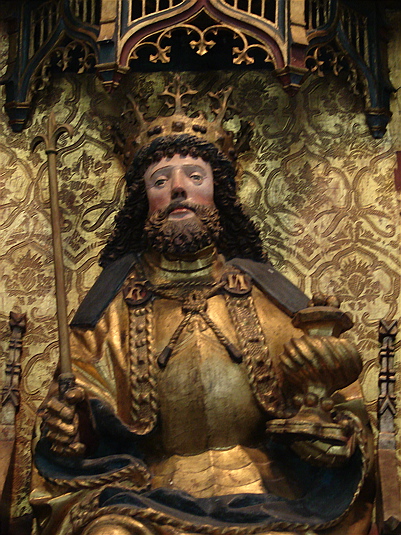
St. Canute IV

When he lived: St. Canute IV, also known as King Canute the Holy, lived from around 1042 to 1086.

Where he lived: He lived primarily in Denmark, where he ruled as the King.

Notable World Events During His Time

  • Norman Conquest (1066): In 1066, William the Conqueror, Duke of Normandy, successfully invaded England, leading to the famous Battle of Hastings. This event reshaped the political landscape of England and had significant implications for the rest of Europe.
  • Investiture Controversy: During Canute’s reign, the Investiture Controversy was ongoing. This conflict between the Pope and the Holy Roman Emperor over the right to appoint bishops and other church officials had a significant impact on the power dynamics between church and state.
  • Great Schism (1054): The Great Schism marked the official split between the Eastern Orthodox Church and the Roman Catholic Church. This event had lasting effects on the religious and cultural development of Europe and the Byzantine Empire.
  • 1066 Almoravid invasion of the Iberian Peninsula: The Almoravids, a North African Berber dynasty, invaded the Iberian Peninsula, leading to conflicts between Muslim and Christian forces in the region.
  • Lunar Eclipse of 1052: An astronomical event such as a lunar eclipse would have been notable during Canute’s time, showing advancements in understanding the cosmos.
  • Birth of Omar Khayyam (1048): The renowned Persian mathematician, astronomer, and poet Omar Khayyam was born during Canute’s lifetime, contributing to the world of mathematics and literature.

Patronage: St. Canute IV is the patron saint of Denmark, as well as of brewers, kings, and the National Cathedral of Denmark in Roskilde. He is known for his piety, charity, and dedication to the Christian faith, which led to his eventual martyrdom.

His Works

St. Canute’s first notable actions were when he was a member of Sweyn’s Raid of England, which occurred in 1069. He is also reported to have been one of the leaders of another raid on England that happened in 1075.

As a king, St. Canute proved to be someone who was highly ambitious and also a very devoted person. This was clear in how he acknowledged the church’s authority and demanded strict observation of church holidays.

St. Canute was a zealous propagator of the faith of Christ; he was pious, and he was also charitable to the poor. He was assiduous in prayer and contemplation.

St. Canute was also known for giving generous gifts to the churches in Odense, Roskide, Viborg, Dalby, and Lund. He also enforced the collection of tithes. This strong devotion to the church resulted in the church becoming his strong ally and supporting his position in power.

At some point in 1085, St. Canute granted the Lund Cathedral large tracts of land in Scania, Zealand, and Amager. The clerics at Lund were given the prerogatives of the land, enabling them to tax the peasantry there.

Despite all this, he still retained his right to pardon the outlaws, impose fines, and demand transportation for his retinue.

Throughout his reign, he attempted to increase the royal power in Denmark by stifling the nobles. He assigned to himself ownership of common lands, the right to goods from shipwrecks, and the right to inherit the possessions of foreigners and those with whom he had no relations.

His policies to strengthen his powers led to discontent amongst his subjects, as they were not accustomed to such a kind of leadership.

His Ambitions

St. Canute’s ambitions were not only for Denmark; he also wished to extend beyond borders. He took it that the crown of England was rightfully his since he was a grandnephew to Canute the Great, who was the ruler of England, Denmark, and Norway until 1035.

In 1085, with the support of his father-in-law, Count Robert, and Olaf III of Norway, he planned to invade England and called his fleet at Limfjord. However, the fleet never set sail as St. Canute became occupied by the potential threat from Henry IV, who was the Holy Roman Emperor. Canute had the fear that Henry would invade Denmark, as Henry’s enemy Rudolf of Rheinfelden had sought refuge in Denmark.

The warriors who made up the fleet got weary of waiting for him as they wanted to return home for the harvest season. They then decided to elect Olaf, who was Canute’s brother, to argue their case. This did not sit well with St. Canute, and he arrested Olaf.

The End of His Reign

In early 1086, a revolt broke out among the peasants against him in Vendsyssel, where Canute was staying. He then fled to Schleswig and then to Odense.

On the 10th of July that same year, Canute and his men took refuge in the wooden St. Alban’s Priory in Odense. However, the rebels stormed into that church and killed Canute and his brother Benedict, as well as seventeen of their followers. Based on the results of his CT scan that was done in 2008, it is likely that he faced his death without any struggle.

After his death, St. Canute was succeeded by his brother Olaf as Olaf I of Denmark.

The reason for the uprising that resulted in his death is unknown, but others argue that it had something to do with the fleet of peasants that he was supposed to go with to the invasion of England.

Legacy

St. Canute is also the founder of the Lund Cathedral School, and he is known as the patron saint of Denmark.

Because of his advocacy for the church and his martyrdom, he quickly became considered a saint. He was canonized in 1101.

July 10  is recognized by the Catholics as his feast day.

The St. Canute Cathedral was built in his name, and his remains and his brother Benedict’s remains were entered there, and their remains are on display there.

Canute’s abortive invasion of England marked the end of the Viking Age.

Controversy

There are different interpretations of St. Canute’s rulership, with some considering him a violent king who tyrannized his subjects and others considering him a strict but fair ruler who supported the Roman Catholic Church.

He was never a thoroughly popular saint in Denmark, but when he was canonized, it gave the Danish monarchy a sense of divine legitimacy.

5 Interesting Facts About St. Canute IV

  1. St. Canute went into exile in Sweden when his brother became the
    King, as he actively opposed him.
  2. St. Canute was the first Dane to be canonized.
  3. After the peasants dispersed when they did not go through with
    their plan to invade England, St. Canute planned to carry out the
    invasion the following year.
  4. He died following a lance thrust to the flank.
  5. When Olaf was king, Denmark suffered crop failure, and this was
    seen as divine retribution for the killing of Canute.

Prayer to St. Canute IV

Heavenly King, we pray that, like St. Canute, we will be willing to offer up all that we have to You so that we may spend eternity in Your royal court in Heaven. Amen.

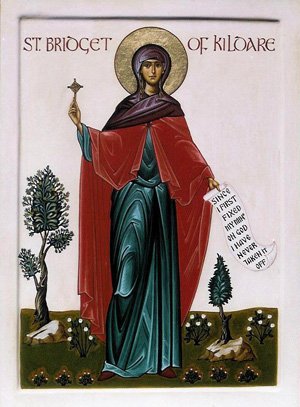
St. Brigid of Ireland

When They Lived:

St. Brigid of Ireland, also known as St. Brigid of Kildare, is believed to have been born in the year 451 or 452, and she passed away on February 1, 525. Her life spanned the early medieval period in Ireland.

Where They Lived:

St. Brigid lived primarily in Ireland, with her birthplace believed to be near Faughart, County Louth. She later founded a monastery in Kildare, a town in County Kildare, Ireland. Kildare became a significant spiritual and cultural center during her time.

Notable World Events during Their Time:

  • Fall of the Western Roman Empire (476 CE): St. Brigid lived in a time when the Western Roman Empire fell, leading to significant political and social changes across Europe.
  • Life of St. Patrick (c. 385–461 CE): St. Brigid’s life partially overlapped with that of St. Patrick, the patron saint of Ireland. Both saints contributed to the spread of Christianity in Ireland and left a lasting impact on Irish culture.
  • Birth of the Gupta Empire (c. 320–550 CE): The Gupta Empire, a powerful and influential ancient Indian civilization, was flourishing during Brigid’s lifetime, making significant advancements in science, mathematics, and the arts.
  • Justinian’s Reign and the Byzantine Empire (527–565 CE): During St. Brigid’s life, the Byzantine Emperor Justinian I was in power. His reign saw significant legal reforms and the construction of iconic structures like the Hagia Sophia.
  • Celtic Monastic Movement: The time of St. Brigid saw the development of the Celtic monastic movement, which focused on spiritual growth, learning, and the preservation of knowledge. St. Brigid’s monastery in Kildare was a part of this movement.

Their Patronage:

St. Brigid is the patron saint of various aspects of life, making her a beloved figure in Irish culture and beyond. She is a patron saint of:

  • Ireland: St. Brigid is one of the patron saints of Ireland, along with St. Patrick and St. Columba.
  • Children: She is often invoked to protect and bless children.
  • Farmers and Livestock: St. Brigid is associated with agriculture, particularly dairy farming, and is invoked for blessings on crops and animals.
  • Scholars and Artists: Given her connection to the monastic movement and the preservation of knowledge, she is considered a patron of scholars, poets, and artists.

Early Life

Saint Brigid of Ireland, also known as Brigid of Kildare, was a miraculous child. From a very tender age, history records her devout love for God and the incredible powers that she exhibited.

When Saint Brigit was born, she was named Brigit, a name originating in the Celtic tradition.

Saint Brigid of Ireland was said to have been born around 451 A.D. in the 5th Century. She was born in Faughart, County Louth, Ireland. Her mother was said to be a slave named Brocca, and her father was a nobleman named Dubhthach.

When Dubhthach’s wife found out that Brocca was carrying her husband’s child, she sold the unnamed slave to a druid.

Brigid was born out of wedlock and into slavery. As a child, she was weaned by a cow as she rejected the food given to her by the Druid.

Brocca, being a Christian, trained her daughter in the way of the Lord. Saint Brigid was very devoted to religion, even at a young age, and showed passionate affection to the needy.

She was a very generous child. Some parts of history record Saint Brigid giving out food, including her mother’s butter, to the poor. The little girl gave out the entire barrel of butter, but miraculously, the barrels were filled back up.

Saint Brigid was generous to a fault, a trait that did her so much good but also got her in a lot of trouble.

As a child, Saint Brigid was said to have performed miracles through prayer. Some parts of tradition record her ability to heal the sick.

By the age of ten, Her Druid master had gotten fed up with her generosity with his properties and had her returned to her master, who also happened to be her father, Dubhthach.

Dedication and Devotion

Saint Brigid was returned to the Dubhthach while her mother stayed with the Druid. However, her generosity didn’t end. She continued to give food and clothes to the poor.

Eventually, Dubhthach got tired of her charity work and angrily took her to the King of Leinster at that time to marry her, or, in some accounts, sell her off.

Some accounts state that while the bargain was being made, Saint Brigid gave the King’s sword to a hungry beggar to barter for food.

The King was so impressed by her kindness that he ordered Dubhthach to let her out of slavery.

Saint Brigid was released. Some say she returned to her mother; thereafter, the Druid tried to marry her off. She vehemently declined and said she had chosen a life of Chastity.

It is said that she was put out for marriage so many times that she feared for her chastity. She then prayed to God to make her ugly in the eyes of men so she wouldn’t be asked for marriage.

Surprisingly, her prayer was answered. She became ugly until her acceptance in an abbey.

Regardless of the accounts, Saint Brigid was said to have received the veil of chastity from the Church. She made a vow of piety, chastity, and poverty for the rest of her life. She spent her time preaching and praying.

Legacy

Some years later, Saint Brigid was given abbatial authority.

In 480 A.D., Brigid established a monastery at Kildare. She named this monastery the ‘Church of Oak’ and had it built above a pagan shrine that belonged to a Celtic goddess called Brigid. It was also said to have been located underneath a large oak tree, probably where the name originated.

She employed the help of seven other women and created a community for chaste women. She was said to have built two more monasteries, one for men and one for women.

Saint Brigit implored a hermit called Conláed to be a spiritual guide. The monasteries grew in size and popularity.

Saint Brigid of Ireland also established a school of art, which included courses on metalwork and illumination.

Saint Brigid spent the rest of her life planting churches and winning souls through her teachings. She has been associated with many miracles, including healing a nun called Dara of blindness.

Death and Canonization

Saint Brigid of Ireland received her blessing of the last rites from Saint Ninnidh of the Pure Hand. She passed away on the 1st of February in her monastery in Kildare.

Saint Brigid died in the year 525 A.D. She was buried on the right-hand side of the church altar. This spot became a popular place for pilgrimages.

She was succeeded by her favorite, Darlugdach.

Circa 878, Saint Brigid’s remains were transferred to the tomb where Patrick and Columba were located. They were finally taken to the Down Cathedral in 1185, where they supposedly lie till today.

Some accounts, however, note that her head was moved to a Jesuit Church in Lisbon.

Saint Brigid became very popular in literature. She was very respected by Ireland, the Eastern Orthodox Church, the Anglican Communion, and the Roman Catholic Church.

Saint Brigid was canonized Pre-Congregation. She is celebrated on the first day of February.

5 Interesting Facts About Saint Brigid of Ireland

  • Did you know that Saint Brigid is known to some as the Mary of
    Ireland?
  • Did you know that Saint Brigid is said to have changed a barrel of
    water to beer? As if this wasn’t enough, she shared this barrel.
    amongst 18 churches.
  • Did you know that Saint Brigid is the patron saint of babies,
    blacksmiths, diary maids, printers, nuns, and Ireland?
  • Did you know that some records consider Saint Brigid of Ireland to
    be the only female Bishop to exist.
  • Did you know that Saint Brigid is said to be affiliated with the
    a Celtic goddess named Brigid?

Prayer to Saint Brigid of Ireland

Brigid, You were a woman of peace. You brought harmony where there was conflict. You brought light to the darkness. You brought hope to the downcast. May the mantle of your peace cover those who are troubled and anxious,and may peace be firmly rooted in our hearts and in our world. Inspire us to act justly and to revere all that God has made. Brigid, you were a voice for the wounded and the weary. Strengthen what is weak within us. Calm us into a quietness that heals and listens. May we grow each day into greater wholeness in mind, body, and spirit. Amen.

Source:[https://www.google.com/amp/s/www.catholicfaithstore.com/daily-bread/prayers-saint-brigid/amp/]{.ul}

St. Bartholomew

St. Bartholomew: The Enigmatic Apostle Who Walked Through History’s Turbulent Times

When he lived: St. Bartholomew, also known as Nathanael, lived during the early 1st century AD.

Where he lived: Born in Cana of Galilee, Bartholomew traversed various regions as an Apostle, spreading the teachings of Jesus Christ.

Notable world events during the time of his life:

  1. The Great Fire of Rome (64 AD): A catastrophic fire swept through Rome, consuming vast portions of the city. The blame fell on Emperor Nero, who allegedly played the lyre while watching the city burn. This event led to the persecution of Christians and played a significant role in shaping early Christianity.
  2. The Siege of Jerusalem (66-70 AD): A Jewish revolt against Roman rule culminated in the Siege of Jerusalem. The city was captured and the Second Temple was destroyed, forever changing the course of Judaism and Christianity.
  3. The Fall of Pompeii (79 AD): The catastrophic eruption of Mount Vesuvius buried the prosperous Roman city of Pompeii in volcanic ash. This tragedy left a lasting impact on Roman society, preservation, and understanding of ancient history.
  4. The Han Dynasty’s Collapse (220 AD): The once-mighty Han Dynasty in China fell, leading to a period of disunity and political fragmentation known as the Three Kingdoms period. This era shaped the cultural and political landscape of China for centuries to come.
  5. The Life of Confucius (551-479 BC): Though Confucius lived centuries before St. Bartholomew, his philosophy and teachings continued to exert a profound influence on Chinese society during the Apostle’s lifetime, as they do to this day.
  6. The Invention of the Papyrus Scroll (circa 2000 BC – 1st century AD): The widespread use of papyrus scrolls in the ancient world facilitated the dissemination of knowledge, including early Christian writings, enabling the rapid spread of the Christian faith.

His Patronage:

  • Leatherworkers and Tanners: It is believed that Bartholomew’s death, allegedly flayed alive, connects him to professions involving the processing of animal hides.
  • Bookbinders and Printers: Due to the significance of the papyrus scroll and the dissemination of knowledge during his time, he is also regarded as the patron saint of those who work with books and printing.
  • Neurological Disorders: Some traditions attribute healing miracles to St. Bartholomew, leading to his patronage of those suffering from neurological ailments.
  • Astronomy and Natural Philosophy: Bartholomew’s life spanned a time of great scientific curiosity, making him a patron saint for those involved in the pursuit of knowledge and understanding the natural world.

St. Bartholomew’s life intertwined with some of history’s most remarkable events, and his enduring patronage speaks to the reverence and fascination with this enigmatic Apostle. As we continue to explore and unravel the mysteries of the past, his legacy stands as a guiding light through the turbulent annals of history.

Bartholomew, a true Israelite

When we talk about the lives of the Twelve Apostles, we are always confronted with the fact that we know almost nothing about them. This is because no detailed records about their early lives were written, either by themselves or by others who knew them personally. Yet these “hidden men” are also the foundation stones of Christ’s Church, which encompasses the whole earth. This is our concern for our dear St. Bartholomew.

The Gospels mention Bartholomew’s name. He was included in the lists of the chosen Twelve in Matthew 10:2-4, Mark 3:13–19, and Luke 6:12–16. Biblical scholars identify him with Nathanael, a man of Cana in Galilee who was summoned by Philip. Philip, who was from Bethsaida, met Jesus in Galilee. He believed that Jesus was the one about whom the prophets of old spoke. When Philip found Nathanael, he told him, “We have found the one about whom Moses wrote in the law and also the prophets, Jesus, son of Joseph, from Nazareth” (John 1:45b). Nathanael answered him, and perhaps the only instance that he spoke is recorded in the Gospel of John: “Can anything good come from Nazareth?” (John 1:46).

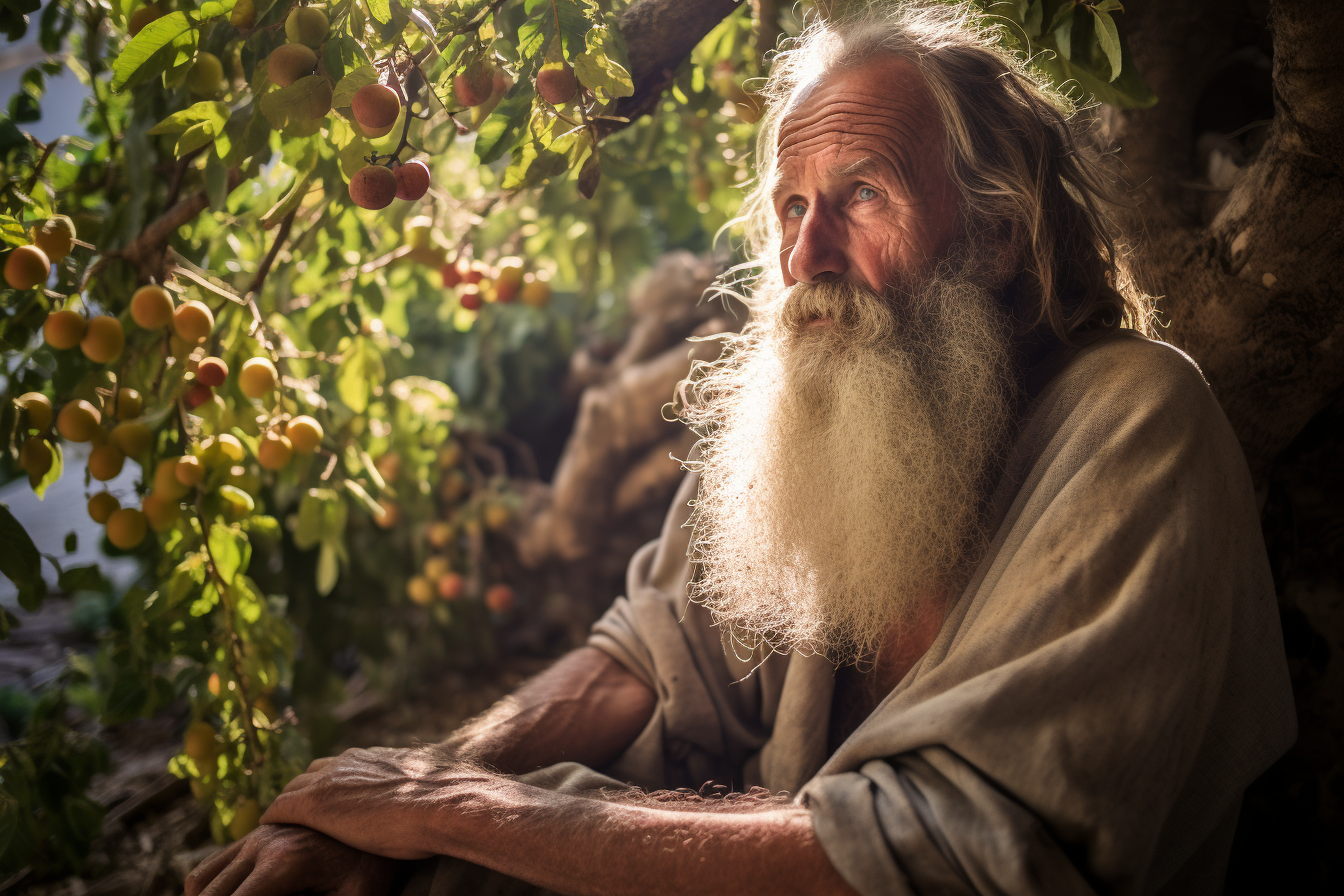
Nevertheless, Nathanael went with Philip to meet Jesus. Upon seeing him, Jesus paid him a great compliment, saying, “Here is a true Israelite. There is no duplicity in him” (John 1:47b). Nathanael was confused, so he asked Him how He knew him. Jesus said, “Before Philip called you, I saw you under the fig tree” (John 1:48b). Biblical scholars believe that an amazing revelation was involved in this scene, which brought Nathanael to exclaim, “Rabbi, you are the Son of God; you are the King of Israel” (John 1:49b). However, Jesus countered: “Do you believe because I told you that I saw you under the fig tree? You will see greater things than this” (John 1:50b).

St. Bartholomew sitting under a fig tree

Seeing “Greater Things”

True enough, Nathanael did see greater things since his encounter with Jesus. He was with Jesus in His public ministry. He saw with his very own eyes the Son of God. He heard His teachings. He witnessed the miracles wrought by Him.

Nathanael was one of those to whom the Risen Jesus appeared on the shore of the Lake of Tiberias (see John 21:1–14). They had been trying to catch fish all night, but all in vain. As the morning broke, they saw a man standing on the shore and asked if they had caught some fish. They answered with dismay that they had not caught anything. The man told them to cast their net again, and they made such a great catch that they could barely haul the net. After seeing such a marvelous event, John cried out to Peter, “It is the Lord!” (John 21:7).

After the Holy Spirit’s descent upon the Apostles on Pentecost, Bartholomew traveled to foreign lands to proclaim the Gospel of Jesus. It is said that he founded Christian communities in parts of India and in countries we now call Turkey and Armenia. According to tradition and ancient historical writings, Bartholomew was believed to have been martyred by flaying alive and was beheaded at the order of the Armenian king Astyages. His feast day is August 24.

Five Interesting Facts About St. Bartholomew

  1. St. Bartholomew is the patron saint of Armenian tanners, leatherworkers, bookbinders, farmers, butchers, plasterers, house painters, tailors, and glove makers.
  2. The name Bartholomew translates from the Hebrew name Bartholomaios, meaning “son of Talmai.”
  3. Nathanael in Hebrew means “God has given” or “gift of God”.
  4. St. Bartholomew’s relics had been deposited in churches named to honor him: his arm in Canterbury, England; his skull in Frankfurt, Germany; and his body in Lipari.
  5. In Christian art, St. Bartholomew is often depicted with flayed skin or holding a knife in his right hand.

Prayer to St. Bartholomew

Strengthen in us, O Lord, the faith by which the blessed Apostle Bartholomew clung wholeheartedly to your Son, and grant that through the help of his prayers, your Church may become for all the nations the sacrament of salvation. Through our Lord Jesus Christ, your Son, who lives and reigns with you in the unity of the Holy Spirit, one God, for ever and ever Amen.

St. Bonaventure

When He Lived

St. Bonaventure, also known as St. Bonaventura, was born in 1221 and passed away on July 15, 1274.

Where He Lived

St. Bonaventure was born in Bagnorea, a town in Italy. He spent a significant portion of his life in Paris, where he pursued his education and later became a prominent scholar and teacher.

Notable World Events

  • The Seventh Crusade (1248-1254): This event saw King Louis IX of France lead a crusade to the Holy Land in an attempt to recapture Jerusalem. The crusade ultimately ended in failure and the capture of Louis IX.
  • Mongol Empire’s Expansion (13th century): During St. Bonaventure’s lifetime, the Mongol Empire, led by figures like Genghis Khan and Kublai Khan, continued its expansion across Asia, the Middle East, and Eastern Europe.
  • Founding of the University of Naples (1224): The University of Naples Federico II was founded during St. Bonaventure’s early years. This institution played a significant role in the development of medieval education and scholarship.
  • Dante Alighieri’s Birth (1265): The famous Italian poet Dante Alighieri was born a few years before St. Bonaventure’s passing. Dante’s literary works, including “The Divine Comedy,” had a lasting impact on Western literature and culture.
  • The Magna Carta (1215): Although a few years before St. Bonaventure’s birth, the Magna Carta’s signing marked a crucial milestone in the establishment of constitutional and legal principles, influencing later developments in governance and human rights.
  • Development of Gothic Architecture: The construction of iconic Gothic cathedrals, such as Notre-Dame in Paris and Chartres Cathedral, was ongoing during St. Bonaventure’s lifetime. These architectural marvels represented advancements in engineering and artistic expression.

His Patronage

St. Bonaventure is renowned as the patron saint of theologians and scholars. He is often invoked by those seeking guidance and inspiration in their academic pursuits. His deep philosophical writings, particularly on the relationship between faith and reason, continue to influence scholars, philosophers, and theologians to this day.

The Early Life of St. Bonaventure

St. Bonaventure, whose real name was Giovanni Di Fidanza, was born in 1221in Bagnoregio. His father was Giovanni Di Fidanza, a physician, while his mother was Maria of Ritella. At his baptism, he was given the name John.

As a little boy, legend has it that St. Bonaventure fell ill, and his mother sought the intercession of St. Francis of Assisi for a cure. The legend further goes on to say that St. Francis saw a great future for the young John and at that point changed his name to Bonaventura (Italian) or Bonaventure (English), meaning bringer of good fortune.

The Priestly Life of St. Bonaventure

Joining the Franciscan order in 1243, St. Bonaventure studied at the University of Paris and obtained a Master of Arts degree. While in Paris, he became close friends with St. Thomas Aquinas and the Holy King, St. Louis.

While in the school of Theology, his masters saw him as a student who had a very keen memory and unusual intelligence, making him stand out amongst his fellow students.

During his priestly years, he was able to integrate his study of theology with the mode of Franciscan life. This he was able to accomplish simply by turning the pursuit of truth into a divine form of worship.

When it came to biblical teachings, St. Bonaventure started this mission earnestly in 1248. From 1251 to 1253, he was said to have lectured on a medieval theology textbook, The Sentences by Peter Lombard, an Italian theologian of the 12th century.

Bonaventure was known to have an uncanny ability to reconcile the diversity of traditions often encountered in philosophy and theology.

As a devout Franciscan, he defended the Franciscan ideal of Christianity against William of Saint-Amour, who wanted to prevent the Franciscans and their brother order, the Dominicans, from attaining positions. This occurred in the year 1256.

Due to his great love and defense of the Franciscan order as well as his personal ability to adhere to higher principles and ideals, he was elected as the 7th Minister General of the Franciscans on February 2, 1257.

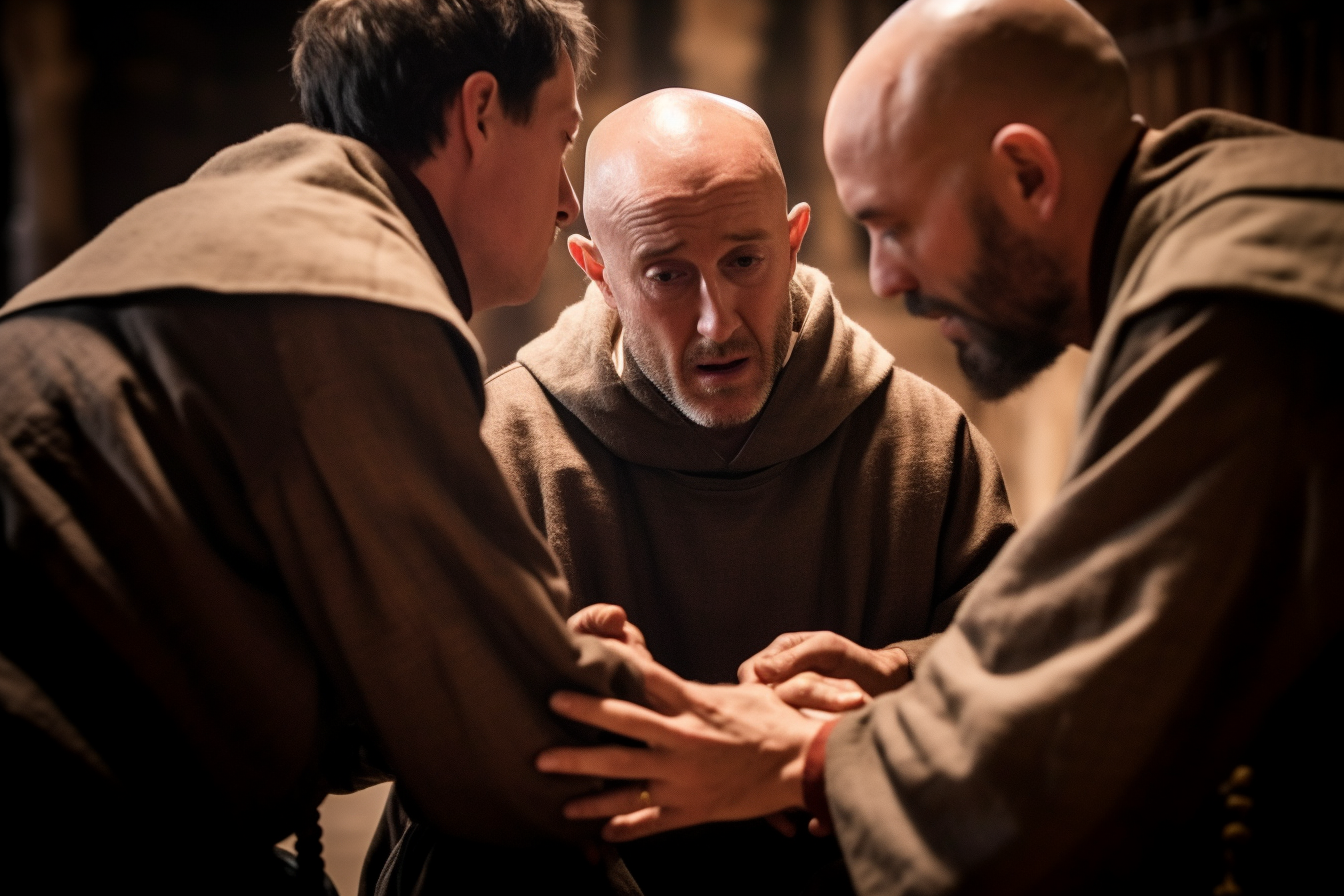
Due to his ability to reconcile differences, he was able to end the discord in the Franciscan order between the two factions that had formed by placating and reproving as needed. This ability of his made Pope Gregory X appoint him the Cardinal Bishop of Albano, Italy, in May 1273.

At an earlier time, though, St. Bonaventure had declined an appointment to the See of York, England, from Pope Clement in 1265.

Being the leading figure in the reformation of the church at the second Council of Lyon, he was able to reconcile the secular church with the moderates in such a way that both sections of the church lived and accepted each other peacefully.

St. Bonaventure calming a dispute between two monks

Due to the graceful way in which he preached the Bible, he was referred to as an eloquent preacher and easily won the hearts of those who came to know him.

Works of St. Bonaventure

The most popular work of St. Bonaventure to this day is His “Journey of the Mind to God”. A great masterpiece, it focuses on how man ought to meditatively contemplate the divine God through Christ. The life of St. Francis was the example upon which this work of his was based.

He was also able to recodify the constitutions of the Franciscan order (1260)  and wrote for the order, “A New Life of St. Francis of He was also able to recodify the constitutions of the Franciscan order (1260) and wrote for the order, “A New Life of St. Francis of Assisi” (1263). In 1269, the order and the written work “A New Life of St. Francis of Assisi” were protected by St. Bonaventure from an assault by Gerard of Abbeville.

Between 1267 and 1273, St. Bonaventure was able to protect the church by ensuring that the Christian faith was upheld and the views of the unorthodox masters of Paris, which contrasted with the revelations in philosophy, were refuted.

Death and Canonization of St. Bonaventure

Sadly, St. Bonaventure died suddenly on July 15th, 1274, in very suspicious circumstances during the Ecumenical Council for which he had worked. Though the cause of his death remains uncertain, some have attributed it to a possible case of poisoning.

St. Bonaventure was canonized by the Franciscan Pope Sixtus IV in 1482, on April 14th precisely. Upon consideration of his works in the life of the church Another Franciscan Pope, Sixtus V, would later in the year 1588 declare St. Bonaventure Doctor of the Church.

5 Interesting Facts About St. Bonaventure

  1. His baptismal name was John, and the name Bonaventure was reportedly
    given to him by St. Francis of Assisi, who, it was said, could see
    into the future of people.
  2. He was born into a prosperous family, as his father was a successful
    doctor in his era.
  3. The name Bonaventure, which stuck to him, means good fortune. It is a
    beautiful name for young baby boys.
  4. St. Bonaventure is the Patron Saint of bowel disorders. You can seek
    his intercession whenever you have bowel problems.
  5. He is referred to as the Seraphic Doctor of the Church. This came
    about due to his sincere devotion to St. Francis and the Franciscan
    way of life.

Prayer to St. Bonaventure

Pierce, O most sweet Lord Jesus, my inmost soul with the most joyous and healthy wound of Thy love and with true, calm, and most holy apostolic charity, that my soul may ever languish and melt with entire love and longing for Thee, may yearn for Thee and for thy courts, may long to be dissolved and to be with Thee. Grant that my soul may hunger after Thee, the Bread of Angels, the refreshment of holy souls, our daily and super substantial bread, having all sweetness and savor and every delightful taste.

May my heart ever hunger after and feed upon Thee, Whom the angels desire to look upon, and may my inmost soul be filled with the sweetness of Thy savor; may it ever thirst for Thee, the fountain of life, the fountain of wisdom and knowledge, the fountain of eternal light, the torrent of pleasure, the fullness of the house of God; may it ever compass Thee, seek Thee, find Thee, run to Thee, come up to Thee, meditate on Thee, speak of Thee, and do all for the praise and glory ofThy name, with humility and discretion, with love and delight, with ease and affection, with perseverance to the end; and be Thou alone ever my hope, my entire confidence, my riches, my delight, my pleasure, my joy, my rest and tranquility, my peace, my sweetness, my food, my refreshment, my refuge, my help, my wisdom, my portion, my possession ,my treasure; in Whom may my mind and my heart be ever fixed and firm and rooted immovably. Amen.

St. Blaise

When They Lived

Saint Blaise, also known as Saint Blaise of Sebaste, is believed to have lived during the 3rd and 4th centuries. The exact dates of his birth and death are uncertain, but he is generally thought to have been born around 280 AD and to have died around 316 AD.

Where They Lived

Saint Blaise was born in the city of Sivas, which is located in modern-day Turkey. He later became the bishop of Sebaste, another city in the same region. Sebaste is known for being a significant center of Christianity during the late Roman Empire.

Notable World Events During Their Time

  • Diocletian’s Persecution (303-311 AD): Saint Blaise lived during a time of intense persecution of Christians under the Roman Emperor Diocletian. This period marked one of the most brutal attacks on the Christian community, with countless believers being martyred for their faith.
  • Edict of Milan (313 AD): During Saint Blaise’s lifetime, the Roman Empire underwent a significant change in policy towards Christianity. The Edict of Milan, issued by Emperor Constantine the Great and his co-emperor Licinius, granted religious tolerance to Christians and officially ended the persecution, allowing the faith to flourish.
  • Founding of Constantinople (330 AD): Constantine the Great, a prominent figure during Saint Blaise’s era, established a new capital city for the Roman Empire – Constantinople (modern-day Istanbul). This event marked a monumental shift in the empire’s political and cultural landscape.
  • Council of Nicaea (325 AD): The Council of Nicaea was a crucial event in the early Christian church. It addressed theological disputes, notably the nature of Christ’s divinity, and led to the formulation of the Nicene Creed, a foundational statement of Christian beliefs.
  • Development of Early Monasticism: During Saint Blaise’s time, the foundations of Christian monasticism were being established by figures like Saint Anthony of Egypt. Monasticism played a significant role in shaping the spiritual and intellectual landscape of the era.

Their Patronage

Saint Blaise is widely recognized as the patron saint of throat ailments and other afflictions. The tradition of blessing throats on his feast day, February 3rd, continues to this day. According to hagiographical accounts, he miraculously cured a boy choking on a fish bone, which led to his association with throat-related illnesses.

The Legendary Bishop of Sebaste

St. Blaise is perhaps one of the most famous medieval martyrs in Catholicism. What we know about him comes from stories and traditions that have come down to the present. In accordance with various traditions, Blaise was born towards the end of the 2nd century. He was believed to have been born to wealthy and noble parents and was most probably a native of Sebastia, Cappadocia, in Asia Minor.

According to legends, most especially the apocryphal Acts of St. Blaise, Blaise was a physician before he was made a bishop. But he was not just a physician; he was a physician possessing the wonderful power of healing. All sources agree that Blaise was the Bishop of Sebaste in Armenia. At that time, a local community usually nominated a man to be a bishop according to his outstanding holiness and exceptional leadership qualities. Therefore, Blaise must have been a great witness and an example of faith, to say the least.

Although Christianity had become the state religion of Rome through Emperor Constantine’s Edict of Milan in 312, Licinius did not recognize the decree. He began a persecution of the Christians. Those who were suspected of being adherents of the Christian faith were sought and arrested. It was during that time that Blaise, the Bishop of Sebaste, was discovered and apprehended.

Blaise’s Miracles

In the apocryphal Acts of St. Blaise, when Blaise was arrested and being led to prison, he met a woman who rushed up to him and pleaded for him to save her only son. The woman’s son was choking to death because of a fishbone. Moved by the mother’s plea, Blaise interceded with his prayers. The boy was miraculously healed! Blaise, even in his life, was known for healing humans.

St. Blaise with a little boy

Numerous miracles were attributed to St. Blaise, including the cure of diseased animals when he was in his refuge. Yes, Blaise was also known for helping and healing animals! Stories say that when the persecution of Christians began, as instructed by the Lord, he withdrew to a cave in the woods. Blaise soon became the friend of animals that were wounded or ill. One day, hunters were searching for wild animals to bring to the city’s amphitheater. To their shock, they saw Blaise kneeling and praying and being surrounded by totally tame wolves, bears, and lions in his presence.

Another recounts a miracle that Blaise performed during his life. He met a poor woman who was greatly distressed because a wolf had snatched her small young pig. The woman asked for his help. Blaise commanded the wolf to return the woman’s pig. Some moments later, the wolf heard Blaise, and it brought back the pig, which was not harmed.

Bishop Blaise was tortured in various ways. He was whipped and raked with iron combs. Finally, the popular Bishop of Sebaste was beheaded. St. Blaise was venerated in the East by the 6th century and in the West by the 9th century. His cult spread throughout Christendom in the 8th century. Many churches are dedicated to him. His feast day is February 3.

5 Interesting Facts About St. Blaise

  1. He is venerated as the patron saint of sufferers from throat diseases and of wool combers.
  2. In the Middle Ages, he gained widespread popularity as one of the Fourteen Holy Helpers or Martyrs. Those who were with St. Blaise were Saints George, Erasmus, Pantaleon, Vitus, Christopher, Denis, Cyriacus, Acacius, Eustace, Giles, Margaret, Barbara, and Catherine.
  3. St. Blaise is venerated as a saint in the Catholic, Eastern Orthodox, and Oriental Orthodox Churches.
  4. During the feast day of St. Blaise on February 3, the blessing of the throats may be given by a priest, deacon, or lay minister who follows the rites and prayers designated for a lay minister. The blessing may be given by touching the throat of each person with two candles blessed on the feast of the Presentation of the Lord (February 2) that have been joined together in the form of a cross.
  5. St. Blaise rescued the city of Dubrovnik from the Venetian invasion.

Prayer to St. Blaise

Hear, O Lord, the supplications your people make under the patronage of the Martyr Saint Blaise, and grant that they may rejoice in peace in this present life and find help for life eternal. Through our Lord Jesus Christ, your Son, who lives and reigns with you in the unity of the Holy Spirit,God, for ever and ever Amen.

St. Bibiana

When they lived: Saint Bibiana, also known as Saint Vivian, lived during the 4th century. The exact dates of her birth and death are uncertain, but she is believed to have lived around the mid-4th century, possibly from 316 to 363 AD.

Where they lived: Saint Bibiana’s life unfolded in the vibrant city of Rome, Italy. She was born and raised in this historical and bustling center of the Roman Empire.

Notable world events during the time of their life:

  • Edict of Milan (313 AD): The Edict of Milan, issued by Emperors Constantine and Licinius, marked a significant turning point for religious freedom. It granted tolerance to all religions within the Roman Empire, ending the persecution of Christians and allowing them to practice openly.
  • Battle of Adrianople (378 AD): This battle between the Eastern Roman Empire and the Visigoths was a major conflict that led to the death of Emperor Valens. It marked the beginning of significant upheavals within the Roman Empire and the gradual decline of its power.
  • Council of Nicaea (325 AD): Though a religious event, the First Council of Nicaea had substantial historical impact. It addressed the Arian controversy, leading to the formulation of the Nicene Creed, a foundational statement of Christian faith that defined the nature of Christ’s divinity.
  • Founding of Constantinople (330 AD): Emperor Constantine established Constantinople (modern-day Istanbul) as the new capital of the Eastern Roman Empire. This marked a shift in power and had long-term geopolitical and cultural implications.
  • Death of Julian the Apostate (363 AD): Emperor Julian’s death signaled the end of his efforts to revive pagan practices and roll back Christian influence within the Roman Empire. His passing marked a turning point in the Empire’s religious landscape.

Their patronage: Saint Bibiana is known as the patron saint of hangovers, headaches, and mental illness. Her association with these aspects of human experience adds a unique and relatable dimension to her veneration.

Early life

Saint Bibiana was a Roman saint who lived in the 4th century. She was born into a wealthy and devout Christian family, and her parents raised her to be a devoted follower of Christ. When she was young, her parents were martyred for their faith, and Bibiana was left to care for her younger sister, Demetria.Saint Bibiana was a Roman saint who lived in the 4th century. She was born into a wealthy and devout Christian family, and her parents raised her to be a devoted follower of Christ. When she was young, her parents were martyred for their faith, and Bibiana was left to care for her younger sister, Demetria.

Despite her youth, Bibiana was determined to continue the legacy of her parents and remained steadfast in her faith. She and Demetria lived a quiet and devout life, spending their days in prayer and study of the Bible.

However, the Roman Empire was not tolerant of Christians at the time, and Bibiana and Demetria were soon arrested for their beliefs. They were brought before the prefect, who tried to force them to renounce their faith and worship the Roman gods. Bibiana refused, and the prefect, enraged by her steadfastness, ordered her to be severely beaten.

Despite the torture she endured, Bibiana refused to give in to the prefect’s demands. She remained steadfast in her faith, and her steadfastness inspired many of the other Christians who were being held with her.

Eventually, the prefect grew tired of trying to force Bibiana to renounce her faith and ordered her to be put to death. She was beheaded, and her body was thrown into a ditch outside the city.

Despite her martyrdom, Bibiana’s faith did not die with her. Her steadfastness and devotion to Christ inspired many other Christians, and she soon became known as a saint. Her story spread throughout the Roman Empire, and she became a symbol of the strength and determination of the Christian faith.

Today, Saint Bibiana is remembered as a powerful example of the power of faith. Her life and death continue to inspire people of all faiths, and she is revered as a saint by the Catholic Church. She is often depicted in art and literature as a young woman holding a palm branch, symbolizing her victory over death through her faith in Christ.

Saint Bibiana’s story is a reminder of the importance of standing firm in one’s beliefs, even in the face of great adversity. Her unwavering devotion to Christ serves as an inspiration to us all, and her memory continues to be celebrated by Christians throughout the world.

St. Bernadette

When They Lived:

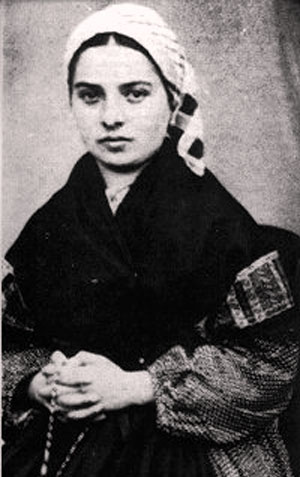
St. Bernadette, born as Marie-Bernarde Soubirous, graced the world with her presence from January 7, 1844, to April 16, 1879.

Where They Lived:

Bernadette’s life unfolded in the quaint town of Lourdes, nestled in the foothills of the Pyrenees mountains in France. Her humble abode was the setting for her remarkable encounters.

Notable World Events During Their Life:

  1. California Gold Rush (1848-1855): As Bernadette was growing up, the world witnessed a surge of adventurers flocking to California in pursuit of gold, reshaping the region’s history and economy.
  2. Publication of “On the Origin of Species” (1859): Charles Darwin’s groundbreaking work introduced the theory of evolution, sparking intense debates about the origins of life and challenging traditional religious perspectives.
  3. American Civil War (1861-1865): While Bernadette remained secluded in Lourdes, the United States was embroiled in a devastating civil war over issues of slavery, unity, and states’ rights.
  4. Completion of the Suez Canal (1869): The inauguration of the Suez Canal connected the Mediterranean Sea to the Red Sea, revolutionizing global trade and travel routes.
  5. Franco-Prussian War (1870-1871): Europe was shaken by conflict as the French Empire clashed with the emerging German states, ultimately leading to the unification of Germany and the fall of Napoleon III.
  6. Telephone Invention (1876): Alexander Graham Bell’s invention of the telephone marked a revolutionary step in communication, bridging distances and changing the world forever.

Their Patronage:

St. Bernadette Soubirous is renowned as the patron saint of illness, poverty, and ridiculed people. Her life was a testament to unwavering faith in the face of suffering and skepticism. Despite the adversities she faced due to her health and the skepticism surrounding her visions, she remains an inspiring figure for those battling illness and adversity.

Early Life

Saint Bernadette Soubirous, also known as Saint Bernadette of Lourdes, was born on the 7th of January, 1844. She was born in Lourdes, Hautes-Pyrénées, in the Kingdom of France.

Saint Bernadette was the eldest of nine children. A little while after she was born, she was baptized in Saint Pierre’s, a local parish in their vicinity. She was baptized on the 9th of January, which also happened to be her parents anniversary.

Her father was a poor miller named François Soubirous, and her mother was Louise. Thanks to the challenging times and the crashing economy of the French kingdom, the family had little to survive on.

Although poor, her parents made sure to provide for the family. Bernadette grew to be a petite young girl who showed an obvious interest in religion.

Tragedy struck when Saint Bernadette contracted cholera in her youth. It is reckoned that the early onset of Cholera led her to forever battle severe asthma.

Saint Bernadette received early formal education at the Sisters of Charity, after which she sought Christian education in Nevers.

Her illness limited her learning abilities. She mainly spoke Occitan, the language of the locals, and had limited writing and reading abilities.

Dedication and Devotion

The Soubirous family’s finances dwindled to the point that they had to live in a basement with one room. The basement was formerly used as a jail. It was provided to them for free by Saint Bernadette’s mother’s cousin.

While out one afternoon on February 11, 1858, with Toinetter’s sister and a group of friends, something extraordinary happened.

Near the Grotto of Massabielle, Saint Bernadette had her first vision. Legend has it that as Bernadette took her shoes off to cross the water,time stood still. Suddenly, from the alcove, a figure cloaked in dazzling white light came out.

Of course, her sister and friends had seen nothing. People assumed the figure was no other person than the Blessed Virgin, even though Bernadette called it an aquer.

This would mark the beginning of further visions in her life. On the 14th of February, Bernadette, her sister, and friends once again returned to the grotto.

She once again saw the apparition, but the others didn’t. This time, the apparition disappeared after the girls threw holy water into the alcove.

On the 18th of February, Saint Bernadette had another vision. In this one, she was instructed to go back to the site of her first vision every day for a few days.

Legacy

Following other visions, Saint Bernadette received various instructions from the figure of light.

She prayed and fasted as instructed. She ate and drank the muddy springs the figure told her to, causing them to become clear. She even relayed the message of the need to build a church to the townspeople.

At first, people were skeptical. They did not believe that this sick child could be visited by that kind of power. Some people even thought she was insane, especially since she continued to call the figure Theaquer.

It wasn’t until the 16th vision that the figure introduced itself as the “Immaculate Conception”.

Embarrassed by her supposed antics, Saint Bernadette’s mother forbade her from speaking on the matter. The young girl didn’t listen and stuck to her story.

Due to her insistence, Several Churches were built in the town. Some of the churches include the Sanctuary of Our Lady of Lourdes and the Basilica of Saint Pius X.

These great churches were not only constructed to accommodate thousands but also ended up being pilgrim sites in the years following the death of Saint Bernadette.

Tired of the fame, Saint Bernadette escaped to a local school in Nevers. On the 29th of July, 1866, she became a member of the Sisters of Charity and moved to the motherhouse.

There, she assumed the name Marie-Bernarde. Although unable to take part in the strenuous activities of the convent, she continued to pray, preach, fast, and meditate.

Death and Canonization

  1. She died in Nevers while Praying the rosary.
    After her death, her claims of visions continued to be reviewed and
    respected. She was canonized on December 8 by Pius XI.
    Her body was said to have been moved three times, and in all cases, it
    was noted to be corrupt.
    Saint Bernadette is commemorated on the 16th of April.

5 Interesting Facts About St. Bernadette

  1. Did you know that Saint Bernadette was not as fluent in French as
    people thought?
  2. Did you know that Saint Bernadette is the patron saint of Lourdes?
    illness, people who are embarrassed because of their faith, and
    against poverty?
  3. Did you know that Saint Bernadette was plagued by visions of the
    white figure 18 times?
  4. Did you know that there is no scientific explanation for how Saint
    Bernadette cleared the spring that had once been muddy.
  5. Did you know that Saint Bernadette was committed to her patron?
    Saint, Saint Bernard?

Prayer to St. Bernadette

O Saint Bernadette, who, as a meek and pure child, did eighteen times at Lourdes contemplate the beauty of the Immaculate Mother of God and receive her messages, and who afterward wished to hide yourself from the world in the convent of Nevers and to offer thyself there as a victim for the conversion of sinners, obtain for us the grace of purity, simplicity, and mortification that we also may attain to the vision of God and of Mary in Heaven. Amen.

Source:[https://www.discerninghearts.com/catholic-podcasts/prayer-of-st-bernadette-and-the-miracles-of-lourdes/]{.ul}

St. Benjamin

When They Lived:

St. Benjamin, also known as Benjamin of Persia, lived during the late 5th century. He was born around 410 AD and met his tragic end in the year 424 AD.

Where They Lived:

St. Benjamin’s life unfolded in the historical region of Persia, present-day Iran. He was part of the Christian community in Persia during a tumultuous period in the region’s history.

Notable World Events During the Time of Their Life:

  • Fall of the Western Roman Empire (476 AD): As St. Benjamin’s life overlapped with the decline of the Western Roman Empire, he witnessed the pivotal moment when the last Roman emperor was deposed. This event marked the end of an era and the beginning of the medieval period in Europe.
  • Council of Ephesus (431 AD): The Council of Ephesus, a significant event in the early Christian church, occurred during St. Benjamin’s lifetime. This ecumenical council aimed to address the Nestorian heresy and solidify the belief in the divine motherhood of Mary, thus shaping the trajectory of Christian theology.
  • Life of St. Patrick (c. 385–461 AD): While St. Benjamin lived in Persia, another notable figure, St. Patrick, was active in Ireland. St. Patrick’s missionary efforts and his role in spreading Christianity throughout Ireland highlight the global scope of the Christian faith during this period.
  • Founding of the Gupta Empire (c. 320–550 AD): In distant India, the Gupta Empire was flourishing during St. Benjamin’s lifetime. This era is often referred to as the “Golden Age of India” due to advancements in arts, sciences, and culture. The empire’s achievements had a global impact.
  • Attila the Hun’s Invasions (5th century): St. Benjamin lived during a time when the notorious Attila the Hun was making his mark in Europe. The fear and turmoil caused by these invasions would have resonated even in Persia, reflecting the interconnectedness of events across continents.
  • Death of Hypatia (415 AD): The tragic death of Hypatia, a renowned philosopher and mathematician in Alexandria, serves as a reminder of the challenges faced by intellectual and academic figures during St. Benjamin’s time. It underscores the importance of preserving knowledge and diverse perspectives.

Their Patronage:

St. Benjamin is recognized as the patron saint of those who are persecuted for their faith. His own life is a testament to his unwavering commitment to Christianity, even in the face of severe persecution. His story serves as an inspiration for individuals who find themselves in situations where their beliefs are challenged or threatened.

Imprisonment

Benjamin, who was a deacon, was imprisoned for a year, and the Eastern Roman Emperor Theodosius II, through an ambassador, facilitated his release. The ambassador agreed on Benjamin’s behalf that he would be released on the condition that he would abandon preaching and speaking about his Christian religion.

Benjamin, on the other hand, did not agree, as he strongly believed that it was his duty to evangelize and tell others about Christ. He continued to preach, which resulted in him being arrested again, and he was brought before the King.

The emperor then ordered that St. Benjamin be tortured. This was after he had asked St. Benjamin to deny Him, whom he worshiped, and St. Benjamin assertively refused.

Reeds were stuck under his nails, both on the toes and fingers, and they were drawn. The process was repeated with violence. The reeds were also inserted into some of his tender parts. A knotty stake was also thrust into his bowels, resulting in the tearing of his internal organs, and this was the final straw that resulted in him becoming a martyr for his Christian faith in the year AD 424.

He showed Christians that no matter how much pain they endured, they must continue proclaiming the gospel.

Benjamin’s feast day is celebrated on the 31st of March. He is known as the patron saint of preachers.

5 Interesting Facts About St. Benjamin

  1. St. Benjamin is considered a Martyr by the Roman Catholics, but he
    is not involved in the General Roman Calendar.
  2. St. Benjamin is also celebrated in the Eastern Orthodox Church on
    the 13th of October.
  3. He knew exactly what would happen to him, but he deliberately
    decided to continue preaching the gospel.
  4. The St. Benjamin medal usually depicts him while in jail while still
    holding on to his faith.
  5. When the reeds were driven into his nails, he took it as a child’s
    play, and this angered the king.

Prayer to St. Benjamin

Glorious Saint Benjamin, constant preacher and Martyr for the Faith,filled with compassion for those who invoke you, I kneel at your feet and humbly beg you to take my present need under your special protection. voucher to recommend it to our Lord Jesus. Please cease to intercede for me until my request is granted. Above all, obtain for me the grace to one day meet God face-to-face, and with you and Mary and all the angels and saints, praise Him through all eternity. Amen.

St. Benedict of Nursia

When He Lived:

Saint Benedict of Nursia, also known as Benedict of Norcia, lived around the late 5th century and early 6th century. He was born in the year 480 or 481 and is believed to have died around 547 or 548.

Where He Lived:

Benedict of Nursia was born in Nursia, a town in present-day Italy. He later established the famous Monte Cassino monastery on a hilltop near Cassino, south of Rome. This monastery became the birthplace of the Benedictine Order and remains a significant spiritual center to this day.

Notable World Events During His Life:

  1. Fall of the Western Roman Empire (476 AD): Benedict’s lifetime saw the final collapse of the Western Roman Empire, leading to significant political and social upheaval across Europe.
  2. Rule of Emperor Justinian (527-565 AD): The reign of Byzantine Emperor Justinian I included the codification of Roman law and ambitious building projects, such as the construction of the Hagia Sophia.
  3. First Academy in Athens (529 AD): In Athens, the Neoplatonic Academy founded by Plato was closed down by the Byzantine Emperor Justinian, marking the end of an era for classical philosophy.
  4. Invention of the Byzantine Mosaic Technique (6th century): The Byzantine Empire developed and refined the art of creating intricate mosaic artworks, influencing religious imagery for centuries.
  5. Boethius and “Consolation of Philosophy” (524 AD): Roman philosopher Boethius wrote his renowned work while imprisoned, exploring themes of fate, free will, and the nature of good and evil.
  6. Publication of the Justinian Code (529 AD): Emperor Justinian’s legal reforms resulted in the compilation of the Corpus Juris Civilis, a comprehensive code that influenced legal systems for centuries.

His Patronage:

Saint Benedict of Nursia is widely recognized as the patron saint of Europe, particularly of Italy. He is also the patron saint of monks, nuns, and students. His influence extends beyond Catholicism; his principles of discipline, humility, and community have had a lasting impact on Western culture. Benedict’s Rule, a guide for monastic living, emphasizes balance, prayer, work, and study, offering valuable insights into leading a purposeful life. This rule became the foundation for the Benedictine Order, fostering learning and stability during times of societal transformation.

The Desire to Be Holy

The principal sources about the life of St. Benedict of Nursia are based on the writings of Pope Gregory the Great. Benedict was born around the year 480 in Nursia (modern-day Norcia) in Italy. He came from a well-to-do family. He was sent to Rome to study. However, Benedict did not stay for a long time in the Eternal City. Pope Gregory mentioned that the reason was Benedict was put off by the depraved lifestyle of many of his fellow students and so he did not want to make the same mistakes. What he only wanted was to please God.

Even before he finished his studies, Benedict left Rome and withdrew to the mountains east of Rome for solitude. After his brief stay in the village of Enfide, where for some time he lived with a “religious community” of monks, he became a hermit in the neighboring locality of Subiaco. He lived there, completely alone, for three years in a cave that would become the heart of the Benedictine monastery of Sacro Speco.

Ora et Labora

Those three years of solitude in Subiaco became a time of maturation for Benedict. It was here that he bore and overcame the three fundamental temptations of every human being: self-affirmation and desire to put oneself at the center, sensuality and anger and revenge. He was convinced that only by overcoming these temptations would he be able to say a useful word to others in their own circumstances of neediness.

After this event, Benedict arrived at Monte Cassino. Among the ruins of an ancient pagan acropolis, Benedict and some of his disciples built their first abbey. In 530, he composed his Rule. It was essentially a manual and a code for monastic life. In the Rule, Benedict wrote, “Idleness is an enemy of the soul; that is why the brothers have to devote themselves to manual work, in some hours, and in others, to reading books containing the word of God.” He taught that prayer and work are not opposed to each other. Rather, they establish a symbiotic relationship. For him, work is an extension of prayer.

After he founded a number of monasteries, Benedict died on March 21, 547. He was believed to have died of fever. His relics were transferred to the monastery of Fleury in France in 672. This event is liturgically celebrated on July 11. Veneration of St. Benedict was spread by thousands of monasteries which followed his Rule. The feast of St. Benedict is now generally held on 11 July 11, the date of the transfer of St. Benedict’s relics. However, Benedictine monasteries also maintain a celebration on March 21.

Five Interesting Facts About St. Benedict of Nursia

  1. St. Benedict of Nursia had a twin sister, St. Scholastica, who was the founder of the Benedictine sisters. They were very close growing up, and after entering religious life, they made it a priority to visit with each other once per year to catch up.
  2. St. Benedict of Nursia was nearly assassinated twice by his own disciples! The monks who did not appreciate his strict rules tried to poison him, but when St. Benedict blessed the chalice, it shattered. The second attempt was when a jealous priest brought him poisoned bread, but St. Benedict called over a raven who frequently ate from his hand to take the poisoned bread somewhere where no one could eat it.
  3. Another miracle that St. Benedict performed was that he drove out a stubborn demon who possessed a man. The possessed man was brought to the bishop and to various shrines of holy martyrs, but without any effect. Finally, the bishop summoned St. Benedict, called on the Lord Jesus Christ, and immediately freed the man from the demon. He gave him two rules to follow to avoid another demonic attack: abstain from meat for the rest of his life, and do not try to enter the priesthood.
  4. In 1947, Pope Pius XII recognized St. Benedict as the Father of Europe. In 1964, Pope Paul VI declared him Patron of Europe.
  5. A medal is attributed to St. Benedict of Nursia, more commonly known as the Benedictine medal. For the Benedictines, all of the references noted on the medal solidify God as our guide and our devotion to the Cross of Christ. Most crucifixes used during exorcisms have this medal.

Prayer to St. Benedict of Nursia

O God, who made the Abbot Saint Benedict an outstanding master of divine service, grant, we pray, that, putting nothing before love of you, we may hasten with a loving heart in the way of your commands. Through our Lord Jesus Christ, your Son, who lives and reigns with you in the unity of the Holy Spirit, one God, for ever and ever Amen.