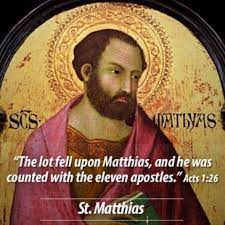
St. Matthias

When They Lived

St. Matthias is believed to have lived during the 1st century AD. His exact birth and death dates are not
precisely known, but he is often associated with the time of Jesus Christ and the early days of the Christian
Church.

Where They Lived

St. Matthias is traditionally associated with various locations in the Eastern Mediterranean region, particularly
in the areas around Jerusalem and Judea. He is often mentioned in the context of the early Christian community
in Jerusalem.

Notable World Events During Their Time

  • Roman Occupation: St. Matthias lived during a time of Roman rule over a significant
    portion of the known world. The influence of the Roman Empire was felt in various aspects of daily life, from
    politics and governance to culture and trade.
  • Death of Jesus Christ: St. Matthias was said to have been chosen as an apostle to replace
    Judas Iscariot after Judas betrayed Jesus Christ. This event is significant not only in Christian theology
    but also in the broader context of the early Christian movement.
  • Spread of Christianity: St. Matthias was a witness to the rapid expansion of Christianity
    from its humble beginnings in Jerusalem to other parts of the Roman Empire. This period marked the initial
    stages of a religious movement that would have profound historical implications.
  • Nero’s Persecution: St. Matthias lived during a time when early Christians faced sporadic
    but intense persecution. The most infamous of these persecutions was carried out by the Roman Emperor Nero,
    who blamed Christians for the Great Fire of Rome in 64 AD.
  • Pax Romana: St. Matthias lived during a period known as the Pax Romana, a relatively
    peaceful and stable era within the Roman Empire. This stability facilitated the movement of people, ideas,
    and goods across vast distances.
  • Emergence of Rabbinic Judaism: During St. Matthias’s lifetime, Judaism was undergoing
    transformations following the destruction of the Second Temple in 70 AD. The emergence of Rabbinic Judaism as
    a central form of Jewish religious expression was an important development during this time.
  • Early Scientific Progress: While not directly related to St. Matthias, the 1st century AD
    saw some scientific advancements, including progress in the fields of astronomy, mathematics, and medicine.
    These advancements laid the groundwork for future discoveries.

Patronage

St. Matthias is commonly recognized as the patron saint of tailors, carpenters, and those who work with
alcohol. His patronage of these diverse professions reflects his role as an apostle and his association with
various aspects of daily life and work. The choice of patronage also serves as a reminder of the
interconnectedness of faith, vocation, and the everyday activities of people.

The Life of St. Matthias

Matthias, whose name means gift of God, was born in the 1st Century in Judea, in the Roman Empire. According to the book of Acts in the Bible,Matthias had been with Jesus from his baptism by John until his ascension, even though he was not mentioned in the list of Jesus disciples.

The appointment of Matthias as an Apostle was made after Jesus had ascended into heaven and before the descent of the Holy Spirit upon the early church. Peter had proposed to the disciples the nomination of two men to replace Judas Iscariot, and they chose Joseph, called Barnabas, and Matthias.

After praying to God for guidance in choosing an Apostle, they cast lots. The lot fell to Matthias, signaling that he was now the 12th apostle of Jesus Christ. Soon after his election, Matthias received the Holy Spirit with other apostles, as stated in Acts 2:1–4.

Ministry

The Acts of the Apostles state that Matthias ministered in Judaea and then carried missions to foreign places. According to Greek tradition, he Christianized Cappadocia, a mountain district in central Turkey.

He also preached in Aethiopia, in the region of Colchis, which is now modern-day Georgia. That is the place where Matthias was stoned, according to Nicephorus, the Greek historian.

The Synopsis of Dorotheus states that Matthias preached the Gospel to barbarians and meat-eaters in the interior of Ethiopia, where the sea harbor of Hyssus is located.

As he was preaching the Gospel message, Matthias emphasized the importance of self-control. For people to experience the peace and joy that God intends, Matthias said, they must subordinate their physical desires to their spiritual desires.

He used to teach people that the physical body is only temporary and is subject to many temptations to sin and illnesses. However, the spiritual soul is permanent and able to discipline the body for good purposes. Matthias preached that the Holy Spirit would empower people to exercise self-control over their unhealthy physical desires so that they could experience good health in their bodies and souls.

Death of Matthias

Matthias died in the year 80 AD. However, there is conflicting information about the place of death and burial site of Matthias. The Synopsis of Dorotheus tradition claims that Matthias died at Sebastopolis and was buried near the Temple of the Sun. Another tradition maintains that he was stoned in Jerusalem by the local people and beheaded.

The Hippolytus of Rome tradition states that Matthias died of old age in Jerusalem. According to Nicephorus, a marker placed in the ruins of the Roman fortress at Gonio in the modern Georgian region of Adjara claims that Matthias is buried at that site.

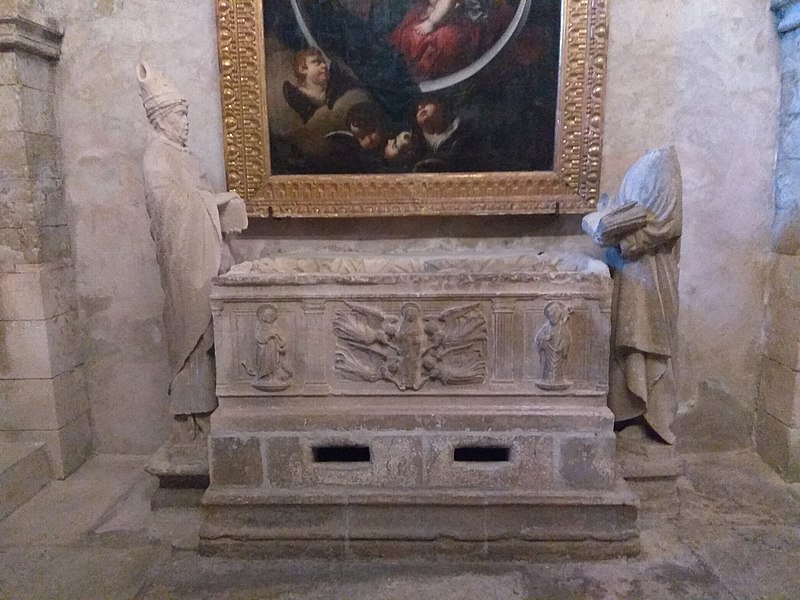
There is a claim that the remains of St. Matthias were taken to Italy by Empress Helena, the mother of Emperor Constantine the Great. The other part of these remains is said to have been taken to the Abbey of Santa Giustina in Padua, and the other part is in the Abbey of St. Matthias in Trier, Germany.

Feast Day

St. Matthias’ feast day is celebrated on May 14. Initially, in the 11th-century Roman Calendar, the feast was celebrated on February 24, and during leap years, it was celebrated on February 25. When the General Roman calendar was revised in 1969, the day of the feast was transferred to May 14 to avoid celebrating it in Lent.

However, the Eastern Rites of the Eastern Orthodox Church celebrate the feast on August 9. The Western Rite parishes of the Orthodox Church are still following the Old Roman Rite of February 24 and 25 in leap years.

The Church of England’s Book of Common Prayer, as well as other older common prayer books in the Anglican Communion, celebrate Feast Day on February 24. The same applies to the Episcopal Church, the Lutheran Church of Missouri Synod, and the Lutheran Church of Canada.

Patronage

St. Matthias is the Patron saint of alcoholics, carpenters, and tailors; Gary, Indiana; Great Falls-Billings, Montana; smallpox; hope; and perseverance.

3 Interesting Facts About St. Matthias

  1. He was an Apostle who replaced Judas Iscariot.
  2. Even as an Apostle of Jesus, St. Matthias is only mentioned in the
    book of Acts and nowhere else in the New Testament.
  3. He was one of the 72 disciples whom Jesus sent out to preach the gospel.
    News.

Prayer to St. Matthias

O Glorious Saint Matthias, in God’s design it fell upon you to take the place of the unfortunate Judas who betrayed his Master. You were selected by the twofold sign of the uprightness of your life and the call of the Holy Spirit. Obtain for us the grace to practice the same uprightness of life and to be called by that same Spirit to the wholehearted service of the Church. Then, after a life of zeal and good works, let us be ushered into your company in heaven to sing forever the praises of Father, Son, and Holy Spirit. Amen.
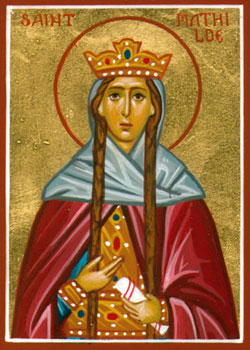

St. Matilda

When They Lived:

St. Matilda, also known as Mathilda or Matilda of Ringelheim, lived from around 895 to 968 AD.

Where They Lived:

St. Matilda resided primarily in the region of Saxony, which is located in present-day Germany.

Notable World Events During the Time of Their Life:

  • Viking Age: St. Matilda lived during a period of Viking expansion and invasions across Europe, impacting political and cultural landscapes.
  • Foundation of the Holy Roman Empire: In 800 AD, Charlemagne’s coronation as Emperor established the Holy Roman Empire, shaping European politics and religion.
  • Ottonian Dynasty and German Empire: St. Matilda was part of the Ottonian Dynasty, playing a role in the formation of the early German Empire.
  • Magdeburg Cathedral: Matilda contributed to the establishment of Magdeburg Cathedral in 937 AD, a significant religious and cultural center.
  • Schism of 1054: The tensions between Eastern and Western Christianity, evident during Matilda’s time, led to the schism in 1054.
  • Islamic Golden Age: Matilda’s era coincided with the Islamic Golden Age, marked by advancements in various fields and cultural exchange.

Their Patronage:

St. Matilda is known as the patroness of large families, widows, and difficult marriages. She nurtured her family and supported charitable work and religious foundations.

Early Life

Saint Matilda of Ringelheim was born into royalty and married into it.

Matilda, also called Mathilde, was born circa 892 in Enger, the Saxony province of East France. Her father was Dietrich, a Saxon Count, and her mother was Reinhild, who was also of royal descent.

She was trained by her grandmother, who was the abbess of a convent. Not only was she given basic training in sewing, but she was also raised to pray and fast. She was a beautiful girl who took special care to give to the needy.

In 909, Saint Matilda got married to Duke Henry of Saxony, who would later become King of East France. In 912, Henry’s father passed away, and he assumed authority.

In 919, ten years after they got married, he was the successor to the German throne after King Conrad I.

The marriage was a very happy one, and Matilda gave birth to five children: three sons and two daughters.

Dedication and Devotion

While Saint Matilda was Queen, her husband bestowed her with riches. From these riches, she gave to the needy and built monasteries all over the city.

She was so pious, religious, and humble that it was recorded that her husband always resorted to her for advice. In 936, her husband Henry passed away and was interred in Quedlinburg, where Matilda would later build a monastery.

Matilda went on to reside in the monastery for some time, assuming the role of the very first abbess. She continued to oversee the business of her family and the throne.

She continued to establish convents with the possessions that her husband had left for her. She split her riches and distributed them to the poor. This further annoyed her sons, Otto and Henry, who never saw eye to eye.

Trouble began to brew when it was time for her son Otto to assume the role of King. She was convinced that the role was better suited for the younger Henry. When she tried to convince Otto to relinquish the throne to his younger brother, he became enraged.

Henry rioted against his brother Otto. This bitterness caused Saint Matilda to escape to her home in the country.

Otto’s wife, Eadgyth, went in search of Saint Matilda and urged her to come back with her. Matilda agreed and surrendered her possessions to Otto, thereby forgiving him.

Matilda’s son, Henry, was ruthless and continued to riot against Otto. Matilda warned him about his behavior, and when he didn’t listen, she prophesied his death.

After Henry died, Matilda was said to have built three more convents. Her health began to deteriorate. She was left in charge of the throne after Otto was crowned Roman Emperor in 962.

Death and Canonization

Saint Matilda was said to have spent some time in her last years in her convent at Nordhausen.

She died at the age of 76 on March 14, 968, after battling sickness for a while. She does so in her convent in Quedlinburg, where she is buried next to her husband.

Matilda devoted her life to setting up monasteries where young people could learn all about the religion. Matilda passed on the authority of the convents to her granddaughter in 966. Her name was also Matilda, and she was the daughter of Otto and Adelheid of Burgundy.

Saint Matilda was canonized Pre-congregationally. She is celebrated on March 14, the day of her death.

5 Interesting Facts About Saint Matilda

  1. Did you know that Saint Matilda is the patron saint of
    Disappointing children, the falsely accused, Queens, and second
    Marriages?
  2. Did you know that Saint Matilda was King Henry’s second wife after
    His first marriage failed.
  3. Did you know that Saint Matilda’s son Otto probably started the Holy
    Roman Empire?
  4. Did you know that the Nordhausen convent was the last to be built by
    Saint Matilda?
  5. Did you know that when her husband died, Saint Matilda asked for
    Mass for his soul, removed her Jewelry, and pledged poverty?

Prayer to Saint Matilda

O GOD, by whose grace the blessed Matilda, enkindled with the fire of thy love, became a burning and shining light in thy Church: Grant that we may be inflamed with the same spirit of discipline and love and ever walk before thee as children of light, through Jesus Christ, our Lord. Amen.

Source:[https://www.sainttherse.com/prayer-to-st-matilda-of-saxony/]{.ul}

St. Matthew

When They Lived:

St. Matthew, also known as Levi, is believed to have lived during the 1st century AD. The exact dates of his birth and death are not definitively known, but it is widely accepted that he lived in the early decades of that century.

Where They Lived:

St. Matthew’s life was centered around Capernaum, a bustling fishing village located on the northern shore of the Sea of Galilee in ancient Israel. This region was a crossroads of cultures and trade, making it a melting pot of various influences.

Notable World Events During the Time of Their Life:

  • The Roman Empire’s Expansion: St. Matthew’s lifetime coincided with the height of the Roman Empire’s expansion, marked by Emperor Augustus’ reign. The Roman Empire’s far-reaching influence had a profound impact on the cultures and societies of the time.
  • The Birth of Jesus Christ: A pivotal event in history, the birth of Jesus Christ is said to have occurred during St. Matthew’s lifetime. While not directly related to St. Matthew’s patronage, this event had a profound impact on Christianity and the world’s cultural and religious landscape.
  • The Destruction of the Second Temple: In 70 AD, the Second Temple in Jerusalem was destroyed by the Romans under Emperor Titus. This event marked a significant turning point in Jewish history and had far-reaching repercussions for religious practices and beliefs.
  • Ptolemaic Influence in Egypt: During St. Matthew’s time, the Ptolemaic Kingdom in Egypt was transitioning into Roman control. This change in power had implications for trade, culture, and knowledge exchange throughout the Mediterranean region.
  • The Development of Roman Law: St. Matthew’s era witnessed the growth and refinement of Roman legal systems, which would later play a crucial role in shaping modern legal frameworks. This development had implications beyond the confines of religion and directly affected the lives of individuals.

Their Patronage:

St. Matthew is revered as the patron saint of accountants, tax collectors, bankers, and customs officers. His association with these professions stems from his own background as a tax collector before he answered the call to become one of Jesus’ twelve apostles. St. Matthew’s transformation from a tax collector to an apostle symbolizes redemption and a change of heart. His story serves as a reminder that

One of the Chosen Twelve

Just like in the case of his fellow Apostles, it is almost impossible to make a complete biography of Matthew because the details of his life are scarce and fragmentary. But the Gospels as well as other non-canonical sources tell us some information about him. Matthew’s name always appears in the lists of the Twelve chosen by Jesus, in Matthew 10:3, Mark 3:18, Luke 6:15, and Acts 1:13. These verses verify that he was indeed one of the Twelve chosen Apostles.

According to their appearance in the Bible, the first gospel goes under his name. The Gospel of Matthew presents Matthew in the list of Twelve with a very precise label: “the tax collector” (Matthew 10:3). Hence, Matthew is identified with the man sitting at the tax office whom Jesus called to follow him: “As Jesus passed on from there, he saw a man named Matthew sitting at the customs post. He said to him, ‘Follow me, And he got up and followed him.” (Matthew 9:9). The Gospels of Mark and Luke also tell of the calling of a man sitting at the tax office who was named “Levi” (see Mark 2:13–17 and Luke 5:27–30).

Despised by Men, Called by Jesus

As his post demanded of him, Matthew collected the taxes that the Jews, his own people, had to pay to the Roman government. As such, he was despised by people because he was considered to be in allegiance with the oppressors. He had probably become used to it, but the day he was called by Jesus changed his life. Luke described what happened after Levi, or Matthew, left his post to follow Jesus: “Then Levi gave a great banquet for him in his house, and a large crowd of tax collectors and others were at the table with them. The Pharisees and their scribes complained to his disciples, saying, ‘Why do you eat and drink with tax collectors and sinners?’ Jesus said to them in reply, ‘Those who are healthy do not need a physician, but the sick do. I have not come to call the righteous to repentance, but sinners.’” (Luke 5:29-32)

Matthew’s Mission

Matthew wrote his version of the Jesus story primarily for the Jewish people who had become followers of Christ. He wanted his audience to know that Jesus was indeed the promised Messiah, the Savior of all people. His Gospel makes clear that Jesus was the fulfillment of all the Old Testament prophecies. In Matthew’s Gospel, we could also see the Eight Beatitudes, which serve as the “magna carta” of the Christian life.

After the Ascension of Jesus, empowered by the Holy Spirit on Pentecost, Matthew preached the Good News in obedience to Christ’s commission, found in the concluding chapter of Matthew’s Gospel: “Go, therefore, and make disciples of all nations, baptizing them in the name of the Father, and of the Son, and of the Holy Spirit, teaching them to observe all that I have commanded you. And behold, I am with you always, until the end of the age.” (Matthew 28:19-20)

It is believed that Matthew reached Ethiopia and other parts of Africa. He established Christian communities there and preached the Gospel. Some sources say that he died a natural death, while others say he was martyred—stabbed to death in particular—in Ethiopia. His feast day is celebrated on September 21.

Five Interesting Facts About St. Matthew

  • St. Matthew is the patron saint of bankers and bookkeepers.
  • St. Matthew’s name in Greek Ματθαῖος (Matthaios) or Hebrew [וּהיָ תְתִּמ], (Mattityahu), means “gift of Yahweh”.
  • St. Matthew is recognized as a saint by several churches other than the Roman Catholic Church, such as the Lutheran, Anglican, and Eastern Orthodox churches, among others.
  • The Gospel of Matthew is symbolized by the divine man or a winged man (reminiscent of the vision of the prophet Ezekiel and the four living creatures in Revelation) because the Gospel highlights Jesus’ entry into this world, His lineage, Incarnation, and birth. It is, according to St. Irenaeus, the “Gospel of His humanity”.
  • Among the four Gospels, Matthew’s version is the only one that mentions the visit of the magi to the Child Jesus.

Prayer to St. Matthew

O God, who with untold mercy was pleased to choose as an Apostle Saint Matthew, the tax collector, grant that, sustained by his example and intercession, we may merit to hold firm in following you. Through our Lord Jesus Christ, your Son, who lives and reigns with you in the unity of the Holy Spirit, one God, for ever and ever Amen.

St. Mary Magdalene

When They Lived:

St. Mary Magdalene, often referred to as the “Apostle to the Apostles,” lived during the 1st century AD. While the exact dates of her birth and death are not definitively known, historical and religious texts suggest she was born around 1st century BCE and passed away around 1st century CE.

Where They Lived:

St. Mary Magdalene hailed from the town of Magdala, situated on the western shore of the Sea of Galilee in ancient Judea. This picturesque fishing village was nestled among rolling hills and held significant importance as a trade and cultural center.

Notable World Events During the Time of Their Life:

  • Roman Conquest of Britain (43 AD): The Roman Empire expanded its dominion by conquering Britain, leading to the establishment of Roman rule on the island and shaping its cultural and political landscape for centuries.
  • The Great Fire of Rome (64 AD): The infamous fire that ravaged Rome during the reign of Emperor Nero resulted in widespread destruction. This event also marked the beginning of Nero’s persecution of Christians, which could have directly affected St. Mary Magdalene and other early Christians.
  • Boudica’s Revolt (60-61 AD): Boudica, queen of the Iceni tribe in Britain, led a rebellion against Roman forces in response to oppressive Roman rule. Her actions left a lasting impact on British history and the struggle for independence.
  • Pompeii and Herculaneum Destruction (79 AD): The catastrophic eruption of Mount Vesuvius buried the Roman cities of Pompeii and Herculaneum under layers of ash and pumice, preserving a snapshot of daily life in ancient Rome and its colonies.
  • Foundation of the Flavian Dynasty (69-96 AD): The Flavian emperors Vespasian, Titus, and Domitian succeeded in restoring stability to the Roman Empire after the tumultuous Year of the Four Emperors, ushering in a new era of Roman leadership.
  • Han Dynasty Collapse and Three Kingdoms Period (220 AD): In China, the once-mighty Han Dynasty crumbled, leading to a period of fragmentation and warfare known as the Three Kingdoms Period. This era would have a profound impact on the country’s cultural and political evolution.

Their Patronage:

St. Mary Magdalene is revered as the patron saint of a diverse array of causes. She is often invoked as a protector against temptation, making her an emblem of spiritual transformation and redemption. Moreover, she is the patroness of women, particularly those seeking solace from personal struggles or seeking guidance on their spiritual journeys. Her association with perfumery and aromatic oils also makes her the patron saint of perfumers and those who work with fragrances.

A Subject of Theories

The Sacred Scriptures have mentioned plenty of women who played important roles in the whole history of salvation. Of course, the Blessed Virgin Mary is exalted among all women for being chosen as the Mother of Jesus Christ, the Redeemer of humanity. Another of the most prominent women mentioned in the New Testament was Mary Magdalene.

As her name implies, Mary lived in the town of Magdala, a prosperous fishing village, at the time Jesus was active in this region. It was also a place where Jesus spent much of His time preaching. This was the place where Mary probably first encountered Jesus.

Mary Magdalene has become the subject of many theories in the New Testament. Some think that she might be the unnamed woman who entered Simon the Pharisee’s house, bringing an alabaster jar of costly perfume, and “stood behind him at his feet weeping and began to bathe his feet with her tears. Then she wiped them with her hair, kissed them, and anointed them with the ointment.” (Luke 7:38). Some say that she was the sister of Martha and Lazarus of Bethany (see John 11:1-44). Others say, and this is most probably what Mary Magdalene was known for until today, that she was the unknown woman who was caught in adultery (see John 8:2-11).

What the Gospels Say

But what is clear in the Gospel is that Mary Magdalene was one of the Galilean women who followed Jesus. To be more precise, she was the woman who “had been cured of evil spirits and infirmities… from whom seven demons had gone out” (Luke 8:2). Nothing is sure about what these “demons” were, but over the centuries, many scholars have guessed that she was an immoral woman. The Church has said this is not so, while many Scripture experts believe that the reference means she was cured of illness by Christ.

What seemed ironic was that Jesus chose the Twelve Apostles. In the face of His suffering and death, they all left Him, except John. The Gospels speak of women who were present during Jesus’ passion. Matthew recounts that there were “many women there, looking on from a distance, who had followed Jesus from Galilee, ministering to him.” (27:55). Mark provided details of who these women were: “There were also women looking on from a distance. Among them were Mary Magdalene, Mary the mother of the younger James and of Joses, and Salome.” (15:40)

But the Gospel according to John even mentioned that she was at the foot of Jesus’ cross: “Standing by the cross of Jesus were his mother and his mother’s sister, Mary the wife of Clopas, and Mary of Magdala.” (John 19:25). And to complete the details, according to Mark, Mary Magdalene was present when Jesus was laid in the tomb: “Mary Magdalene and Mary the mother of Joses watched where he was laid.” (Mark 15:47).

The First to See the Risen Christ

The Gospels all agree that Mary Magdalene was the first person to see the Resurrected Christ (see Matthew 28:1; Mark 16:9; Luke 24:10; John 20:1). The Gospel according to John provided more details about Mary Magdalene’s encounter with the Risen Jesus than the other three Gospels.

St. Mary Magdalene

Nothing is known about where Mary Magdalene went after Jesus ascended into heaven. Tradition says that she went with the Apostle John to Ephesus. Others say she went to southern France, where she lived in solitude in a cave and prayed. Her feast day is celebrated on July 22.

Five Interesting Facts About St. Mary Magdalene

  • St. Mary Magdalene is known as “Apostola Apostolorum” or the “Apostle to the Apostles”. According to John 20:17, the Risen Jesus instructed and sent her to tell the Apostles that He was ascending to God.
  • St. Mary Magdalene’s name is mentioned twelve different times in the Bible.
  • Pope Gregory the Great referred to Mary Magdalene’s deliverance from the seven demons, inferring that they were the seven deadly sins talked about in the Bible, which include lust, gluttony, greed, sloth, wrath, envy, and pride.
  • St. Mary Magdalene is the patron saint of converts, women, penitents, contemplation, and sexual temptation.
  • According to French legend, St. Mary Magdalene is alleged to have converted the king and queen of Gaul and evangelized the Franks, thus becoming the Apostle of France.

Prayer to St. Mary Magdalene

O God, whose Only Begotten Son entrusted Mary Magdalene before all others with announcing the great joy of the Resurrection,grant, we pray,that through her intercession and example we may proclaim the living Christ and come to see him reigning in your glory. Who lives and reigns with you in the unity of the Holy Spirit,one God, for ever and ever. Amen.

St. Martha

When they lived:

St. Martha, believed to have been born around the 1st century AD, lived during the time of early Christianity in the Roman province of Judea.

Where they lived:

St. Martha resided in the village of Bethany, a short distance from Jerusalem. This quaint village, nestled on the eastern slope of the Mount of Olives, provided the backdrop for many of the significant events in her life.

Notable world events during the time of their life:

  • Construction of the Roman Colosseum (70-80 AD): As St. Martha lived through the first century, she would have been aware of the grand construction of the Roman Colosseum, an iconic amphitheater in Rome, showcasing the might of the Roman Empire through gladiatorial contests and other spectacles.
  • Boudicca’s Revolt (60-61 AD): Martha might have heard tales of the fierce warrior queen Boudicca leading an uprising against Roman rule in Britain, highlighting the ongoing conflicts within the expanding Roman Empire.
  • Great Fire of Rome (64 AD): The infamous fire that swept through Rome during the reign of Emperor Nero would have been a topic of discussion even in far-off Bethany, emphasizing the interconnectedness of the Roman world.
  • Pompeii and Herculaneum Destruction (79 AD): While not directly impacting St. Martha’s region, the eruption of Mount Vesuvius and the subsequent destruction of Pompeii and Herculaneum brought attention to the raw power of nature.
  • Spread of Buddhism: In the East, Buddhism continued to spread during St. Martha’s lifetime, highlighting the diverse spiritual landscape of the ancient world.
  • Emergence of the Silk Road: The trading network known as the Silk Road was growing in significance, linking the East and West and facilitating the exchange of goods, ideas, and cultures.

Their patronage:

St. Martha is widely recognized as the patron saint of homemakers, cooks, and innkeepers. Her hospitality and devotion to serving Jesus and his disciples exemplify her role as a patron for those who embrace the responsibilities of domestic life. Her story reminds us of the importance of welcoming others with an open heart and finding spiritual meaning in everyday tasks.

Martha’s encounter with Jesus, as recounted in the Bible, demonstrates the balance between active service and contemplative devotion. Her willingness to serve in practical ways while also engaging in deep theological conversations with Jesus makes her an intriguing figure for people seeking to integrate their faith into their daily lives.

In an age where the balance between material and spiritual pursuits is often challenged, St. Martha’s example offers guidance on finding harmony between hospitality, faith, and personal growth. Whether in the bustling kitchens of modern households or the quiet corners of meditation, St. Martha’s legacy continues to inspire individuals to find the divine in the ordinary and to extend warmth and kindness to all who cross their paths.

Martha, the Anxious Server

Nothing was recorded about the early life of St. Martha. Thankfully, we could see a glimpse of her life through the Gospels. What is clear about Martha is that she was from Bethany, a small village about two miles from Jerusalem. She had two siblings, Mary and Lazarus. It was evident that Jesus was a close friend to them.

Martha was mentioned in three Gospel passages. These passages show the type of friendship these siblings had with the Lord Jesus. The first instance, in the Gospel according to Luke (10:38-42), we could find how Martha received Jesus in their home. She was described as a very busy guest master, worrying herself with serving Jesus. While she was frantically preparing something for Jesus, her sister Mary sat beside the Lord’s feet and listened to Him speaking, without being bothered by her sister’s business. Martha was worrying so much about the work, she did not have time to enjoy being with Him and listening to His words. Martha complained about how her sister was not helping her serve. Jesus replied to her, saying, “Martha, Martha, you are anxious and worried about many things. There is a need for only one thing. Mary has chosen the better part and it will not be taken from her.” (Luke 10:41-42). Jesus had put Martha’s over-worrying into the right context who emphasized the importance of contemplating Him before all things.

Martha’s Faith

The second instance, in the Gospel according to John (11:1-44), we could find Martha and her sister Mary mourning the death of their brother Lazarus. He had died for four days when Jesus went to Bethany. She told the Lord that if He was there with them earlier, their brother would have not died. But Jesus gave her a revelation: “I am the resurrection and the life; whoever believes in me, even if he dies, will live, and everyone who lives and believes in me will never die. Do you believe this?” to which Martha replied, “Yes, Lord. I have come to believe that you are the Messiah, the Son of God, the one who is coming into the world.” (John 11:25-27). Moved by this kind of faith, Jesus went to Lazarus’ tomb and ordered that it be opened. Martha’s faith was confirmed by Jesus through raising Lazarus back to life.

Martha’s “New” Serving

The third and last instance, again in the Gospel according to John (12:1-2), six days before the Passover, we could find Jesus in the house of the three siblings. They hosted Him for dinner, probably a thanksgiving celebration for such a miracle of raising Lazarus from the dead. Once again, we could see in these passages that Martha was serving again. But this time, her serving was different from the first. Her serving was infused with her faith and peace.

Early traditions say that after the first persecutions of Christians, Martha, Mary and Lazarus and other disciples left their own land and went to France, arriving in Saintes-Maries-de-la-Mer, in Provence, where they brought the Christian faith. In Bethany, now called El-Azariyeh or “the place of Lazarus”, we can find the tomb of Lazarus and a sanctuary built upon the ruins of Byzantine and Crusader structures. This is believed to be the house of Martha. Her feast day is celebrated on July 29.

Five Interesting Facts About St. Martha

  • St. Martha is the patron saint of housewives, servants, waiters and cooks.
  • St. Martha is commonly regarded as typifying the active Christian life as contrasted with her sister Mary, who typifies the contemplative life.
  • The name “Martha” in Aramaic means “lady or mistress of the house”.
  • St. Martha is also venerated in the Eastern Christianity, Anglican Communion and Lutheran Church.
  • St. Martha is depicted in Christian art with a dragon trampled by her feet, which merited her the nickname “the dragon slayer”! This was according to a legend about her, who fought, caught and tied up a “dragon” (probably a crocodile) that killed many people.

Prayer to St. Martha

O God, whose Son called Lazarus to life from the grave.and was pleased to be welcomed in Martha’s house as a guest, grant, we pray, that, serving faithfully our brother and sisters, we may merit, with Mary, to be fed by meditating on your words.Through our Lord Jesus Christ, your Son, who lives and reigns with you in the unity of the Holy Spirit, one God, for ever and ever. Amen.

St. Marian

When they lived:

St. Marian’s life graced the pages of history during the early 3rd century, around the years 240 to 290 AD.

Where they lived:

St. Marian’s footsteps echoed in the ancient city of Antioch, situated in the Roman province of Syria, a bustling metropolis renowned for its cultural diversity and strategic significance.

Notable world events during the time of their life:

  • Crisis of the Third Century (235-284 AD): St. Marian lived through a tumultuous period marked by political instability, economic decline, and military struggles within the Roman Empire. This era saw multiple emperors rise and fall, contributing to widespread chaos and uncertainty.
  • Galen’s Medical Pioneering (129-216 AD): Amid the chaos, the renowned physician Galen’s works laid the foundation for modern medicine. His contributions to anatomy, physiology, and pharmacology significantly advanced the understanding of the human body and medical practices during St. Marian’s lifetime.
  • Diocletian’s Reforms (late 3rd century AD): St. Marian lived through the reign of Emperor Diocletian, who attempted to stabilize the Roman Empire through economic reforms, administrative restructuring, and religious policies. His efforts reshaped the empire’s governance and religious landscape.
  • Expansion of the Silk Road: St. Marian’s era witnessed the expansion of the Silk Road trade network, fostering cultural exchange between the East and West. The exchange of goods, ideas, and technologies along this ancient route had a profound impact on global civilizations.
  • First Recorded Pandemic (Antonine Plague, 165-180 AD): Though preceding St. Marian’s time by a few decades, the Antonine Plague’s effects lingered. This early pandemic, possibly caused by either smallpox or measles, left a scar on the Roman Empire and contributed to its changing dynamics.

Their patronage:

St. Marian stands as the patron saint of resilience and steadfastness in the face of adversity. Their life embodies the spirit of endurance and faith during times of upheaval, drawing strength from their unwavering commitment to their beliefs. St. Marian’s legacy serves as an inspiration for those navigating challenges in their own lives, teaching us that even in the midst of chaos, the light of hope and determination can shine brightly.

Early Life History

Marian, known as Mary, the virgin mother of Jesus, was born on September 8, 18 BC. She was a 1st-century Galilean Jewish Woman from Nazareth. According to the apocryphal Gospel of James, Mary was the daughter of St. Joachim and St. Anne. It is stated that Anne had been barren for a long time, and she was of advanced age when she gave birth to Mary.

When Mary was 3 years old, she was given to be of service in the Templein Jerusalem. However, the idea that she was allowed in the Holy of Holies is impossible, as this would have constituted blasphemy for ancient Jews.

Furthermore, some apocryphal accounts state that Mary was betrothed to Joseph when she was between 12 and 14 years old. Joseph was of advanced age. According to ancient Jewish custom, Mary could have been betrothed when she was about 12 years old.

Miracle Conception

The angel Gabriel appeared to Mary, who was a virgin at that time, and informed her that the Holy Spirit would make her conceive and that she would give birth to Jesus, the son of God. The angel told Mary to name her son Yeshua, which means salvation.

Just before the betrothal ceremony, Joseph discovered that Mary was pregnant. He planned to secretly leave her, but the angel of God told him not to leave her because the pregnancy was by the Holy Spirit. He told him not to hesitate to take Mary as his wife, and this paved the way for their marriage.

Mary was later told by the angel Gabriel that her relative Elizabeth, the mother of John the Baptist, was pregnant. She had been barren for a long time and was of advanced age. Elizabeth was the wife of a priest named Zechariah. Mary visited her, and upon her arrival, she was addressed by Elizabeth as the mother of her Lord.

The Roman Emperor Augustus declared that a census was to be held. Therefore, Joseph had to return to Bethlehem, his hometown, to register for a Roman census. He went to Bethlehem with Mary, and on arrival, Mary gave birth to Jesus in a manger because the local inn was full.

According to the gospel of Matthew, Joseph was warned in a dream that King Herod wanted to kill all infant boys, including baby Jesus. Herod had been informed that a newborn child was to be a king, and he felt threatened. Joseph and Mary fled by night to Egypt and lived there for some time. When Herod died, they returned to Nazareth in Galilee and lived there.

Mary was mentioned a few times in the New Testament when she was with Jesus. She was present when Jesus performed his first miracle during a wedding at Cana. At her suggestion, Jesus changed water into wine. She was also present among the women at the crucifixion, standing near the disciple whom Jesus loved, along with Mary of Clopas and Mary Magdalene.

Death of Mary

Mary lived for 11 years after the death of Jesus and died in 41 AD. On June 25, 1997, Pope John Paul II said that Mary died of natural causes before her assumption into heaven.

Feast Day

There are numerous feast days for St. Mary. However, there are two prominent feasts in the General Roman Calendar. On January 1, there is Mary, the Holy Mother of God’s feast day. On February 2, there is the purification of the Blessed Virgin Mary, also known as Candlemas.

Differences in feasts are influenced by doctrinal issues. A good example is the Feast of the Assumption. There is a lack of agreement among all Christians on the circumstances of the death or Assumption of Mary. Therefore, the feast of assumption is celebrated among some denominations but not others.

Patronage

Mary serves as the patron saint of all human beings, watching over them with motherly care. This is due to her role as the mother of Jesus Christ, the savior of the world.

5 Interesting Facts About St. Marian

  • Mary was 12 years old when she was engaged to Joseph and 13 when she
    gave birth to Jesus.
  • She was a virgin when she gave birth to Jesus. The Holy Spirit made
    Mary conceive.
  • Mary was instrumental in calling Jesus to perform his first miracle at
    a wedding in Cana. He turned water into wine.
  • According to Eastern Christian teachings, Mary’s tomb was found
    empty after her body and soul ascended to heaven.
  • Mary, just like her husband Joseph, was a descendant of King David.

Prayer to St. Marian

Hail Mary, full of grace; the Lord is with thee; blessed art thou among women, and blessed is the fruit of thy womb, Jesus. Holy Mary, Mother of God, pray for us sinners, now and at the hour of our death. Amen.

St. Margaret of Cortona

Born in 1247 A.D., Saint Margaret was born in Laviano, Italy. She was born to farming parents, and at the tender age of seven years old, she lost her dear mother. Soon after her mother’s death, her father remarried.

Saint Margaret did not see eye to eye with her stepmother, though. At the age of seventeen, she ran away with Arsenio. She stayed with him for a total of ten years in his castle as his mistress and even bore him a son.

One day, he did not return to the castle in which they were staying. After much investigation into his disappearance, it came to light that her beloved was murdered in a forest nearby.

How did this young woman come to her faith after experiencing such heartache? Let’s read on and find out!

Saint Margaret’s Turn to the Church

The loss of her beloved Arsenio shook Saint Margaret to such a point that she took on a life of prayer and penance. Soon after his death,Saint Margaret left the castle with her child and attempted to return home to her father. Outlawed by her stepmother, Saint Margaret and her son took up living with the Franciscan friars in Cortona.

In 1277, Saint Margaret joined the Third Order of St. Francis. Here, she made the choice to live in poverty and begged for only bread and sustenance. She continued with her life of prayer and penance in Cortona.

Later, Saint Margaret established a hospital in Cortona. It was here that she looked after the sick, homeless, and impoverished people of Cortona and its environs. To ensure there were enough nurses for the running of the hospital, Saint Margaret established the congregation of Tertiary Sisters.

Furthermore, another order was established by Saint Margaret that was devoted to Our Lady of Mercy. The members of this order also devoted themselves to supporting the hospital and helping the needy as much as they could.

The Last Years of Saint Margaret

Only on two occasions did Saint Margaret of Cortona involve herself in public affairs. On both occasions, Saint Margaret challenged the Bishop of Arezzo. Why did she do this? This was simply because he lived and engaged in war like a prince. She did not agree with this, and thus she took it upon herself to challenge him.

When he refused to change his ways, Saint Margaret moved in and took up residence in the ruined church of Basil of Caesarea (now called Santa Margherita). Here, she lived her last remaining years. She passed away on February 22, 1297, at the age of 50 years old.

Canonization

On May 16, 1728, Saint Margaret was canonized by Pope Benedict XIII. She is further honored with a Lesser Feast. This feast takes place on the liturgical calendar of the Episcopal Church in the United States of America on February 22.

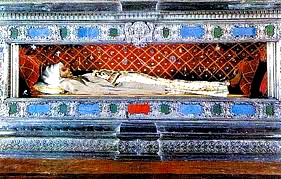
Further honoring this, the Church of Santa Margherita in Cortona was rebuilt. Her body now lies in a silver casket under the church, embalmed.

Patronage

Saint Margaret of Cortona has strong patronage for several things in society. The patronage of Saint Margaret lay against temptations, falsely accused people, homeless people, insanity, sexual temptation, single laywomen, and loss of parents. Furthermore, her patronage also includes people with mental illness, midwives, penitent women, single mothers, people ridiculed for their pity, third children, and reformed prostitutes.

5 Interesting Facts About St. Margaret of Cortona

  • The body of Saint Margaret of Cortona was once believed to be
    incorrupt. This means that it was believed that her body had the
    divine right to avoid the process of decomposition.
  • A 1950 biographical film was made about the life of Saint Margaret.
    of Cortona. This film was directed and written by Mario Bonnard, with
    Maria Frau stars as Margaret.
  • While on their stay with the Franciscan friars in Cortona, her son
    became a friar.
  • Before returning to the home where she grew up, Saint Margaret
    returned all the gifts her late beloved had gifted her to his family.
  • Sinners were drawn to Saint Margaret for her advice and
    inspiration.

Prayer to St. Margaret of Cortona

God our Father, through the intercession of Saint Margaret of Cortona,we renew our resolve to fulfill the obligation of Lenten penance. Be with us as we turn from sin and hear the Good News. This we ask through Christ our Lord. Amen.

St. Margaret Clitherow

When They Lived

St. Margaret Clitherow lived from 1556 to 1586.

Where They Lived

St. Margaret Clitherow lived in York, England.

Notable World Events During Their Life

  • Spanish Armada (1588): The iconic naval battle between the Spanish Armada and the English fleet.
  • Scientific Revolution: Advancements in science by figures like Copernicus, Galileo, and Kepler.
  • Exploration and Colonization: Establishment of the Roanoke Colony and global exploration.
  • Shakespearean Era: Flourishing arts and literature, including the works of Shakespeare.
  • Thirty Years’ War (1618-1648): A major European conflict reshaping the continent.

Patronage

St. Margaret Clitherow is the patron saint of martyrs, difficult marriages, and businesswomen. Her life story is
a testament to her unwavering faith and strength, making her an inspiration for those facing challenges in their
lives. Margaret’s commitment to her Catholic faith during a time of religious upheaval highlights her dedication
to her beliefs, even in the face of persecution and adversity. Her story serves as a reminder of the power of
conviction and the importance of standing up for one’s principles.

Early Life

Margaret Clitherow was born in York, Yorkshire, England, in 1556. She had five siblings. Her father was Thomas Middleton. He was a reputable businessman and also managed a wax factory. In 1564, he became Sheriff of York. Margaret lost her father when she was 14 and was raised by her mother, Jane Middleton. She grew up to be a charming and unique young woman. She got married to John Clitherow, the city’s chamberlain and a wealthy meat seller. Her marriage with Thomas produced three exceptional children, and they were all raised in The Shambles.

Conversion to Catholicism

Margret Citherow became a Roman Catholic in 1574. Although her husband was part of the established church, he didn’t oppose her decision as his brother was a Catholic priest. There was a law at that time that mandated that a fine be paid for missing service. John Clitherow ensured he always paid for his wife. After some time, she was imprisoned for not attending service and released shortly after. She was jailed twice after her first incarceration.

Her zeal for the Catholic faith was intense, and she was a fearless lady willing to risk her life to protect and provide shelter to Catholic priests, who were at that time illegal. She carried this out passionately, despite the capital punishment she could face for engaging in such activities. As this was against a law made in 1584.

She provided two chambers for these priests, where they lived and celebrated the mass secretly. Most fugitive priests North of England found safety and solace in her homes.

Her Oldest son, Henry, had traveled abroad to be trained as a Catholic priest. This sparked a lot of questioning and interrogation. Her husband was able to provide a genuine response to these interrogations. However, in 1586, during a search, a little boy got so scared that he pointed at the location where the priests hid, which led to their arrests.

Trial and Death

Margaret Clitherow was arrested for harboring Catholic priests. To save her family from testifying, she refused a trial. She vehemently affirmed that she didn’t commit any crime, so there was no point trying her. She was sentenced to death. She was killed in a very gruesome manner. Heavy rocks placed on a door board were pressed down on her back so that the heavy and sharp rocks pressed her down and broke her back. Her execution was carried out in 1586 on Lady Day.

Legacy

Margaret is revered as the patroness of the Catholic Women’s League. There are so many churches and institutions across America and Europe bearing her name. Churches and schools alike in England and America take her name. She is also the co-patroness of the Latin Mass Society. This organization set up the annual pilgrimage to York to honour her.

Veneration

Pope Pius XI beatified Margaret in 1929. On October 25th, 1970, together with forty other martyrs from both England and Wales, she was canonized by Pope Paul VI. Her Shrine is located at 35, 36, The Shambles.

5 Interesting Facts About St. Margaret Clitherow

  • Her Feast day is March 26th.
  • In Prison, she learned how to speak Latin to participate actively in
    Latin mass.
  • She gave birth to her third child, Williams, while in Prison.
  • She was executed while pregnant with her fourth child.
  • She is nicknamed the Pearl of York.

Prayer to St. Margaret Clitherow

Dear Lord Jesus, give us the courage and grace not only to live holy lives but to be willing to die holy deaths, as St. Margaret of Clitherow did. We thank you, dear Lord, for the examples of your holy saints. May we follow in their footsteps. In Your holy name, we pray. Amen.

Source: https://catholicexchange.com/saint-margaret-of-clitherow

St. Lydwine

When They Lived:

St. Lydwine, also known as Lydwine of Schiedam, lived from 1380 to 1433.

Where They Lived:

St. Lydwine was born, lived, and died in the town of Schiedam, located in the Netherlands.

Notable World Events During Their Lifetime:

  • Hundred Years’ War (1337-1453): A prolonged conflict between England and France that reshaped Europe.
  • Renaissance (14th-17th century): A cultural and intellectual revival that transitioned from the Middle Ages to the modern era.
  • The Council of Constance (1414-1418): A church council that reformed the Catholic Church and resolved the Papal Schism.
  • The Printing Press: Johannes Gutenberg’s invention revolutionized the spread of knowledge.
  • The Ottoman Empire’s Expansion: Expansion of territories with implications for Europe’s landscape.
  • The Great Western Schism (1378-1417): A split within the Catholic Church with competing popes.

Patronage:

St. Lydwine is the patron saint of those who suffer from chronic illness and bodily afflictions. She is also invoked by those seeking relief from prolonged pain and suffering. Her life story is a source of inspiration for Catholics and a testament to human endurance and faith in adversity.

Early Life

There are various accounts of Saint Lydwine. These various accounts differ in major parts of her life, but all accounts talk about her perseverance and love for God.

Saint Lydwine, also called Lidwid, Lidwina, and Lydwine of Schiedam, was born in Schiedam, County of Holland, in the Holy Roman Empire. She was born on April 18, 1380.

Although there are several biographical recounts of this saint, there seems to be no mention of her mother. Her father, who is not named, is only said to be an artisan.

Saint Lydwine was said to have had eight siblings. She was a bubbly young girl who loved her neighbors, but most of all, she loved God. Even at a young age, she was said to have taken time out of her daily life to say her prayers.

The most popular account of Saint Lydwine’s story states that at the age of 15, Circa 1396, she was struck by an unfortunate event that would make her revered till today.

At the age of 15, Saint Lydwine was said to have been ice skating with friends. One of these friends bumped into her, causing her to fall and break a rib.

Although initially looking like something that could easily be treated,her injury worsened. After some time, an abscess formed at the site of the injury and grew worse as the day went by.

Dedication and Devotion

Saint Lydwine became bedridden, and her days were filled with gloom and pain. Regardless, it was said that she didn’t let this affect her competence.

Saint Lydwine remained cheerful. She prayed and fasted, asking God to let her cup of pain pass over.St. Lydwine praying for healing

It seemed God didn’t hear her because the abscess burst and spread throughout her body. Her body became gangrenous and began to affect her organs.

Pieces of Lydwine’s body were said to have fallen out, and she continued to bleed from her mouth, nose, ears, and eyes. It grew increasingly difficult for her to function.

At some point in time, Saint Lydwine became paralyzed and couldn’t be moved from her bed. During this trying time, she prayed to God, and it was shown to her that this was God’s plan for her.

Several maladies befell her, but she became cheerful because she believed God was with her. Because of her sores and festering wounds, no one wanted to be associated with her, but she did not complain.

In addition to her sufferings, Saint Lydwine was said to have suffered from stigmata. These injuries on her hands and feet bore an eerie resemblance to Jesus’.

Some people claimed she faked the stigmata, but after seeing it for themselves and hearing her preach about the love of God even in her pain, they were convinced.

Saint Lydwine was especially devoted to the Virgin Mary. She continued to fast and pray, and soon she became popular for her healing powers.

Legacy

Saint Lydwine was said to have been blessed with spiritual gifts. Not only was she a miraculous healer who prayed for the sick people’s health to return, but she was also said to suffer from visions of heaven and hell.

Some traditions even claim she had encounters with apparitions that she was convinced were Jesus Christ.

Lydwine suffered from nausea, headaches, pain, fever, and even blindness, but these didn’t stop her from carrying out her prayers and fasting with enthusiasm.

She was visited by the rich and famous. She was also said to have been tested by a skeptical priest who left her home with new respect and admiration for her.

Death and Canonization

  1. She was buried in a chapel in her hometown. Her tomb became a
    popular pilgrimage.

5 Interesting Facts About Saint Lydwine

  1. Did you know that Saint Lydwine is the patron saint of the
    chronically ill, Ice skaters, and Schiedam?
  2. Did you know that Saint Lydwine was said to be the first-ever
    recorded patient suffering from multiple sclerosis?
  3. Did you know that some accounts concerning Saint Lydwine’s state that
    She was impregnated by a priest in the area. It claims that this
    was the reason why she had a ‘swollen’ body.
  4. Did you know that a written document from Saint Lydwine’s hometown
    Schiedam testifies to her extreme piety by fasting and praying for
    long hours at length? This document is said to be in existence.
    till today.
  5. Did you know that Saint Lydwine was said to have survived on bites?
    of apples, dates, sips of wine, and for some time, the Holy
    Sacrament?

Prayer to Saint Lydwine

O Glorious Saint Lydwine of Schiedam, you were chosen by Christ to suffer immense pain for poor sinners and to offer up all your sufferings to Him. Intercede on our behalf and help us through our small sufferings that cannot be compared to yours. Grant us the grace to trust completely in Jesus even during times of deep sorrow and confusion. Help us to always place our petitions in the hands of the Blessed Virgin Mary, who on our behalf will offer up our petitions to Jesus, like she did kindly for you. May we be given the grace to persevere in our sufferings until the Lord calls us home to enjoy the Glory of Heaven. Amen. Saint Lydwine, whose life was filled with intense suffering for poor sinners, pray for us!

Source:[http://sacrocordejesu7.blogspot.com/2015/04/feast-day-of-saint-lydwine-schiedam.html?m=1]{.ul}

St. Luke

When They Lived

St. Luke, the revered figure whose contributions have had a lasting impact on both the Christian faith and the world at large, is believed to have lived during the 1st century AD. While the exact years of his birth and death are not definitively known, his influence and legacy endure to this day.

Where They Lived

St. Luke is traditionally associated with the city of Antioch, a thriving cultural and commercial hub in the ancient region of Syria. Antioch’s diverse population and dynamic atmosphere would have provided an enriching environment for a figure like St. Luke to flourish.

Notable World Events During Their Time

  • The Pax Romana: St. Luke’s lifetime coincided with the Pax Romana, a period of relative peace and stability within the Roman Empire. This era facilitated the spread of ideas, cultures, and religions, contributing to the dissemination of Christianity.
  • The Great Fire of Rome (64 AD): The devastating fire that swept through Rome during Nero’s reign left an indelible mark on history. This event led to accusations against early Christians, underscoring the challenges they faced and the resilience they exhibited.
  • The Destruction of the Second Temple (70 AD): A cataclysmic event for Judaism, the Roman siege and destruction of the Second Temple in Jerusalem had far-reaching implications for both religious traditions and the political landscape of the time.
  • The Life of Apostle Paul: St. Luke is famously associated with the Apostle Paul, whose journeys and teachings played a pivotal role in shaping early Christianity. The duo’s interactions and collaboration have left an indelible mark on the Christian faith.
  • Scientific Advancements: St. Luke’s life was a witness to the advancement of scientific knowledge. While not directly tied to his work, this period saw the blossoming of Greek and Roman scientific endeavors, contributing to the foundation of modern scientific thought.

Their Patronage

St. Luke is celebrated as the patron saint of a wide array of professions and causes. While he is most commonly associated with physicians, artists, and surgeons due to his identity as both a physician and an evangelist, his patronage extends beyond these domains. Writers, historians, painters, and even those suffering from illnesses find solace in seeking his intercession. St. Luke’s multifaceted identity and diverse patronage make him a source of inspiration and comfort for people from all walks of life.

Intriguing Insights

Beyond his religious contributions, St. Luke’s life serves as a reminder of the interconnectedness of history, faith, and culture. His Gospel and the Book of Acts provide valuable insights into the early Christian community and the challenges it faced, offering a lens through which we can better understand the foundations of Christianity. St. Luke’s ability to bridge the spiritual and the practical, the scientific and the divine, makes him a figure whose legacy continues to captivate and inspire, transcending time and boundaries.

The Evangelist

There are no extant writings about the early life of St. Luke. However, the Church historian Eusebius tells us that Luke was born in Antioch and was a Gentile. We know nothing of the circumstances of the conversion of Luke.

The third of the four Gospels is attributed to St. Luke. He never met Christ in person. However, in his Gospel, Luke says that he came to a knowledge of Jesus by talking to eyewitnesses to the events of the life, death and resurrection of Jesus. Listening to these stories helped him to become a believer himself, and he penned his version of the Gospel so that others would come to know, believe and love Jesus. He also wrote the Acts of the Apostles. In it, we learn about the coming of the promised Holy Spirit, the work and mission of the Apostles, especially St. Paul, and how the Church grew in the world.

Paul’s Faithful Companion

Luke’s name appears in the Acts of the Apostles. He was a companion of St. Paul and traveled with him on his second missionary journey. We can deduce that he really joined Paul by reading the Acts of the Apostles. The first up to the sixteenth chapter of the Acts of the Apostles were written in the third person. However, in the succeeding parts of it, it suddenly passed to the first person plural: “During [the] night Paul had a vision. A Macedonian stood before him and implored him with these words, ‘Come over to Macedonia and help us.’ When he had seen the vision, we sought passage to Macedonia at once, concluding that God had called us to proclaim the good news to them.” (Acts 16:9-10)

After this, Luke then accompanied Paul to Samothrace, Neapolis and Philippi around the year 51. Another passage in the third person leads the reader to think that Luke was not arrested with Paul, but rather stayed in Philippi after his friend left. When Paul was arrested and imprisoned in Rome in the year 61, Luke remained at his side as can be seen from the Epistles of Paul to Philemon and to Timothy. After being left by all, in the last phase of his imprisonment, Paul wrote to Timothy and told him that “only Luke is with me” (2 Timothy 4:11).

The Beloved Physician

Luke was a physician. This was, in fact, proven by no less than St. Paul himself when he called Luke as the “beloved physician” (Colossians 4:14). No wonder why in his account of the Gospel, Luke helps his readers know how Jesus was concerned for the sick, the poor and those who are in need of help, forgiveness and mercy. Through his Gospel, we learn how compassionate and caring Jesus was.

The details of the death of Luke are uncertain. Some sources say he suffered martyrdom. Others say he lived to old age. The oldest traditions say Luke settled in Boeotia where he wrote the Gospel and died at age 84. His relics are found in the Abbey of Santa Giustina in Padua, a rib from his body was sent to his original tomb in Thebes and his skull is preserved in the Cathedral of St. Vitus in Prague. His feast day is October 18.

Five Interesting Facts About St. Luke

  • St. Luke is the patron saint of doctors and physicians.
  • St. Luke is also the patron saint of artists. It is believed that he painted a famous portrait of Mary, our Blessed Mother.
  • The symbol for St. Luke’s Gospel is an ox. An ox was often sacrificed as an offering to God in the Biblical times. In his writings, St. Luke reminds his readers of the sacrifice of Jesus to save all people through His death and resurrection.
  • Among the four Gospel accounts, the Gospel according to Luke is the longest. One might think that Matthew’s was the longest, but the Gospel of Luke “extends” its story to the Acts of the Apostles as its second part since they were both authored by St. Luke.
  • It is only in the Gospel according to Luke that we could find three parables consecutively written. These were the parables of the lost sheep, lost coin and the lost son. They are all found in chapter 15.

Prayer to St. Luke

Lord God, who chose Saint Luke to reveal by his preaching and writings the mystery of your love for the poor, grant that those who already glory in your name may persevere as one heart and one soul and that all nations may merit to see your salvation.Through our Lord Jesus Christ, your Son, who lives and reigns with you in the unity of the Holy Spirit, one God, for ever and ever. Amen.