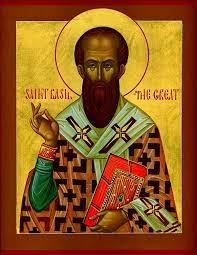
St. Basil the Great

When They Lived:

St. Basil the Great, also known as Basil of Caesarea, lived during the latter part of the 4th century. He was born around 329 AD and passed away on January 1, 379 AD.

Where They Lived:

Basil the Great spent the majority of his life in Caesarea, which was located in the Roman province of Cappadocia, in present-day Turkey. This region was renowned for its rich cultural and intellectual atmosphere.

Notable World Events During Their Life:

  • Council of Nicaea (325 AD): Basil’s early years were marked by the aftermath of the First Council of Nicaea, where the nature of Christ’s divinity was debated and established as a foundational doctrine of Christianity.
  • Death of Emperor Constantine the Great (337 AD): The passing of Emperor Constantine brought political changes to the Roman Empire, which had a lasting impact on the Christian Church’s relationship with the state.
  • Fall of the Western Roman Empire (476 AD): Though after Basil’s time, the eventual fall of the Western Roman Empire marked a significant transition in the geopolitical landscape of Europe.
  • Founding of Constantinople (330 AD): Emperor Constantine established Constantinople (modern-day Istanbul) as the new capital of the Roman Empire, altering the centers of power and influencing the spread of Christianity.
  • Life of St. Augustine (354–430 AD): The life of Augustine of Hippo, a contemporaneous figure, was marked by his profound philosophical and theological writings, which significantly shaped Christian thought.

Their Patronage:

St. Basil the Great is celebrated as the patron saint of a wide range of causes and groups, making his influence remarkably diverse and enduring. His patronage includes:

  • Hospital Administrators and Nurses: Basil’s efforts to care for the sick and destitute have linked him to those in the medical field, emphasizing the importance of compassion and care.
  • Theologians and Scholars: Basil’s intellectual pursuits and profound theological contributions have made him a guiding figure for those who seek wisdom and understanding.
  • Poverty Relief Organizations: His dedication to serving the less fortunate makes him a patron of charitable organizations, inspiring acts of kindness and generosity.
  • Educators and Students: Basil’s establishment of the first organized Christian educational system highlights his influence on learning and the dissemination of knowledge.
  • Monastics and Ascetics: Basil’s monastic writings and disciplined lifestyle have earned him the respect of those in the monastic and contemplative traditions.
  • Cappadocia and Greece: He is also venerated as a patron of his homeland and its people.

Life and Legacy

Saint Basil The Great was born in the year 330 to a distinguished Christian Cappadocian Greek family known for their devotion. He was tutored formally and received extensive education in Caesarea Mazaca in Cappadocia where he became acquainted with Gregory of Nazianzus who would go on to become a revered Saint and a key player in Basil’s quest for Monasticism.

Basil the Great left for Constantinople to further his studies, where he once again met with Gregory and became fast friends with him. In 356, Basil traveled to Egypt and Syria, where he gained further extensive knowledge of law like his father, Basil the Elder. He was on his way to becoming a great scholar when things took a rather unexpected turn.

Basil’s legal learning was interrupted when he met Eustathius of Sebaste,who would become his mentor. He was so deeply influenced by their relationship that he abandoned his career as a legal orator and became a devout believer in God and religion.

The beginning of this Godly relationship marked a turning point for Basil. He began to travel far and wide through Palestine, Egypt, Syria, and Mesopotamia to study and begin his practice of monasticism and asceticism. He pursued theological missions, took solitude, and heeded the needs of the poor, distributing his riches amongst them.

While he remained dedicated to asceticism, he realized he was not one to live in solitude. He began to see the beauty in communal relationships and eventually realized he bore different convictions from his mentor,Gregory of Nazianzus.

By 358, Basil had departed from Gregory and began to gather disciples with whom he shared the same views. He went on to write about and teach monastic communal life. These early writings would make up the documents of Saint Basil’s legacy.

Just before being ordained Deacon in 362, Saint Basil attended the Council of Constantinople, where he renounced his alliance with the Homoiousians. He considered the Homoiousians’ semi-Arian views unacceptable and instead stood in support of the Nicene Creed.

Arianism threatened to tear the Christians of Cappadocia apart. Led by Emperor Valens, the Arian heresy interpreted Jesus as an entity that did not always exist as God. This explanation of Christ’s divinity was not accepted by the many Christian orthodox, causing Emperor Valens to persecute Christians who dared to speak against or debate this heresy.

Saint Basil continued to fight against the wild spread of Arianism even after being made Bishop in 370. Striking a perfect balance between political power and his religious beliefs, Basil was strict but always showed mercy on the needy. He built the Basiliad, which was a poorhouse, hospice, and hospital and is described as one of the greatest monuments in Christian history.

Saint Basil the Great continued to preach his belief that God the Father and Son are one. He continued his passionate quest against Arianism, prayed tirelessly, and reformed prostitutes and thieves until his death.

Works

Saint Basil the Great wrote several books and documented several real-life accounts that would stand as a legacy. Among these letters, valuable books on history and teachings have appeared in the 20th century. Some of Saint Basil’s works include the Sermon to the Lazicians, Moralia, and Asketika.

Saint Basil has a strong influence on Christian Liturgy. He is also mentioned and preserved in specific prayers, like the litany of saints used for exorcism.

5 Interesting Facts About St. Basil the Great

  1. Did you know Saint Basil is the patron saint of Turkey? He is the
    patron saint for the region of Cappadocia, where he originated from.
  2. Did you know that Saint Basil is buried in Saint George’s Cathedral?
    in Istanbul, Turkey? Before being renamed, Istanbul was called
    Constantinople.
  3. Did you know that Saint Basil’s modern place of birth is Kayseri?
    Turkey? Keysari is the modern-day Ceaserea Mazaca.
  4. Did you know that Saint Basil had nine siblings, four of whom are
    venerated saints like him? These are Macrina the Younger,
    Naucratius, Peter of Sebaste, and Gregory of Nyssa
  5. Did you know that Basil the Great’s books still guide monks today?
    today? Some of his books, like Moralia, act as ethical manuals.
    for monks.

Prayer to St. Basil the Great

Saint Basil, o great follower of God, help all as well as me. Defender of orthodoxy, defend us too, that follow your faith and stand beside you. Great follower of God, pray to him for all your people, as well as for unworthy me. Strong knight and leader of Ostrog, save us from the seen and unseen. Raised on Serbian soil, be the light in front of God, be our light, light up our road, and make darkness disappear. With prayer and tears, you have warmed the cold cliffs of Ostrog; please warm our hearts with God’s spirit so we can be saved. From all corners of the world to your grave came the weak and the ill, and you helped them, got rid of their demons as well as the devil, and healed their souls and bodies. Please continue to help the baptized and the non-baptized, everybody, and me as well. You brought peace to fighting brothers; please continue to bring peace, help the divided, make the sad happy, calm the stubborn, and heal the sick. Saint Basil, miracle worker, father of our spirits, listen and hear your children’s spirits in the name of Jesus Christ.
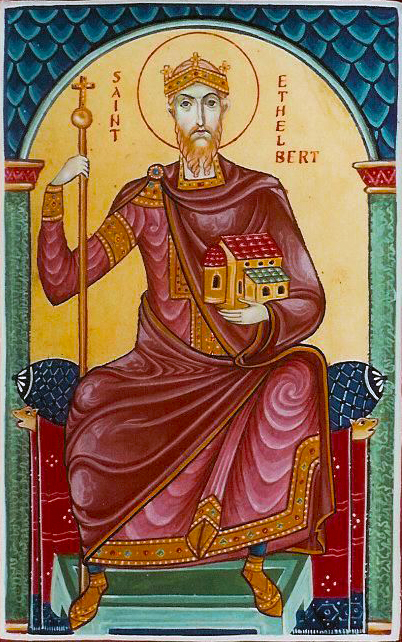
St. Augustine of Canterbury

When He Lived:

St. Augustine of Canterbury, also known as Augustine the Lesser, lived from around the 6th century to 26 May 604 AD.

Where He Lived:

Augustine was born in Rome, Italy. However, he is most famously associated with his mission to England, where he became the first Archbishop of Canterbury.

Notable World Events During His Time:

  • Fall of the Western Roman Empire (476 AD): Augustine’s early years coincided with the aftermath of the fall of the Western Roman Empire. This event marked a significant shift in the political and cultural landscape of Europe.
  • Byzantine-Sassanian War of 602-628: During Augustine’s life, the Byzantine Empire and the Sassanian Empire were engaged in a prolonged conflict, impacting the world’s geopolitical balance.
  • Founding of the Sui Dynasty in China (581 AD): The Sui Dynasty was established during Augustine’s lifetime, leading to the unification of China and significant reforms.
  • The Life of Muhammad and the Rise of Islam: Augustine’s lifetime saw the birth of Islam and the rise of the Islamic civilization, with far-reaching historical implications.
  • Development of the First Codified Legal Systems: Legal systems like the Byzantine Emperor Justinian’s codification of Roman law emerged during Augustine’s lifetime, impacting legal practices.

Patronage:

St. Augustine of Canterbury is the patron saint of England and the Anglican Communion. His legacy is closely tied to the establishment of Christianity in England through his missionary efforts. His influence extends to education, promoting learning and scholarship in early medieval England.

Road to England

Initially, St. Augustine was the prior of a monastery based in Rome until Pope Gregory the Great chose him to lead the Gregorian mission in 596. St. Augustine had a group of about 40 companions, some of whom were monks. This was a mission to Britain to Christianize King Thelberht and his kingdom. This king had married a Christian princess who was expected to have some influence over her husband.

The task of the mission was a huge one, and they felt that they were not going to succeed. At one point, he returned to Rome to ask for papal permission to return; the pope, however, did not give in but instead sent him back with letters to encourage the other missionaries.

His Works in Canterbury

They reached the main town of Canterbury in 597 and managed to convert him from Anglo-Saxon paganism to Christianity. The King gave them land and allowed them to preach freely. St. Augustine was consecrated as a bishop, and he converted a lot of the King’s subjects.

Soon after his arrival in Canterbury, St. Augustine founded the monastery of Saint Peter and Paul, which later became St. Augustine’s Abbey. At one point, he was expected to move to London, but that move never happened.

After St. Augustine established his episcopal see in Canterbury, he converted a lot of people to Christianity. Gregory claimed in one of his letters that more than 10,000 Christians had been baptized.

St. Augustine also reconsecrated a building that had been used for pagan worship so that it could be used for Christian worship.

Gregory also instructed St. Augustine on some matters, such as the consecration of temples for Christian use and the moving of feasts to days celebrating Christian martyrs. Throughout his missionary work, St. Augustine got most of his guidance from Gregory.

St. Augustine arranged the concentration of his successor, Laurence of Canterbury, who was also a member of his team on the Gregorian mission.

Relations with the Native Bishops

In 601, Pope Gregory sent more missionaries to Canterbury as well as gifts for the church. In spite of all the great work of St. Augustine, the attempts to persuade the native British bishops to submit to him were unfruitful.

Unfortunately, St. Augustine failed to extend his authority to the Christians in Wales and Dumnonia to the west. This was because the natives viewed Augustine with uncertainty, and this was worsened when St. Augustine did not rise from his seat when the British bishops were entering during one of the meetings. This, in turn, resulted in the bishops not recognizing him as their archbishop.

There were also differences between St. Augustine and the British Church, and these also contributed to his being accepted. Differences included the observance of Easter, tonsure, and approaches to ascetism and missionary endeavors.

There were also some political dimensions involved since St. Augustine’s efforts were sponsored by the king. This also contributed to the other bishops not accepting him.

Legacy

His way of doing things introduced a more active missionary style to the British Isles.

There is a shrine at St. Augustine’s, Ramsgate, that is kept in his honor. His feast day is May 27, He was canonized in 1303 and is known as the patron saint of brewers, printers, and theologians.

5 Interesting Facts About St. Augustine of Canterbury

  1. St. Augustine once had a mass baptism where he baptized thousands.
    of people on Christmas Day in 597.
  2. The pope once wrote a letter to the king complimenting St.
    Augustine’s knowledge of the Bible
  3. St. Augustine regularly wrote letters to the pope, requesting
    advice.
  4. St. Augustine is the founder of The King’s School in Canterbury.
    which is the oldest existing school.
  5. He is believed to have been from a well-off family.

Prayer to St. Augustine of Canterbury

O Lord our God, by your Son Jesus Christ, you called your apostles and sent them forth to preach the Gospel to the nations. We bless your holy name for your servant Augustine, first Archbishop of Canterbury, whose labors in propagating your Church among the English people we commemorate today, and we pray that all whom you call and send may do your will, bide their time, and see your glory, through Jesus Christ our Lord, who lives and reigns with you and the Holy Spirit, one God, forever and ever. Amen.

St. Apollonius the Apologist

When they lived: St. Apollonius the Apologist is believed to have lived during the late 2nd century to the early 3rd century, specifically around the years 160 to 240 AD.

Where they lived: St. Apollonius lived primarily in Athens, Greece, during a time when it was a hub of intellectual and philosophical activity.

Notable world events during the time of their life:

  1. Antonine Plague (165-180 AD): The Antonine Plague, possibly caused by either smallpox or measles, spread across the Roman Empire, causing significant death and social disruption.
  2. Decian Persecution (249-251 AD): During this period, the Roman Emperor Decius initiated a widespread persecution of Christians.
  3. Crisis of the Third Century (235-284 AD): The Roman Empire faced a series of political, military, and economic crises during this time.
  4. Invention of the Steam Engine (1st century AD): The invention of the aeolipile, an early steam engine, by the engineer Hero of Alexandria.
  5. Life of Origen (185-254 AD): Origen of Alexandria, a prominent early Christian theologian, lived during a similar timeframe as St. Apollonius.

Patronage: St. Apollonius the Apologist is considered a patron saint of intellectuals, philosophers, and scholars.

Early Life

There are various sources that document Saint Apollonius’ life. These sources, however, do not provide much detail about the great Saint.

Saint Apollonius was born in Rome on an unknown date. What is for sure is that he was born sometime in the 2nd century.

There is no document detailing the Saint’s early life. There is no known record about his parents, siblings, or where he gained an early formal record.

Saint Apollonius was a hardworking Roman citizen. He was well-learned and well-spoken. He was not only intelligent, but he was also a devout Christian.

He was said to be extremely talented and well-educated on subjects like philosophy.

Saint Apollonius was a senator. He controlled lands and slaves that inhabited the lands. He was a distinguished member of Roman society.

Saint Apollonius was so deeply invested in Religion that he took a special liking to Jewish writings about the Church. He spent time gathering extensive knowledge about the religion.

Dedication and Devotion

Impressed by the writings and in awe of God, he allowed himself to be baptized. He was said to have spent his time praying or meditating on the writings and the scripture.

In those times, the early Church was being persecuted. The persecutions were, however, sanctioned by Emperor Commodus out of respect for his mistress, Empress Marcia. Empress Marcia was a devout Christian.

The Christians experienced peace for some time as trouble quieted, but it was only for a while. Soon, these persecutions started again.

One day, One of Saint Apollonius’ slaves accused him of practicing Christianity. After this was brought to the attention of the authorities, the Praetorian Prefect, Sextus Tigidius Perennis, ordered the arrest of Apollonius.

The slave who had made the accusation was also arrested. As the law had commanded, the slave was put to death for being an informant. He had his legs broken before he was executed.

Legacy

Saint Apollonius was not only investigated but also called to hearings. In these hearings, he was allowed to speak freely and convince the people that he was not wrong for being a Christian.

Saint Apollonius was offered freedom on the basis that he would denounce Christianity. A man of Faith, he refused and instead chose to debate his way to freedom, much to the chagrin of his friends.

Saint Apollonius acted as he deserved. An eloquent speaker that he was, he spoke at length on the advantages of his faith. He offered facts to support his beliefs.

An avid reader, he showed the authorities that pagan worship was wrong. He claimed the scriptures showed what true religion was.

Despite his many facts, the court found Saint Apollonius guilty of Christianity. He was condemned to death.

Death and Canonization

Saint Apollonius was beheaded around the year 186. He died as a martyr for the sake of religion.

Although he was condemned, years later, his arguments and apologies were found to be very important to the Church.

Saint Apollonius was not recognized as a Saint and Martyr until the Middle Ages. He was canonized Pre-Congregation.

Saint Apollonius is celebrated by the Roman Catholic Church on the 18th of April and on the 23rd of July by the Eastern Orthodox Church.

5 Interesting Facts About St. Apollonius

  1. Did you know that Saint Apollonius is the patron Saint of
  2. Did you know that in some accounts, Saint Apollonius had legs?
    crushed before he was executed?
  3. Did you know that Saint Apollonius was confused for other saints?
    like Apollo of Alexandria and The Apollonius in literary works?
  4. Did you know that Saint Apollonius directly debated Sextus Tigidius?
    Perennis’ view of religion in the court He was not afraid to talk.
    about his faith even in the face of enemies and death.
  5. Did you know that Saint Apollonius was investigated by the Prefect?
    Perennius and a group of senators? On both accounts, there was
    Nothing bad was found against him.

Prayers to St. Apollonius

Lord God, you call us to live a life of holiness and sanctity. Through the example of St. Apollonius, we may be strengthened to proclaim our faith to those who do not know it. We ask this through Christ our Lord. Amen.

Source:[https://www.google.com/amp/s/vitaesanctorum.wordpress.com/2013/04/18/st-apollonius-the-apologist/amp/]{.ul}

St. Apollonia

When she lived:

St. Apollonia is believed to have lived during the late 2nd century and early 3rd century, around the years 200-249 AD.

Where she lived:

St. Apollonia lived in Alexandria, an ancient city located in Egypt. During her time, Alexandria was a prominent cultural, intellectual, and trading hub in the Mediterranean region.

Notable world events during the time of her life:

  • Severan Dynasty: The Severan dynasty ruled the Roman Empire during the late 2nd and early 3rd centuries. This period saw a mix of military successes, internal strife, and cultural developments.
  • Crisis of the Third Century: The Roman Empire experienced a period of crisis marked by economic instability, military conflicts, and numerous short-lived emperors. This era had a significant impact on the stability of the empire.
  • Persecutions of Christians: During St. Apollonia’s lifetime, Christians faced intermittent persecutions by the Roman authorities. This period saw waves of hostility towards Christians, varying in intensity and impact.
  • Decian Persecution: In 250 AD, Emperor Decius initiated a widespread persecution of Christians, requiring citizens to offer sacrifices to the Roman gods. This event had a profound effect on the early Christian community.
  • Origen’s Theological Works: Origen, an influential Christian theologian, lived and worked in Alexandria during the same time as St. Apollonia. His theological writings and teachings greatly influenced early Christian thought.
  • Roman-Gothic Wars: In the mid-3rd century, the Roman Empire faced invasions and conflicts from various groups, including the Goths. These wars highlighted the challenges faced by the Roman military and administration.

Her patronage:

St. Apollonia is recognized as the patron saint of dentists and those suffering from dental problems. Her story is often invoked to provide comfort to those in pain, particularly dental pain, as she herself famously endured the torture of having her teeth shattered during her persecution.

Early Years

Apollonia was born in the 2nd century in Alexandria. Her father was a Roman magistrate who firmly believed in the religion of the state. Apollonia grew up into a beautiful maiden, good and pure. She was taught by her mother about Jesus Christ and Christianity at an early age.

When she was older, she developed a strong desire to be baptized and serve God. An angel appeared and led her out of Alexandria into the desert to the cell of Leonine, a disciple of Saint Anthony.

Baptism and Ministry

Apollonia told Leonine that she wanted to be baptized into Christianity. She was baptized and sent back to Alexandria to preach the Good News of Jesus Christ. She returned home full of joy and energy to preach the Word of God. She preached with eloquence to the people who were hungry for the Word. She won a lot of souls for Jesus Christ through her preaching.

Apollonia’s father received complaints that his daughter was breaking the law by preaching the gospel. She was reprimanded by her father, but she refused to abandon her faith.

Death

On February 9, 249, a mob attacked and captured Apollonia, demanding that she abandon her faith. Emperor Phillip was on a mission to rid the empire of Christianity. The mob brutally hit her face to the extent that she lost all her teeth. She was ordered to leave Christianity and worship pagan gods publicly or be thrown into the fire.

They kindled a big fire and threatened to burn her alive if she stood by her faith. She then jumped into the fire voluntarily, to the surprise of the mob.

The fact that she died for her faith and beliefs led to people describing her as a martyr. However, St. Apollonia was not consumed entirely by the fire at Alexandria. Remnants of her head and teeth were recovered from the ashes by her disciples. These fragments have been distributed all over Europe, with some bits and pieces reaching America.

The hand of St. Apollonia is in the ancient Basilica of Santa Maria in Trastevere in Rome. San Basilio in Rome has preserved the jaw of Apollo. Another jaw is kept at the church of Saint Anne de Beaupré,near Quelle.

Pieces of her teeth are held in churches in Naples, Volterra, and Bologna. All Roman Catholic churches consider her remains to be sacred.

St. Apollonia’s martyrdom resulted in many churches and altars being dedicated to her. Catholics believe that she is the patroness of dentists. Individuals suffering from toothache and other dental diseases pray to her so that she can intercede on their behalf.

The fact that she defied her persecutors at such an old age reflects that she was a courageous woman. Other Christians fled the city, but she fought her battle of faith till the end.

St. Apollonia belongs to a class of early Christian martyrs. When they are confronted with the choice between renouncing their faith or suffering death, they voluntarily embrace their death.

Apollonia spent her whole life serving God, and even at her old age, she was determined to spread the gospel. She dared to risk her life to comfort imprisoned Christians.

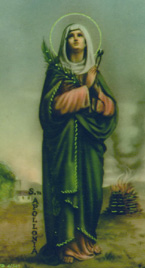
In Roman Catholic art, paintings of St. Apollonia are visible on stained glass windows, illuminated manuscripts, architecture, and other forms of Christian art. These representations reflect the lives or deaths of saints.

St. Apollonia is represented in the art with a pair of pincers holding a tooth or with a golden tooth suspended from her necklace. This shows the way that she died; hence, Catholics view her as the patron saint of dentists.

5 Interesting Facts About St. Apollonia

  1. Her image is the side support of the arms of the British Dental
    Association.
  2. In art, she is often represented with pincers, in which a tooth is
    held. Ancient art depicts her with a golden tooth at the end of
    her necklace.
  3. In some parts of Europe, Catholics believe that fasting and prayer
    On the day of St. Apollonia’s celebration (February 9), guarantees
    a toothache-free year.
  4. St. Apollonia is observed as the patron saint of dentists because all her
    teeth were knocked out for refusing to renounce her faith in
    Christianity.
  5. Her greatest sacrifice was that of her own life as she jumped free.
    from their captors and jumped willingly into the burning fire.

Prayer to St. Apollonia

Glorious Apollonia, patron saint of dentistry and refuge to all those suffering from diseases of the teeth, I consecrate myself to thee, beseeching thee to number me among thy clients. Assist me by your intercession with God in my daily work and intercede with Him to obtain for me a happy death. Pray that my heart, like yours, may be inflamed with the love of Jesus and Mary, through Christ our Lord. Amen. My God, bring me safe through temptation and strengthen me as thou didst our own patriarch Apollonia, through Christ our Lord. Amen.

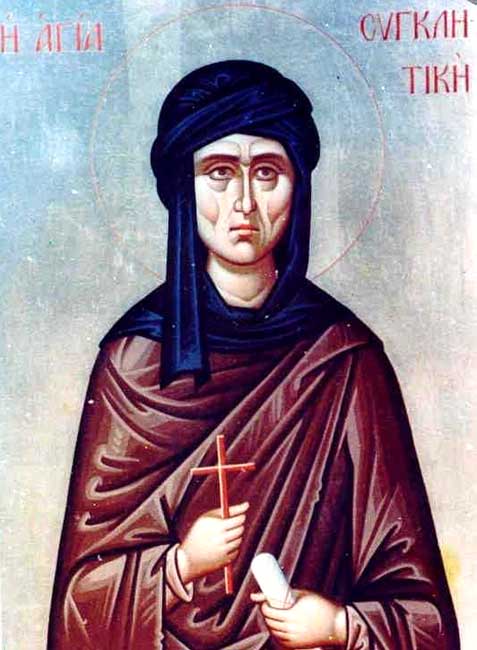
St. Apollinaris Syncletica

When They Lived:

St. Apollinaris Syncletica, also known simply as St. Syncletica, lived during the late 3rd century to the early 4th century. She was born around 270 AD and passed away around 350 AD.

Where They Lived:

St. Apollinaris Syncletica resided in Alexandria, Egypt, a vibrant center of culture, learning, and spirituality during her time. Alexandria was renowned for its diverse population and its prominent role in early Christian thought.

Notable World Events During the Time of Their Life:

  1. Diocletian’s Persecution (303-311 AD): St. Syncletica’s life coincided with the fierce persecution of Christians under Emperor Diocletian. This era marked a significant challenge for early Christians, leading to numerous acts of martyrdom and a steadfast commitment to their faith.
  2. Edict of Milan (313 AD): The Edict of Milan, issued by Emperor Constantine and co-emperor Licinius, brought an end to the widespread persecution of Christians. This decree granted religious tolerance and freedom to all religions, marking a pivotal moment in the history of Christianity.
  3. Council of Nicaea (325 AD): The Council of Nicaea, a crucial event in the development of Christian theology, addressed the Arian heresy and formulated the Nicene Creed, which laid down fundamental beliefs about the nature of Christ and the Holy Trinity.
  4. Ptolemaic School in Alexandria: During St. Syncletica’s lifetime, the Ptolemaic School of Alexandria continued to be a hub of scholarly activity, contributing to advances in mathematics, astronomy, and philosophy.
  5. Rise of Monasticism: St. Syncletica played a significant role in the ascetic movement and the rise of monasticism. Her teachings and practices inspired many, contributing to the development of Christian monastic traditions.
  6. Founding of Constantinople (330 AD): Emperor Constantine founded the city of Constantinople (modern-day Istanbul) as the new capital of the Roman Empire. This event marked a shift in political power and had far-reaching implications for the Christian Church.
  7. Coptic Christianity in Egypt: St. Syncletica’s life intersected with the growing influence of Coptic Christianity in Egypt, as the region became a stronghold for early Christian thought and spirituality.

Their Patronage:

St. Apollinaris Syncletica is revered as the patron saint of ascetics, nuns, and those who lead a contemplative life. Her dedication to a life of solitude, prayer, and self-discipline serves as an inspiration for individuals seeking a deeper connection with their spirituality in the midst of worldly distractions.

Intriguing Aspects of Their Life:

St. Syncletica’s journey from a life of privilege to one of profound simplicity and devotion highlights her strong character and commitment to her faith. Her sayings and teachings, collected in collections known as “Sayings of the Desert Fathers,” offer valuable insights into early Christian spirituality, emphasizing the importance of inner transformation and detachment from material desires.

Life and Devotion

Saint Apollinaris Syncletica lived so long ago that it is impossible to know for sure how she lived. No data is available detailing what she did throughout her life.

What little is known about Saint Apollinaris is thought to have been gleaned from tales, traditions, and even a mixture of earlier saints that might have shared her name.

She might be a mystery that is still being discovered; however, she is a respected member of the Roman Catholic Church.

There are books written by contemporary biographers that might have traced Apollinaris back to her roots. Most of what is known is speculation or exaggeration.

Saint Apollinaris was said to have been born in Constantinople. It is not said exactly where in Constantinople she might have been born or when.

According to tradition, at a young age, Apollinaris was to be given out in marriage by her parents. She continued to refuse every suitor that was brought to her by her desperate parents.

Eventually, she was able to convince her parents to leave her unmarried.

The truth was that Saint Apollinaris had taken a liking to the idea of seclusion and asceticism. She was deeply in love with God and wished to retire in privacy to serve him properly.

After much convincing, her parents allowed her to make a pilgrimage to the holy city of Jerusalem. The child of distinguished parents, she was naturally followed by slaves who were to tend to her aid and every whim.

Legacy

On arrival in Jerusalem, Saint Apollinaris was said to have set all her slaves free, with the exception of two who had agreed to stay willingly. She was said to have bought or bribed a habit.

On her way back home after her pilgrimage, Saint Apollinaris was said to have donned the habit. She fittingly escaped her slaves and went into hiding in the desert.

The casting away of her former clothes was said to have been symbolic of the throwing away of the worldly things that she grew up with.

Saint Apollinaris’ slaves and parents looked all over the city for her. Seeing that she couldn’t be found, her parents gave up and assumed she had sought refuge in a monastery.

Apollinaris was said to have left her hiding place and gone to Wadi El-Natrun in the Nitrian desert. There, she found a reclusive community of monks.

Finding their lifestyle impressive, Saint Apollinaris was said to have joined the men in living in caves. The problem, however, was that she was not a man.

To solve this, Saint Apollinarius adopted the name Dorotheus and swapped her feminine habit for masculine clothes.

Macarius had taken a liking to the young Apollinaris, whom he assumed was a man. She was immediately accepted into the monastery.

At home, Saint Apollinaris’ parents had other problems. Their second daughter had suddenly become possessed by a demon. To save the girl, Apollinaris’ parents sent her to be exorcised.

Macarius was said to have suddenly been motivated and knew the right person to cast out the demons were

Dorotheus. Saint Apollinaris, who was falsely known as Dorotheus, agreed and prayed over her sister.

The demons were cast out successfully, and the girl was sent back home. Soon after, she fell sick.

Assuming that she was pregnant, the young girl accused Dorotheus of defiling her.

Angry, the parents ordered poor Dorotheus to be brought to them. It was then that Saint Apollinaris rid herself of the male habit and presented herself as she was, to the shock of everyone involved.

Needless to say, her parents were glad to have her back. Apollinaris however returned to her secluded home a few days later.

Death and Canonization

Until she died of natural causes around 420 A.D., none of Apollinaris brothers realized her real gender.

Saint Apollinaris Syncletica was canonized Pre-Congregation. She is remembered in the Catholic Church on the 5th of January.

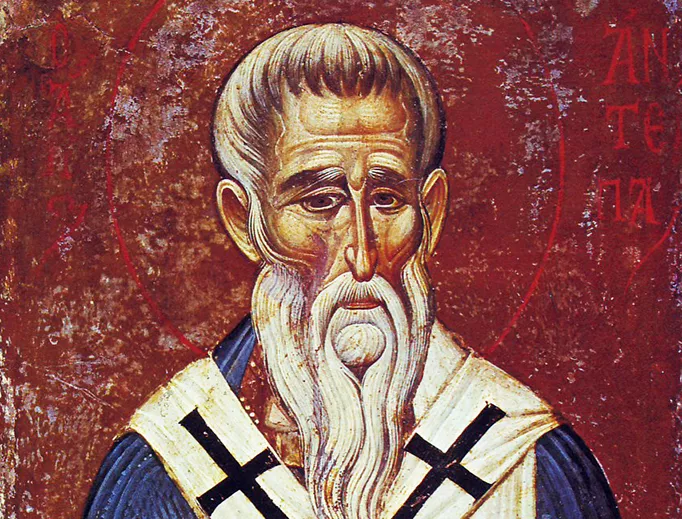
St. Antipas

St. Antipas: A Glimpse into a Time of Faith and Turmoil

When They Lived:

St. Antipas, also known as Antipas of Pergamum, lived during the late 1st century and early 2nd century AD. He is believed to have been born around 62 AD and passed away in the year 92 AD.

Where They Lived:

St. Antipas resided in the ancient city of Pergamum, which was situated in what is now modern-day Turkey. Pergamum was renowned for its rich history, cultural significance, and proximity to important trade routes of the time.

Notable World Events During the Time of Their Life:

  1. The Great Fire of Rome (64 AD): A catastrophic fire that ravaged Rome, Emperor Nero was rumored to have fiddled while the city burned. This event led to the persecution of Christians, marking a tumultuous period for early believers like St. Antipas.
  2. Construction of the Colosseum (70-80 AD): The construction of the iconic Roman Colosseum took place during this period. The arena would later witness countless gladiatorial contests and public spectacles, becoming a symbol of Roman entertainment.
  3. Completion of the Mishnah (c. 200 AD): Although slightly later than St. Antipas’ time, the compilation of the Mishnah—an essential text in Jewish law—began during this period. This marked a significant milestone in Jewish scholarship and religious preservation.
  4. Pliny the Younger’s Correspondence (c. 100 AD): The Roman author Pliny the Younger’s letters provide valuable insights into the social, political, and cultural aspects of the time. His writings shed light on early Christian practices and interactions with Roman authorities.
  5. Halley’s Comet Appearance (87 AD): Halley’s Comet made a notable appearance during St. Antipas’ lifetime. This celestial event sparked curiosity and speculation, reflecting the growing interest in scientific observation.

Their Patronage:

St. Antipas is recognized as the patron saint of dentists and those suffering from dental issues. This unique patronage stems from a hagiographical account in which St. Antipas supposedly had his teeth violently extracted during his martyrdom, drawing a connection between his suffering and dental ailments.

  • When he lived: Saint Antipas lived in the first century AD. While the exact dates of his birth and death are not firmly established, he is believed to have been martyred during the reign of the Roman Emperor Nero (54–68 AD) or Emperor Domitian (81–96 AD).
  • Where he lived: He lived in Pergamum, a significant city of the Roman province of Asia, which corresponds to modern-day Turkey.
  • Notable world events during the time of his life: This was a period of significant change in the ancient world. In the mid-first century AD, the Roman Empire was at the height of its power. Nero became Emperor in 54 AD, and his rule was marked by extravagance, tyranny, and the Great Fire of Rome in 64 AD. In the Far East, Buddhism was spreading in China. Meanwhile, the construction of the famous Nabataean rock city of Petra was completed in present-day Jordan. Back in Rome, the Flavian Amphitheater, better known as the Colosseum, began construction under the reign of Emperor Vespasian around 70 AD.
  • His patronage: Saint Antipas is known as the patron saint of toothaches and diseases of the teeth.

Saint Antipas, an intriguing figure from the annals of early Christian history, is a compelling testament to the power of faith. His life and martyrdom provide a timeless example of resolute commitment to one’s beliefs, even in the face of extreme adversity.

St. Antipas in Holy Scripture

The Bible makes a single, albeit impactful, reference to Saint Antipas in the Book of Revelation (2:13), identifying him as a martyr and faithful witness to Christ Jesus. Despite his brief mention in the scriptures, the portrayal of Antipas resonates powerfully. He is described as a minister laboring in Pergamum, where Satan had his seat, an indication of the immense spiritual adversity that the saint encountered.

The Bishop of Pergamum

While historical records do not provide concrete evidence, traditional Eastern Orthodox Christian narratives describe Antipas as the Bishop of the Christian church at Pergamum. Appointed by John the Apostle during Emperor Nero’s reign, Antipas is believed to have spent his years faithfully ministering, witnessing, and upholding the Christian faith in the heart of a city known for its deeply rooted pagan beliefs.

Despite the mounting pressures and threats to his life, Saint Antipas remained undeterred in his faith. This unwavering commitment is beautifully encapsulated in his reputed response when cautioned that the entire world was against him: “Then I am against the whole world!”

Martyrdom of Saint Antipas

The climax of Antipas’s commitment to his faith came when he was martyred under the reign of either Nero or Domitian. According to tradition, he was burned to death on a brazen bull-shaped altar because he would not renounce his faith in Christ Jesus. His martyrdom remains an inspiring testimony to the power of faith in the face of overwhelming opposition.

The Miracle of Saint Antipas

Even in death, Saint Antipas continued to inspire the faithful. According to tradition, a unique phenomenon referred to as the “manna of the saints” is associated with him. It is believed that oil, seen as a blessing, secretes from his relics, further accentuating the saint’s miraculous nature.

Saint Antipas, the Protector

Known as a healer, Saint Antipas is invoked for relief from toothache and diseases of the teeth. This association offers us a relatable facet of the saint, who is seen as a protector and healer, providing comfort in everyday struggles.

The Feast of Saint Antipas

On April 11, Eastern Christianity commemorates the feast day of Saint Antipas, remembering his unwavering faith and sacrifice.

Saint Antipas and Pergamum

It’s important to note that the spiritual legacy of Saint Antipas is deeply intertwined with the city of Pergamum, a significant historical city known for its wealth, power, and influence in ancient times. Once a bustling center for science, literature, and art, Pergamum played a vital role in Western civilization’s development. Yet, amidst its grandeur, it was also a battleground for spiritual warfare, a testament to Antipas’s courage and determination.

Conclusion

In conclusion, while specific details about Saint Antipas’s life are sparse and rooted in tradition, the known aspects of his life provide a powerful image of an unyielding Christian martyr. His legacy continues to inspire the faithful, reminding us of the power of unwavering faith and the everlasting influence of saintly lives.

St. Anthony the Abbot

Unveiling the Legacy of St. Anthony the Abbot: A Life Amidst Historical Turmoil

When They Lived:

St. Anthony the Abbot, also known as Anthony of Egypt, lived during the 3rd and 4th centuries. He was born in the year 251 AD and passed away on January 17, 356 AD.

Where They Lived:

St. Anthony spent the majority of his life in the deserts of Egypt, particularly in the region around the Red Sea. He is considered one of the pioneers of Christian monasticism and is often associated with the development of the desert hermit tradition.

Notable World Events During Their Life:

  1. Diocletian’s Persecution (303-313 AD): St. Anthony’s early life was marked by the severe persecution of Christians under the Roman Emperor Diocletian. This event not only shaped the religious landscape but also impacted the lives of countless individuals, including Anthony’s own spiritual journey.
  2. Edict of Milan (313 AD): The Edict of Milan, issued by Emperor Constantine the Great, marked a significant turning point in the history of Christianity. It granted religious tolerance to Christians and allowed them to practice their faith openly, which greatly influenced the spread of Christian beliefs.
  3. Council of Nicaea (325 AD): St. Anthony lived through the time of the First Council of Nicaea, where Christian bishops gathered to address theological controversies, resulting in the formulation of the Nicene Creed. This event laid the foundation for Christian orthodoxy and played a crucial role in defining core beliefs.
  4. Fall of the Western Roman Empire (476 AD): Though Anthony had passed away by this time, his legacy endured during the tumultuous period following the fall of the Western Roman Empire. The decline of centralized power in Europe led to the rise of various kingdoms and marked the transition from antiquity to the Middle Ages.
  5. Life of St. Augustine (354-430 AD): The influential theologian and philosopher St. Augustine of Hippo lived during the later years of St. Anthony’s life. Augustine’s teachings and writings would become integral to the development of Western Christian thought, contributing to the shaping of doctrine and theology.

Their Patronage:

St. Anthony the Abbot is renowned as the patron saint of various aspects of life, reflecting his profound influence on both the spiritual and practical realms:

  • Patron Saint of Monasticism: St. Anthony’s solitary and ascetic lifestyle in the desert established a precedent for Christian monasticism, inspiring countless men and women to embrace lives of devotion, meditation, and self-discipline.
  • Patron Saint of Animals and Grains: Legend has it that during his time in the desert, Anthony encountered various creatures and maintained a harmonious relationship with them. This led to his association with animals and, subsequently, his patronage over animals and the crops that sustain them.
  • Protector against Infectious Diseases: In times of epidemic outbreaks, St. Anthony’s intercession has been sought for protection and healing from infectious diseases. This role has gained prominence, particularly in the context of historical plagues and modern health crises.
  • Helper of Those in Despair: St. Anthony is often invoked by those facing spiritual desolation, personal struggles, or feelings of hopelessness. His own battles against temptation and his triumphs over despair make him a relatable figure for those navigating their own challenges.

A Radical Way of Life

St. Anthony the Abbot lived in the 3rd century. He was born to noble and wealthy parents in Egypt around the year 250. When he was about twenty years old, his parents died. Anthony began to practice an ascetic life at this age. Moved by the Gospel message, “Go, sell what you have, and give to [the] poor” (Mark 10:21b), he gave away all the money and possessions he and his sister had inherited.

When he was thirty-five years old, Anthony moved to the desert to live in solitude. As a hermit, Anthony practiced extreme asceticism. He ate little, prayed much, and fought the temptations of the devil to return to the city and its money. He was granted great wisdom by God, and so many people came to him for advice. Even emperors visited him and asked his opinion on various matters.

Fighting the Devil

St. Anthony was known to have faced spiritual combat. With what he envisioned as the forces of evil, his life was one long struggle against the devil. In the writings of St. Athanasius, the Bishop of Alexandria, the evil assaults on Anthony took the form of either horrible or seductive visions experienced by the saint. At times, the devil appeared to him disguised as a monk, bringing bread during his fasts. Other instances included the devil in the guise of women, wild beasts, or soldiers beating the saint and leaving him half-dead. In all these visions conjured up by Satan, Anthony repelled them with his fervent prayer and penitential acts.

A Community of Hermits

Before Anthony’s time, many men and women went out into the solitude of the desert to pray and do penance. These hermits lived alone and were far apart from other people. When he was 54, Anthony responded to many requests and founded a community of hermits. They spent most of their time alone. They met each day to worship and eat together.

Because of his spiritual gifts, Anthony drew many people to himself for spiritual guidance and healing. He left the solitude of the desert twice and walked to the big city of Alexandria. In his second visit to Alexandria, he preached against the heresy of Arianism, an erroneous doctrine teaching that Christ is not of the same substance as God the Father. He also comforted the victims of the persecutions of Maximinus and taught people the truth about Christ. He went back to the desert, and someone began to gather Anthony’s words of wisdom.

When he was 60 years old, Anthony desired to become a martyr during the renewed Roman persecution in the year 311. He fearlessly exposed himself to danger, at the same time giving moral and material support to those in prison. Anthony died in solitude at the age of 105 at Mount Colzim. His feast day is January 17.

5 Interesting Facts About St. Anthony the Abbot

  1. St. Anthony the Abbot is also called the Desert Father and St. Anthony of Egypt.
  2. Most of the known facts about St. Anthony the Abbot are derived from the biography of St. Athanasius, the “Father of Orthodoxy.”
  3. St. Athanasius wrote that St. Anthony the Abbot was unable to read or write because he could not bear the rough behavior of the boys in the school.
  4. St. Anthony the Abbot is generally considered to be the founder and father of organized Christian monasticism, although he himself preferred to live the life of a true hermit, apart from any community, in the deserts of Egypt.
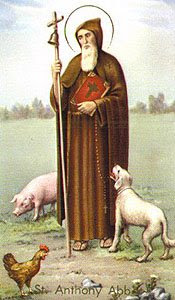
  5. St. Anthony the Abbot is associated in art with a T-shaped cross, a pig, and a book. The pig and the cross are symbols of his valiant warfare with the devil; the cross is his constant means of power over evil spirits, and the pig is a symbol of the devil himself.

Prayer to St. Anthony the Abbot

O God, who brought the Abbot Saint Anthony to serve you through a wondrous way of life in the desert, grant, through his intercession, that, denying ourselves, we may always love you above all things. Through our Lord Jesus Christ, your Son, who lives and reigns with you in the unity of the Holy Spirit,God, for ever and ever Amen.

St. Anthony of Padua

When he lived: St. Anthony of Padua, also known as St. Anthony of Lisbon, lived from 1195 to 1231.

Where he lived: St. Anthony was born in Lisbon, Portugal, and later lived and performed most of his work in Padua, Italy.

Notable world events during the time of his life:

  1. Fourth Crusade (1202-1204): The Fourth Crusade, initiated by Pope Innocent III, was originally intended to recapture Jerusalem. However, it deviated from its goal and ended up sacking Constantinople in 1204, significantly altering the political landscape of the Byzantine Empire.
  2. Magna Carta (1215): In 1215, King John of England was compelled by his barons to sign the Magna Carta, a historic document that established certain rights and limited the power of the monarchy. This event laid the groundwork for modern concepts of constitutional law and individual rights.
  3. Genghis Khan’s Conquests (13th century): During St. Anthony’s lifetime, Genghis Khan and his successors were expanding the Mongol Empire through a series of military campaigns, which eventually became the largest contiguous empire in history.
  4. University of Paris Founded (1150-1257): The University of Paris, one of the earliest and most influential universities in Europe, was established during this period. It played a crucial role in the development of scholasticism and intellectual pursuits.
  5. Invention of the Magnetic Compass (12th century): While not a single event, the invention and refinement of the magnetic compass during the 12th century transformed navigation and exploration, enabling sailors to traverse vast distances with increased accuracy.

Patronage:

St. Anthony of Padua is widely recognized as the patron saint of lost things and lost people. This patronage originates from a legend that speaks of a book of Psalms that he lost and later recovered through prayer. Additionally, he is venerated as the patron saint of the poor, oppressed, and those seeking guidance in their lives. His association with finding lost items has led to a popular devotion where people seek his intercession when they’ve misplaced something important.

An Ardent Desire

Anthony was born in Lisbon, Portugal, about 1195, to a noble family. He was baptized and given the name Fernando. He joined the Canons who adhered to the Rule of St. Augustine, first at the monastery of St. Vincent in his hometown and later at the Holy Cross in Coimbra.

He devoted much of his time to solitude, studying the Scriptures and the Church Fathers, theology, and preaching. In 1220, in Coimbra, Fernando experienced a decisive turning point in his life. During that time, the relics of the first five Franciscan missionaries who had gone to Morocco and were martyred were exposed for veneration. Their story inspired Fernando to imitate them. Hence, he asked to leave the Augustinian Canons to become a Friar Minor.

Fernando’s request was granted. He took the name Anthony and set out for Morocco. However, God had a different plan for him. After he fell sick, he was obliged to return to Italy. In 1221, he participated in the famous “Chapter of Mats” in Assisi, where he also met St. Francis. Then he lived for a period of time in solitude in the convent of Forli, Northern Italy. It was there that God called him to another mission.

Called to Preach and Teach

Anthony was invited to preach during a priestly ordination, a somewhat casual circumstance. He showed himself to be endowed with such knowledge and eloquence that the superiors assigned him the task of preaching. This paved the way for him to embark on apostolic work in France and Italy, with such great progress that many people who had left the Church returned.

He was also one of the first, if not the first, to teach theology to his brother in the Friars Minor. With the blessing and recognition of St. Francis himself, Anthony began his teaching in Bologna. Anthony laid the foundations of Franciscan theology, which was later developed by other brilliant thinkers such as St. Bonaventure of Bagnoregio and Blessed Duns Scotus.

Anthony occasionally taught at the universities of Montpellier and Toulouse in southern France, but he performed best in the role of a preacher. His teaching was so simple and resounding that even the innocent and those who were unlettered could understand his message. A story was told that when Anthony attempted to preach to heretics who would not listen to him, he went out and preached his message to the fish. When the people saw the fish begin to gather, they realized they should also listen to what Anthony had to say.

Subsequently, Anthony became the Provincial Superior of the Friars Minor in northern Italy. He continued his ministry of preaching, alternating it with his office of governance. When he ended his term as Provincial, he withdrew to a place near Padua, where he had stayed on various other occasions. Less than a year later, Anthony died at the city gates on June 13, 1231. Only a year after his death, because of the miracles brought about through his intercession, Pope Gregory IX canonized Anthony. His feast day is June 13.

5 Interesting Facts About St. Anthony of Padua

  1. St. Anthony of Padua is the patron saint of the poor, of sailors and fishermen, of priests, and of travelers. But he is more famous as the saint to be invoked for lost articles.
  2. St. Anthony of Padua’s remains were exhumed some 336 years after his death. It was found out that his body was corrupted except for his tongue, which was totally incorrupt—the same tongue that formed and spoke perfect teachings.
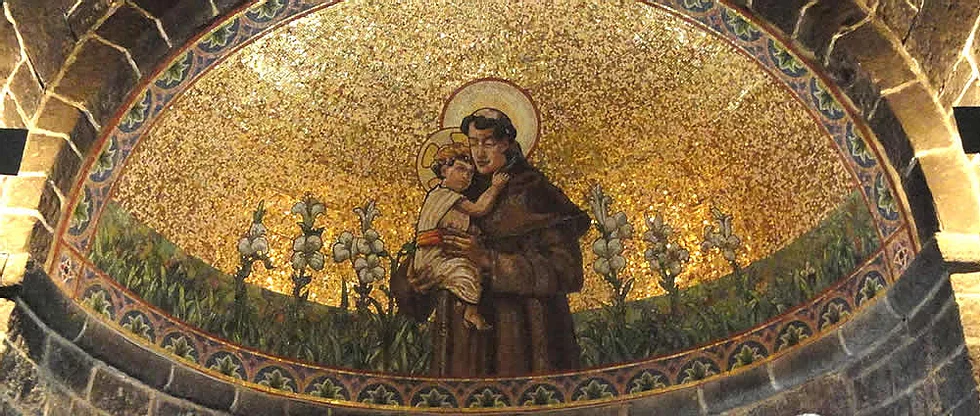
  3. In Christian art, St. Anthony of Padua is often depicted with a book in his hands, with a lily or torch, or carrying the Child Jesus in his arms.
  4. St. Anthony of Padua was declared a Doctor of the Church by Pope Pius XII in 1946.
  5. St. Anthony of Padua is one of the saints who were canonized in a short span of time.

Prayer to St. Anthony of Padua

Almighty, ever-living God, who gave Saint Anthony of Padua to your people as an outstanding preacher and an intercessor in their need, grant that, with his assistance, as we follow the teachings of the Christian life, we may know your help in every trial. Through our Lord Jesus Christ, your Son, who lives and reigns with you in the unity of the Holy Spirit, one God, for ever and ever Amen.

St. Angela of Foligno

When She Lived

St. Angela of Foligno, also known as Angela di Foligno, lived from 1248 to 1309.

Where She Lived

St. Angela of Foligno was born and spent most of her life in the town of Foligno, which is located in central Italy.

Notable World Events During Her Time

  • The Seventh Crusade (1248-1254): Angela was born during the Seventh Crusade, a series of military campaigns led by King Louis IX of France against the Muslim-controlled Holy Land.
  • The Mongol Empire’s Expansion (13th century): The Mongol Empire, under the leadership of figures like Genghis Khan and Kublai Khan, was expanding across Asia and Eastern Europe during Angela’s lifetime.
  • The Renaissance Emergence (14th-17th centuries): Angela’s life overlapped with the early stages of the Renaissance, a period marked by a revival of art, literature, and learning.
  • The Black Death (1347-1351): Although Angela had passed away before the outbreak of the Black Death, the devastation caused by this pandemic was felt across Europe during her lifetime.

Her Patronage

St. Angela of Foligno is revered as the patron saint of those seeking conversion, spiritual growth, and profound repentance. Her life is a testament to her personal transformation from a worldly existence to a deep spiritual connection with God.

Early Life

St. Angela of Foligno was born in the Holy Roman Empire town of Foligno in the year 1248, and she died on the 3rd of January in 1309. She was born into a wealthy Italian family, married at an early age, and had several children. It is reported that during the early stages of her life, she loved the pleasures of the world.

When she was about 40 years old, she had a vision of St. Francis of Assisi, and she reported that after this vision of St. Francis of Assisi, she recognized the emptiness in her life and began to live a life devoted to higher perfection. She decided to leave the pleasures of comfort and live in penance.

Three years after she had devoted her life to it, St. Frances’ mother died, and after a few months, her husband and children also died. St. Angela began depriving herself of her possessions and lived as a pertinent, devoted priestess and servant. She was in the company of a serving woman known as Masazoula. St. Angela joined the order of St. Francis in 1291, placing herself under the direction of a Franciscan friar named Arnoldo, who would serve as her confessor.

She was also a Franciscan tertiary who had extensive writings about her mystical revelations; hence, she is considered a great medieval mystic. She became known as the Mistress of Theologians because her writings earned respect in the Catholic Church. She dedicated her mystical revelations to a scribe in the late 13th century.

St. Angela recorded her conversation history in her book, titled Book of Visions and Instructions. In this book, she dictated an account of her spiritual progress, and this account is known as the Memoriale, which was transcribed by a Latin man known as Brother A. The Memoriale is the first part of the two sections of St. Angela of Foligno’s Liber. The second section, known as Instructions, consists of 36 instructional texts, a note about her death, and an epilogue.

The instructional texts reflect St. Angela’s teachings during that period, and they are rather in a more conventional tone, with differences in vocabulary and an emphasis on memorial. St. Angela emphasized prayer to reach the summit of perfection. She also encouraged prayer if someone wanted to receive divine light. Basically, she emphasized that to achieve anything, one has to pray. She also emphasized reading the book of life.

Brother A started his work with St. Angela in 1292, and he was with her until 1296. During that time, St. Angela completed the higher and more difficult ten stages of attaining perfection; however, these were impossible for him to understand, so he condensed them into seven supplementary stages, whose descriptions take up a large portion of the memorial. The work was completed in 1298, and Cardinal James and eight minor friars gave their approval; however, Brother A revised it in 1299–1300.

Between 1296 and her time of death, her sanctity gathered fame, and many women and men strove under her direction to advance in Holiness.

Besides her spiritual writings, St. Angela was also known for being the founder of a religious community that refused to be an enclosed religious order. This means this religious order did not subscribe to separating themselves from the rest of the world and had to continue with her vision of caring for those in need and devoting their lives to works of charity.

When St. Angela died in 1309, she was surrounded by a community of her disciples, and many people attributed miracles to her. Her whole doctrine was drawn from the Book of Life.

Legacy

St. Angela was venerated in the Roman Catholic Church, and she was beatified on July 11, 1701, by Pope Clement XI in St. Peter’s Basilica. Her feast day is on the 4th of January for the rest of the world, but it is on the 7th of January in the United States of America.

She was canonized in 2013.

Even though the community she founded was not recognized as a religious order, St. Angela is honored as a religious individual.

5 Interesting Facts About St. Angela of Foligno

  1. St. Angela’s canonization was an “equipollent canonization”,
    meaning there was no execution of the ordinary judicial process of
    canonization.
  2. St. Angela’s works are usually published under the title II Libro.
    della Angela da Foligno.
  3. The differences in tone in St. Angela’s instructional texts can be
    indicative of different writers.
  4. St. Angela told her companions on Christmas 1308 that she would
    die shortly, and she died in her sleep on the 3rd of January 1309.
  5. Many miracles attributed to her were accomplished at her tomb.

Prayer to St. Angela of Foligno

St. Angela, you were born into a wealthy family and married at a young age, having several children. You were a very worldly woman, enjoying fine clothes, jewelry, parties, and affairs. However, at the age of forty, you had a vision of St. Francis and turned your life around. Not long after your conversion, your mother, husband, and sons died. You became a Third Order Franciscan and obtained a Franciscan friar for your spiritual director. He wrote at your dictation about the visions you received from God. Your penitential life attracted followers, and you became the leader of a community without enclosures so that the group could perform acts of charity in the surrounding neighborhoods. Towards the end of your life, you saw Jesus, who promised to come for you shortly. You died in your sleep in early January. St. Angela, you led a life of selfishness and sin before making a confession that changed your life forever. Pray that more people may be led to the Sacrament of Reconciliation to receive God’s mercy and healing. St. Angela, you believed in a life spent in penance, prayer, and service to neighbors. Pray that we may devote ourselves to others with selfless generosity and out of love for God. St. Angela, you are called a “Teacher to the Theologians”. Intercede for us this day, that we may come to know Christ through the grace and wisdom of the Gospels. Amen.Amen.  Angela, obtain for me the favor that I seek through the pious exercise of this Novena. Mention your intention(s) here.

Say 1 [OurFather…]{.ul} Say 1 [HailMary…]{.ul} Say 1 [GloryBe…] {.ul}

St..t Angela of Foligno,Pray for us.St..t Angela of Foligno,Pray for us.St..t Angela of Foligno,Pray for us.

From[https://www.catholicdoors.com/prayers/novenas/p04079.htm]{.ul}

St. Alphonsus Marie Liguori


When They Lived

St. Alphonsus Marie Liguori was born on September 27, 1696, and he passed away on August 1, 1787.

Where They Lived

St. Alphonsus Marie Liguori was born in Marianella, near Naples, Italy. He spent much of his life in Naples and the surrounding areas.

Notable World Events During Their Time

  • Enlightenment Period (17th-18th centuries): St. Alphonsus lived during the Enlightenment, a period marked by intellectual and cultural changes that emphasized reason, science, and individualism. This era had a profound impact on the way people thought about religion, philosophy, and society.
  • Seven Years’ War (1756-1763): This global conflict involving many of the great powers of the time had significant political and economic ramifications. It reshaped territorial boundaries and colonial possessions, influencing the course of history for years to come.
  • American Revolution (1775-1783): St. Alphonsus witnessed the American colonies’ fight for independence from British rule. The ideas of liberty, self-determination, and the rights of man that emerged during this time would echo throughout the world, inspiring other movements for change.
  • Industrial Revolution (18th century): The Industrial Revolution brought about transformative technological advancements, shifting societies from agrarian-based economies to industrial and urbanized ones. This period saw the rise of factories, machinery, and significant social changes.
  • The Enlightenment Thinkers (e.g., Voltaire, Rousseau, and Montesquieu): St. Alphonsus’s lifetime coincided with the influential ideas of Enlightenment thinkers. These philosophers challenged traditional institutions, paving the way for new political and social ideologies.

Patronage

St. Alphonsus Marie Liguori is the patron saint of various areas, including:

  • Moral Theologians: St. Alphonsus’s extensive work in moral theology, including his writing on ethics and conscience, has earned him recognition as a patron for those who study and engage in this field.
  • Confessors and Moralists: Due to his emphasis on the Sacrament of Confession and his dedication to guiding individuals in moral decision-making, he became a patron for confessors, moral theologians, and those who seek guidance in their spiritual lives.
  • Arthritis Sufferers: St. Alphonsus is also considered a patron saint for those afflicted with arthritis and various bodily ailments. This designation stems from his own physical struggles during his life, as he dealt with health issues and physical pain.
  • Writers and Preachers: His prolific writings, including spiritual and devotional works, make him a patron for writers and preachers who strive to communicate religious and moral truths effectively.

St. Alphonsus Marie Liguori’s life intersected with a dynamic period of history, marked by intellectual upheaval and global change. His legacy continues to influence moral thought and theological study, making him a figure of great significance both within and beyond the realm of Catholicism.

A Thirsting Soul

Alfonso Maria de’ Liguori, or Alphonsus Liguori in English, was born in 1696 in Naples, Italy. He belonged to a wealthy noble family. His father was a captain in the Royal Navy, while his mother was a very devout woman. His parents provided him with an exceptional education. He studied literature, philosophy, and the arts.

Years later, Alphonsus became the most brilliant lawyer in the court of Naples. For eight years, he won all the cases he defended. However, despite the fame and recognition he enjoyed, in his soul was a thirst for God and the desire for perfection. Alphonsus was led by the Lord to understand that He was calling him to a different vocation. In 1723, he grew indignant at the blatant corruption and injustice ruining the reputation of the legal profession.

With this in the background, Alphonsus abandoned his profession, with all the riches and success it entailed, and decided to become a priest despite his father’s opposition. He was taught by excellent teachers who introduced him to the study of the Sacred Scriptures, Church history, and mysticism. He formed in himself a vast theological culture, which later on was put to good use in his work as a writer.

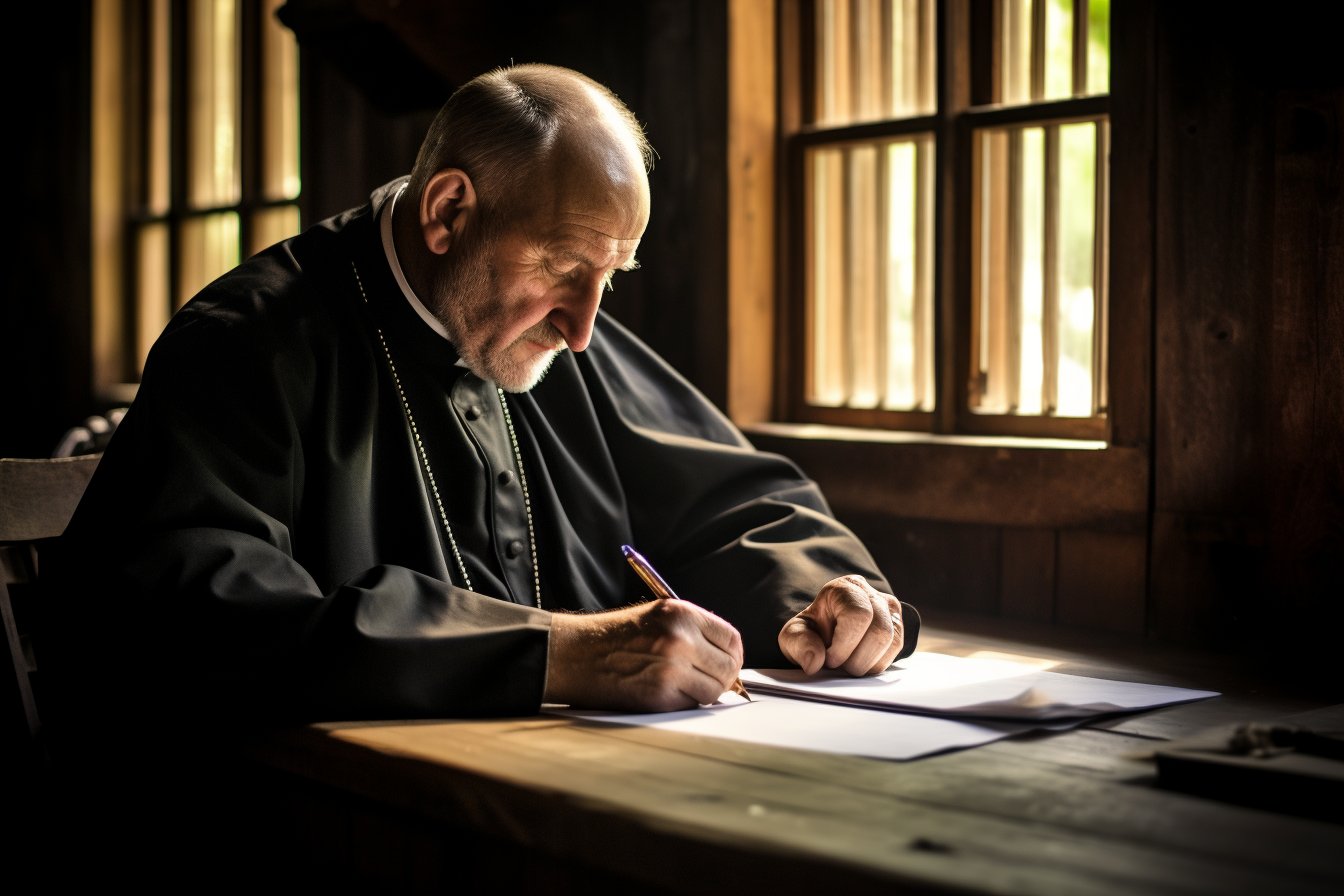
St. Alphonsus Marie Liguori writing at his desk

A Pastor for the Marginalized

In 1726, Alphonsus was ordained to the priesthood. He entered the diocesan Congregation of Apostolic Missions for the exercise of his ministry. Alphonsus started his mission of evangelization and catechesis among the humblest and poorest in Neapolitan society. He preached to them and instructed them about the basic teachings and truths of the faith. Many of these people were very often prone to vice and, worse, were involved in crimes. With much patience, he taught them to pray and encouraged them to improve their way of life.

Alphonsus’ efforts reaped very good results. In the most wretched districts of the city, groups of people increased in number, meeting in the evenings in private houses to pray and meditate on the Word of God. These groups were guided by several catechists trained by Alphonsus himself and other priests. At the desire of the Archbishop of Naples, these meetings were held in the chapels and came to be known as “evening chapels”. These became true and proper sources of moral education, social improvement, and reciprocal help among the poor.

Going into the Deep

When he was 35 years old, after considering leaving and evangelizing the pagan peoples, Alphonsus came into contact with the peasants and shepherds of the hinterland of the Kingdom of Naples. He was struck by their ignorance of religion and their poor state. Alphonsus decided to leave the capital and dedicated himself to these people, who were poor both materially and spiritually. In 1732, he founded the Congregation of the Most Holy Redeemer, now known as the Redemptionists.

He put the congregation under the protection of Bishop Tommaso Falcoia, of whom he subsequently became the superior. The members of the congregation were authentic itinerant missionaries. They reached the most remote of villages and exhorted people to convert and persevere in the Christian life, especially through prayer.

Alphonsus’ reputation, goodness, and pastoral zeal led him to be appointed Bishop of Sant’Agata dei Goti in 1762. He continued his work there until he eventually fell ill, which gravely weakened him and made him leave his office in 1787 through the concession of Pope Pius VI. In 1787, Alphonsus breathed his last after great suffering. He was canonized in 1839. His feast day is August 1.

Five Interesting Facts About St. Alphonsus Liguori

  1. St. Alphonsus Liguori is the patron saint of moral theologians and confessors.
  2. St. Alphonsus Liguori is also the patron saint of those suffering from arthritis. St. Alphonsus experienced really painful arthritis all his life. This is why he is often portrayed with his chin touching his neck.
  3. When he was only 16 years old, St. Alphonsus Liguori obtained a degree in civil and canon law.
  4. St. Alphonsus Liguori was declared Doctor of the Church in 1871 by Pope Pius IX.
  5. St. Alphonsus Liguori was known to have a deep love and devotion to the Blessed Virgin. One of his works was The Glories of Mary, one of the most profound works of Marian literature ever written.

Prayer to St. Alphonsus Marie Liguori

O God, who constantly raises up in your Church new examples of virtue, grant that we may follow so closely in the footsteps of the Bishop Saint Alphonsus in his zeal for souls as to attain the same rewards that are his in heaven. Through our Lord Jesus Christ, your Son, who lives and reigns with you in the unity of the Holy Spirit,God, for ever and ever Amen.