St. Maria Goretti

St. Maria Goretti: A Life of Virtue and Courage

When they lived:

St. Maria Goretti was born on October 16, 1890, in Corinaldo, Italy, and passed away on July 6, 1902, in Nettuno, Italy.

Where they lived:

St. Maria Goretti spent most of her life in the picturesque Italian countryside. Her family lived in Corinaldo, a town located in the Marche region of central Italy. After her father’s death, they moved to Le Ferriere, another small village in the region, before finally settling in Nettuno, near Rome.

Notable world events during the time of their life:

  1. The Wright Brothers’ First Flight (1903): Just a year after St. Maria Goretti’s passing, the Wright brothers achieved the first powered, controlled, and sustained flight in Kitty Hawk, North Carolina, USA. This event marked a pivotal moment in the history of aviation and set the stage for modern air travel.
  2. Russo-Japanese War (1904-1905): During this time, the Imperial Japanese forces clashed with the Russian Empire, leading to significant military advancements, territorial shifts, and the emergence of Japan as a global power. This conflict was a major event in shaping geopolitical dynamics in the early 20th century.
  3. Einstein’s Theory of Special Relativity (1905): Albert Einstein published his groundbreaking theory of special relativity in 1905, forever altering the understanding of time, space, and energy. This landmark scientific discovery laid the foundation for modern physics and transformed the world of science.
  4. The First Modern Summer Olympics (1896): The revival of the Olympic Games took place in Athens, Greece, in 1896, during St. Maria Goretti’s lifetime. This international sporting event brought together athletes from various nations to compete in the spirit of unity and friendly competition.

Patronage:

St. Maria Goretti is widely venerated as the patron saint of purity, chastity, and forgiveness. Her life was a testament to the virtue of purity and the strength of forgiveness even in the face of great adversity.

They loved God and one another.

Maria Goretti was born on October 16, 1890, in Corinaldo, Ancona Province, Italy. She was the third of seven children in a poor family of farmworkers. Her father moved them to Ferrier di Conca, near Anzio. When Maria was nine years old, her father died of malaria. Their family was left even more destitute and poor. Their family moved in with another family just to survive.

Most of Maria’s siblings would work in the fields with their mother. Maria, on the other hand, would watch her baby sister, cook their meals, and manage the house. It was really a difficult life for them. However, despite their poverty and struggles, they were close to one another and were devout Christians.

Battling sin with purity

On July 5, 1902, when Maria was just eleven years old, Alessandro, the 20-year-old son of the family whose house they were sharing, came home early from work. He knew that Maria was alone, except for her baby sister, who was watching. Aleesandro had insisted on having intercourse with her twice before, and Maria had always declined and refused his lustful intention.

Maria was sitting outside on the steps of the house sewing at that time. As she concentrated on her chore, Alessandro surprised her and grabbed her from her steps. Wanting to rape Maria now, he wielded a knife and insistently demanded that she submit to his desire. The young girl refused and told him that what he wanted to do was a mortal sin, warning him that he could go to hell and be punished for it. But the young man was even more unyielding, so Maria fought him with all her might, screaming, “No! It is a sin! God does not want it!”

Enraged by this, Alessandro tried to choke her. Maria, firm in her belief that this is a mortal sin, said she would rather die than submit. When Maria continued to resist, Alessandro stabbed her eleven times. Maria was badly injured but was still alive. She tried to move toward the door, but Alessandro advanced toward her and stabbed her three more times before he finally escaped.

Maria’s baby sister woke up from the commotion and started crying. When Maria’s mother and Alessandro’s father came to check on the crying baby, they found poor Maria and rushed her to the hospital in Nettuno. Unfortunately, her wounds were beyond the surgeon’s ability to help. She explained to her mother and to the police what had ensued. The next day, she expressed forgiveness for Alessandro and said she wanted to see him in heaven with her. That fateful day, while looking upon an image of the Virgin Mary and holding a cross to her chest, Maria breathed her last.

The Little Saint

Alessandro was captured and confessed that he had attempted to persuade Maria to accompany him to bed on some occasions in the past and had attempted to rape her before. He was found guilty and sentenced to thirty years in prison. For the first several years, he was unrepentant. However, he recounted that Maria visited him in a dream. Twenty-seven years later, he was released from prison, apologized and sought forgiveness from Maria’s mother, and received Communion the next day.

Maria Goretti was beatified by Pope Pius XII in a ceremony at Saint Peter’s Basilica on April 27, 1947, and was declared a saint on June 24, 1950, by the same pope. Her feast day is July 6.

Five Interesting Facts About St. Maria Goretti

  1. St. Maria Goretti is one of the youngest saints to be canonized.
  2. St. Maria Goretti is the patron saint of chastity, rape victims, girls, youth, teenage girls, poverty, purity, and forgiveness.
  3. During the canonization of St. Maria Goretti, Alessandro was present in the St. Peter’s crowd to celebrate her canonization.
  4. After he was released from prison, Alessandro, the man who killed St. Maria Goretti, became a lay brother of the Order of Friars Minor Capuchin, where he lived in a monastery and worked as its receptionist and gardener until his death.
  5. It is often incorrectly reported that St. Maria Goretti’s body is incorrupt. Her skeletal remains are contained in a wax figure of her and are encased in a glass coffin.

Prayer to St. Maria Goretti

O God, author of innocence and lover of chastity, who bestowed the grace of martyrdom on your handmaid, the Virgin Saint Maria Goretti, in her youth, grant, we pray, through her intercession, that, as you gave her a crown for her steadfastness, so we, too, may be firm in obeying your commandments. Through our Lord Jesus Christ, your Son, who lives and reigns with you in the unity of the Holy Spirit, one God, for ever and ever Amen.


St. Kateri Tekakwitha

When She Lived:

Kateri Tekakwitha, also known as Lily of the Mohawks, lived during the 17th century. She was born in 1656 in the Mohawk village of Ossernenon (present-day Auriesville, New York).

Where She Lived:

Kateri lived in the Mohawk territory, which was part of the northeastern woodlands of North America. This region encompassed parts of present-day New York, Vermont, and Quebec, Canada.

Notable World Events During Her Life:

  • The Great Plague of London (1665-1666): A deadly outbreak of bubonic plague that swept through London, causing the death of an estimated 100,000 people, roughly a quarter of the city’s population.
  • The Great Fire of London (1666): A catastrophic fire that raged through central London, destroying a significant portion of the city’s buildings, including 87 churches and numerous homes.
  • Newton’s Theory of Universal Gravitation (1687): Sir Isaac Newton published his groundbreaking work “Philosophiæ Naturalis Principia Mathematica,” in which he formulated the laws of motion and the law of universal gravitation.
  • The Glorious Revolution (1688-1689): A bloodless revolution in England that led to the deposition of King James II and the ascension of William III and Mary II to the English throne, affirming parliamentary supremacy.
  • Founding of the Bank of England (1694): The Bank of England, the central bank of the United Kingdom, was established to act as the government’s banker and issuer of banknotes.

Her Patronage:

Kateri Tekakwitha is recognized as the patron saint of ecology and the environment. Her deep connection with nature and the environment, often seeking solace and spirituality in the wilderness, has made her a beloved figure among those advocating for the protection of nature.

Early Life

St. Kateri Tekakwitha was born around the year 1656 in today’s New York state. Her father was a Mohawk warrior, while her mother was a Christian from the Algonquin tribe. Her mother gave Kateri a sense of the living God.

When Kateri was a child, her tribe was attacked by a smallpox epidemic. Both her father and mother were among those who had died. She, too, got the disease, leaving her with permanent scars on her face and impaired eyesight. The chief of their tribe, Kateri’s uncle, adopted her. While she was still very young, Kateri’s aunts began planning her marriage.

Kateri’s Conversion

When Kateri was eighteen years old, Jacques de Lamberville, a Catholic missionary, came to their village, bringing the message that God loves all people. However, most members of the Mohawk tribe did not believe the missionary’s message. On the other hand, Kateri believed this and began receiving instruction in the Catholic faith. Eventually, Kateri was baptized by de Lamberville. She also realized that she was called into an intimate union with God as a consecrated virgin.

A Holy Life

St Kateri Tekakwitha praying in a forest. a campfire sits in front of her as the sun rises behind her.

Because of Kateri’s new belief, many members of their tribe made fun of her. She was also ostracized by her tribe for refusing the marriage that had been planned for her. The life of the Mohawk village had become violent, and debauchery was commonplace. Realizing that this was proving too dangerous to her life and her call to perpetual virginity, she ran away and took refuge in the St. Francis Xavier Mission in Caughnawaga, Quebec, near Montreal. She worked there and was still faithful to her people’s traditions. However, she renounced their religious beliefs. Kateri lived a simple life and was faithful to her love for Jesus, to prayer, and to attending the daily Mass.

Kateri led a holy life by example. She dedicated much of her time to teaching children and caring for the sick and elderly. Her greatest and sincerest desire was to know and do what pleased God. Kateri lived out the last years of her short life here, practicing austere penance and constant prayer.

Kateri died in 1680, when she was just twenty-four years old. Devotion to Kateri began immediately after her death, and her body, enshrined in Caughnawaga, is visited by many pilgrims each year. Fifty years after her death, the first convent for Indian nuns was founded in Mexico. She was beatified by Pope John Paul II in 1980 and canonized by Pope Benedict XVI on October 21, 2012. Her feast day is July 24.

Five Interesting Facts About St. Kateri Tekakwitha

  1. At her death, it is said that the disfiguring scars St. Kateri Tekakwitha suffered from smallpox disappeared and her face shone with radiant beauty.
  2. St. Kateri Tekakwitha was said to have reached the highest levels of mystical union with God, and many miracles were attributed to her while she was still alive.
  3. St. Kateri Tekakwitha is often called “The Lily of the Mohawks” or “the Mohawk Maiden.”
  4. St. Kateri Tekakwitha is the first canonized indigenous woman of North America and the second indigenous person of North America to be canonized, the first being St. Juan Diego Cuauhtlatoatzin, whose tilma was used by the Virgin Mary to imprint her image, now known worldwide as Our Lady of Guadalupe.
  5. The meaning of the name Tekakwitha has been rendered into English as “she walks groping for her way.” Another rendering is “she puts things in their place.”

Prayer to St. Kateri Tekakwitha

God our Father, whom Kateri Tekakwitha liked to call the Great Spirit, We thank you for having given us this young woman as a model of the Christian life. Despite her frailness and her community’s resistance,she bore witness to the presence of Christ. With her companions, she drew close to the elderly and the sick. Every day, she saw in nature a reflection of her own glory and beauty. Grant that by her intercession we may always be close to you,more sensitive to the needs of those around us,and more respectful of creation. With her, we shall strive to discover what pleases you and endeavor to accomplish it until the day you call us back to you. Amen.

St. Leonard

When they lived: St. Leonard, also known as Leonard of Noblac, lived during the 5th century.Where they lived: St. Leonard was born in Gaul (modern-day France) and spent most of his life in the region of Limousin.

Notable World Events During His Time

  • 476 AD – Fall of the Roman Empire: In the year 476 AD, the Roman Empire, which had been a dominant force for centuries, finally fell. This marked the end of ancient Rome and the beginning of the Middle Ages, a time of great transformation in Europe.
  • 507 AD – Battle of Vouillé: The Battle of Vouillé was a significant event during St. Leonard’s lifetime. It resulted in the defeat of the Visigothic king Alaric II by the Frankish king Clovis I, expanding Frankish influence in the region.
  • 570 AD – Birth of Prophet Muhammad: In the year 570 AD, the founder of Islam, Prophet Muhammad, was born in Mecca. His teachings would go on to shape the course of history, and Islam would become one of the world’s major religions.
  • 589 AD – Council of Toledo: The Third Council of Toledo, held in 589 AD, played a vital role in the history of Spain. It helped in the conversion of the Visigoths to Catholicism and solidified the position of the Catholic Church in the region.
  • 622 AD – The Hijra: This significant event marked the migration of Prophet Muhammad and his followers from Mecca to Medina, known as the Hijra. This event is considered the starting point of the Islamic lunar calendar and was a crucial turning point for Islam.
  • 640 AD – Library of Alexandria Destruction: In 640 AD, during St. Leonard’s lifetime, the Library of Alexandria, one of the ancient world’s most renowned centers of knowledge, was tragically destroyed during the Muslim conquest of Egypt, resulting in the loss of countless historical texts and knowledge.
  • 732 AD – Battle of Tours: The Battle of Tours, fought in 732 AD, halted the expansion of the Islamic Umayyad Caliphate into Europe. Frankish leader Charles Martel’s victory was crucial in preserving Christianity and European culture.

Patronage: St. Leonard is widely known as the patron saint of prisoners, captives, and women in labor. His life of compassion and intercession for those in distress earned him this role as a protector and helper.

Life and Dedication

Saint Leonard is also known as Leonard of Noblac. Some refer to him as Leonard, Linhart, Leonhard, Leonardo, and even Annard.

Although quite notable in the Roman Catholic Church, there are details missing about the life of Leonard.

Saint Leonard was said to have been a Frankish nobleman. He belonged to the court of King Clovis I, a pagan man who established the Merovingian dynasty.

Saint Leonard was a devoted young Christian. He was said to have been the godchild of Saint Remigius, who was at that time the bishop of Reims.

As soon as he was old enough, Saint Leonard joined his godfather as a disciple. He often accompanied Saint Remigius on his missions to preach the gospel to pagan worshippers.

As a disciple, he was given permission to visit several prisons. There, he would preach to the sinners and set them free if necessary.

In his time, Saint Leonard set quite a few prisoners free.

Legacy

He was an austere man who practiced mortification, prayed, and fasted for long periods. He was zealous and dedicated to God.

It was, therefore, no surprise that he was considered a likely candidate for the bishopric. This offer was exempted for members of the noble Merovingian court.

Saint Leonard turned down the offer, much to the dismay of the parishioners.

At some point in history, the Queen joked with Leonard and insinuated that he used prayers to stop an impending opposition army attack. To her and the rest of the court’s surprise, Saint Leonard prayed to God, and King Clovis I won the battle.

It was this stunning miracle that convinced King Clovis that a pagan God could not help him. He and the rest of the noble court converted to Christianity.

Sometime later, Saint Leonard joined a monastery at Micy, near Orleans, France. There, he dedicated his time to improving his relationship with God.

He might have motivated his brother, Saint Lifiard, to build a monastery at Neun, where he and other young Christian men lived.

Saint Leonard had become used to human interaction. He craved total seclusion, and so he retreated into the forest of Limousin. There, he became a hermit.

He continued to preach to the locals, and soon he had converted many to Christianity. These people will come to respect Saint Leonard as much as they stuck around him for his knowledge.

He was said to have established an oratory. He lived there and only ventured out to preach to the people nearby and in other churches.

The people, however, wanted more of him. For this reason, Saint Leonard founded a monastery that was open to all devoted locals. The monastery was closely located near Leonard’s oratory.

Saint Leonard was said to have performed miracles during his time. The most notable miracle was the delivery of a baby for the Queen of Franks, who suffered from a complicated pregnancy. He was rewarded with several pieces of land at Noble.

On a piece of this land, he established the Abbey of Noblac.

He was revered by many, and he almost always drew crowds of people who came to say their respects.

Death and Canonization

Saint Leonard died around 559 A.D. He received as much respect in his death as he did when he was alive.

His shrine was visited by pilgrims, and he was noted for several miracles. There are about 4000 requests that were granted through the intercession of Saint Leonard.

Saint Leonard is celebrated on the 6th of November. He is venerated in the Roman Catholic Church, the Eastern Orthodox Church, and the Anglican Church.

5 Interesting Facts About Saint Leonard

  1. Did you know that Saint Leonard is the patron saint of prisoners?
  2. Did you know that Saint Leonard survived on fruits, herbs, and water
    from a spring as a hermit?
  3. Did you know that there are churches dedicated to Saint Leonard in
    major cities in France, Belgium, Spain, and Italy?
  4. Did you know the Saint-Léonard-de-Noblat village is named after
    Saint Leonard?
  5. Did you know that history records that prisoners egos invoked Saint
    Leonard, are you set free from their chains?

Prayer to Saint Leonard

O Almighty God, who has called us to faith in thee and bast compassedus about with so great a cloud of witnesses; Grant that we, encouraged by the good examples of thy saints and especially of thy servant Leonard, may persevere in running the race that is set before us, until at length, through thy mercy, we with them attain to the eternal joy, through him who is the author and finisher of our faith, thy Son Jesus Christ, our Lord. Amen.

Source:[https://www.sainttherse.com/prayer-to-saint-leonard-of-noblac/]{.ul}

St. Louis King of France

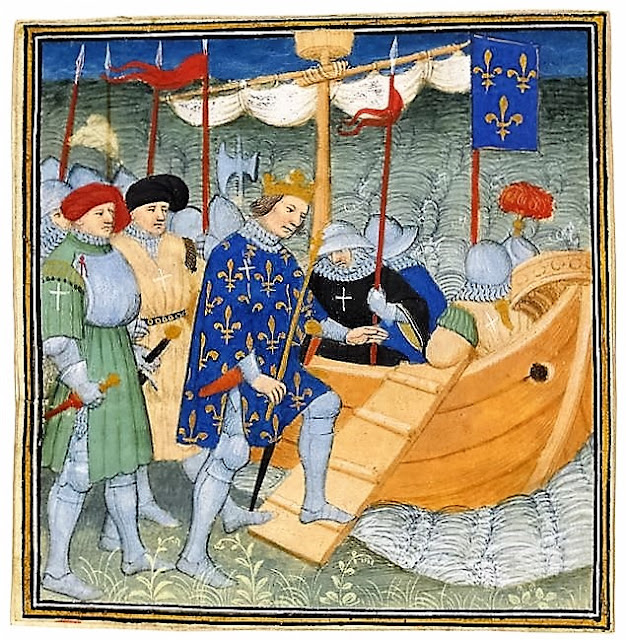
When they lived: St. Louis IX, also known as St. Louis King of France, lived from April 25, 1214, to August 25, 1270.

Where they lived: St. Louis IX ruled from the magnificent city of Paris, the heart of France during the medieval period.

Notable world events during the time of their life:

  • The Seventh Crusade (1248-1254): During this event, King Louis IX embarked on a daring and passionate mission to reclaim the Holy Land. His leadership and valiant efforts earned him respect from both allies and adversaries, leaving a lasting impact on European history.
  • The Mongol Empire and the Battle of Ain Jalut (1260): Far beyond the borders of Europe, the Mongol Empire was rapidly expanding its dominion. In 1260, the Battle of Ain Jalut marked a significant turning point as the Mamluks of Egypt halted the Mongol advance. This event reshaped the dynamics of power in the Middle East and influenced international politics.
  • The Great Famine (1315-1317): Although this occurred after King Louis IX’s life, it had its roots during his time. A series of crop failures and harsh weather conditions led to widespread famine across Europe. The consequences were devastating, affecting millions of lives and leaving a lasting impact on agriculture and trade in the region.
  • The University of Oxford’s Establishment (c. 1248): While King Louis IX was still alive, one of the world’s oldest and most prestigious universities, the University of Oxford, was founded in England. This institution would go on to become a center of academic excellence and contribute significantly to advancements in various fields.
  • Marco Polo’s Travels (1271-1295): Around the time of St. Louis IX’s death, the legendary explorer Marco Polo embarked on his epic journey to the Far East. His travels brought back incredible tales of the riches and wonders of the Orient, sparking curiosity and opening up new avenues of trade and cultural exchange between Europe and Asia.

Their patronage: St. Louis IX is often venerated as the patron saint of the Third Order of St. Francis. He was a devoted supporter of the Franciscan order and embodied their principles of humility, compassion, and service to the poor. Additionally, he is recognized as the patron saint of builders, as he was responsible for several ambitious construction projects during his reign, including the Sainte-Chapelle in Paris, a stunning Gothic chapel renowned for its breathtaking stained glass.

His Life as a King

When she was the regent ruler, Louis’ mother dealt with rebellious vassals and obtained a definitive victory in the Albigensian Crusade, which had started 20 years earlier. When Louis finally took over there, he also faced recurring conflicts with some of his kingdom’s most powerful nobles.

In spite of all the opposition, Louis annexed several provinces, notably parts of Aquitaine, Maine, and Provence. During the time he was in power, the kingdom of France reached an economic as well as political peak. He was highly regarded by his fellow European rulers.

St. Louis was also a reformer who developed the French royal justice system, where the king was the supreme judge. He banned the trial by ordeal, in which the accused were subjected to painful torture as a way of determining their innocence. He also introduced the principle of innocence until proven guilty.

St. Louis banned all forms of lending with the idea of getting an interest rate. He was renowned for his charity as he fed beggars from his table, washed their feet, and ministered to the needs of the lepers, who were generally ostracized.

As king, he would feed over one hundred people and eat their leftovers. He founded many hospitals and houses, such as the house of the Filles-Dieu for reformed prostitutes and the Quinze, Vingt, for 300 blind men.

At one point, Louis led the seventh crusade in his mid-thirties and the eighth crusade in his mid-fifties against the Ayyubids, Bahriyya Mamluks, and Hafsid Kingdom as a way of honoring a vow he had made in prayer when he was ill. When he was leading the seventh crusade, he was captured and ransomed against a third of France’s annual revenue, and he died from dysentery when he was leading the eighth crusade.

Up until the time his mother died in 1252, she remained a valued advisor to him. She advised him on how to be a great leader and a great Christian.

During the golden century of St. Louis, the kingdom of France was at its height both politically and economically. He commanded the largest army and ruled the largest and wealthiest kingdom, as well as the European center of arts and intellectual thought at the time.

St. Louis was also very famous for the style of his court because of artwork purchased from Persian masters. The Saint’s personal chapel, the Sainte Chapelle in Paris, was known for its intricate stained glass windows, and it has been copied more than once by his disciples everywhere.

His Life as a Christian

He is generally regarded as an ideal Christian ruler. St. Louis was inspired by Christian zeal and Catholic devotion. He is known for enforcing strict Catholic orthodoxy, and he punished those who blasphemed.

Saint Louis was also known for protecting the poor and never speaking ill of anyone. Everything that he did was for the glory of God and the good of his people. He excelled in penance, had a great love for the church, and was even merciful to the rebels.

Many Europeans had much respect for St. Louis, and it was mainly because of his personality and not because of his military dominance. He was the ideal example of a Christian prince. He had a reputation for fairness and saintliness, and in many cases, he was chosen as an arbiter of quarrels among rulers of Europe.

Another act to show his dedication to Christianity was when he burned 12,000 manuscript copies of the Talmud and other imported Jewish books.

St. Louis, the Husband

Louise married Margaret of Provence on May 27, 1232. This new queen had religious zeal, which qualified her as a well-suited partner for the king, and this marriage also had political connections.

St. Louis enjoyed the company of his wife, and they would ride together as he showed her the public works he was making in Paris. The public works that he did were both for Paris’ defense and its health.

They would read and listen to music together. This, however, aroused some jealousy in the saint’s mother, and she tried to keep the couple apart as much as possible.

His Legacy

St. Louis’ patronage of the arts inspired much innovation in Gothic art. His feast day is celebrated on the 25th of August. He is known as the patron saint of the third order of St. Francis.

5 Interesting Facts About St. Louis, King of France

  1. Remembered as one of the most notable European monarchs of the
    Middle Ages.
  2. St. Louis enforced a law that punished blasphemy by mutilation.
    of the tongue and lips
  3. St. Louis is the only canonized king of France.
  4. Much of what is known about St. Louis comes from Jean de
    Joinville’s famous “Life of Saint Louis”
  5. Both his grandfathers were kings.

Prayer to St. Louis, King of France

O holy King St. Louis, worthy son of our Holy Father St. Francis and patron of the Third Order, intercede for me with our Heavenly Father. Obtain for me the grace to follow in thy footsteps, to be always an adutiful child of St. Francis, and to observe exactly, all the days of my life, that holy rule which thou lovedst so ardently and kept faithfully. Be my guide and protector, so that I may never stray from the path of virtue but increase daily in holiness and perfection and finally merit to be numbered among the chosen ones of our Seraphic Father in Heaven. Amen.

St. Philip Neri

St. Philip Neri: The Joyful Apostle of Rome

When they lived:

St. Philip Neri lived from July 22, 1515, to May 25, 1595.

Where they lived:

St. Philip Neri spent the majority of his life in the vibrant city of Rome, Italy.

Notable world events during the time of their life:

  1. The Council of Trent (1545 – 1563): One of the most significant events in the history of the Catholic Church, this ecumenical council addressed various issues and reforms within the Church, setting the foundations for the Counter-Reformation. St. Philip Neri played a crucial role in this period, promoting spiritual renewal and leading many to a deeper faith.
  2. The Age of Exploration (15th – 17th centuries): During St. Philip Neri’s life, the world witnessed a surge in exploration, with daring adventurers like Christopher Columbus and Ferdinand Magellan sailing the seas to discover new lands. This era of exploration brought about cultural exchanges, trade, and the expansion of knowledge and ideas.
  3. Galileo Galilei’s Discoveries (1564 – 1642): Galileo, a brilliant astronomer and mathematician, made groundbreaking discoveries during St. Philip Neri’s time. His observations using the telescope challenged existing beliefs about the cosmos and played a crucial role in advancing the scientific revolution.
  4. The Spanish Armada (1588): In 1588, the formidable Spanish Armada, an enormous fleet of ships, set sail to invade England. However, it faced defeat at the hands of the English fleet and adverse weather conditions. This event marked a turning point in European history and secured England’s position as a naval power.
  5. The Shakespearean Era (Late 16th – Early 17th centuries): St. Philip Neri’s life coincided with the flourishing of English literature, particularly the works of William Shakespeare. The Bard’s plays and poetry continue to influence the literary world and have left an enduring impact on the English language.

Patronage:

St. Philip Neri is the patron saint of joy, humor, and merrymaking. He is also considered the patron saint of Rome, where his cheerful and compassionate character endeared him to many, earning him the title “The Apostle of Rome.”


From the business of the world to the business of God

Philip Neri was born in Florence, Italy, on July 21, 1515. He was one of four children born to Francesco Neri, a notary. Philip’s mother died while they were very young. However, her place was filled by a capable stepmother. From infancy, Philip had a merry and docile disposition.

Philip received his early education from the Dominican friars in a monastery in Florence. When he was 18 years old, he went off to live with a wealthy relative in San Germano. His family hoped that he would become a successful businessman like his uncle. He assisted him there, and his family expected he could have possibly inherited the business.

However, soon after his arrival, Philip experienced a mystical vision. This event was an intense and personal encounter with Christ. It dramatically changed the course of his life. Soon, he lost interest in owning property or even participating in business and trade. He felt a call from the Holy Spirit to a life radically lived for and to serve the Lord and the Church.

A Champion of the Poor

Philip set out for Rome to study. He tutored young students to support himself at the university. During his first two years in Rome, Philip lived a solitary life. He practiced an ascetical way of life. During his free time, he visited the churches in Rome and the catacombs of many saints to pray. While he was praying in one of the catacombs, Philip suddenly realized what God wanted him to do with his life.

In 1535, Philip began studying theology and philosophy at the Sapienza and at St. Augustine’s monastery. Although he was considered a “promising scholar,” after three years of studies, Philip gave up any thought of ordination. Instead, Philip started to work among the poor and sick in Rome. In 1548, with the help of his confessor, Father Persiano Rossa, Philip founded a confraternity for poor laymen to meet for spiritual exercises and service of the poor, the Confraternity of the Most Holy Trinity, or the Oratory.

Philip and his contagious holiness

Philip had already accomplished so much, but his confessor, Father Persiano Rossa, was determined that his work would be more effective as a priest. This led him to decide to become a priest. On May 23, 1551, Philip was ordained to the priesthood. He talked about his ministry whenever he met someone new and urged people to join him. From there, Philip went to live with Father Rossa and other priests at San Girolamo and carried on his mission, mostly through the confessional.

Some people call Philip Neri the “saint maker”. This was because so many men came to Philip seeking advice and direction for living their faith. These men later became saints. Some of these men were St. Ignatius of Loyola, St. Francis de Sales, St. Charles Borromeo, and St. Francis Xavier. It is said that even popes and bishops came to the oratory to seek Philip’s advice.

When he was already old, after spending a day hearing confessions and receiving visitors, Philip Neri suffered a hemorrhage and died on the feast of Corpus Christi in 1595. Philip Neri was beatified by Pope Paul V on May 11, 1615, and canonized by Pope Gregory XV on March 12, 1622. His feast day is celebrated on May 26.

5 Interesting Facts About St. Philip Neri

  1. St. Philip Neri is the patron of joy and humor, Rome, and the US Army Special Forces.
  2. When he was young, St. Philip Neri was called “Pippo buono” or “good little Phil”. This was because he was a cheerful and attractive lad, popular with all who knew him.
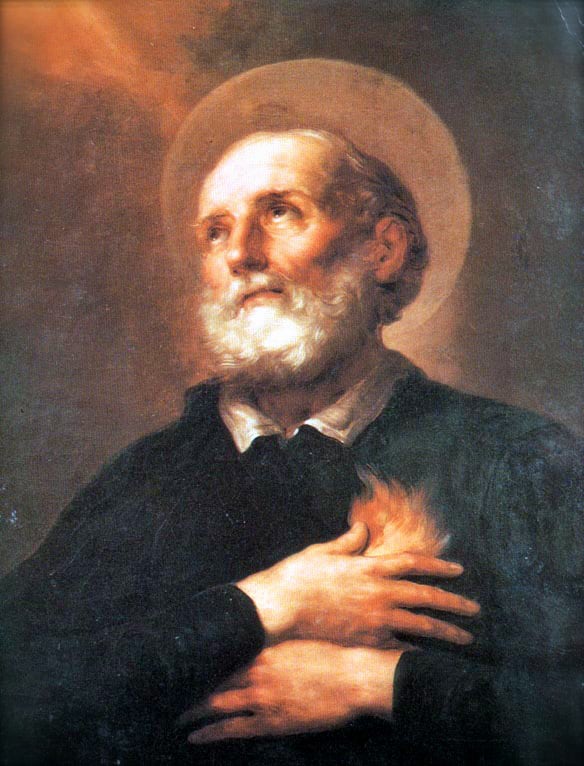
  3. In 1544, on the eve of Pentecost, St. Philip Neri saw what appeared to be a globe of fire that entered his mouth, causing him to feel his heart dilate. Philip was engulfed with divine love that caused him to scream out, “Enough, enough, Lord, I can bear no more.” Philip then discovered a swelling over his heart, though it caused him no pain.
  4. St. Philip Neri once shaved half his beard just to bring smiles to children.
  5. A legend about him says that when the Pope wanted to make St. Philip Neri a cardinal, he hung a cardinal’s hat on Philip’s door. St. Philip took the hat and played catch with it, throwing it like a Frisbee, saying, “Don’t take yourself too seriously.”

Prayer to St. Philip Neri

O God, who never ceases to bestow the glory of holiness on the faithful servants you raise up for yourself,graciously grant that the Holy Spirit may kindle in us that fire with which he wonderfully filled the heart of Saint Philip Neri. Through our Lord Jesus Christ, your Son,who lives and reigns with you in the unity of the Holy Spirit,one God, for ever and ever Amen.
St. Raymond Nonnatus


St. Raymond Nonnatus: The Miracle-Born Saint

When they lived:

St. Raymond Nonnatus, also known as Saint Raymond Nonnat, lived during the 12th and 13th centuries. He was born in 1204 in the village of Portell, Catalonia, Spain.

Where they lived:

St. Raymond’s early life was deeply rooted in the picturesque landscapes of Catalonia, a region known for its rich history, stunning architecture, and vibrant culture.

Notable world events during the time of their life:

  • 1215 – Magna Carta Sealed: In a significant historical moment, King John of England sealed the Magna Carta, laying the groundwork for constitutional rights and limiting the power of the monarchy. Though St. Raymond lived in Spain, this event’s ripples would eventually impact governance and liberties worldwide.
  • 1227 – Genghis Khan’s Death: The legendary Mongol leader Genghis Khan passed away, leaving behind an empire that stretched from Asia to Eastern Europe. His legacy shaped the course of history, ushering in cultural exchanges, trade routes, and the famed Pax Mongolica.
  • 1248-1254 – The Seventh Crusade: Led by King Louis IX of France, the Seventh Crusade aimed to regain control of the Holy Land. The effects of this religious expedition reverberated across continents and influenced the cultural exchange between East and West.
  • 1269 – Marco Polo’s Travels: The renowned Venetian merchant and explorer, Marco Polo, completed his extraordinary journey through Asia. His fascinating tales of distant lands and cultures captivated the imagination of Europe, sparking further exploration and trade with the East.

Their patronage:

St. Raymond Nonnatus is known as the patron saint of expectant mothers, midwives, and newborns. He earned this title due to the circumstances of his birth. “Nonnatus” translates to “not born,” as he was delivered through an emergency cesarean section after his mother’s death, making him a symbol of hope and protection during childbirth.

Early Life

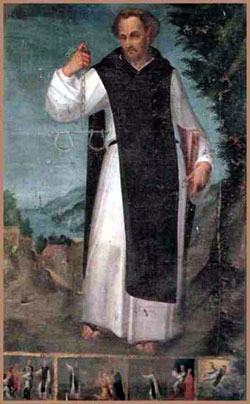
Raymond Nonnatus was born in 1204 in the village of Portell in the Diocese of Urgell. His mother died while giving birth to him, and a caesarean section had to be performed to save his life. Hence, he goes by the Latin nickname Nonnatus, which means “not born”. He was practically taken out of the womb of his deceased mother. His father was a local doctor who performed the surgery that saved his life.

Raymond’s well-educated father had high expectations for his son, whom he wanted to serve in the Kingdom of Aragon’s royal court. However,Raymond was so devoted to Christianity that he did not want anything to do with the royal court. His father resorted to sending him to one of his family farms. This move did not deter the young Raymond from following his religious beliefs. He studied the word of God and prayed with the farmworkers at a nearby ancient country chapel, which was dedicated to St. Nicholas.

Upon realizing Raymond’s devotion to Christianity, his father expressed hopes for his son’s social advancement. He permitted him to take up the habit with the Mercedians in Barcelona. The order was established to set free Christian captives from the Moors of North Africa by paying ransom to the captors. The founder of that order was St. Peter Nolasco, who was also Raymond’s mentor. Raymond was trained well to the extent that he became a priest in 1222 and later became Master General of the Order.

Raymond set out to fulfill the goals of the order, which entailed ransoming captured Christians. He went to Valencia, where he managed to set free 140 Christians from slavery after paying the required ransom. His next journey took him to North Africa, where he successfully ransomed 250 captives in Algiers. However, in Tunis, he ran out of money to pay the ransom and offered himself in exchange for 28 captive Christians. By doing so, he was following a special fourth vow taken by the members of the order.

He was sentenced to death but was spared by his captors, who realized that his ransom would bring in a large amount of money. During his incarceration, he preached the gospel of Jesus Christ and managed to convert some prison guards. To stop him from preaching, his captors bored a hole through his lips with a hot iron and attached a padlock. In 1239, he was ransomed by his order and returned to Spain. That year, Pope Gregory IX named Raymond Cardinal Deacon of Sant’ Eustachio.

Date of Death

Raymond died at the Castle of Cardona, 69 miles from Barcelona, on August 31, 1240, aged 36. He was on his way to Rome after being invited by the Pope. His body was claimed by the local count, the friars, and the town. As a way of resolving this dispute, the body was placed on a blind mule. Without guidance, the mule went straight to a nearby chapel where Raymond had prayed as a young man. This was taken as a sign that he should be buried at the chapel.

Canonization and patronage

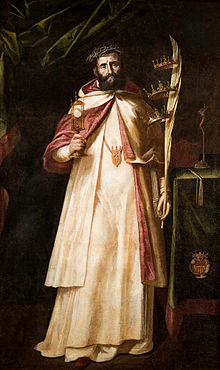
Raymond was canonized in Rome by Pope Alexander VII in 1657. He is portrayed in paintings in the habit of his order, surrounded by ransomed slaves, with a padlock on his lips. Raymond is the patron saint of pregnant women, childbirth, and newborn infants. Due to the story of his birth, women facing childbirth pray to ask for his intercession.

Feast Day

His feast day is celebrated on August 31. However, the reforms of the church calendar in 1969 did not include Raymond’s feast day with those that are observed wherever the Roman Rite is celebrated. Therefore, since he is included in the Roman Martyrology for August 31, Mass and the Liturgy of the Hours may be recited in his honor on that day as in the pre-1970 General Roman Calendar, which is observed by some traditionalist Catholics.

5 Interesting Facts About St. Raymond Nonnatus

  1. His Latin nickname Nonnatus means “not born” because he was taken
    from the womb of his deceased mother.
  2. During his time in Tunis as a prisoner of faith, he managed to
    convert some prison guards to Christianity.

Prayer to St. Raymond Nonnatus

Glorious St. Raymond, filled with compassion for those who invoke you and with love for those who suffer heavily under the weight of my troubles,I cast myself at your feet and humbly beg of you to take my present concerns, which I recommend to you, under your special protection. [Mention your intention(s) here…]Promise to recommend these to the Blessed Virgin Mary and lay them before the Throne of Jesus, so that He may bring it to a happy ending. Cease not to intercede for me until my request is granted. Above all, obtain for me the grace of one day coming face to face with God and with you, the Blessed Virgin Mary, and the saints, praising and blessing together for all eternity. Amen.

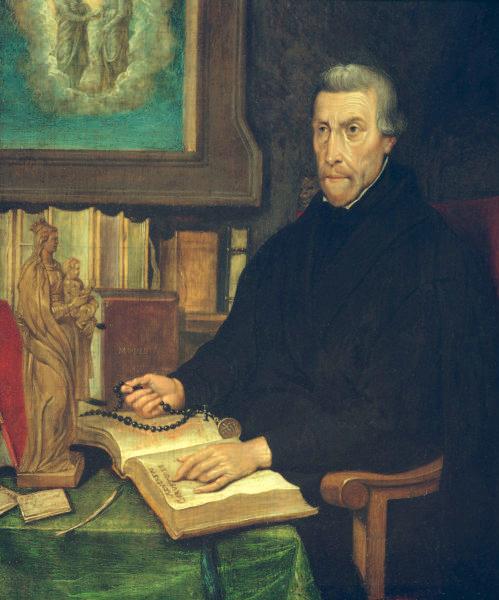
St. Peter Canisius

St. Peter Canisius: A Renaissance Scholar and Spiritual Titan

When they lived:

St. Peter Canisius lived from May 8, 1521, to December 21, 1597.

Where they lived:

Born in Nijmegen, Netherlands, St. Peter Canisius spent most of his life in various regions of Europe, including Germany, Austria, Switzerland, and the Czech Republic.

Notable world events during the time of their life:

  • The Council of Trent (1545-1563): This significant event in the history of the Catholic Church aimed to address and reform various issues raised by the Protestant Reformation. St. Peter Canisius, a prominent Jesuit priest, played an essential role in implementing the council’s decrees and promoting Catholic reforms.
  • The Age of Exploration (15th-17th centuries): During Canisius’ lifetime, European exploration and colonization expanded rapidly, with explorers like Christopher Columbus, Vasco da Gama, and Ferdinand Magellan making groundbreaking discoveries. This era led to the encounter of different cultures and civilizations, impacting the world’s geopolitical landscape.
  • The Scientific Revolution (16th-17th centuries): This period saw groundbreaking advancements in science and mathematics. Renowned figures like Galileo Galilei, Johannes Kepler, and Nicolaus Copernicus challenged the prevailing geocentric model of the universe, paving the way for modern astronomy and physics.
  • The Northern European Renaissance (14th-17th centuries): St. Peter Canisius lived during the peak of the Renaissance, a flourishing period of art, literature, and intellectual growth. This cultural movement shaped Europe’s history and brought about immense contributions to the arts and sciences.
  • The Battle of Lepanto (1571): This naval battle, fought between the Holy League, a Christian alliance, and the Ottoman Empire, marked a crucial victory for Christianity. St. Peter Canisius played an important role in rallying support for the Holy League and strengthening Europe’s resistance against the Ottoman forces.

Their patronage:

St. Peter Canisius is the patron saint of the Catholic Press, the Catholic press workers, and the Catholic schools in Germany.

Life

Peter’s father was a well-off Burgermeister, and his mother died soon after his birth. He was 19 years old when he went to study at the University of Cologne. He completed his master’s degree there in 1540.

In 1543, Peter met Peter Faber, and through him, he joined the Society of Jesus that was newly established. Under the supervision of Faber, he did spiritual exercises, and soon he decided to become a Jesuit.

He also preached in the city, and he taught in universities because of his recurrent travels between colleges and universities, which were tiring and unsafe at the time. He came to be known as the Second Apostle of Germany.

He had a strong influence on Emperor Ferdinand I. as the king’s son in the office of court preacher appointed Phaser, who was a married priest. Canisius opposed him both verbally and on paper. As a result, the phaser was dismissed. Phaser harbored resentment against Canisius for the rest of his life.

Peter attended many sessions of the Council of Trent. He was a persuasive preacher. He was also offered to be a bishop, which he declined. He wanted to stay as a traveler and continue his teaching and traveling.

In 1557, he moved to Germany, at the Colloquy of Worms, where he continued to be the foremost Catholic theologian. From 1559 to 1568, he served in the Cathedral of Augsburg as a preacher, and after that, he founded the University of Innsbruck in 1562.

After he left Germany, the newly built Society of Jesus became a powerful tool. Canisius spent his last 20 years of life in Fribourg. He made the Jesuits, where young ones trained for university studies for generations.

Work

He published his three catechisms in both Latin and German, which were his lasting contributions, and they were widespread and became popular in the Christian religion.

In 1555, he published his book, Summary of Christian Doctrine, which was written in easy Latin. After a year, in 1556, German was published too.

The same year, his other work, A Tiny Catechism for Children, was published. After two years, An Abridged Catechism, which was his most famous work, was published too.

Death

In 1591, when Canisius was 70 years old, he suffered a stroke that left him partially paralyzed. Despite all that, he still continued his preaching with the help of security until he died in Fribourg. He died at the age of 76 on Dec. 21, 1597.

Canisius was buried at St. Nicholas Church. But later, his remains were transferred to the Jesuit College he founded and the place he had spent his last years. The room that he used during his previous months was also open for reverence.

5 Interesting Facts About St. Peter Canisius

  1. Canisius’ famous saying is, “If you have too much to do, with
    “With God’s help, you will find time to do it all.”
  2. He was known as the Second Apostle of Germany.
  3. Peter Canisius was known as a profoundly prayerful person and
    indefatigable worker.
  4. He traveled about 2000 miles in 1557 through Italy, Austria,
    Bavaria and the Rhineland.
  5. Peter Canisius was declared the doctor of the church.

Prayer to St. Peter Canisius

Dear Doctor and Defender of the Church, to you the Master must have said, “Well done, composer of books that have taught and inspired countless persons in many lands.” Help those who compose catechisms to communicate the true teachings of Christ in ways that can be understood by our contemporaries so that they will be moved to follow Jesus. Amen.

St. Justin Martyr

When they lived:

St. Justin Martyr lived during the 2nd century AD.

Where they lived:

St. Justin Martyr was born in Flavia Neapolis (modern-day Nablus) in the Roman province of Judea, which is present-day Palestine.

Notable world events during the time of their life:

  • Roman Empire reaches its height (c. 117-138 AD): St. Justin Martyr lived during the apex of the Roman Empire’s power and influence, under the reign of Emperor Hadrian. The Roman Empire was at its territorial peak, boasting incredible cultural diversity and technological advancements.
  • Antonine Plague (165-180 AD): Also known as the “Plague of Galen,” this deadly pandemic spread throughout the Roman Empire, causing widespread suffering and death. It had a significant impact on the population and had implications for the social and economic structure of the empire.
  • Bar Kokhba Revolt (132-135 AD): During this time, a major Jewish rebellion erupted in Judea against the Roman Empire’s rule. The conflict was led by Simon Bar Kokhba, and its suppression resulted in significant consequences for the Jewish population in the region.
  • Establishment of the Antonine Wall (142 AD): The Romans built the Antonine Wall in present-day Scotland, marking the northernmost frontier of the Roman Empire. This defensive wall had strategic implications for the Roman military presence in the region.
  • The Golden Age of Chinese Literature (c. 2nd century AD): While St. Justin Martyr was in the West, the East experienced a flourishing of Chinese literature, with renowned authors like Zhang Heng making significant contributions to poetry, prose, and scientific writings.

Patronage:

St. Justin Martyr is considered a patron saint of philosophers, apologists, and Catholic teachers. He is recognized for his eloquent defense of Christianity and his efforts to engage in philosophical debates to bridge the gap between faith and reason.

A Lover of Wisdom

Justin, who would later be referred to as Justin Martyr, was born around the year 100 to Greek-speaking parents in the Palestinian province of Samaria (ancient Shechem). His father was an adherent of the Greek pagan religion. Justin was raised in that religion. He was also given an excellent education in history and literature.

As a young man, Justin was interested in philosophy. He searched for truth in the various schools of thought that emerged throughout the empire. However, despite this ardent desire, he was frustrated with the philosophers’ conceits and limitations, aside from their apparent indifference to God.

After some years of study and searching for answers, Justin encountered an old man who urged him to study the Jewish prophets. That encounter had a life-changing impact on Justin’s life and views. The old man told him that the prophets had not solely spoken by inspiration from God, but they also prophesied of Christ’s coming and the establishment of His church. The aspiring philosopher began to be drawn to the beliefs and doctrines of Christianity, which eventually led him to be baptized around age thirty.

The Unapologetic Apologetic

After his conversion, Justin continued to wear the philosopher’s toga. He embraced a life of simplicity and austerity even after he moved to Rome. He was deeply inspired by the dedicated example of Christians whom he had seen martyred for their faith. He was most likely ordained as a deacon because he preached, was not married, and gave religious instruction in his own home. Other than that, he was also the author of various apologetic works that centered on the defense of the Catholic faith against pagans, Jews, and non-believing philosophers. Some of his works, which were strongly worded, were addressed to Roman officials to refute the lies that had been perpetrated against the Church.

In his writings, Justin also explained that the Church considers celibacy a sacred vocation. He also condemned the common practice of infanticide and denounced the accumulation of excessive wealth and property. Justin also explains in his writings that the Church regards celibacy as a sacred calling, condemns the common practice of killing infants, and looks down on the accumulation of excessive wealth and property. His first defense, or apology, was written to Emperor Antoninus Pius around the year 150. He convinced the emperor to regard Christianity with tolerance.

However, when Marcus Aurelius was made emperor in 165, persecution of Christians began again. In that year, Justin wrote to the emperor, who was himself a philosopher. He attempted to demonstrate the unjust treatment of the occurring persecutions and defended the superiority of the Christian faith over Greek philosophy. Fully convinced of his claims, Justin expected that he would be put to death for expressing them.

Martyred for His Convictions

Indeed, Justin was arrested along with a group of other believers. They were brought before the Roman prefect, Rusticus. The prefect made it clear that Justin could be spared from execution. This would happen if he would obey the gods and comply with the edicts of the emperors. Justin, steadfast in faith and conviction, refused and instead replied, “No one can be justly blamed or condemned for obeying the commands of our Savior Jesus Christ.”

Rusticus gave them another opportunity to save their lives from death and questioned them regarding their beliefs about Christ and their manner of worship. Justin and his companions declined the prefect’s advice to renounce their faith and pledge their loyalty to the emperor. With firm faith, Justin said, “There is nothing that we more earnestly desire than to endure torments for the sake of our Lord Jesus Christ. We are Christians and will never sacrifice to idols.” Along with his six companions, Justin was scourged and beheaded. His feast day is June 1.

5 Interesting Facts About St. Justin Martyr

  1. St. Justin Martyr is the patron saint of philosophers and lecturers.
  2. St. Justin Martyr has been regarded as a saint since the earliest centuries of the Church. Eastern Catholics and Eastern Orthodox Christians also celebrate his feast day on June 1.
  3. St. Justin Martyr wrote one of the earliest documents that described the weekly Sunday liturgy of Christians. The structure of their worship is in great contrast to the present form of the Holy Mass. He also emphasized that only baptized people and those free from serious sins may receive the Eucharist.
  4. Most of St. Justin Martyr’s works are lost. His existing works are The First Apology, The Second Apology, and Dialogue with Trypho.
  5. St. Justin Martyr was the first known writer to quote from the Acts of the Apostles.

Prayer to St. Justin Martyr

O God, who through the folly of the Cross wondrous taught Saint Justin the Martyr the surpassing knowledge of Jesus Christ, grant us, through his intercession, that, having rejected deception and error, we may become steadfast in the faith. Through our Lord Jesus Christ, your Son, who lives and reigns with you in the unity of the Holy Spirit, one God, for ever and ever, Amen.

St. John the Baptist

St. John the Baptist: A Zealous Prophet in Turbulent Times

When they lived:

St. John the Baptist, a captivating and enigmatic figure, lived during the early 1st century AD.

Where they lived:

He resided in the rugged wilderness of Judea, a land of untamed beauty and spiritual significance.

Notable world events during the time of their life:

  • The Roman Empire’s Conquest of Judea (63 BC – 6 AD): During John’s life, Judea was under the dominion of the Roman Empire. This conquest brought both cultural upheaval and economic development to the region, shaping the social landscape in which John would later emerge as a prophet.
  • Birth of Jesus Christ (c. 4 BC): Perhaps the most profound event of the era, the birth of Jesus in Bethlehem marked the beginning of Christianity and set the stage for John’s pivotal role as the herald of the Messiah.
  • The Great Fire of Rome (64 AD): An infamous blaze that engulfed Rome, destroying much of the city and leading to widespread devastation. This event brought forth accusations against Christians, eventually leading to their persecution, including John’s cousin, Jesus, and the early Christian community.
  • The Siege of Jerusalem (70 AD): The Roman forces, under the command of Titus, laid siege to Jerusalem, resulting in the destruction of the Second Temple and reshaping the course of Jewish history. John’s life unfolded in the backdrop of the political and religious tensions that led to this monumental event.

Their patronage:

  • Patron Saint of Baptism: As the one who baptized Jesus Christ, St. John’s name became synonymous with this sacred sacrament, symbolizing purification and rebirth.
  • Patron Saint of Converts: His teachings and dedication to spiritual renewal inspired many to embrace Christianity, making him the patron saint of those who undergo conversions.
  • Patron Saint of Tailors: Interestingly, St. John is also the patron saint of tailors, as it is believed that his humble attire in the wilderness influenced the habits of medieval tailors’ guilds.
  • Patron Saint of Protection against Poison: Legend has it that St. John once drank poisoned wine and miraculously survived, bestowing upon him the patronage against poison-related afflictions.

A Son Was Promised

During ancient times, when a king was about to visit a town subjected to his rule, the townspeople prepared for the king’s coming. This was done in order to offer the king a warm welcome to their place. This was precisely the “job” that St. John the Baptist had done.

John the Baptist was the older cousin of Jesus. He was a prophet sent by God to prepare the people for the coming of the promised Redeemer into the world. His birth can be seen in the gospel according to Luke. His father, Zechariah, belonged to the priestly section of Abia. His mother, Elizabeth, was also a direct descendant of Aaron. Both of them lived good lives and were obedient to the law. However, they had no children because they were both advanced in age and Elizabeth was barren.

When their section was assigned to offer incense in the temple, Zechariah was chosen to burn the incense. While the incense was being offered, the angel Gabriel appeared to Zechariah with the news that he and his wife would have a child. This child, the angel continues, would bring “joy and gladness, and many will rejoice at his birth, for he will be great in the sight of [the] Lord. He will drink neither wine nor strong drinks. He will be filled with the Holy Spirit even from his mother’s womb, and he will turn many of the children of Israel to the Lord, their God. He will go before him in the spirit and power of Elijah to turn the hearts of fathers toward children and the disobedient to the understanding of the righteous, to prepare a people fit for the Lord.” (Luke 1:14-17). Adding to this, the angel told him that the child’s name should be “John”.

Zechariah doubted the angel’s message, and for that, he became mute. Soon enough, Elizabeth bore a child. Nine months later, she gave birth to a baby boy. Their relatives were confused when Elizabeth told them that the boy’s name would be “John”. So they asked Zechariah, who asked for something to write on, and he wrote, “John is his name” (Luke 1:63). All were amazed because Zechariah was able to speak again.

The Lord’s Forerunner in Life and in Death

After the account of his birth, John’s early life was untold in the Gospels. Some years later, John began his mission. He preached about repentance for the people’s sins and to “prepare the way of the Lord, make straight his paths” (Luke 3:4). He baptized those who heeded his preaching in the Jordan River. Some of those who had heard him thought that he was the Messiah, to which he replied, “I am not the Messiah” (John 1:20). He baptized Jesus at the inauguration of his mission.

Besides his powerful words about the need for repentance, John also denounced King Herod’s evil act. He was married to Herodias, his brother’s wife. This was a great sin because Herod’s brother was still living. Bearing grudges against John, Herodias demanded that he be arrested. And thus, it happened.

Since then, Herodias has found opportunities to have John killed. One day, Herod hosted a banquet for his friends and guests. Herodias had her daughter dance for Herod. Herod was so overjoyed with the woman’s performance that he promised that he would give anything, even half of his kingdom, to Herodias’ daughter. At Herodias’ bidding, her daughter asked for John the Baptist’s head on a platter. Herod was shocked at the girl’s request, but since he swore before his guests, he dispatched an executioner and had John the Baptist beheaded. Truly, he was Christ’s forerunner in life and in death.

5 Interesting Facts About St. John the Baptist

  1. St. John the Baptist is the patron saint of Jordan, Puerto Rico, France, Canada, and many other places.
  2. Aside from Jesus’ and Mary’s birthdays (December 25 and September 8, respectively), the Church also celebrates the birth of St. John the Baptist on June 24. No other saint was given such an honor by the church.
  3. The church also commemorates St. John the Baptist’s passion or martyrdom on August 29.
  4. The name “John” is derived from the Hebrew name []dir=”rtl” (Yochanan), which means “Yahweh is gracious”.
  5. The Church considers St. John the Baptist the last and greatest among the prophets prior to Jesus’ coming.

Prayer to St. John the Baptist

O God, who raised up Saint John the Baptist to make ready a nation fit for Christ the Lord,give your people, we pray,the grace of spiritual joys and direct the hearts of all the faithful into the way of salvation and peace. Through our Lord Jesus Christ, your Son, who lives and reigns with you in the unity of the Holy Spirit, one God, for ever and ever, Amen.

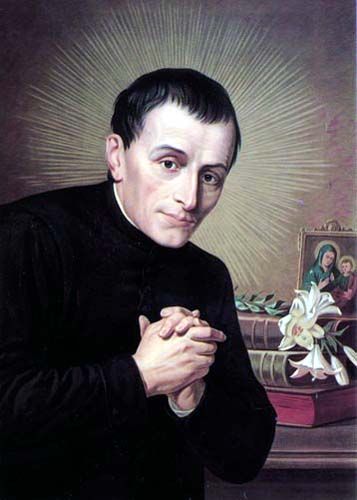
St. Joseph Cafasso

When they lived:

St. Joseph Cafasso lived from January 15, 1811, to June 23, 1860.

Where they lived:

St. Joseph Cafasso was born and lived most of his life in Castelnuovo d’Asti, a picturesque town in the Piedmont region of northern Italy.

Notable world events during the time of their life:

  1. Industrial Revolution (1760-1840): The world was witnessing a period of significant industrialization, transforming economies and societies across the globe. New technologies like steam engines and mechanized factories were reshaping how people lived and worked.
  2. Italian Unification (1815-1871): During Cafasso’s lifetime, Italy was fragmented into numerous independent states and kingdoms. The Italian Unification movement, also known as the Risorgimento, sought to unify these regions into a single nation. The movement ultimately led to the establishment of the Kingdom of Italy in 1861, just a year before Cafasso’s death.
  3. California Gold Rush (1848-1855): In 1848, gold was discovered in California, triggering a massive migration of people from around the world to the region in search of riches. This event significantly impacted the development of the United States and contributed to its westward expansion.
  4. Publication of “On the Origin of Species” (1859): Charles Darwin’s groundbreaking work, “On the Origin of Species,” was published in 1859. The book introduced the theory of evolution by natural selection, revolutionizing the way people perceived the development of life on Earth.
  5. Crimean War (1853-1856): This war, fought primarily in the Crimean Peninsula, involved Russia against an alliance of the Ottoman Empire, Britain, France, and Sardinia. The conflict marked a significant shift in the nature of warfare and highlighted the importance of medical care and nursing for wounded soldiers.

Their patronage:

St. Joseph Cafasso is the patron saint of prisoners, students, and those condemned to death. He dedicated his life to ministering to prisoners and preparing them for a better life, both spiritually and socially. His compassion and guidance earned him the title of the “priest of the gallows,” as he accompanied many condemned prisoners in their final moments, offering solace and redemption.

The Life and Works of Joseph Cafasso

Joseph Cafasso was born with a deformed spine. He was the third child born out of a total of four children to peasant-class parents. From a young age, Cafasso always wanted to be a priest. In order to pursue this dream, Cafasso undertook his ecclesial studies in Turin and Chieri.

He successfully completed his ecclesial studies and became an ordained priest in the archdiocesan cathedral on September 21, 1833. He furthered his studies at the Turin College for a total of four months.

While furthering his studies, he met Luigi Guala, the co-founder of the Institute of St. Francis of Assisi. Joseph stayed connected to this college, progressing from student to, later, the successor to Guala’s position as college rector in 1848.

As Joseph Cafasso grew stronger in his spiritual leadership, he decided to join the Third Order of St. Francis. It was here that he became a teacher and taught the teachings of the Bible. While being a teacher, he never once ignored his duties as a priest. He aided those who came from poorer backgrounds by supplying them with books and other school supplies they needed to see their studies through to completion.

In 1836, he became a well-known figure for his work and teachings on moral theological subjects. He drew on various teachings from the French school as well as those of other notable academics such as Alphonsus Liguori and Francis de Sales. He also fought against the intrusions of the state into church affairs.

He was also well known for being as frugal as possible. He never smoked or drank anything other than water alone. He never complained about aches and pains, such as headaches or toothaches. He was noted for his early Mass at 4:30 every morning. Furthermore, he would often spend long hours in the chapel.

Joseph Cafasso was also noted for being a confessor and spiritual director. He guided people to found new religious institutions or congregations, helping the church meet the needs of the world as they saw fit. He also did extensive work in prisons. Here, he served as a comforter for those who were condemned to death. Due to this, he quickly gained the nickname “Priest of the Gallows.”

The most notable moment of his extensive work in the prisons was when he personally escorted a total of 60 prison inmates condemned to death to the gallows. Once they had confessed their sins and said their final words, they were given absolution. Following this, they were hung to their deaths. Joseph Cafasso often referred to those hung once given absoluteness as “hanged saints.”

The death of Joseph Cafasso

On June 23, 1860, at the age of 49, Joseph Cafasso passed away. He passed away from pneumonia. This pneumonia was coupled with several other complications. These complications include those from a stomach hemorrhage and congenital medical issues.

All he owned was bequeathed to the Little House of Providence, which was a religious order close to his heart that was founded decades before his passing. Pope Pius XII canonized Joseph Cafasso on June 22, 1947, at the Vatican City in Saint Peter’s Basilica. Furthermore, Pope Pius XII declared him the patron saint of all Italian prisoners on April 9, 1948.

5 Interesting Facts About St. Joseph Cafasso

  1. There is a monument erected in his honor in Turin.
  2. In 1968, a church in Rome was dedicated to him.
  3. His feast day is celebrated on June 23.
  4. The major shrine of Joseph Cafasso is located at Santuario della
    Consolata, Turin, in Italy
  5. He was beatified on May 3, 1925, by Pope Pius XII, in Saint Peter’s
    Basilica in the Kingdom of Italy

Prayer to St. Joseph Cafasso

O God, Father of infinite goodness, you endowed your priest, Saint Joseph Cafasso, with outstanding gifts of charity and wisdom to train, according to Gospel principles, ministers of the word and reconciliation; grant to us, through his intercession, a sense of brotherly compassion, so that we may walk in holiness and justice all the days of our lives. We make our prayer through our Lord Jesus Christ, your Son, who is God and lives and reigns with you in the unity of the Holy Spirit, for ever and ever.

[https://archive.sdb.org/ENG/pdf/Cafasso_Colletta_Ufficio_en.pdf]{.ul}