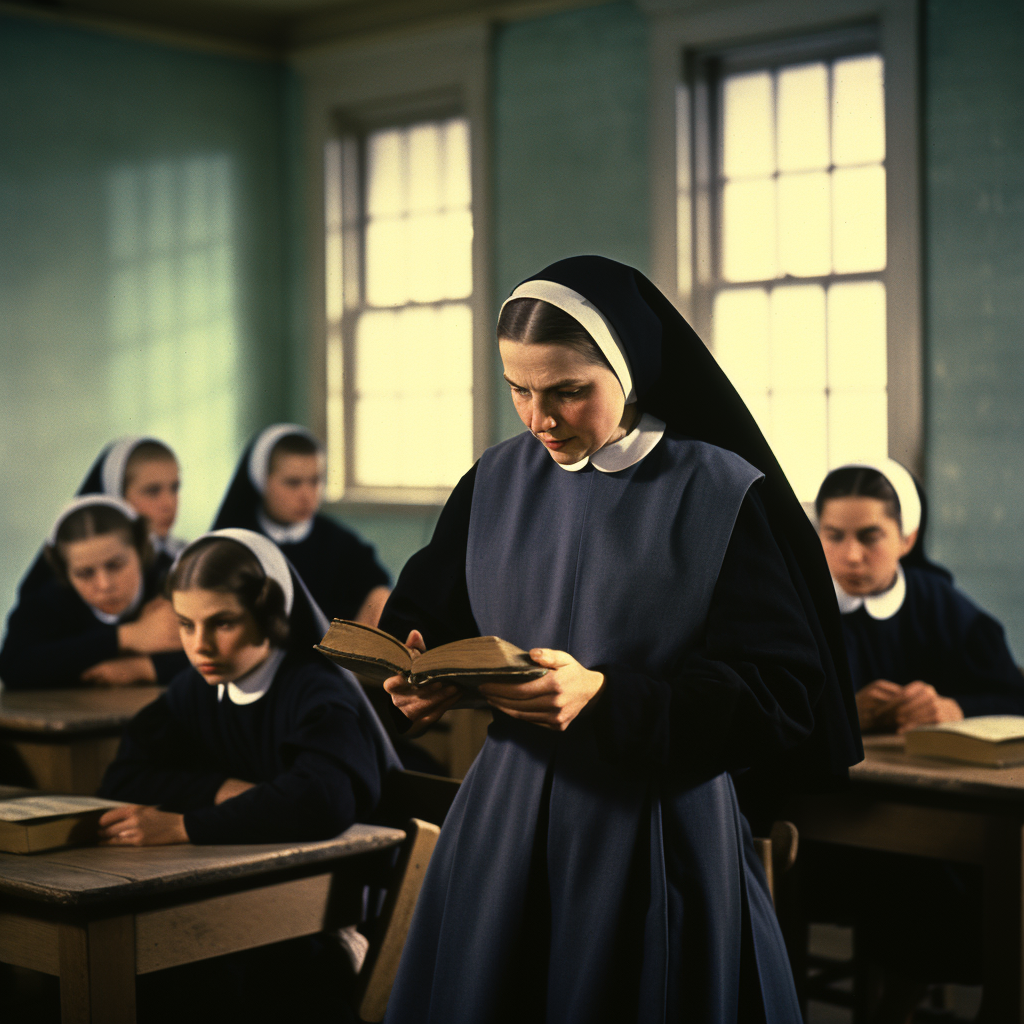
St. John Eudes

When he lived: November 14, 1601 – August 19, 1680

Where he lived: Ri, Normandy, France

Notable world events during the time of his life:

  1. Thirty Years’ War (1618-1648): A devastating conflict that engulfed much of Europe, escalating from a religious war to a complex power struggle.
  2. English Civil War (1642-1651): England faced internal strife, leading to the execution of King Charles I and the establishment of the Commonwealth under Oliver Cromwell.
  3. Scientific Revolution (16th-17th centuries): A time of remarkable scientific progress with luminaries like Galileo, Kepler, and Newton shaping our understanding of the cosmos.
  4. Founding of Quebec City (1608): Samuel de Champlain established Quebec City, marking the beginning of French colonization in North America.
  5. Treaty of Westphalia (1648): This treaty ended the Thirty Years’ War, ushering in a new era of diplomacy and recognizing the sovereignty of individual states.

Patronage: St. John Eudes is venerated as the patron saint of pastors and confessors, known for his dedication to training priests and providing spiritual guidance.

A Preacher-Missionary

St. John Eudes was born into a peasant family in 1601 in Normandy, France. He was instructed by the Jesuits at Caen. Since he was a child, he has already tried to live in imitation of the Lord Jesus Christ. When he was fourteen years old, he took a vow of chastity.

Eventually, John heeded the call to the priesthood. He entered the Bérullian Oratory, and in 1625, he was ordained a priest. During the severe plagues of 1627 and 1631, he volunteered to care for the stricken in his own diocese. Lest he infect his fellow religious, during the plague he lived in a huge cask in the middle of a field.

Fr. John was known for his eloquent and moving preaching. When he was thirty-two years old, with his gifts of preaching and his charity as a confessor, he began to give parish missions. He realized the need for parish priests’ support and encouragement in becoming men of both prayer and action. He conducted conferences for them and outlined the duties they ought to fulfill. Fr. John preached over a hundred parish missions, some lasting from several weeks to several months.

Concern for the Formation of the Clergy

Driven by his concern for the spiritual formation and improvement of the clergy, Fr. John realized that the greatest need was the establishment of seminaries. His superior general, the bishop, and even Cardinal Richelieu granted him permission to begin the work. However, the succeeding superior general disapproved. After long prayers and listening to counsel, Fr. John decided that it was best for him to leave the religious community.

That same year, Fr. John established a new community, the Congregation of Jesus and Mary. His congregation was devoted to the formation of the clergy by founding and conducting diocesan seminaries. The members were dedicated to promoting good seminary training, which would form Christ-like priests. This new aspiration gained the approval of individual bishops. Unfortunately, it also met with immediate opposition, especially from the Jansenists and even some of his former associates. Fr. John founded several seminaries in Normandy. However, he was not able to obtain approval from Rome.

Caring for the lost

In his parish mission work, Fr. John was deeply disturbed by the unfortunate conditions of prostitutes who sought to escape from their miserable lives. He founded temporary shelters; however, the arrangements were not satisfactory. A certain Madeleine Lamy, who had cared for several of the women, one day said to him, “Where are you off to now? To some church, I suppose, where you’ll gaze at the images and think yourself pious. And all the time, what is really wanted of you is a decent house for these poor creatures.” The words and the laughter of those present struck deeply within him. The result was another new religious community, called the Sisters of Charity of the Refuge, to provide a refuge for prostitutes.
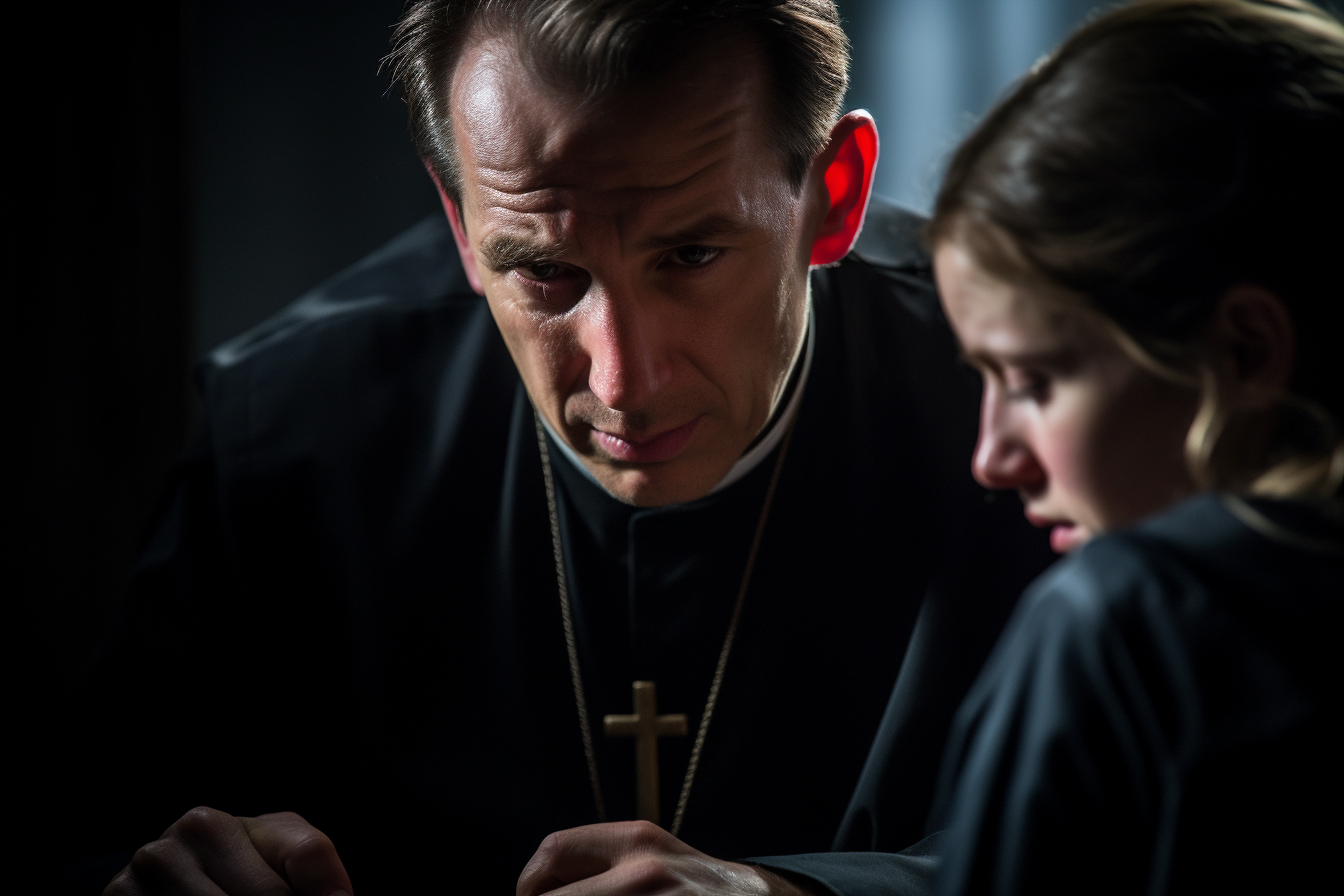
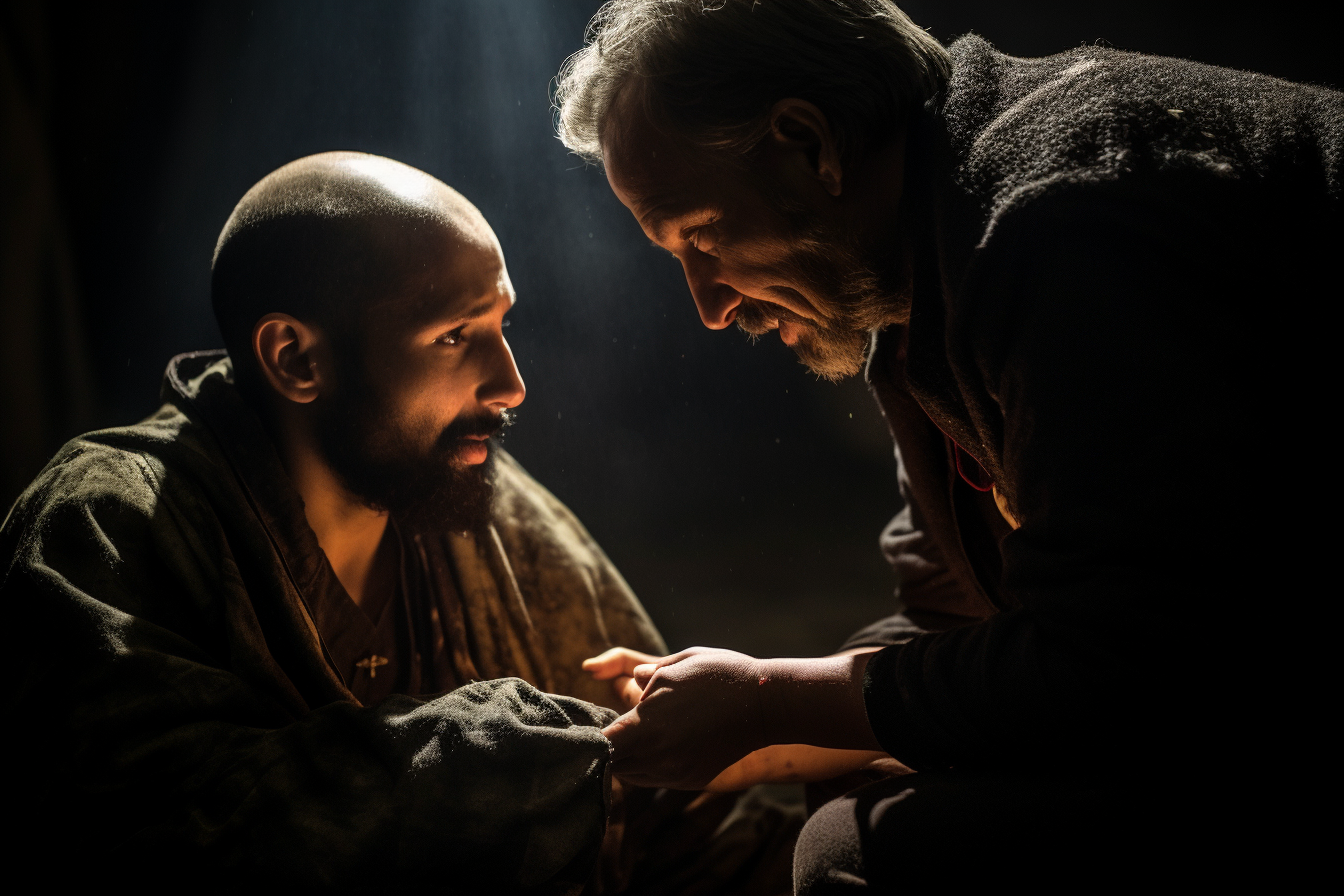
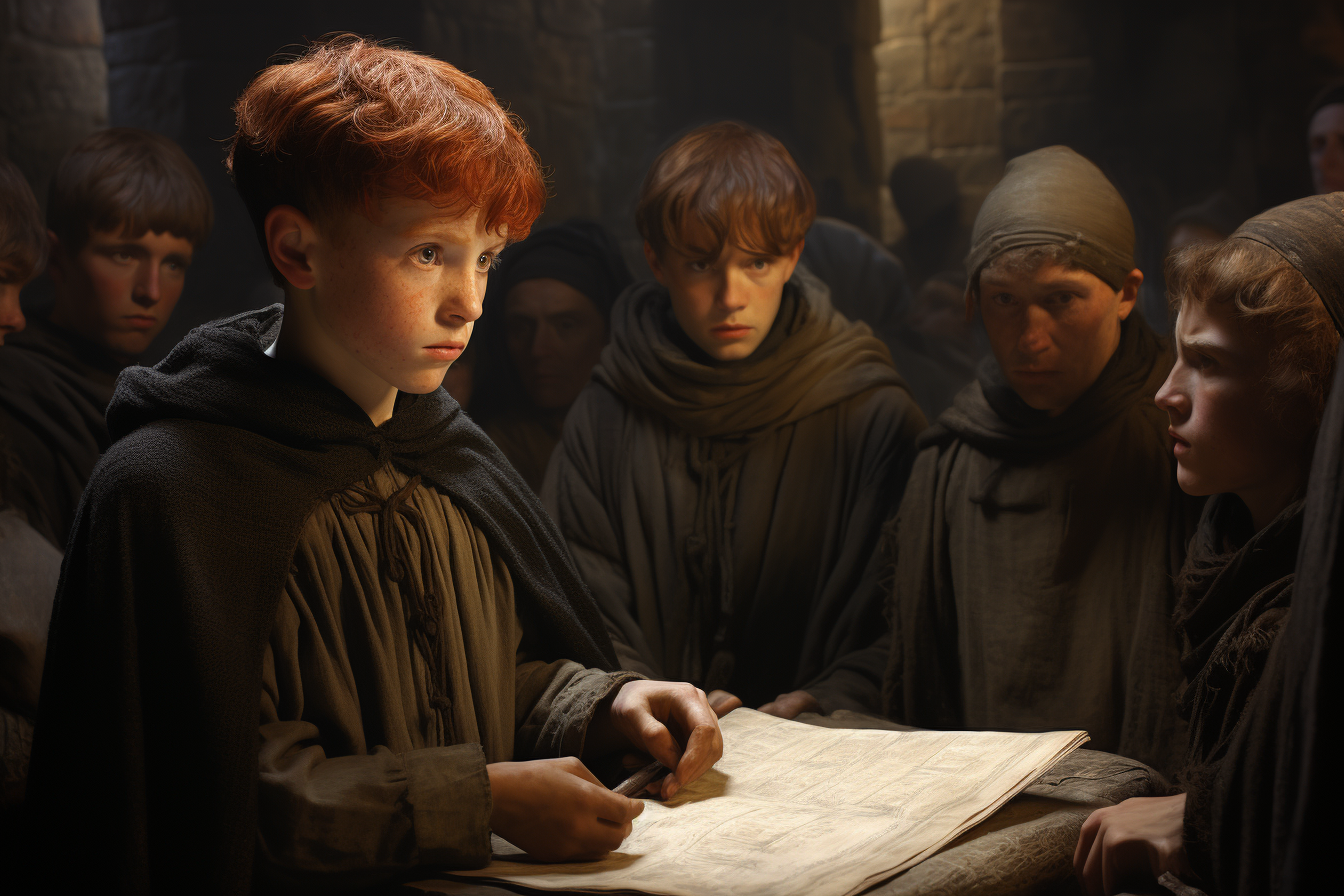
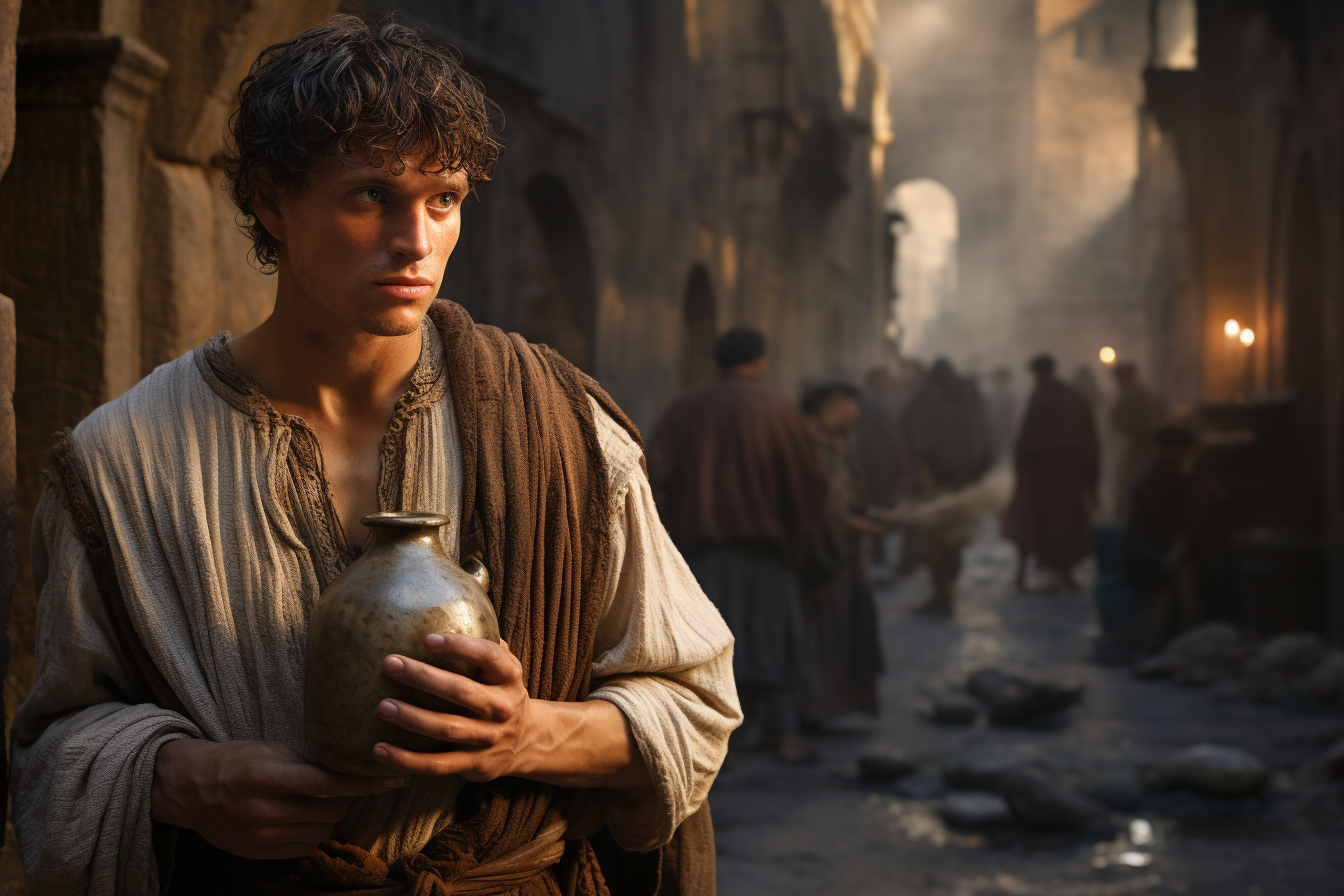
St. John Eudes caring for a young prosecute

John Eudes is probably best known for the central themes of his writings: Jesus as the source of holiness and Mary as the model of the Christian life. He died at Caen on August 19th, 1680. On January 6, 1903, his virtues were declared heroic by Pope Leo XIII. The miracles proposed for his beatification were approved by Pope Pius X on May 3, 1908, and he was beatified on April 25, 1909. He was canonized in 1925. His feast day is August 19.

Five Interesting Facts About St. John Eudes

  1. St. John Eudes is the patron saint of missionaries, of the Diocese of Baie-Comeau, and of fallen women and prostitutes.
  2. St. John Eudes’ most revered achievement was promoting devotions to the Sacred Hearts of Jesus and Mary.
  3. St. John Eudes has been called the “Apostle of the Sacred Heart” because of his deep devotion to the Sacred Heart of Jesus.
  4. St. John Eudes established the first feasts in honor of the hearts of Jesus and Mary. He was known as the author of the liturgical worship of the Sacred Hearts of Jesus and Mary. He even wrote the votive mass and office for their feast day.
  5. In Christian art, St. John Eudes is depicted with a burning heart. Sometimes he is also shown holding a crucifix.

Prayer to St. John Eudes

O God, who wonderfully chose the priest Saint John Eudes to proclaim the unfathomable riches of Christ, grant us, by his example and teachings, that, growing in knowledge of you, we may live faithfully by the light of the Gospel. Through our Lord Jesus Christ, your Son, who lives and reigns with you in the unity of the Holy Spirit,God, for ever and ever Amen.
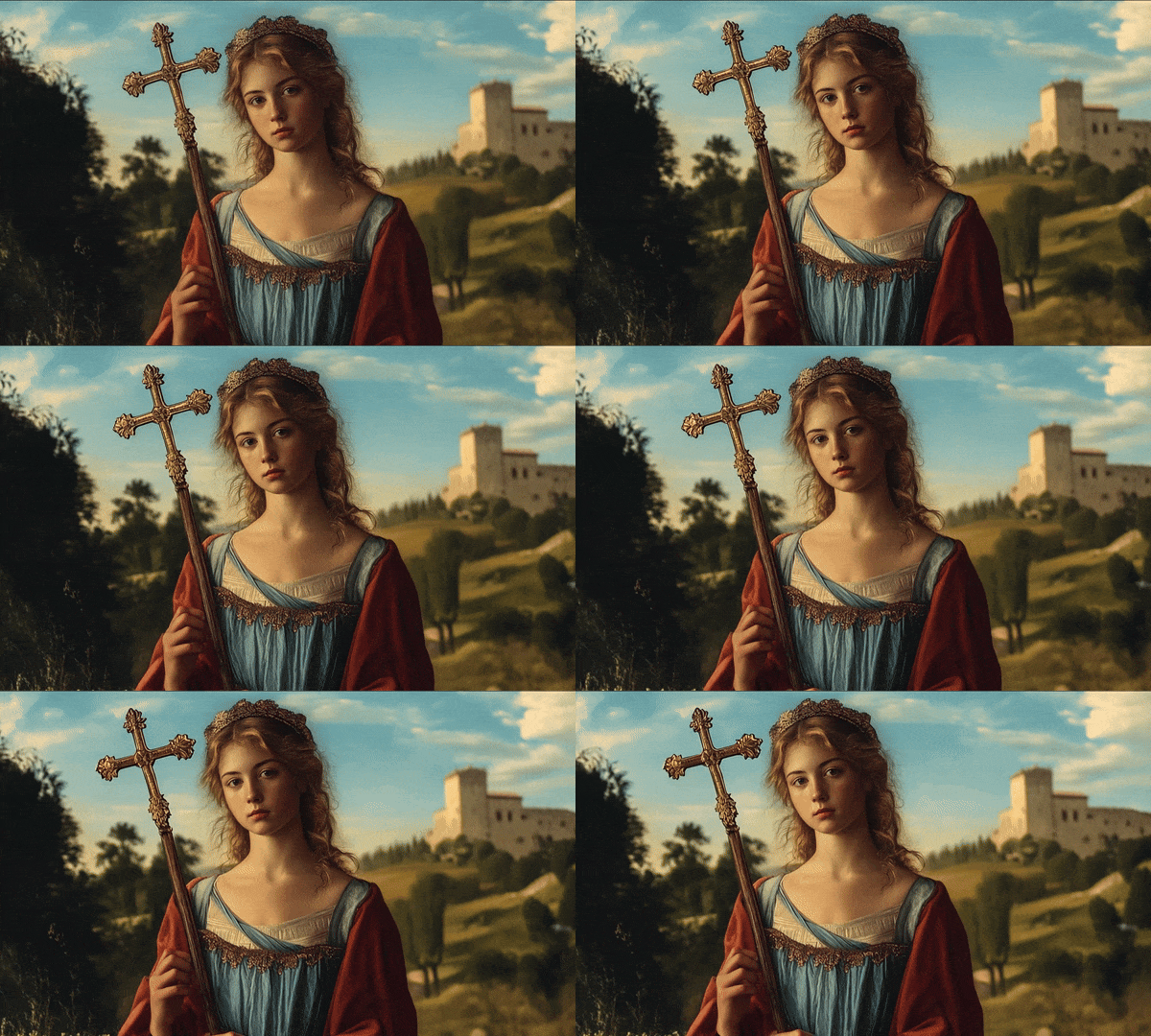
St. Helena

When She Lived

Saint Helena is believed to have lived from around 248 AD to 329 AD.

Where She Lived

Saint Helena was born in Drepanum and later resided in Rome, the capital of the Roman Empire.

Notable World Events During Her Life

  • The Edict of Milan (313 AD): Emperor Constantine the Great issued the Edict of Milan, which granted religious tolerance to Christians, ending the persecution they had faced for centuries.
  • The First Council of Nicaea (325 AD): This ecumenical council aimed to address theological disputes within Christianity and resulted in the formulation of the Nicene Creed, a significant statement of Christian faith.
  • Roman Empire’s Split (285-337 AD): During Saint Helena’s lifetime, the Roman Empire was divided into the Western and Eastern Roman Empires. Her son, Constantine, played a pivotal role in this division.
  • Emergence of Byzantine Empire: The establishment of Constantinople (modern-day Istanbul) as the capital of the Eastern Roman Empire marked the beginning of the Byzantine Empire’s prominence.
  • The Barbarian Invasions: Various Germanic tribes, such as the Visigoths and Vandals, began invading the Roman Empire during this time, leading to significant geopolitical changes.
  • Birth of Christianity: Christianity continued to grow in influence, transitioning from a persecuted sect to becoming the state religion of the Roman Empire under Constantine’s rule.

Patronage

Saint Helena is the patron saint of several important aspects, including archaeologists (due to her reputed discovery of the True Cross), converts, difficult marriages (likely due to her own challenging marriage), and the island of Saint Helena. She is also invoked for those seeking the discovery of lost or hidden treasures.

Introduction

Born outside the noble classes at the time, Saint Helena was born around 248 A.D. in present-day Turkey. Saint Helena is also known as Helena and Helena Augusta.

She is one of the most important and notable figures in the history of Christianity, with several churches revering her as a saint and others commemorating her. The churches that revere her include the Eastern Orthodox Church, the Catholic Church, the Oriental Orthodox Churches, and the Anglican Communion. The Lutheran Church commemorates her.

Little is known about her early life, but her story and how she became so notable are ones to remember. Let’s read on and discover her life story and how she became so important in the faith of Christianity.

Marriage to Emperor Constantius

While the exact date of their meeting is unknown, it is widely believed that Constantius saw Helena as his soulmate, sent by God. Why? At the time of their meeting, Constantius and Helena were wearing identical silver bracelets.

The exact legal nature of the relationship between Saint Helena and Constantius is unknown. Some historians believe that the two lovebirds were in a common-law marriage, while others believe that they were in fact legally married.

Other historians have also found some sources where Saint Helena was called the wife of Constantius, while other sources called her his concubine. Nonetheless, Saint Helena, soon into their relationship, gave birth to the future emperor of Rome while in Serbia.

Born on February 27, around 270 A.D., Constantine I was the only son between Helena and Constantius. Soon after his birth, Constantius divorced Helena and married Theodora. This was done for Constantius to have a wife born into the noble classes and keep up with his rising status in the noble world.

Pilgrimage

The divorce broke Helena, and she lived a life away from being known by the public. It wasn’t until Constantine I took the throne in 306 A.D. that Saint Helena came to live in the public eye again.

Once Constantine I became emperor, Saint Helena was given the title of Augusta Imperatrix.” This gave Helena complete, unlimited access to the imperial treasury and all the resources needed to locate Christian relics.

Once this happened, Saint Helena undertook her pilgrimage to Palestine and its environs. She was also tasked with the beautification of two churches, namely, the Church of the Nativity in Bethlehem and the Church of Eleona on the Mount of Olives. These churches are the sites of Christ’s birth and ascension, both Holy grounds in the Christian faith.

Saint Helena discovered major relics of the Christian tradition while on her pilgrimage to Palestine and its environs. Some of these major relics included the True Cross, the nails of the crucifixion, the rope used in the crucifixion, and the Holy Tunic.

In 327 A.D., Saint Helena returned to Rome with the relics she had discovered. The relics are housed in her palace’s private chapel, which can still be seen today. She is known as the patron saint of new discoveries for her important discovery of these relics. She is also the patron saint of difficult marriages, divorced people, converts, and archaeologists.

Later, the palace, in which Saint Helena resided, was converted into the Basilica of the Holy Cross in Jerusalem.

The Last Years of Saint Helena

Around 330 A.D., beloved Saint Helena passed away with her son at her side. She was buried outside Rome on the Via Labicana, in the Mausoleum of Helena. The sarcophagus of Saint Helena is on display at the Pio-Clementine Vatican Museum, with her granddaughter’s sarcophagus next to it.

5 Interesting Facts About St. Helena

  • Her feast day as a saint of the Eastern Orthodox Church is
    celebrated with her son, May 21, known as the “Feast of the Holy Great
    Sovereigns Constantine and Helena, Equal to the Apostles
  • While on her pilgrimage, she also stopped in Cyprus. It is said
    that Saint Helena is responsible for the large cat population as she
    ordered for cats to be sent to rid the monastery of snakes.
  • The skull of Saint Helena is on display in the Cathedral of Trier.
    in Germany.
  • The complete body of Saint Helena is believed to be enshrined.
    under the main altar at the Church of Saint Elizabeth in Venice.
  • The statue of Saint Helena can be seen in St. Peter’s Basilica in
    Rome, Italy.

Prayer to St. Helena

Holy and blessed St. Helena, with love and devotion you sought to find the Cross of Our Savior. I plead for your intercession that I may have the same love and devotion to Jesus, my Lord. Like you, may I accept the trials of life with patience and hope? Under your protection, may I carry the Cross that the Lord has given me in this life, and one day may I share with you the Crown of life eternal. St. Helena, finder of the Cross, pray for us. Amen

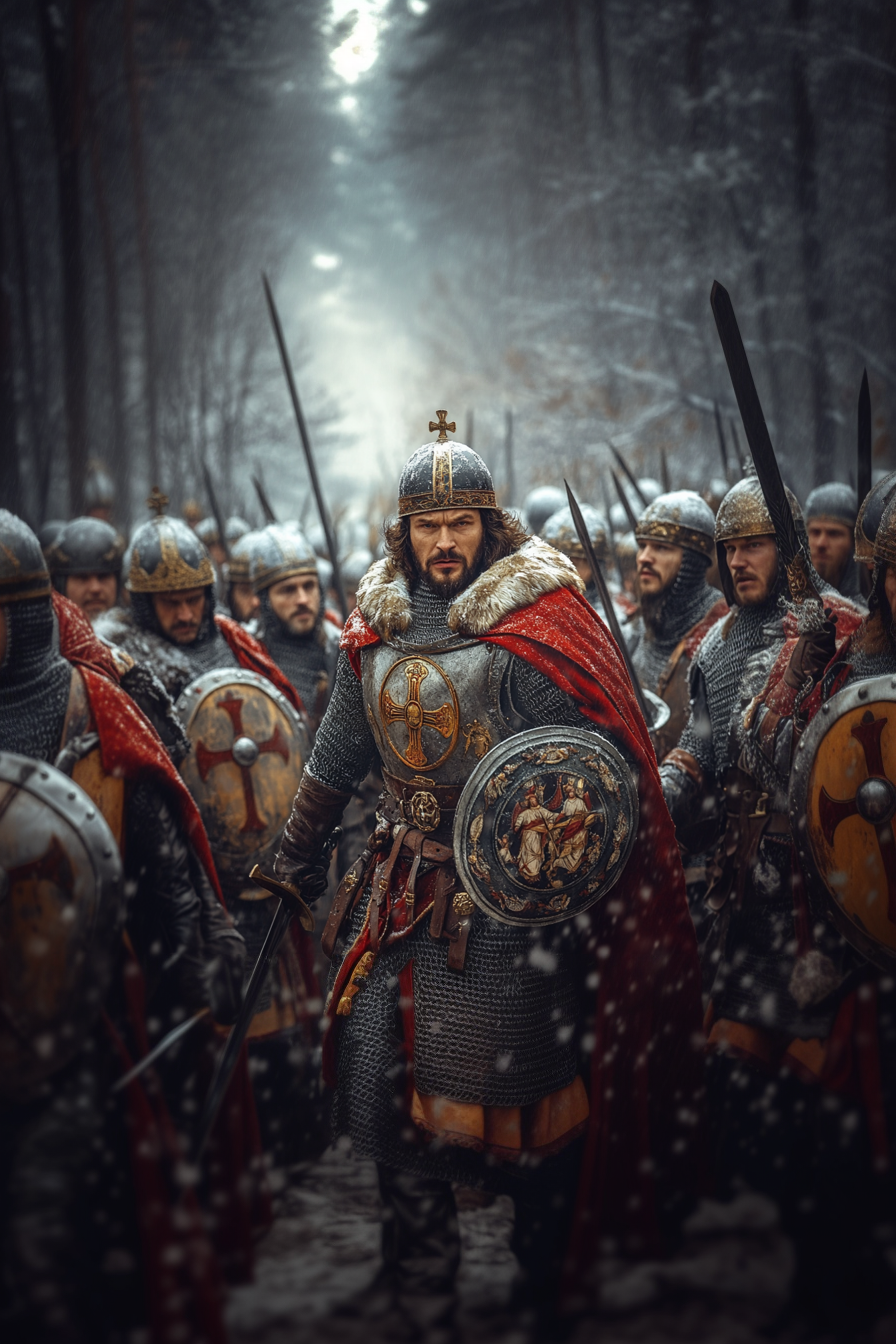
St. Stephen the Great

When they lived:

St. Stephen the Great lived from 1433 to 1504.

Where they lived:

St. Stephen the Great was a ruler of Moldavia, a historical region located in present-day northeastern Romania.

Notable world events during the time of their life:

  • Fall of Constantinople (1453): One of the most significant events during St. Stephen’s reign
    was the fall of Constantinople, the Byzantine capital, to the Ottoman Empire in 1453. This event marked the
    end of the Byzantine Empire and significantly impacted the geopolitics of the region.
  • Italian Renaissance (14th to 17th centuries): During St. Stephen’s time, the Italian
    Renaissance was flourishing. This cultural and artistic movement had a profound impact on European
    intellectual life, contributing to advancements in art, science, and literature.
  • Columbus’ First Voyage to the New World (1492): In 1492, Christopher Columbus, an explorer
    sponsored by Spain, reached the Americas. This event opened up new possibilities for trade, colonization,
    and cultural exchange, reshaping the global perspective of the time.
  • Printing Press Invention (mid-15th century): Johannes Gutenberg’s invention of the printing
    press with movable type revolutionized the spread of knowledge, ideas, and religious texts. This advancement
    had a profound influence on the dissemination of information during St. Stephen’s reign.
  • The Reconquista (Completion in 1492): During St. Stephen’s lifetime, the Catholic Monarchs
    of Spain, Isabella I of Castile, and Ferdinand II of Aragon, completed the Reconquista, recapturing the last
    Muslim stronghold of Granada. This marked the end of Muslim rule in the Iberian Peninsula.
  • Battle of Vaslui (1475): A notable military event during St. Stephen’s reign was the Battle
    of Vaslui, where the Moldavian forces, led by St. Stephen himself, achieved a decisive victory against the
    Ottoman Empire. This victory cemented his reputation as a defender of Christianity and earned him the title
    “Athleta Christi” (Champion of Christ).

Patronage:

St. Stephen the Great is venerated as a saint in the Eastern Orthodox Church and is considered a national hero in
Romania. He is often invoked as the patron saint of rulers, statesmen, and defenders of the Christian faith. Due
to his significant military victories and his dedication to protecting his people and faith, he is also regarded
as a patron of national sovereignty and independence.

Saint Stephen the Great of Moldavia: Faith, Valor, and Human Struggle

In the annals of Christian history, few figures stand as tall as Saint Stephen the Great of Moldavia. A ruler, a warrior, and a man of profound faith, Stephen’s life exemplifies the complex interplay between earthly power and divine calling. As Catholics, we look to such figures not as perfect beings, but as fellow pilgrims on the path of faith, whose struggles and triumphs can inspire our own journey.

A Reign Begun in Turmoil

Stephen’s ascension to the throne of Moldavia in 1457 was marked by the tragedy of his father’s assassination. At just 23 years old, he inherited a realm beset by external threats and internal strife. Yet, it was in this crucible of challenge that Stephen’s faith and leadership would be forged.

Defender of the Faith

Throughout his 47-year reign, Stephen stood as a bulwark against the expanding Ottoman Empire. His military acumen, coupled with his deep faith, allowed him to achieve remarkable victories against seemingly insurmountable odds. The Battle of Vaslui in 1475, where his forces defeated a much larger Ottoman army, stands as a testament to his strategic brilliance and the power of faith in the face of adversity.

Stephen’s dedication to defending Christendom went beyond the battlefield. He saw himself as a protector of the faith, not just of territory. This conviction drove him to seek alliances with other Christian powers and to appeal to the Pope for support against the Ottoman threat.

A Builder of Sacred Spaces

Perhaps one of Stephen’s most enduring legacies is the multitude of churches and monasteries he constructed throughout Moldavia. Tradition holds that he built a church or monastery after each of his victories, resulting in 48 such structures. These weren’t mere monuments to triumph, but expressions of gratitude to God and centers of spiritual life for his people.

The Putna Monastery, built in 1466, became particularly significant. Not only did it serve as a spiritual center, but it also became Stephen’s final resting place, a symbol of the unity between his earthly rule and his spiritual devotion.

The Human Behind the Saint

As Catholics, we understand that sainthood doesn’t equate to perfection. Stephen, like all of us, had his flaws and struggles. His personal life was complex, marked by multiple marriages and extramarital relationships. These aspects of his life remind us that even those who achieve great things for the faith are not immune to human weaknesses.

Stephen’s temperament could be fierce, sometimes leading to harsh judgments and actions. Yet, it was this same passion that fueled his unwavering defense of his people and his faith. His life teaches us that God can work through our imperfections, using even our flaws as instruments of His will.

A Legacy of Faith and Nationalism

Stephen’s reign left an indelible mark on Moldavian and Romanian history. He is remembered not just as a great military leader or political figure, but as a defender of Christianity and a patron of culture and the arts. The churches and monasteries he built continue to stand as centers of faith and national identity.

His canonization by the Romanian Orthodox Church in 1992 reflects the deep impact he had on the spiritual life of his people. While as Catholics we may differ in some theological aspects, we can appreciate the profound faith that motivated Stephen’s actions and the lasting spiritual legacy he left.

Lessons for Today’s Faithful

Saint Stephen the Great’s life offers several valuable lessons for Catholics today:

1. Faith can be a source of strength in seemingly impossible situations.
2. Our actions, especially in leadership roles, should be guided by our spiritual convictions.
3. Supporting the Church and creating spaces for worship and spiritual growth is a worthy endeavor.
4. We can serve God’s purpose even with our flaws and imperfections.
5. Defending one’s faith and culture can go hand in hand with respecting and cooperating with others.

Conclusion

Saint Stephen the Great of Moldavia stands as a complex figure in Christian history. His life was marked by great achievements in defense of the faith and numerous contributions to the spiritual and cultural life of his people. At the same time, he grappled with human weaknesses and moral challenges.

As Catholics, we can look to Stephen as an example of how faith can guide and strengthen us in our worldly duties. His life reminds us that sainthood is not about achieving perfection, but about striving to serve God and our fellow humans to the best of our abilities, despite our flaws.

In an era where faith and leadership often seem at odds, the legacy of Saint Stephen the Great challenges us to integrate our spiritual beliefs with our public responsibilities. May his example inspire us to stand firm in our faith, to serve our communities with dedication, and to always seek God’s guidance in all our endeavors.

Five Interesting Facts

  • Undefeated in Major Battles: Despite facing numerous invasions, Stephen won an impressive 46 out of 48 major battles during his reign. This remarkable military record earned him fame throughout Europe as a great defender of Christendom against the Ottoman Empire.
  • Church-Building Tradition: There’s a popular tradition that Stephen built a church or monastery after each of his victories. While the exact number is debated, he is credited with founding around 48 churches and monasteries throughout Moldavia, many of which still stand today.
  • Longest-Reigning Moldavian Prince: Stephen ruled Moldavia for 47 years, from 1457 to 1504, making him the longest-reigning prince in the country’s history. His long reign brought stability and prosperity to Moldavia.
  • Papal Recognition: In 1476, Pope Sixtus IV named Stephen “Athleta Christi” (Champion of Christ) for his defense of Christian Europe against Ottoman expansion. This title was a significant honor and recognition of his efforts to protect Christendom.
  • Cultural Legacy: Beyond his military and religious achievements, Stephen was a patron of arts and culture. He established a court school for manuscripts at the Putna Monastery, which became an important center of Moldavian culture and art. Many beautifully illustrated manuscripts from this period survive to this day.

Prayer to St. Stephen the Great

Let us begin, in the name of the Father, and of the Son, and of the Holy Spirit. Amen.Amen. rious St. Stephen, first Martyr for the Faith, filled with compassion for those who invoke you, with love for those who suffer, heavily laden with the weight of my troubles. I kneel at your feet and humbly beg you to take my present need under your special protection.

(Mention your request here.)

voucher to recommend it to our Lord Jesus. Cease not to intercede until my request is granted. Above all, obtain for me the grace to one day meet God face-to-face, and with you and Mary and all the angels and saints, praise Him through all eternity. O most powerful Saint Stephen, deacon and martyr, do not let me lose my soul, but grant me the grace of winning my way to heaven, forever and ever. Saint Stephen, pray for us.

St. Cajetan

St. Cajetan – Patron Saint of the Unemployed and Workers

When they lived: St. Cajetan, also known as St. Gaetano dei Conti di Tiene, was born on October 1, 1480, and he passed away on August 7, 1547.

Where they lived: St. Cajetan lived primarily in Italy, with significant periods spent in the cities of Vicenza, Venice, and Naples.

Notable world events during the time of their life:

  • Age of Exploration (late 15th to early 17th centuries): During St. Cajetan’s lifetime, European explorers like Christopher Columbus, Vasco da Gama, and Ferdinand Magellan were making groundbreaking voyages, discovering new lands, and establishing new trade routes. This era marked a significant expansion of global knowledge and interconnectedness.
  • Protestant Reformation (early 16th century): The Reformation was a time of religious upheaval, initiated by figures like Martin Luther and John Calvin, challenging the authority of the Roman Catholic Church. This movement had a profound impact on Christianity, leading to the formation of various Protestant denominations and inspiring religious reforms within the Catholic Church as well.
  • Renaissance (14th to 17th centuries): St. Cajetan lived during the height of the Renaissance, a period of cultural rebirth characterized by a flourishing of art, literature, and scientific inquiry. Notable figures like Leonardo da Vinci, Michelangelo, and Copernicus were shaping the world with their contributions, elevating human knowledge and creativity.
  • Italian Wars (1494-1559): The Italian Wars were a series of conflicts involving major European powers seeking control over Italian territories. These wars had a lasting impact on the political and cultural landscape of Italy and neighboring regions.
  • Printing Revolution (15th century): The advent of the printing press during St. Cajetan’s lifetime revolutionized communication and disseminated knowledge more widely. It played a crucial role in the spread of religious ideas, scientific discoveries, and cultural exchange.

Their patronage: St. Cajetan is revered as the patron saint of the unemployed, job seekers, and workers. He dedicated his life to serving the poor and the sick and founded the Theatines, a religious order known for their commitment to poverty, humility, and reform within the Catholic Church. His compassionate and selfless nature continues to inspire those in need and those seeking meaningful employment or assistance in times of difficulty.

And so His Life Took a Different turn.

The youngest of three brothers, Gaetano da Conti di Thiene, was born into nobility of first rank on October 1, 11480, in Vicenza, Italy. His father was Count Gasper, Lord of Thiene, and his mother was Maria Porta, a devout woman.

By every standard of that era, Cajetan was a silver-spoon boy. Sadly, his father died when Cajetan was only two years old. His mother took it upon herself to see that Cajetan received an excellent spiritual and physical education with all purity.

The Lawyer

Cajetan got an early start, and he ran with it. At the age of 24, in 1504, he graduated with a doctorate degree in Civil law and Canon law from the University of Padua.

In 1506 he was invited to Rome by Pope Julius I to work with him as a diplomat. He assisted at the 5th Lateran Council and reconciled the Republic of Venice with the Pope’s side.

When Pope Julius 11 passed on in 1513. Cajetan resigned from his position to join the priesthood.

The Call

You have made us for yourself, O Lord, and our heart is restless until it rests in you. St. Augustine of Hippo

Those words of Augustine of Hippo were very accurate for Cajetan. His heart burned with a higher devotion he had never known before. In 1513, he studied to become a priest, leaving behind what seemed like a promising career.

On September 30, 1516, Cajetan was ordained a priest. Soon after he became a priest, his mother became sick, and he went back to his hometown in Italy in 1518.

After his mother’s death, he set up a hospital for the incurables in 1522 at Vincenza. He was dedicated to caring for the sick, the poor, and the sad in society.

Cajetan and a few like-minded priests came together to form a new congregation in 1523. The congregation was known as the Order of the Theatine. The title was taken from one of the co-founders, Giovanni Pietro Caraffa, bishop of Theate, who later became Pope Paul IV.

Mission to Rescue the Church

Upholding the vows of charity, chastity, and obedience, Cajetan and his companions were scandalized by the life of the clergy (Church) in Rome. The Church of God and its leadership were in terrible shape.

People were hungry for bread and spiritual nourishment, and the clergy, whose duty it was to feed the laity with the words of God, were lost in immorality and acquiring wealth.

The leadership of the country was no different than the church, which was complacent.

Many were hungry, and morality was at an all-time low in Rome. The church needed to be rescued from itself, but who would call the cat?

Cajetan returned to Rome, and together with the few morally conscious priests and the Theatines, they embarked on reformation within the church. They took off their beautiful vests and put on poor robes, and they identified with the poor and worn-out of society.

Cajetan hungered to save souls going astray. They led by example. He practiced moral living, taught religious studies, preached the truth, spoke reason to the nobles, challenged the status quo, and above all, tendered to the sick and needy. Never neglecting any.

Cajetan and his group persisted in the face of open opposition from the laity and clergy, who didn’t want the reformation. Their lives were the opposite of how many priests lived then.

His practical life and example won many, and holy life gradually crept back into the church, even though the process was slow.

Joy in Suffering

In 1527, the Theatines were sacked by Spanish soldiers during the sack of Rome. They fled to Venice. Cajetan, in particular, was imprisoned and tortured by the soldiers before he was released to join his order.

In Venice, Cajetan continued caring for the sick and needy. He also built a hospital for the incurables.

St. Cajetan helping a poor man

The Pope sent Cajetan to Naples in 1533. In Naples, he founded another oratory (congregation). He also established a nonprofit bank designed to protect the poor from borrowing money at exorbitant rates. That bank is now the Bank of Naples.

Worn out from labor, Cajetan became sick. When doctors advised him to be transferred to a bed rather than the board he sleeps on, he refused. He said, “My savior died on the cross; let me die on the wood at least.”

He died on August 7, 1547.

5 Interesting Facts About Saint Cajetan

  1. A man of great courage, he showed the light when the church was in
    dark place.
  2. Do you have any concerns about the church? St. Cajetan has shown
    that fighting for the reformation of the church is better than
    fighting against the church.
  3. Are you unemployed and worried? Call on St. Cajetan. He’s the patron.
    saint of the unemployed, bankers, gamblers, workers, and job
    seekers. He’s been there before.
  4. A man of empathy. He emptied himself to care for the needy, and the
    sick with all his nobility afforded him.
  5. What better way to be joyful in suffering? He offered all his
    sufferings for the conversion of souls.

Prayer to Saint Cajetan

Glorious St. Cajetan, acclaimed by all people to be the Father of Providence because you provide miraculous aid to all who come to you in need, I stand here before you today, asking that you present to the Lord the requests that I confidently deposit in your hands. May these graces that I now request help me to always see the Kingdom of God and His righteousness, knowing that God, who dresses with beauty the flowers of the field and abundantly feeds the birds of the sky, will give me all other things. Amen.

St. John Vianney

St. John Vianney – The Curé d’Ars

When He Lived:

St. John Vianney, also known as the Curé d’Ars, lived from May 8, 1786, to August 4, 1859.

Where He Lived:

St. John Vianney lived in the village of Ars-sur-Formans in the Rhône department of France. This small and humble village became the center of his ministry and pilgrimage site for Catholics around the world.

Notable World Events during His Time:

  1. French Revolution (1789-1799): St. John Vianney was born in the midst of the French Revolution, a tumultuous period marked by radical social and political upheaval, including the fall of the monarchy, rise of Napoleon Bonaparte, and significant changes in the structure of French society.
  2. Napoleonic Wars (1803-1815): During St. John Vianney’s early adulthood, Europe was embroiled in the Napoleonic Wars, a series of conflicts involving Napoleon’s French Empire and various coalitions of other European powers, shaping the continent’s political landscape and affecting the lives of millions.
  3. Publication of Charles Darwin’s “On the Origin of Species” (1859): In the later years of St. John Vianney’s life, Charles Darwin published his groundbreaking work on evolutionary biology, challenging traditional religious perspectives on creation and sparking debates about science and faith.
  4. Industrial Revolution: Throughout St. John Vianney’s lifetime, the Industrial Revolution transformed economies and societies worldwide, bringing technological advancements, urbanization, and significant changes in labor and living conditions.
  5. California Gold Rush (1848-1855): The discovery of gold in California, USA, triggered a massive migration of people seeking fortune, shaping the development of the American West and affecting global economies.

Patronage:

St. John Vianney is the patron saint of priests and parish priests due to his significant role as a pastor and his dedication to the spiritual care of his community. He is also the patron saint of the village of Ars-sur-Formans and has become a symbol of simple and unwavering faith, drawing countless pilgrims seeking his intercession and inspiration.

His Humble beginnings

Jean Baptiste Marie Vianney (known as John Vianney in English) was born on May 8, 1786, in Dardilly, near Lyon, France, and was baptized the same day. He was the fourth of six children born to a family of farmers, Matthieu and Marie Vianney. He was raised in the Catholic faith, and his humble family often helped the poor. Young Vianney lived as a poor farm boy and shepherd.

When the anti-clerical French Revolution broke out in 1790, priests were forced to do their ministry in secret due to the impending execution imposed upon them. Despite this fearful situation, the young Vianney believed the priests were heroes, and he really admired their bravery. Despite the pressing circumstances of his time, John continued attending catechism classes, received First Communion, and was confirmed in secret.

In 1806, a school for ecclesiastical students was opened. At the age of 20, John began his formal seminary schooling (actually, at his age, he was very late to enter the seminary because of his family’s financial status). However, ecclesiastical studies in preparation for ordination were never easy for John. Though his teachers never seemed to doubt his priestly calling, he was of average intelligence. His knowledge was limited to a little arithmetic, geography, and history. But the most difficult for John was the study of Latin, which, during that time, was extremely important.

The Road Seems rough.

The French Revolution brought a temporary halt to John’s studies. In 1809, he was drafted into the French Army. However, due to his frail health, he missed his recruiting call. In 1812, he returned to Ecully and resumed his studies. Still struggling with his studies due to his limited intelligence, he had to take philosophy classes in French, not Latin, and failed many of his examinations (after several attempts, John eventually passed his courses). The priest who tutored him persuaded the bishop to ordain John for his holiness, not for his intelligence. And so, John was ordained deacon in June 1815 and later on as a priest on August 12 of the same year.

The newly-ordained Vianney was appointed assistant to Abbe Balley, the parish priest of Ecully. Three years later, Balley passed away. In 1818, Fr. Vianney was assigned as pastor to the small parish of Ars, a village not far from Lyon. The people of Ars were hostile, ignorant of the faith, and lived wayward lives. However, the beloved Curé of Ars won their hearts through constant prayer, preaching, and penance.

The Holy Man of Ars

In 1824, with the help of Catherine Lassagne and Benedicta Lardet, Fr. Vianney established La Providence, a home for orphan girls. He taught catechism to children and offered personal penances for his flock. He preached powerful sermons, reminding his flock of God’s mercy and love and that He could forgive sins, no matter how grave they were.

But the most remarkable of his works was his ardent dedication as a confessor. Fr. Vianney had no gift of intense learning, but he did have the gift of understanding people’s hearts and minds. His reputation as a confessor grew rapidly, and pilgrims traveled from all over France to come to him for the Sacrament of Reconciliation (it was believed that he heard 20,000 confessions a year, which later increased to 75,000). Fr. Vianney, strongly dedicated to the conversion and sanctity of his people, would spend up to 16 hours a day in the confessional.

Fr. Vianney served the small parish of Ars for 41 years. On August 4, 1859, at the age of 73, the humble Curé of Ars breathed his last. All throughout France, he was known as a holy man. He had limited knowledge, but he was full of love for his people. He was canonized on May 31, 1925, by Pope Pius XI and was declared the patron saint of priests. His feast day is August 4.

Five Interesting Facts About St. John Vianney

  1. Because of St. John Vianney’s commitment to the Sacrament of Reconciliation, the devil hated him so much. St. John Vianney was repeatedly attacked by the devil, who even burned his bed while the saint was sleeping.
  2. St. John Vianney is one of the “incorrupt saints”. His body, many years after his death, remains intact and did not decompose.
  3. St. John Vianney had a deep devotion and love for St. Philomena, a young Christian martyr. He attributed many miracles that happened in his parish to the saint’s intercession.
  4. St. John Vianney attempted to run away from Ars four times! This was because he really wanted to become a monk. After his fourth attempt, he finally decided that it was not to be.
  5. Commemorating the 150th anniversary of St. John Vianney’s death in 2009, Pope Benedict XVI declared 2009 the Year for Priests. He wrote a Letter to the Clergy where he encouraged all priests to look to the Curé of Ars as an example of dedication to one’s priestly vocation.

Prayer to St. John Vianney

(by St. John Vianney)

I love You, O my God, and my only desire is to love You until the last breath of my life. I love You, O my infinitely lovable God, and I would rather die loving you than live without loving You. I love You, Lord, and the only grace I ask is to love You eternally. My God, if my tongue cannot say in every moment that I love You, I want my heart to repeat it to You as often as I draw breath.

St. Fursey

When They Lived:

Saint Fursey, also known as Fursa, lived during the early medieval period. He was born around the year 567 AD and passed away in 650 AD.

Where They Lived:

Saint Fursey was originally from Ireland, where he began his monastic life. He later became a missionary and traveled to various parts of Europe, most notably in what is now France.

Notable World Events During Their Life:

  • The Lombard Invasion (568-572): The Lombards, a Germanic people, invaded Italy and established a kingdom, leading to significant changes in the political landscape of the region.
  • The Conversion of England (late 6th to early 7th century): Christianity was spreading across England during this time, with missionaries like Saint Augustine of Canterbury playing a crucial role in the conversion of the Anglo-Saxons.
  • The Reign of Emperor Heraclius (610-641): Heraclius was a Byzantine Emperor known for his military campaigns, including the successful defense against the Sassanian Empire and the recovery of the True Cross, an important relic in Christian history.
  • The Rise of Islam (7th century): The Islamic prophet Muhammad lived during this period, and the Islamic faith began to spread across the Arabian Peninsula, leading to significant geopolitical and religious changes in the Middle East.
  • The Rise of the Tang Dynasty in China (618-907): The Tang Dynasty marked a golden age of Chinese civilization, with advancements in art, literature, and science, including the invention of woodblock printing and significant contributions to mathematics and astronomy.

Their Patronage:

Saint Fursey is recognized as the patron saint of travelers, particularly those seeking safe journeys and protection during travel. His life as a missionary and his travels across Europe make him a fitting patron for those who embark on journeys, whether for spiritual, personal, or practical reasons. Saint Fursey’s story is a reminder of the importance of faith and courage in the face of unknown challenges. His legacy continues to inspire people to seek guidance and protection as they navigate the paths of life.

Early Life

Saint Fursey, also called Fursa, Fursy, Forseus, and Furseus, was born in Ireland in the region now known as Connacht in 597. Born of royal descent, his father was Fintan, and his Grandfather was Finlog, the pagan king of a community at that time. His mother, however, was the Christian daughter of Aed-Finn, the king of Connacht.

At Birth, Saint Fursey was baptized by his Father’s uncle, St. Brendan the Traveller, who ruled a monastery. Throughout his childhood, he was educated by the monks in the monastery, after which he was sent to the monastery at Inisquin.

St. Fursey studying the the monastary

At Inisquin, Saint Fursey became a devout Christian and studied the Scriptures. He lived in sanctity and spent his time praying and preaching. Eventually, he built his monastery, which would later go on to be one of the most famous monastic centers.

Dedication and Devotion

Saint Fursey didn’t begin to experience vision until his early twenties. These visions would, however, last his whole life and play an important role in helping the church understand the journey of a soul into spirituality.

The first account of Saint Fursey’s vision happened as he arrived at his father’s home.

Saint Fursey had grown to be respected. As he gained more popularity, many people traveled from far and wide to be admitted under his rule. This disturbed him, however, as he aimed to teach God’s word and not to be famous.

Saint Fursey wanted to have his relatives in his New monastery, so he set out with some monks for Munster, his father’s hometown. As he arrived, however, he suddenly fell ill.

Saint Fursey fell into a trance, where he was borne up to heaven by some angels. He saw angels and heard them sing. He was instructed by these angels to become a more devout worker for God.

He was returned to his body by these angels. This trance lasted 3 hours, according to legend.

The next vision came three days after the first. He was again taken to heaven, but this time he encountered demons who tried to attack him. Saint Fursey described how the angels fought with the demons six times for his soul.

In this vision, he saw saints Melden and Beoan, who taught him everything he needed to know about Monasticism. They warned him about the sins of disobedience and pride and the coming of a future famine.

It was also during this second vision that he bore the physical mark of his trip into the spiritual realm.

As Saint Fursey was being returned to his body through the fire of all,the body of a tortured sinner hit and burned him. This Mark stayed with him forever.

On the third account of Saint Furley’s vision, which occurred exactly 12 months after the first, the angel injuncted him to serve 12 years of apostolic labor.

Saint Furley served faithfully for 12 years, after which he retired to Ireland and started a monastery at Rathmat. Saint Fursey preached the Word of God and performed miracles all over the land.

Legacy

Saint Furley was very instrumental in spreading Christianity to the untouched parts of East Anglia and England.

When Saint Furley and his brothers Foillan and Ultan arrived in the Kingdom of East Anglia, Sigeberht, the Christian king, provided them with land to build an abbey.

Saint Furley preached in East Anglia, gained souls, and the monastery grew in size.

After Sigeberht was killed in the war, Saint Furley was supported by the successor, King Anna of East Anglia.

Hurley retired for one year to live with his brother, where he practiced asceticism. However, his life of seclusion didn’t last long, as people continued to visit him. Eventually, as war threatened East Anglia, he left for France in 648, where he performed one of his most notable miracles.

Saint Furley prayed over the dead body of the son of Duke Hayson, who was then resurrected. Traveling on to Neustria, he continued to preach the word, perform miracles, cure sickness, and convert many.

He arrived at Peronne, where reports of his good deeds had already created respect for him in the people’s hearts. There he continued to pray, preach, and perform miracles. The King offered Saint Fursey any part of his land in his kingdom to set up a monastery. He selected Latinacum.

There, Saint Fursey built a monastery and three chapels.

Death and Canonization

Saint Fursey died in the year 650 in Mézerolles, which for some time was renamed Forsheim in his honor. He was buried in a church in Peronne.

Saint Fursey’s body was moved three times. After he was buried in Peronne, he was moved to the petico of the church of St. Peter, and then four years later, he was moved back to Peronne.

Saint Fursey was canonized Pre-Congregation.

5 Interesting Facts About St. Fursey

  • Did you know that Peronne adopted Saint Fursey as its patron saint?
  • Did you know that Saint Fursey dedicated two of the three chapels in
    Latinacum to Jesus Christ and St. Peter? The last chapel was later
    dedicated to him after his death.
  • Did you know that Saint Fursey’s body lay unburied for 30 days at
    St. Peter? It was visited by pilgrims and noted to have been
    corrupt and emitting a sweet smell.
  • Did you know that Saint Fursey’s body went without decay for four
    years?
  • Did you know Peronne became a favorite hot spot for pilgrims? It was
    so popular that it was called “Peronne Scottorum” or “Peronne of
    the Irish”.

Prayer to St. Fursey

The arms of God are around my shoulders. The touch of the Holy Spirit upon my head The design of Christ’s cross upon my forehead The sound of the Holy Spirit in my ears The fragrance of the Holy Spirit in my nostrils The vision of heaven’s company in my eyes The conversation of heaven’s company on my lips The work of God’s church is in my hands; the service of God and the neighbor is at my feet. A home for God in my heart, and to God, the father of all, my entire being. Amen.

Source:[https://godspacelight.com/2019/01/16/st-fursey-and-his-lorica/]{.ul}

St. Paul the Hermit

When They Lived:

St. Paul the Hermit, also known as Paul of Thebes, is believed to have lived during the 3rd century AD. He is often considered one of the earliest Christian hermits and ascetics, making his life a remarkable example of early Christian spirituality.

Where They Lived:

St. Paul the Hermit’s ascetic journey led him to the deserts of Egypt. Specifically, he is renowned for his life of solitude and contemplation in the region now known as the Eastern Desert, near the Red Sea. His choice of a remote and arid landscape for his hermitage is an intriguing aspect of his story.

Notable World Events During the Time of Their Life:

  • Diocletian’s Persecution (303-313 AD): St. Paul the Hermit lived during the era of the Diocletianic Persecution, one of the most severe persecutions of Christians in the Roman Empire. His decision to withdraw from society into the desert can be seen as a response to this threat to Christian faith.
  • Rise of Christian Monasticism: St. Paul’s life coincided with the emergence of Christian monasticism. He is considered one of the pioneers of this movement, and his choice to live as a hermit significantly influenced the development of monasticism in Egypt and beyond.
  • Roman Emperor Constantine’s Conversion (312 AD): During his lifetime, St. Paul witnessed the momentous conversion of the Roman Emperor Constantine to Christianity. This event marked a significant turning point in the history of Christianity, as it led to the eventual legalization and later official adoption of Christianity as the state religion.
  • Antony the Great’s Asceticism (c. 251-356 AD): St. Paul was a contemporary of another famous desert hermit, Antony the Great. Their lives in solitude and their eventual meeting in the desert are part of Christian hagiography and illustrate the rise of asceticism in Egypt.
  • Emergence of Desert Fathers and Mothers: St. Paul’s era saw the emergence of numerous Desert Fathers and Mothers who sought spiritual growth through solitude and asceticism. These individuals played a vital role in shaping early Christian theology and monastic traditions.

Their Patronage:

St. Paul the Hermit is considered the patron saint of hermits, ascetics, and all those who seek a life of solitude and contemplation. His enduring legacy lies not only in his own pursuit of a solitary life but also in his influence on the development of Christian monasticism. His example continues to inspire those who are drawn to a life of prayer, meditation, and spiritual reflection, even in the bustling modern world.

Early Life

Saint Paul the Hermit, also called Paul of Thebes, was born around 227 A.D. He was born in Egypt, in the region of Thebaid. The names of Saint Paul’s parents and siblings are unknown, but it is recorded that he had a married sister.

At the age of 15, Saint Paul and his sister were orphaned and received some of their parents possessions.

In the year 250, Roman Emperor Traianus Decius began to persecute Christians. Saint Paul was a devout Christian and felt threatened by the Emperor. In a bid to escape Decius, Saint Paul the Hermit went into hiding in a friend’s house.

Fearing that his sister’s husband was going to sell him out to the Emperor, Saint Paul left his hiding spot and instead took to the safety of the wilderness.

Dedication and Devotion

Saint Paul the Hermit lived in a cave in the Egyptian desert, where he spent most of his time praying. He had planned to return home after the troubles had ended, but he got used to living in solitude and instead spent the rest of his life alone.

For the majority of the time he spent in the wilderness, he was provided with water from a spring that ran in the desert, and a palm tree provided him with food and clothing. He made his clothes out of the leaves of the trees.

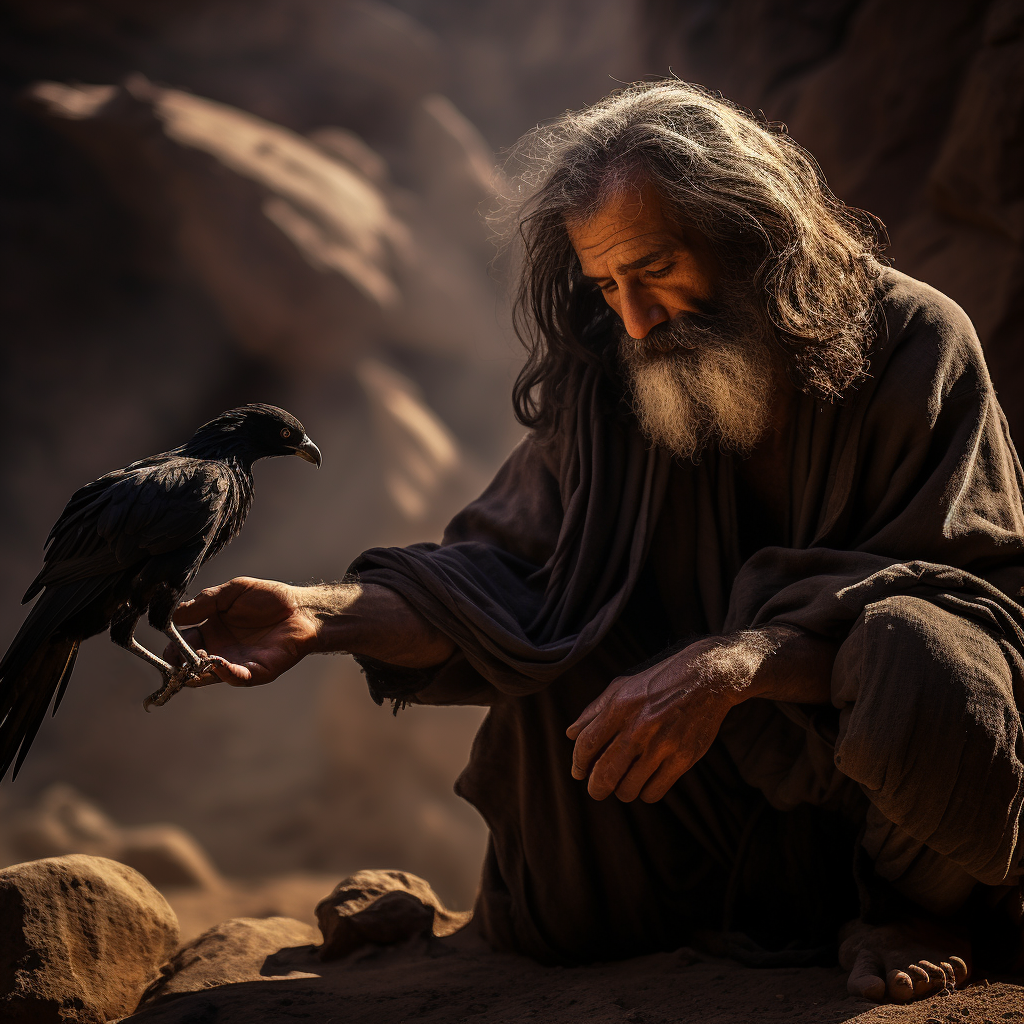
This went on until he reached the age of 43. After that, a raven started to bring him bread for food every day.

St. Paul the Hermit receiving food from a raven

When Saint Paul turned 90, his presence in the wilderness was shown to St. Anthony the Great. Saint Anthony had a vision in which he saw Saint Paul and spent a year trying to find him.

Anthony finally found Saint Paul in his 113th year, in 342 AD. He met him in the cave, and they became fast friends. They dined on the bread the raven brought and prayed together.

While Saint Anthony was convinced that he had just found a new friend,Saint Paul knew that God sent him Anthony to help him die. He told Anthony this, and Anthony wept bitterly.

Saint Paul the Hermit requested the cloak that Athanasius had gifted Anthony and asked that his body be wrapped up and buried in it. While Anthony left to get the cloak, Saint Paul the Hermit passed away peacefully.

Death and Canonization

Saint Paul the Hermit died in 342 A.D. His grave was dug by two lions, and Saint Anthony laid him to rest. When Saint Anthony left the wilderness, he took with him the clothes made from woven leaves that Saint Paul always wore.

Saint Paul was canonized Pre-congregationally. He is commemorated in the Coptic and Armenian rites of the Mass.

He is described as the patron saint of hermits, weavers, and the clothing industry.

Saint Paul the Hermit is celebrated every year by the Catholic Church on the 15th of January in the West and by Orthodox Catholic Churches. The Oriental Orthodox Churches celebrate him on the 9th of February.

5 Interesting Facts About St. Paul the Hermit

  1. Did you know that Saint Anthony described Saint Paul the Hermit as
    the first monk and the Father of Monasticism?
  2. Did you know that Saint Paul is believed to be buried on the site of
    the cave where he lived? It is believed that the Monastery of
    Saint Paul the Anchorite, which is located in the eastern desert,
    mountains of Egypt near the Red Sea are where he spent most of his
    life.
  3. Did you know that Saint Anthony wore Saint Paul the Hermit’s woven
    clothes? He so treasured the Saint that he wore the garment on the
    feast days of Easter and Pentecost.
  4. Did you know that Saint Paul is the patron saint of the Diocese of
    San Pablo in the Philippines? He is also a titular member of the
    Cathedral.
  5. Did you know that Saint Paul grew up in an influential family? He
    was well educated and fluent in Greek.

Prayer to St. Paul the Hermit

Father and Prince of Hermits! Thou art now contemplating in all his glory that God, whose weakness and lowliness thou didst study and imitate during the sixty years of thy desert life; thou art now with him in the eternal union of the Vision. Instead of thy cavern, where thou didst spend thy life of unknown penance, thou hast the immensity of the heavens for thy dwelling; instead of thy tunic of palm leaves, thou hast the robe of light; instead of the pittance of material bread, thou hast the Bread of eternal life; instead of thy humble fountain, thou hast the waters that spring up to eternity, filling thy soul with infinite delights. Thou didst imitate the silence of the Babe of Bethlehem by thy holy life of seclusion; now, thy tongue is forever singing the praises of this God, and the music of infinite bliss is forever falling on thine ear. Thou didst not know this world of ours, save by its deserts; but now, thou mustst be compassionate and pray for us who live in it; speak for us to our dear Jesus; remind Him how He visited it in wonderful mercy and love; pray his sweet blessing upon us, and the graces of perfect detachment from transitory things, love of poverty, love of prayer, and love of our heavenly country. Amen.

Source:[http://www.catholicharboroffaithandmorals.com/St.%20Paul%20First%20Hermit.html]{.ul}

St. Felix of Nola

Early Life

Saint Felix of Nola was born in the early 3rd century to Hermias in Nola, Italy. He was the elder son, and after his father passed away, he was bequeathed all of his property.

Saint Felix sold off a large percentage of his properties and gave the proceeds to the needy. He then pursued a life of faith. Saint Maximus,the Bishop of Nola, ordained him a priest and made him his right-hand man. From then on, Felix worked closely with Maximus.

St. Felix of Nola giving fresh water to the poor

Dedication and Devotion

It was in the year 250 that Emperor Decius began his reign of terror and decree against Christians. Bishop Maximus fled to a hiding place to escape the Emperor’s slaughter, but continued to govern from this hiding place.

When Emperor Decius realized Bishop Maximus was missing, he ordered the immediate arrest of Saint Felix.

Saint Felix of Nola was jailed and tortured in place of Maximus as punishment for his faith. However, he was able to escape jail, according to reports, with the help of an angel.

The angel directed him to the desert, where Bishop Maximus was. Maximus was gravely ill, and Saint Felix arrived in time to help him. They hid away until the scourge ended with the death of Emperor Decius in 251.

Legacy

After Maximus passed on, the people unanimously requested that Felix be the new Bishop of Nola. Saint Felix, however, declined and asked that Quintus, a fellow priest, be named Bishop in his stead.

Felix continued to serve as a priest and later retired to his remaining farmland, where he lived and planted crops. He continued his charitable work by giving his proceeds to the needy even as he continued to live as a poor man.

He was so admired by many, including Saint Paulinus of Nola, who adopted Saint Felix as his very own patron saint.

Death and Canonization

Saint Felix of Nola died in 255 A.D. How he died, however, remains a debate. Some people speculate that he died a Martyr, sacrificing his life for the cause of his faith, in the year 255 under the rule of Emperor Valerian.

There are others who believe that he died during the persecution of Christians by Emperor Decius.

Saint Paulinus, however, believes that Saint Felix of Nola “died as a confessor,”, as he describes in one of his poems.

Saint Felix was canonized pre-congregation. He was interred within the precincts of Nola, and his tomb became a reported spot for miracles. He is celebrated by the Catholic Church on January 14.

5 Interesting Facts About St. Felix of Nola

  1. Did you know that the remains of Saint Felix are kept at different
    locations? Some are kept in the cathedral, close to where he was.
    first interred, and some parts are kept in several places, like Rome.
    and Benevento.
  2. Do you know that Saint Felix is the Patron Saint of domestic animals?
    and spiders? He is also a patron saint against lies, eye diseases,
    and false witnesses.
  3. A legend attributes God’s use of spiders to saving Bishop Maximus and
    Saint Felix of Nola on two occasions. It claims that as they hid
    In the caves, spiders whipped the web over the entrances, causing
    Decius’ guards, who came searching, thought it had been abandoned.
    for a long time.
  4. Did you know that Saint Felix’s story was preserved by Saint
    Paulinus? Saint Paulinus wrote about him almost a century later.
    his death.
  5. In one account, Saint Felix found Maximus dying of hunger and
    thirst. He miraculously found some grapes in a bush and squeezed
    them into the Bishop’s mouth before carrying him to safety.

Prayer to St. Felix of Nola

Dear St. Felix, help me to accept any suffering that comes my way and to offer it up in the Name of the Lord. Amen.

Source:[https://www.google.com/amp/s/prayers4reparation.wordpress.com/2012/12/22/st-felix-of-nola-prayer-meditation/amp/]{.ul}

St. Hilary of Poitiers

When they lived:

St. Hilary of Poitiers, also known as Hilarius, lived during the 4th century. He was born around 310 AD and passed away in 367 AD.

Where they lived:

St. Hilary of Poitiers lived in Poitiers, a city in the western part of present-day France. This region was known for its vibrant Christian community during his time.

Notable world events during the time of their life:

  • The Council of Nicaea (325 AD): This landmark event in Christian history aimed to address the Arian controversy, specifically the nature of the relationship between Jesus and God the Father. The Nicene Creed was formulated during this council, establishing important doctrinal foundations for Christianity.
  • The Edict of Milan (313 AD): Issued by Emperor Constantine, this edict granted religious tolerance to Christians within the Roman Empire. It marked a significant turning point in the history of Christianity, leading to its eventual establishment as the state religion.
  • The Fall of the Western Roman Empire: St. Hilary lived during a time of great turmoil in the Roman Empire. The Western Roman Empire faced numerous challenges, including invasions by various Germanic tribes. The events leading up to the fall of the Western Roman Empire in 476 AD had significant cultural and political repercussions for Europe.
  • The Birth of Monasticism: During St. Hilary’s lifetime, monasticism began to gain prominence in Christian practice. Figures like St. Anthony the Great and St. Pachomius laid the foundations for monastic communities, which became influential centers of spirituality and learning in the medieval period.

Their patronage:

St. Hilary of Poitiers is recognized as the patron saint of scholars, students, and theologians. His commitment to defending and explaining the Christian faith, as well as his prolific writings, make him an important figure in the history of theological thought. His dedication to education and his efforts to bridge the gap between the Latin-speaking West and the Greek-speaking East contributed significantly to the development of early Christian doctrine. St. Hilary’s intellectual legacy continues to inspire those who seek to deepen their understanding of theology and Christian teachings.

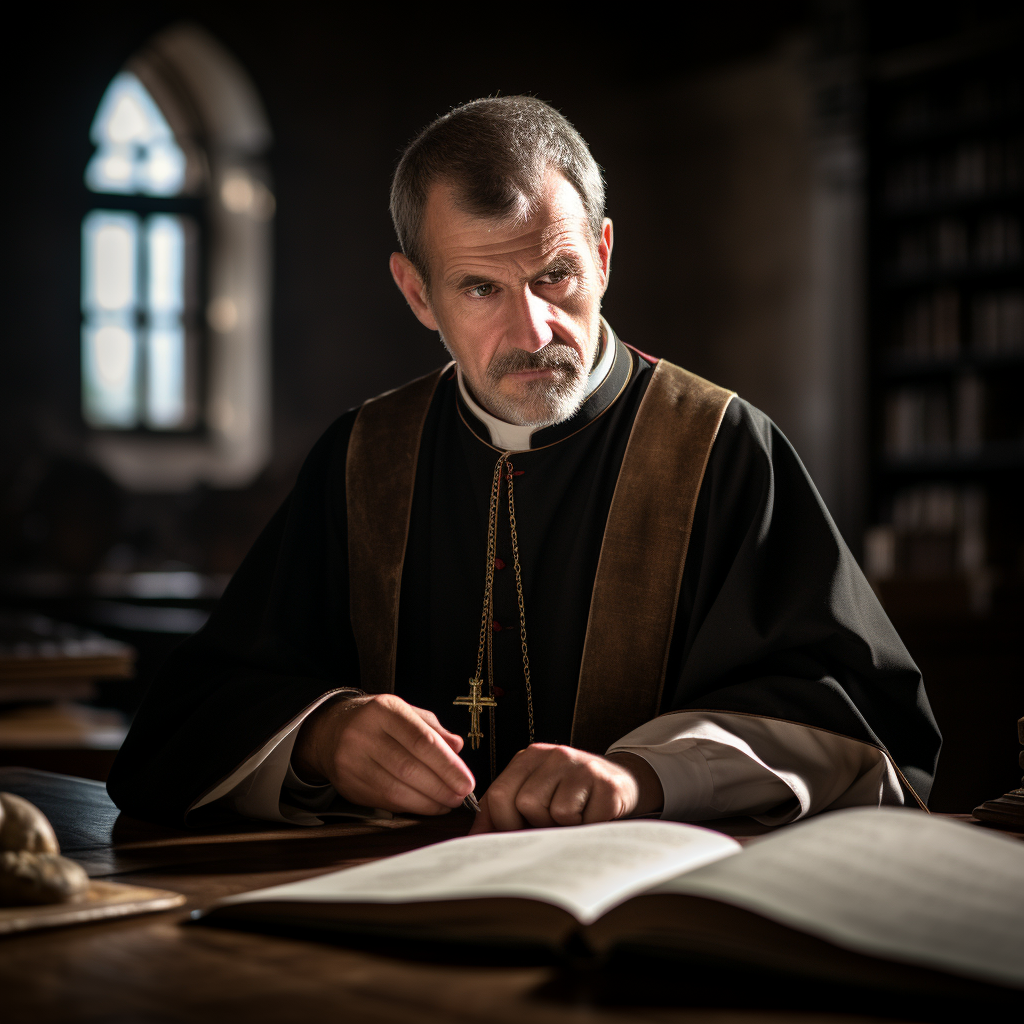
St. Hilary of Pointiers reading the bible

Early Life

Although Saint Hilary believed in the Divinity of God, it hadn’t always been that way.

The date of birth of Saint Hilary cannot be pinpointed or established as a fact. Saint Hilary was born in Poitiers between the end of the 3rd and the beginning of the 4th century A.D. He was born to pagan parents.

Saint Hilary grew up receiving an extensive and quality education in various subjects, including Greek. He took great interest in the writing of the Old and New Testaments. He was so invested in the writings that he took an interest in the religion and abandoned Neoplatonism for Christianity.

Saint Hilary was held in high esteem so much that between the years 350 and 353, he was voted Bishop by all of Poitier.

Dedication and Devotion

It was at that time that the Arian Heresy threatened to take down the Orthodox Christian Church. Hilary took a stand against the Arians, refusing to let their beliefs be forced upon the people.

One of the methods by which Saint Hilary took a stand against Arianism was by protecting the excommunication. Saint Hilary also sent a letter to Constantius II, a Roman Emperor who backed the Arians. His efforts to convince the Emperor to stop the persecution of Orthodox Christians, however, were not successful.

Between the years 356 and 360, Saint Hilary was banished to Phrygia, somewhere in Ancient Greece, by the Command of Constantius as a punishment for not renouncing in support of Arian’s biggest enemy, Saint Athanasius the Great.

While in exile, Saint Hilary remained Bishop and continued to guide his people. He continued to write while in exile, creating books that would continue to be important to theology in the coming years.

Saint Hilary continued to remain a staunch believer in the divinity of God’s trinity. He continued to attend synods. He continued and failed to secure a chance to see Constantius in order to plead for public debates with his opponents. He didn’t stop until his opponents considered him a threat and had him return home to his diocese.

On his return to his diocese, Saint Hilary continued to fight against Arianism, striving to call out the semi-Arian Bishops in Gaul, Germania, and Britain. In 364, Saint Hilary impeached Auxentius, a Bishop who supported the Arians but, as a result, got exiled from Milan.

He continued to write about his failed attempts against the Arians, with some of his works exposing bishops and rulers who stood in full support of the Arians.

Death and Canonization

Saint Hilary of Poitiers died in 367. He is highly respected, and his works continue to remain influential in Christianity today.

Saint Hilary was declared a doctor of the church in 1851. He is celebrated by the Catholic Church and remembered by the Anglican Communion on the 13th of January.

5 Interesting Facts About Saint Hilary of Poitiers

  • Did you know that some people consider Saint Hilary the first Latin Christian hymn writer? It is speculated that he has three hymns attributed to him.
  • Did you know that Saint Hilary’s daughter, Abra, is a venerated saint? Saint Abra was a nun, although she was also born a pagan. She took a vow of virginity on her father’s advice.
  • Did you know that Saint Hilary is also cited as a patron saint against snake bites, snakes, and rheumatism?
  • Did you know that Saint Hilary wrote the first Latin Commentary on Matthew to survive until today? He did this in his book Commentarius in Evangelium Matthaei, which he wrote before the exile.
  • Did you know Saint Hilary’s major impact on theology was the 12 books he wrote during exile? The books are known as De Trinitate.

Prayer to Saint Hilary of Poitiers

Grant, we pray to You, Almighty God, that the example of St. Hilary and that of all Your Saints may lead us to a better life, so that by keeping their feast days we may be brought to imitate their good deeds. St. Hilary was a champion of the Truth; may we never tell lies to excuse ourselves, to hurt others, to gain, or to make ourselves look more important. Through Christ, Our Lord Amen.

Source: [https://www.google.com/amp/s/prayers4reparation.wordpress.com/2012/01/17/prayer-to-st-hilary-patron-of-all-tempted-to-tell-lies/amp/] {.ul}

St. Marguerite Bourgeoys

When they lived: St. Marguerite Bourgeoys lived from April 17, 1620, to January 12, 1700.

Where they lived: St. Marguerite Bourgeoys spent a significant part of her life in Ville-Marie, which is now known as Montreal, Canada. She was a French teacher and founder of the Congregation of Notre Dame of Montreal.

Notable world events during the time of their life:

  • Thirty Years’ War (1618-1648): This devastating conflict shaped much of Europe during Marguerite Bourgeoys’ lifetime, involving religious, political, and territorial struggles among various nations and religious groups.
  • Salem Witch Trials (1692-1693): In the Massachusetts Bay Colony, a series of witch trials and hysteria occurred, resulting in the execution of several people accused of witchcraft. This event highlights the complexities of societal fears and beliefs during the period.
  • Scientific Revolution: Marguerite Bourgeoys lived during a time when scientific thinking was rapidly evolving. The works of prominent figures like Galileo Galilei, Johannes Kepler, and Isaac Newton laid the foundation for modern science, challenging traditional beliefs and encouraging empirical inquiry.
  • Great Fire of London (1666): This catastrophic fire swept through London, causing widespread destruction and leading to significant urban planning changes. It was a pivotal moment in the city’s history and marked the transition towards more organized and fire-resistant architectural designs.
  • Treaty of Westphalia (1648): Ending the Thirty Years’ War and the Eighty Years’ War, this series of treaties reshaped the political and religious landscape of Europe. It established the principle of state sovereignty and religious tolerance, contributing to the development of modern international relations.
  • Glorious Revolution (1688): The overthrow of King James II in England marked a crucial turning point in constitutional history. This event led to the establishment of parliamentary supremacy and paved the way for modern constitutional monarchies.
  • Enlightenment Era: Marguerite Bourgeoys’ lifetime coincided with the Enlightenment, an intellectual movement that emphasized reason, science, and individual rights. Thinkers like Voltaire, Rousseau, and Locke were shaping new ideas about society, government, and human nature.

Their patronage: St. Marguerite Bourgeoys is the patron saint of educators and the founder of the first uncloistered religious community in Canada. She dedicated her life to providing education to young girls, particularly from less fortunate backgrounds. Her legacy continues to inspire educators around the world who are committed to providing quality education and improving the lives of those in need.

Early Life

Saint Marguerite Bourgeoys was born in Troyes, France, on April 17, 1620. Marguerite, the seventh of thirteen children born to Abraham Bourgeoys and Guillemette Garnier, loved and cared for her siblings until her death.

Up until the age of 15, Saint Marguerite did not belong to the confraternity of the Congregation Notre-Dame attached to the town’s monastery. However, between the ages of 15 and 16, she made a decision to join the ritual associated with the Congregation.

Dedication and Devotion

Saint Marguerite knew she was destined for religious work. This was further confirmed after her divine experience with the Blessed Virgin, after which she saw a marked change in her life.

Paul De Chomedey, the governor of the French settlement at Montreal, New France, and brother to an Augustinian Canoness in Troyes, visited France in 1652. His sister was in charge of the sodality where Marguerite belonged. It was during this visit that he met Marguerite and invited her back to Canada with him to start a school in Ville-Marie, New France.

By 1653, Saint Marguerite Bourgeoys had accepted his invitation and left on a 3-month journey to New France.

Along with the joys of starting to do something with her life, this new land brought challenges and hardships. Instead of being deterred by these limitations, however, Saint Marguerite made the most of her situation.

Saint Marguerite assisted in the building of the institution. After the completion of the institution, she gathered a workforce to build the very first church in Ville-Marie, the Notre-Dame-de-Bonsecours Chapel, or the Chapel of Our Lady of Good Counsel. This church would be Ville-Marie’s first permanent church.

In 1658, St. Marguerite Bourgeoys convinced the governor to allow her to open a school in Ville-Marie. In April of the same year, she was provided with a vacant stable to be used as the school. This represented the first marked change in education in New France.

St. Marguerite Bougeoys teaching in her newly establish school to a group of young nuns

Legacy

St. Marguerite traveled out of France several times in search of new teacher recruits for her new school. It was during this time that she became guardian to Filles du Roi, young orphan girls sent by the monarch to start new families. She cared for the girls, acted as a matchmaker, and mentored them on their new path.

Through all this, St. Marguerite’s belief in spirituality continued to grow. She worked as a preacher throughout the colony as well as educating the local children.

Eventually, in 1669, François de Laval, the Apostolic Vicar, issued an ordinance that allowed the congregation of Notre-Dame to preach anywhere on the Island of Montreal. This enabled Saint Marguerite to widen her reach outside her community.

St. Marguerite Bourgeoys fought to have her community left uncloistered, and in 1670, she was presented with letter patents from Louis XIV,securing her community.

St. Marguerite continued to provide institutions for the betterment of the colony. She established a boarding school for girls and a school for the training of artisans.

Between 1678 and 1680, St. Marguerite established institutions in mission villages and Quebec. Her community remained very active and continued to grow in various countries.

On July 1, 1698, the congregation was “canonically constituted a community.”.

Saint Marguerite was a pioneer of the uncloistered congregation and liberating education. She continued to provide hope, charity, and service to the people until she passed away.

Death and Canonization

Saint Marguerite Bourgeoys spent her last years praying and encouraging her sisters to build a spiritual character. She died in her adopted home, Montreal, on January 12, 1700.

Saint Marguerite Bourgeoys was canonized by the Catholic Church in 1982, the process taking almost a century. She is celebrated by the Catholic Church, and even in death, she is said to be a bearer of miracles.

5 Interesting Facts About St. Marguerite Bourgeoys

  • Did you know that St. Marguerite Bourgeoys was the first female saint?
    in Canada?
  • Did you know that St. Marguerite Bourgeoys was the first teacher in
    Montreal?
  • Did you know that it is said that St. Marguerite gave her life for a
    woman of her community? Numerous stories state that a younger
    A woman in the congregation suffered from an illness. St. Marguerite
    Bourgeoys prayed to God to make her suffer in the woman’s place.
    after which she fell ill and died 12 days later.
  • Did you know that St. Marguerite worked with Jeanne Mance at the
    hospital? After arriving at Ville-Marie, St. Marguerite Bourgeoys
    noticed that very few children survived until school age. She
    worked to help more children survive this tragedy.
  • Did you know that the clay from Saint Marguerite’s tomb was used to
    heal the sick? On two occasions, men with illnesses that caused
    their skin to rot, she applied clay from her tomb to the affected
    limbs, and we’re healed. These miracles were what caused her
    beatification.

Prayers to St. Marguerite Bourgeoys

O, Mother Bourgeoys, you whose compassionate power is ever increasing, show us your way of Truth, Faith, and Holiness. Make us humble enough to abandon ourselves to the will of God and generous enough to find in the cross the joy of the Loving Giver. May your Fidelity to Jesus in the Blessed Sacrament lead us ever closer to this source of light and peace. May your spirit of openness help us to be concerned for our brothers and sisters throughout the world. Finally, may our Lady of the Trinity bring us to the unity of eternal grace, to which God has called you for all eternity. Amen.

Source:[https://stmarguerite.org/wp-content/uploads/2019/03/StMarg.Pamphlet.pdf]{.ul}