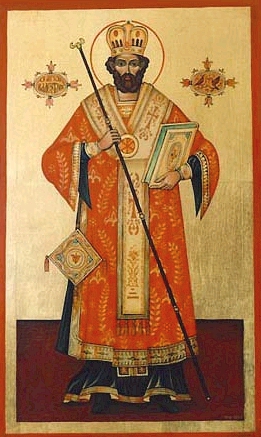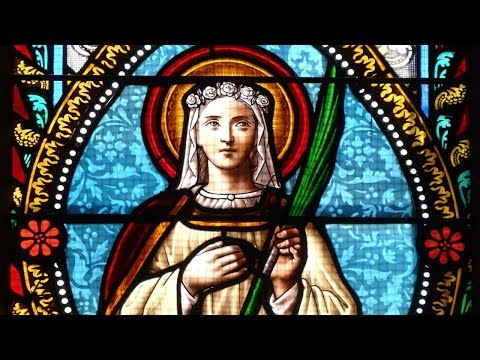
St. John of Kanty


St. John of Kanty

When they lived:

St. John of Kanty, also known as St. John Cantius, lived during the late 14th and early 15th centuries. He was born on June 24, 1390, and passed away on December 24, 1473.

Where they lived:

St. John of Kanty lived in various regions, but he is most famously associated with the city of Kraków, which was then a part of the Kingdom of Poland.

Notable world events during the time of their life:

  • 1420 – The Council of Constance (1414-1418) concludes: This council was a significant event in the history of the Catholic Church, as it aimed to resolve the Western Schism, during which there were rival popes claiming authority. The Council successfully elected Pope Martin V, effectively ending the schism and reuniting the Catholic Church.
  • 1453 – The Fall of Constantinople: One of the most impactful events of the era was the fall of the Byzantine Empire’s capital, Constantinople, to the Ottoman Turks on May 29, 1453. This event marked the end of the Byzantine Empire and had far-reaching consequences for Europe, sparking the Renaissance and influencing the Age of Exploration.
  • 1455 – The Gutenberg Bible is printed: Johannes Gutenberg’s invention of the movable-type printing press revolutionized the dissemination of knowledge and played a crucial role in the spread of ideas during the Renaissance. The printing press accelerated the spread of literature, science, and religious texts.
  • 1472 – First recorded use of a mechanical clock: In this year, Italian engineer Francesco di Giorgio Martini created a mechanical clock for the Cathedral of Santa Maria del Fiore in Florence. This innovation furthered the development of timekeeping and had a lasting impact on various scientific and technological advancements.

Their patronage:

St. John of Kanty is recognized as the patron saint of Poland, Lithuania, and the Pontifical Gregorian University. He is also the patron saint of students and academic institutions due to his dedication to education and knowledge during his life as a professor and scholar.

Early Life

Saint John of Kanty is also known as John of Cantius. He was born on June 23rd, 1390.

Saint John of Kanty was born in Kty, a little town close to Owicim in Poland. His parents were Stanisaw and Anna Kanty.

Saint John was a bright child. He was intelligent and was sent to receive the best education available at the time.

Saint John was sent to the Kraków Academy. He received his bachelor’s degree and a license from the institution a few years later. In 1418, around the age of 28, Saint John became a doctor of philosophy.

After he finished school, he spent a few years tutoring at the same university. He taught philosophy and spent his time preparing for the priesthood.

Sometime later, he was made rector at the School of the Canons regular.At the same time, he was ordained a priest.

While he held the position of rector at the Most Holy Sepulcher in Miechow, he was called back by his alma mater.

Kraków Academy offered Saint John of Kanty a professorship of the Sacred Scripture. He had taken an interest in theological writings and writers. This encouraged him to go on to earn a doctorate in theology.

Saint John was hardworking. He soon got noticed and was appointed director of the department of theology.

His new ascension to what was considered a position of power led his enemies to plan to bring him down. Saint John’s rivals set him up with false accusations.

There was no proper interrogation, and so Saint John was judged guilty of his charges. He was expelled from his position as director and sent out of college.

Saint John was sent out to Olkusz to act as a parish preacher at a church there.

Dedication and devotion

It seemed that Saint John had fallen from grace as a man and as a presbyter. He was not only insulted by the people in his new city, but he was treated like an outcast.

Saint John of Kant carried out his duties and responsibilities with efficiency and an amazing amount of zeal. He was humble, respectful, passionate, and devoted to the church.

Still, this was not enough for the people. They remained suspicious of him, and we were disrespectful towards him. This did nothing to dampen his spirit.

If Saint John was anxious about this new parish, he did not show it. Instead, he puts in his all and provides nothing but the best.

After a while, his parishioners began to take notice of his integrity. Saint John was always available and ready to help. He was generous, almost to a fault, and always split his belongings with those who needed them.

He did all this without complaining.

The period started to realize that they had misjudged him all this time and began to accept him.

Legacy

After serving the parish for several years, Saint John returned to Krakow, where he taught scripture till his death.

Back in Kraków, Saint John of Kanty was once again accepted by the people who had cast him aside. Their respect for him had strengthened, and he was once more favored by distinguished and noblemen.
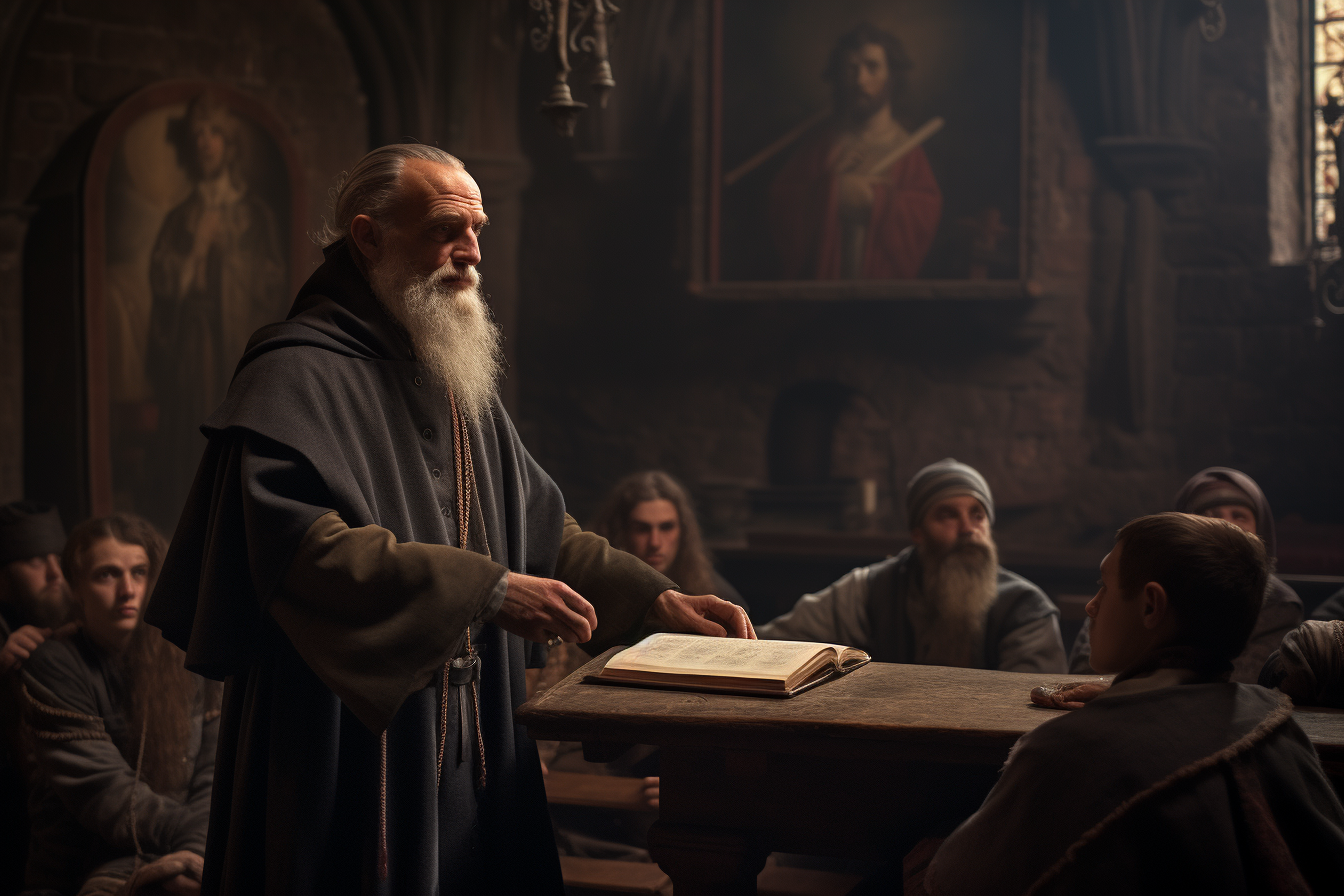
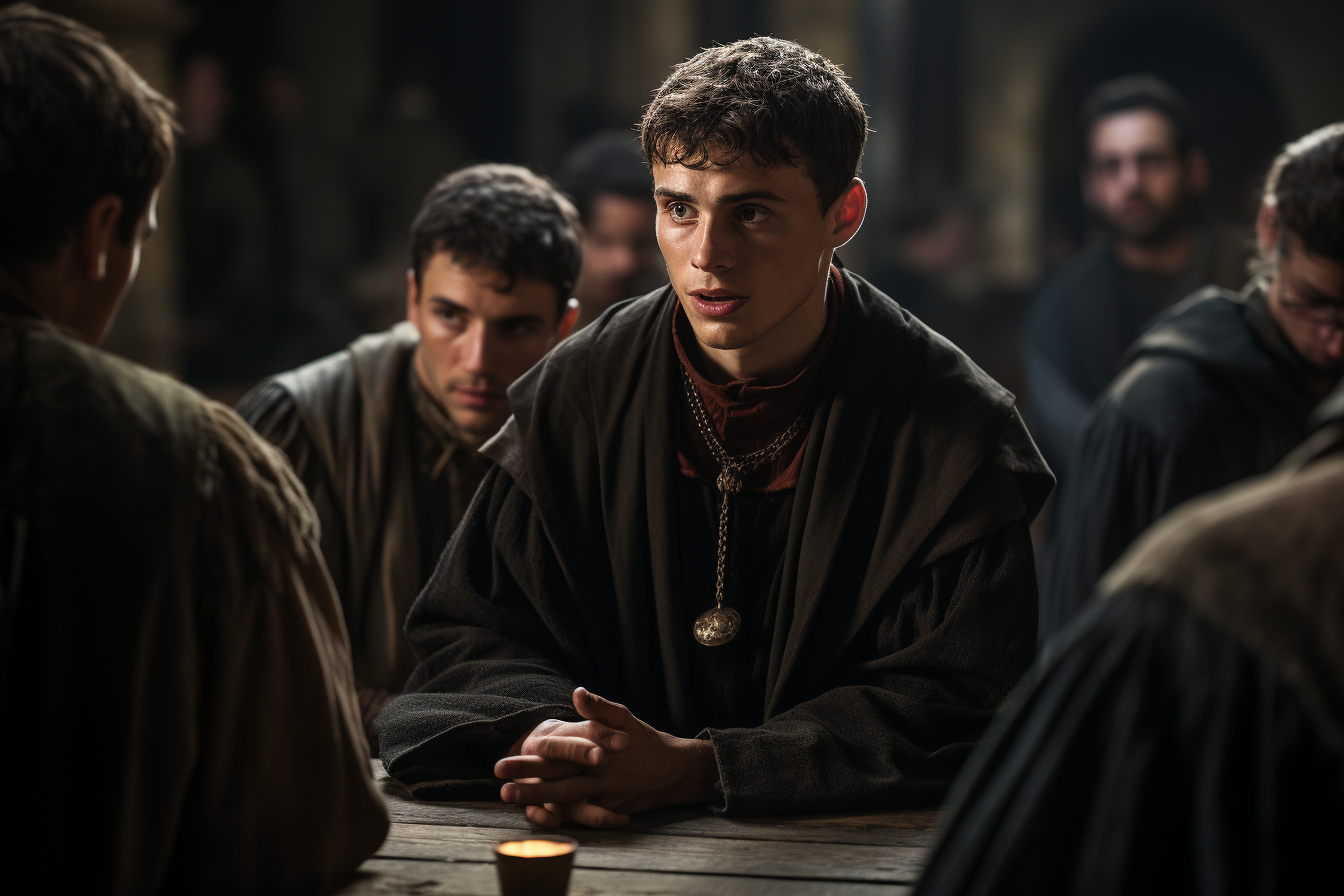
St. John Kanty teaching to his congregation

Back in Kraków, Saint John never ceased to give alms to the poor. He was said to have been a man of good humor who never let anything other than the necessities for survival go.

In his time, Saint John made several pilgrimages to holy places.

Death and Canonization

  1. He was buried at the Collegiate Church of St. Anne.

5 Interesting Facts About St. John of Kanty

  1. Did you know that Saint John of Kanty is the patron saint of
    Lithuania and Poland?
  2. Did you know that Saint John of Kant was a vegetarian? He abstained
    from meat.
  3. Did you know that Saint John made a pilgrimage to Jerusalem? It is
    said that he had done this in the hope that he would be martyred.
    for Christ.
  4. Did you know that Saint John is almost always depicted in a
    professor’s gown with his arm around a student or giving his
    garments to the needy?
  5. Did you know that Saint John of Kanty is the only confessor who is
    honored in the Catholic liturgy by three hymns?

Prayer to St. John of Kanty

Almighty Father, through the example of John of Kantymay, we grow in the wisdom of the saints. As we show understanding and kindness to others, may we receive your forgiveness. Through our Lord Jesus Christ, your Son, who lives and reigns with you in the unity of the Holy Spirit, one God, forever and ever Amen.

Source:[https://www.google.com/amp/s/prayers4reparation.wordpress.com/2012/12/13/prayer-on-the-memorial-of-st-john-of-kanty/amp/]{.ul}

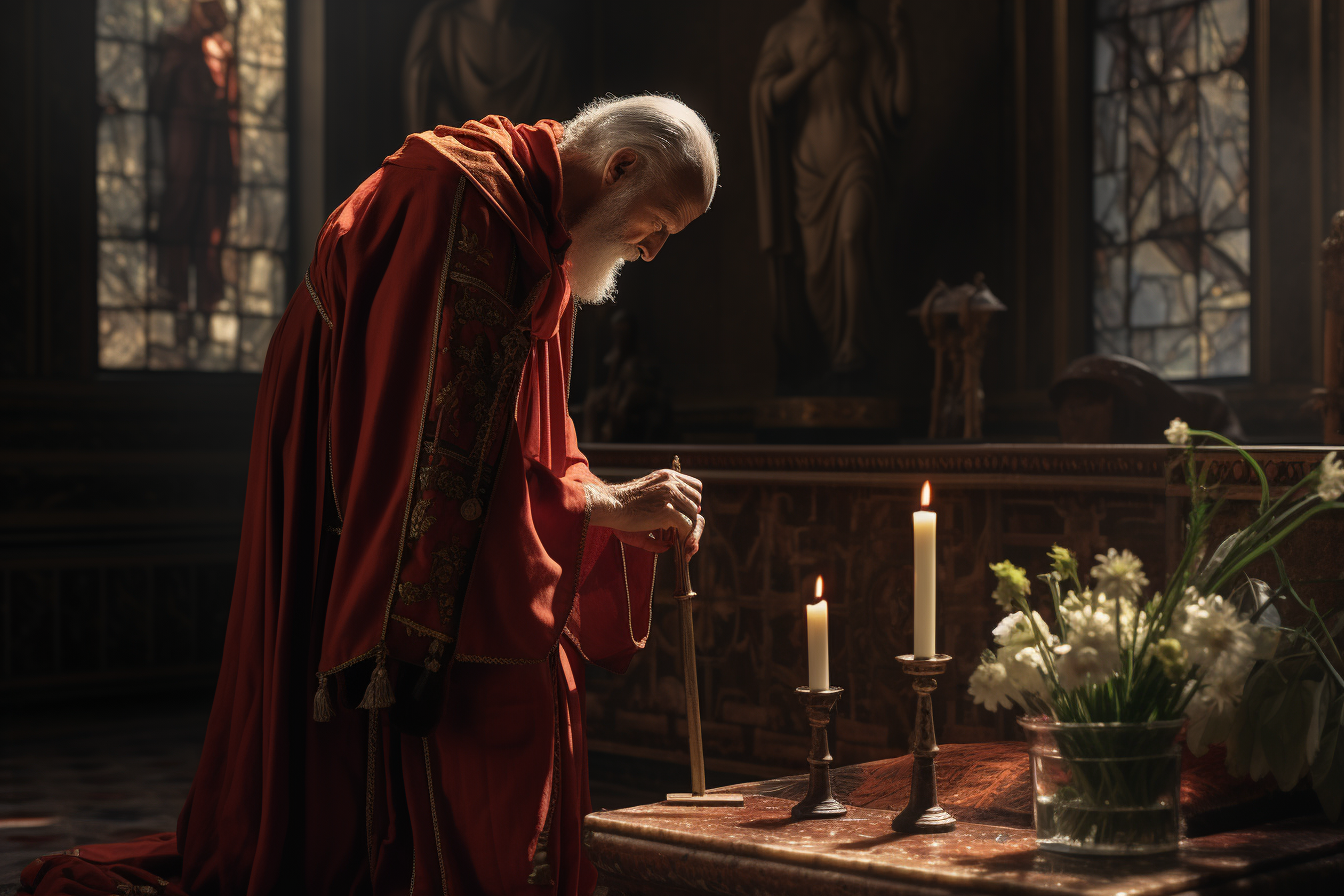
St. Narcissus

When they lived:

St. Narcissus, also known as Saint Narcissus of Jerusalem, lived during the 2nd century. His exact birth date is uncertain, but he is believed to have been born around the year 99 AD. He passed away on October 29, 215 AD.

Where they lived:

St. Narcissus resided in the vibrant city of Jerusalem, a significant religious and cultural hub of the time. Jerusalem was part of the Roman Empire during his life and held immense historical and spiritual importance.

Notable world events during the time of their life:

  • Roman Empire’s Height: St. Narcissus lived during the height of the Roman Empire’s power and expansion. The empire was marked by significant advancements in engineering, architecture, and governance.
  • Antonine Plague (165-180 AD): During his lifetime, the Roman Empire was ravaged by the Antonine Plague, which had far-reaching consequences on society and may have influenced his life and spiritual outlook.
  • Persecutions of Christians: St. Narcissus lived in a time of sporadic and localized persecutions of Christians. His life coincided with periods of relative tolerance as well as intensified persecution, which significantly impacted the Christian community’s growth and resilience.
  • Parthian War (161-166 AD): The Roman Empire engaged in conflicts with the Parthian Empire, leading to territorial disputes and geopolitical tensions in the eastern regions. These conflicts could have affected trade routes and the overall stability of the region.
  • Scientific Advancements: St. Narcissus lived during a time of scientific curiosity. Notably, his life overlapped with the works of prominent figures like Galen, a renowned physician, and Claudius Ptolemy, a mathematician, astronomer, and geographer.

Their patronage:

St. Narcissus is widely recognized as the patron saint of vineyards, vintners, and winegrowers. This patronage stems from a notable miracle attributed to him. As the story goes, he miraculously turned water into wine during a scarcity, demonstrating his spiritual authority and compassion. This act of transforming water into wine connects him symbolically with the biblical narrative of Jesus’ first miracle at the Wedding at Cana.

Life and Dedication

Like many saints that existed during the time of the early Church, Saint Narcissus lacks several details of his life in writing.

Saint Narcissus lived during a time when the church experienced several challenges. Not only were the people susceptible to the diseases that plagued them without a cure, limiting their ability to travel and preach, but they were also persecuted for their faith.

St. Narcissus setting the altar for mass.

Regardless of all these problems, Saint Narcissus stood firm in his faith and devotion to God.

Saint Narcissus was born around 99 A.D. This date cannot truly be confirmed. However, this is popularly accepted as a measure to go by.

Narcissus was thought to have been born in Jerusalem; however, there is no data to prove this. Other than these pieces of information that are probably strewn together from pieces of historical writing, there is no more information about him.

There is no record of Saint Narcissus’ family or what he did earlier in his life. In fact, his story kicks off when he is 80 years old.

When he was around 80 years old, Saint Narcissus was made Bishop of Jerusalem. He was a holy man and highly respected in his city.

Around 195 A.D., Narcissus and Theophilus, who was then bishop of Caesarea, together presided over a council. The council was called to determine what day was fit for Easter celebrations.

At the Council, it was decided that Easter would always be celebrated on Sunday.

Saint Narcissus was a man who was said to have performed miracles. Saint Eusebius wrote about this, alleging a particular miracle for Narcissus.

Eusebius wrote that on Easter Eve, the church lamps had run out of oil. This was bad news because the lighting of the lamps was important to the celebrations.

Instead of being sad, Saint Narcissus had asked that the empty lamps and pitchers of water be brought from the wells. He then prayed for the water and poured it into the lamp.

The water was said to have miraculously turned to oil.

Legacy

Although he was widely respected for his gifts and calm manner, Saint Narcissus made several enemies.

He was accused of various sins by sinners in his town. These sins were so severe that Saint Narcissus started to lose respect in the eyes of the people. It didn’t help that the three accusers swore that they were telling the truth.

A legend has it that one of the accusers asked to be killed in a fire if he was lying. Another asked to be struck with leprosy. The last asked to be immediately blinded if he was found lying.

After all, parties were interviewed, and Saint Narcissus was found innocent. Needless to say, the three accusers were struck by their causes.

Due to this slander, Saint Narcissus retired from Jerusalem and went into solitude. He spent time alone, praying, fasting, and meditating away from civilization.

While Saint Narcissus was away, three bishops assumed his role without success. He returned years later and accepted the pleas of his people to become bishop once again.

Saint Narcissus was, however, very old and fragile, and he appointed Saint Alexander to be coadjutor. While he didn’t care for major matters alone, he continued to work for the people.

Death and Canonization

Saint Narcissus was said to have died around 216 A.D. He was said to have passed away in Aelia Capitolinia. He was canonized pre-congregation.

Saint Narcissus is celebrated by the Roman Catholic Church on the 29th of October and on August 7 by the Eastern Orthodox Church.

5 Interesting Facts About Saint Narcissus

  1. Did you know that Saint Narcissus was the 30th Bishop of the See?
  2. Did you know that some historians reckon that Saint Narcissus lived
    up to 160 years?
  3. Did you know that some historians reckon that Saint Narcissus
    austere?
  4. Did you know that while in seclusion, Saint Narcissus was
    thought to have died?
  5. Did you know that at the Council, it was said that Easter should not
    be celebrated with the Jewish Passover?

Prayer to Saint Narcissus

God, you made St. Narcissus an outstanding exemplar of divine love and the faith that conquers the world, and you added him to the role of saintly pastors. Grant, by his intercession, that we may persevere in faith and love and become sharers of his glory. Amen.

Source:[https://www.catholicdoors.com/prayers/novenas/p04056.htm]{.ul}

St. Valentine

When they lived:

St. Valentine is believed to have lived during the late 3rd century AD, around 260-269 AD.

Where they lived:

St. Valentine lived in Rome, Italy, during the tumultuous period of the Roman Empire.

Notable world events during the time of their life:

  • Persecutions of Christians: One of the most significant events during St. Valentine’s time was the widespread persecution of Christians in the Roman Empire. Emperor Decius and later Emperor Valerian issued edicts against Christians, resulting in the martyrdom of many early Christians, including St. Valentine.
  • Roman Empire in Crisis: The Roman Empire was in a state of decline during this era, marked by political instability, economic troubles, and military challenges from various fronts. These challenges contributed to the overall atmosphere of uncertainty in which St. Valentine lived.
  • Galen’s Medical Contributions: During St. Valentine’s time, the Greek physician Galen was making substantial contributions to the field of medicine. His work on anatomy, physiology, and pharmacology would continue to influence medical practices for centuries.
  • Aurelian Walls Construction: In Rome, the construction of the Aurelian Walls, a massive defensive fortification, began during the reign of Emperor Aurelian (c. 271-275 AD). These walls were built to protect the city from external threats and invasions, reflecting the turbulent times in which St. Valentine lived.
  • Crisis of the Third Century: This period saw a series of short-lived and often ineffective emperors, leading to civil wars and fragmentation within the Roman Empire. This instability had profound implications for the lives of people like St. Valentine.
  • Zenobia’s Rebellion: Queen Zenobia of Palmyra rebelled against Roman authority during St. Valentine’s era, leading her forces to capture several Roman provinces in the East before being eventually defeated by Emperor Aurelian.

Patronage:

St. Valentine is the patron saint of lovers, beekeepers, and epileptics. His association with lovers stems from the legend that he performed marriages for Christian couples when such unions were forbidden, leading to the tradition of sending love notes, known as valentines, on February 14th, his feast day. Beekeepers may have adopted him as their patron due to the belief that his intercession protected their hives. His patronage of epileptics may relate to the historical belief that he could heal the condition through his prayers.

Biography

Valentine’s day is one of the most loved ‘unofficial holidays’ mainly because of what we celebrate on this day; love. You have probably done some basic research to understand the origins of this beautiful day and you came across the Catholic saint, St. Valentine. Now buckle up and get to know more about this saint of love.

The Beginning

San Valentino widely known as St. Valentine was born in 175 AD in Terniin Italy. He started off as an Italian doctor and later he became a priest. As a 3rd Century Roman priest and martyr, he lived during the reign of Claudius II, known as Claudius the Goth.

In Rome, Claudius was persecuting Christians. On the other hand, St.Valentine was playing a crucial role in helping those Christians. He was also actively involved in performing marriage ceremonies between youngChristian couples that were in love. Bear in mind, at this point, theRoman law forbade young people from getting married.

As a result of these roles, St. Valentine was arrested and imprisoned under threat. The emperor tried to convert St. Valentine but the saint of love did not give his religion up. Claudius sent Valentine away to prison. While in prison, Valentine preached day in and day out.

Miracles

Asterius was the guard at the prison where Valentine was. Asterius’ daughter was blind, so he asked Valentine to hear her confession. After listening to the confession, Valentine put his hands over the blind girl’s eyes and chanted, “Lord Jesus Christ, enlighten your handmaid because You are God, the True Light.” After that, the girl regained her sight!

After the miracle, the guard was thrilled. He and most of his family members converted to Christianity. Who wouldn’t? Someone close to themhad experienced such a life-changing Christian encounter. Sadly, EmperorClaudius got to know about this conversion and order that they all get killed.

Death

Before his death, Valentine sent the girl a loving note which he signed,“from Your Valentine”. This marked the birth of the tradition we enjoy today. The tradition of sending valentine’s cards.

Valentine was stoned and beaten with clubs. On the 14th of February, he was beheaded. This was around 269 AD. He was buried at a Christian cemetery on the Via Flaminian and years later, a chapel was built on top of his remains.

On the same day, Valentine was killed, the bishop of Terni also calledValentine was imprisoned and beheaded by Placidus (the prefect of Placidus). This happened about 60 miles outside of Rome. There is a belief that these two incidences aren’t just coincidences. Some people believe that St. Valentine existed in two places at once. These could also have been two people who had the same name and died in an almost similar manner. What do you think?

Love for Love

St. Valentine is the patron saint of all things to do with love this is because of the love he had for love when he was alive. He is the patron saint of happy marriages, betrothed couples, lovers, young people. His involvement in marriage ceremonies for couples is the main reason why he is a patron saint for this important part of our lives.

St. Valentine is commemorated in the Anglican Communion and the Lutheran churches. The Catholic church recognizes him as a saint and lists him as such on the 14th of February entry in the Roman Martyrology. However, in 1969, the Catholic church removed his name from the general Roman calendar.

5 Interesting Facts About St. Valentine

  • His skull is on display in Rome and it is crowned with flowers.
  • In 1836, the Carmelite priest John Spratt received a gift from Pope
    Gregory XVI. The gift was a small vessel tinged with St.
    Valentine’s blood.
  • He is also a patron saint of beekeepers and epilepsy.
  • In most artistic pieces, St. Valentine is often accompanied by roses
    and birds.
  • Valentine’s day feast was established in 496 AD by Pope Gelasius

Prayer to St. Valentine

Dear Saint and glorious martyr, Teach us to love unselfishly and to find great joy in giving. Enable all true lovers to bring out the best in each other. Let them love each other in God and in God in each other. Amen

St. Lucy

Saint Lucy: The Guiding Light Through History

When they lived:

Saint Lucy, also known as Saint Lucia, lived during the late Roman Empire in the 3rd century. Her exact birth and death dates are not certain, but it is widely believed that she was born around 283 AD and died around 304 AD.

Where they lived:

Saint Lucy was born in Syracuse, a vibrant and bustling city located on the eastern coast of Sicily, which was a part of the Roman Empire at the time.

Notable world events during the time of their life:

  • Crisis of the Third Century (235-284 AD): The Roman Empire was in a state of turmoil, facing multiple challenges such as political instability, economic crises, and invasions from external forces. This period saw numerous emperors rise and fall, leading to a weakened empire.
  • Diocletian’s Reforms (284 AD): Emperor Diocletian implemented significant administrative and economic reforms in an attempt to stabilize the Roman Empire. He divided the empire into the Eastern and Western halves, each with its own ruler, laying the groundwork for the Byzantine Empire.
  • Great Persecution of Christians (303-311 AD): One of the most significant events during Saint Lucy’s time was the intense persecution of Christians under Emperor Diocletian and his successors. Many Christians, including Saint Lucy, faced martyrdom for their faith.

Her patronage:

Saint Lucy is widely venerated as the patron saint of eyesight, the blind, and eye-related illnesses. This patronage is inspired by the legend that, during her torture, her eyes were gouged out, but later miraculously restored.

Early Life

She is known as St. Lucia to Italians and called the patron saint of the blind by all, partly because her name means “light.”

Lucy was born in 283 AD to an Italian father and a Greek mother, Eutychian. Lucy was born into rich and noble parents in Syracuse, Sicily. Sadly, St. Lucy lost her father when she was 5 years old, leaving her and her sick mother, Eutychian, without a protective guardian.

St. Lucy was privately raised as a devout Catholic by her mother. As her love for God leaped, she secretly took an oath of perpetual chastity and never to be married. It was her earnest desire to distribute her riches to the poor. Her vow to God was to become her undoing.

Young Lucy’s Life with Her Mother

Lucy’s mother’s hemorrhagic illness (bleeding disorder) became too grave, and fearing for Lucy’s future if anything were to happen to her, Eutychia arranged Lucy’s marriage to a paganistic young man from a wealthy family, not knowing of Lucy’s oath to the Lord. Lucy has grown into a young maiden, renowned for her beauty and sparkling eyes, and more suitors have sought her hand in marriage.

Thinking of a way to tell her mother of her vow to God, Lucy persuaded her mother to visit the shrine of St. Agatha at Catania with her in the hope of a cure. St. Agatha (February 5, 251 AD) was a young virgin martyred for her faith during the Decian persecution. St. Agatha’s tomb had become a pilgrimage center for many as miracles were received at the shrine.

While Lucy and her mother were at Catania, St. Agatha came to Lucy in her dream. She told her that her mother, Eutychia, would be cured because of her faith. Eutychian received her healing while still at Catania; using this opportunity, Lucy confessed to her mother about the vow she swore to the lord and why she should allow her to distribute a more significant part of her riches to the poor. Though dismayed at the thought that her daughter wouldn’t be married, Eutychian agreed to let her serve God according to her faith.

She, however, suggested that Lucy leave her riches as a legacy. To this, Lucy responded, “Whatever you give away at death for the Lord’s sake, you gave because you could not take it with you. Give now to the true savior, while you’re healthy, whatever you intended to give at your death”.

Killed for Her Faith and Belief in God (Virgin and Martyr)

Lucy was born in an era of anxiety, paganistic Rome, and great persecutions of Christians (Catholics) under the rule of Emperor Diocletian. He had made the restoration of Rome to its former glory his sole purpose. To achieve this, the emperor wrongly believed that the pagan traditions of Rome must be upheld and any other faith suppressed and crushed to unify Rome again into one impenetrable empire.

Thus, in that era, being a Christian (Catholic) in Rome was dangerous, and St. Lucy’s groom knows this. Word got to St. Lucy’s intended groom that Lucy had given out a large part of her riches and inheritance to the poor and was never to be married. The pagan intended groom of Lucy, spurned by her rejection of him and possibly fueled by greed for her riches, reported Lucy as a Christian to the local authorities.

Governor Paschasius asked Lucy to burn a sacrifice for the emperor, which she refused because it went against her faith. Governor Paschasius then ordered that Lucy be moved to a brothel to become a prostitute. History explained that she couldn’t be removed when the soldiers came to move Lucy to the brothel. The governor ordered that she be burned, yet the fire built around her didn’t burn her.

Lucy suffered many persecutions while in prison, including having her ears gouged out, but she remained steadfast to her vows and belief in God. Her courage during her ordeal was unheard of in Sicily, and her fame spread beyond Rome.

St. Lucy paid the ultimate price for her faith in God on December 13, 304, when a sword was pierced through her neck in public. She died a virgin martyr.

5 Interesting Facts About St. Lucy

  1. I bet you didn’t know that St. Lucy is one of the eight women.
    mentioned by name in the Roman Catholic mass during the
    eucharistic celebration. Yes, she’s one of the few.
  2. Did you know that St. Lucy’s feast day (December 13) is known as the
    festival of light? This is because her feast day once coincided with
    with the winter solstice, the shortest day of the year before
    calendar reforms.
  3. A great miracle was witnessed at her burial. While her body was
    being prepared for burial, her eyes were discovered to be
    miraculously restored. Speak of the title, Patron of the Blind.”
    and eye disorders.
  4. Sweden has the most peculiar way of celebrating the feast day of St.
    Lucy. The first daughter of any family dresses in white (purity).
    red sash (martyrdom)  and carries a wreath of candles on her head.
  5. Just in case you didn’t know, St. Lucy has a country named after her. St
    Lucia, the island Caribbean country in the West Indies, bears the
    record as the first-ever country named after a woman.

Prayer to St. Lucy

Saint Lucy, you did not hide your light under a basket but let it shine for the whole world, for all the centuries to see. We may not suffer torture in our lives the way you did, but we are still called to let the light of our Christianity illumine our daily lives. Please help us have the courage to bring our Christianity into our work, our recreation, our relationships, and our conversation in every corner of our day. Amen.

St. Edmund Rich

When they lived:

St. Edmond Rich, also known as St. Edmund of Abingdon, lived during the 13th century.

Where they lived:

St. Edmond Rich was born in Abingdon, England, and spent much of his life in Oxford.

Notable world events during the time of their life:

  • The Mongol Empire’s Expansion (1206-1294): In the 13th century, the Mongol Empire led by Genghis Khan and later his descendants continued its unstoppable expansion, conquering vast territories across Asia, the Middle East, and Eastern Europe. This event had a significant impact on global trade, cultural exchange, and the spread of ideas.
  • The Magna Carta (1215): In the year 1215, the Magna Carta was signed by King John of England, which established certain fundamental rights and liberties for the people. This document marked a crucial step towards the limitation of absolute monarchial power and laid the groundwork for modern constitutional law.
  • The Renaissance Emerges (14th – 17th centuries): Though the Renaissance is often associated with the 15th century, its roots can be traced back to the 13th century. This period marked a reawakening of arts, culture, and intellectual pursuits in Europe, leading to groundbreaking advances in various fields like art, literature, and science.
  • The Seventh Crusade (1248-1254): During St. Edmond’s lifetime, King Louis IX of France led the Seventh Crusade to the Holy Land, attempting to regain Christian control over Jerusalem and surrounding areas. Although the crusade ultimately failed, it had significant ramifications for the European involvement in the Middle East.
  • The First University Colleges Established (13th century): In the 13th century, the world witnessed the emergence of the first university colleges, including the University of Oxford, where St. Edmond Rich studied and later became a prominent lecturer. This period saw a surge in intellectual pursuits and the establishment of institutions of higher learning.

St. Edmond Rich’s patronage:

St. Edmond Rich is the patron saint of the city of Pontignano, Italy. Pontignano holds special significance as it is the place where St. Edmond chose to live as a hermit for a brief period before being called to a life of religious leadership.

As an Archbishop of Canterbury, St. Edmond Rich played a crucial role in the ecclesiastical and educational spheres during his time. He was known for his humility, wisdom, and dedication to the poor, making him a revered figure not only among Catholics but also among people from various walks of life.

The Early Life of St. Edmund Rich

Born to parents Reginald and Mabel Rich around November 20th, 1175, Edmund was the eldest of four children. His father would later retire to monastic life with permission from his wife and Edmund’s mother, a pious and devote woman.

His mother, Mabel, took up the responsibility of training the children, and Edmund probably had his early studies at a school owned by the monks in Abingdon. His mother’s influence helped the young Edmund develop a love for purity.

He loved to learn about religious things and, at 12, made a vow of everlasting chastity before the statue of the Blessed Virgin.

The Career and Priestly Life of St. Edmund Rich

After his earlier studies, St. Edmund proceeded to study further at the University of Paris, France, and sometime around 1200, he started teaching. He lectured actively on mathematics and dialectics in both Oxford and Paris. He also pioneered the study of Aristotle in his time.

Records have it that he was the first to hold a Master of Arts in Oxford, though not the first Doctor of Divinity there. He was fond of praying for long hours at night, which resulted in him often nodding off while lecturing.

St. Edmund rich praying late at nightMost of his lecturing fees were normally spent on charity, including taking care of the needs of his students.
Due to his mother’s influence, St. Edmund studied theology and began his career as a priest sometime between 1205 and 1210, with some resistance on his part.

Retiring to spend a year in the Augustinian Canons, he was ordained and embarked on a doctorate degree in divinity course. He became famous as a lecturer in theology and an eloquent preacher.

But for his gifts as a preacher and an expositor, this great saint would likely have opted to become a monk. He was appointed as the Vicar of the Parish of Calne in Wiltshire and Treasurer of Salisbury Cathedral sometime between 1219 and 1222.

Archbishop of Canterbury Cathedral

In 1233, St. Edmund reluctantly accepted to become the Archbishop of Canterbury Cathedral under Pope Gregory IX’s appointment. His consecration as archbishop was done on April 2, 1234.

As the archbishop, he was found to admonish the king (Henry III) to heed and follow his father’s examples. He threatened the king with excommunication if he failed to dismiss his foreign councilors, who were his favorites, and the king yielded.

He also went on peace talks with Llewelyn the Great, which turned out to be successful. This eventually turned King Henry III against him.

Due to his truthful nature, regardless of situations, most people were dissatisfied with him, including the King and some monks in his archdiocese. This led to great political discord, with the King usurping his authority by requesting a legate from the Pope.

Despite the political discord and tensions, St. Edmund was faithful in his defense of the church as well as the state. The heightened political discord eventually led him to retire in 1240, when he retired to France and became a monk.

Works of St. Edmund Rich

Beyond defending the rights of the church and state, St. Edmund has two works accredited to him that are still relevant to the church today.

His works are Speculum Ecclesiae, an ancestral treatise, and the Provincial Constitutions.

Death and Canonization of St. Edmund Rich

On November 16, 1240, St. Edmund met his death in Soisy, on his way to Rome to plead his case with the Curia. He was buried at Pontigny Abbey,and miracles were reported to have occurred at his gravesite.

Shortly after his death, his faithful began to clamor for his canonization. King Henry III strongly opposed this. However, barely six years after his death in 1247, he was canonized by Pope Innocent IV. His feast day is the 16th of November.

He is patronized by many in England, including Abingdon, the Roman Catholic Diocese of Portsmouth, and St. Edmund’s College, to name a few.

5 Interesting Facts About St. Edmund Rich

  1. Can you believe that St. Edmund’s father, Reginald, chose to become a
    monk even while his mother was still living.
  2. The name “Rich” was an epithet given to his father, a wealthy
    merchant and not used for St. Edmund and his siblings.
  3. St. Edmund began to see visions when he was still a very young boy.
    in school.
  4. He is believed to have received his first vision of Christ as a boy.
    This led to him constantly signing himself with the name” Jesus of
    Nazareth”
  5. Did you know St. Edmund’s decision to study theology was because of
    His mother appeared to him in a vision, advising him to do so.

Prayer to St. Edmund Rich

Into Thy hands, O Lord, and into the hands of Thy holy angels, I commit and entrust this day my soul, my relations, my benefactors, my friends, my enemies, and all Thy people. Keep us, O Lord, through the day, by the merits and intercession of the Blessed Virgin Mary and all the saints, from all vicious and unruly desires, from all sins and temptations of the devil, and from sudden and unprovided death and the pains of hell. Illuminate my heart with the grace of Thy Holy Spirit; grant that I may ever be obedient to Thy commandments; suffer me not to be separated from Thee, O Lord Jesus Christ, who lives and reigns with God the Father and the Holy Spirit for ever and ever. Amen.

[https://www.catholicity.com/prayer/prayer-of-saint-edmund-of-abingdon.html]{.ul}

St. Rose Philippine Duchesne

When they lived:

St. Rose Philippine Duchesne, also known as Saint Rose of Lima, lived during a period of great historical significance. She was born on August 29, 1769, in Grenoble, France, and she passed away on November 18, 1852, in St. Charles, Missouri, USA.

Where they lived:

St. Rose Philippine Duchesne’s life was marked by remarkable geographic mobility. She spent her early years in France, where she joined the Society of the Sacred Heart. Later in life, she ventured to the New World, specifically to the United States, where she became known as the “Woman Who Prays Always.” Her pioneering spirit led her to establish the first Sacred Heart school in America in Florissant, Missouri.

Notable world events during the time of her life:

  • American Revolution (1775-1783): St. Rose Philippine Duchesne lived through the American Revolution, a period of intense political and social upheaval in the American colonies. While she was still a child in France at the time, the revolution’s impact rippled across the Atlantic, influencing the world she would eventually inhabit.
  • French Revolution (1789-1799): As a young nun in France, St. Rose Philippine Duchesne faced the challenges of the French Revolution, which brought significant changes to French society, including the suppression of religious orders. Her determination to serve her faith in such tumultuous times showcases her unwavering commitment to her vocation.
  • Lewis and Clark Expedition (1804-1806): While St. Rose Philippine Duchesne was not directly involved, she lived during the era of the Lewis and Clark Expedition. This pioneering journey expanded the frontiers of knowledge about the American West, a region where she would later carry out her missionary work.
  • Napoleonic Wars (1803-1815): The Napoleonic Wars reshaped the political landscape of Europe during St. Rose Philippine Duchesne’s lifetime. They brought both turmoil and opportunity as she worked to establish and expand the Society of the Sacred Heart’s presence in the United States.
  • Steam Engine Invention (late 18th to early 19th century): The development of the steam engine revolutionized transportation and industry during St. Rose Philippine Duchesne’s lifetime. This technological advancement played a role in the spread of the Catholic faith as well as her own travels within the United States.
  • Missouri Compromise (1820): St. Rose Philippine Duchesne lived during a pivotal moment in American history when the Missouri Compromise was enacted. This legislation aimed to maintain a balance between slave and free states, impacting the social and political landscape of the region where she conducted her missionary work.

Patronage:

St. Rose Philippine Duchesne is the patron saint of several significant causes and groups:

  • Catholic Schools: She is the patroness of Catholic schools and educators, reflecting her dedication to providing education to young people and her establishment of the first Sacred Heart school in the United States.
  • Religious Freedom: St. Rose Philippine Duchesne’s life was marked by a commitment to her faith in the face of political and social challenges. She is a symbol of perseverance and religious freedom.
  • Native Americans: During her time in America, she demonstrated deep respect and care for Native American communities, earning her the title of the “Woman Who Prays Always” among the Potawatomi people. She serves as a patron for Native American rights and reconciliation efforts.

St. Rose Philippine Duchesne’s life is a testament to resilience, faith, and the power of education in times of great historical change. Her legacy continues to inspire and guide those who seek to make a positive impact on the world.

Early Life

Saint Rose Philippine Duchesne was born on August 29, 1769, in France. Her mother, Rose-Euphrosine Périer, was a sister of Claude Perier. On the other hand, her father, Pierre-François Duchesne, was a very prominent lawyer during the Day of the Tiles.

Furthermore, she was the second-eldest daughter of seven daughters and one son. She grew up in a big family home known as the Palace of Justice in Grenoble, France.

Soon after a bout of smallpox attacked Rose Philippine Duchesne in 1781, she was sent with her cousin to the Monastery of Sainte-Marie-d’en-Haut to be educated. This was a very prestigious place to be educated during this time, and only those of high social status were allowed to attend.

St. Rose Philippine with her cousin at the monastery school

While attending the monastery, Rose began to develop a strong attachment to monastic life. This was heavily opposed by her family, and as a result, her father removed her from the school. She was then educated at home with her cousins.

Despite her family’s opposition, in 1788, Rose Philippine Duchesne entered the Visitation of Holy Mary religious order. She was given immediate admission and continued staying with the members of the order until it was shut down during the French Revolution in 1792.

During this time, the nuns and members were dispersed. As a result of this, Rose Philippine Duchesne returned to her family home. She continued her charitable work by attending to those suffering from the French Revolution and those who had been imprisoned in the monastery.

The Works of Rose Philippine Duchesne

In 1801, the churches of France were allowed to continue their work again. Thus, Rose Philippine Duchesne attempted to re-establish the Visitation Monastery alongside the Mother Superior. However, this proved to be an impossible task as the living conditions were not viable for such operations. This is because the original building was used as a military barracks and a prison during the war and was in shambles as a result.

Keeping strong in her faith and not giving up, Rose Philippine Duchesnein, 1804, made an agreement with the founder of the new Society of the Sacred Heart. The founder of the new Society of the Sacred Heart was Madame-Sophie Barat, and together, they merged the Visitation community with the new community.

The two ladies became best friends and worked closely together to make a change in their society. The community they ran educated young women and was an enclosed religious order. In 1815, Rose Philippine Duchesne established a convent in Paris. This convent was known as the Convent of the Sacred Heart. Here, she also opened a school and became the mistress of novices.

It was soon after this that Rose Philippine Duchesne began her missionary work in America. Her first missionary work began in 1818 in Missouri, America. The journey to get to Missouri, America, took a total of seven weeks.

Upon arrival, Rose Philippine Duchesne and her companions immediately established a new Sacred Heart convent. It was here that they also opened a school and a novitiate. At first, the convent faced several issues, including a lack of funds, inadequate housing, hunger, and freezing weather. It was not until the Sacred Heart community was well established that they overcame these problems.

Another notable mission done by Rose Philippine Duchesne and her companions was that to Kansas in 1841. Rose Philippine Duchesne and her companions joined the Jesuits on their mission to Father Christian Hoecken in eastern Kansas. At the age of 71, this mission took its toll on Rose Philippine Duchesne. However, she was determined to help the Native Americans.

While on this mission, Rose Philippine Duchesne was nicknamed “Quahkahkanumad, which translates as Woman Who Prays Always, by the local community. This is because, due to her elderly age, she was unable to teach. Therefore, she spent the majority of her time in prayer.

The Death of Saint Rose, Philippine Duchesne

On November 18, 1852, at the age of 83, Rose Philippine Duchesne passed away in Missouri. Once her health began declining, she returned to St.Charles, Missouri. Here, she lived in a room under the stairway near the chapel for approximately a decade. She was alone, going blind, and feeble in her last few months.

She is remembered as the patron saint of perseverance and adversity. On July 3, 1988, Saint Rose Philippine Duchesne was canonized by Pope John Paul II in Vatican City.

5 Interesting Facts About St. Rose Philippine Duchesne

  1. Saint Rose Philippine Duchesne is venerated in the Roman Catholic Church.
    Church, with her feast day celebrated on November 18.
  2. In her memory, there is a major shrine for Saint Rose.
    Philippine Duchesne. The shrine can still be seen today in Missouri.
    United States of America.
  3. Saint Rose Philippine Duchesne was beatified on May 12, 1940, in the
    Vatican City, by Pope Pius XII.
  4. Her uncle was Claude Perier, an industrialist who helped finance
    the rise to power of Napoleon.
  5. Saint Rose Philippine Duchesne’s cousin, Casimir, later became the
    Prime Minister of France

Prayer to St. Rose, Philippine Duchesne

When we are asked to be bold and courageous, you are our inspiration. When our imaginations dream and see beyond the limits of our sight, you are our hope. When we fail to meet a challenge and need to accept our limitations, you are our model. When we pray with the desire for deep union with God, you are our saint. And with your blessing, to the greater glory of God, we seek to be loving people who live and serve others with your same purpose, vision, and quiet humility. Amen.

St. Albert the Great

St. Albert the Great

When he lived:

St. Albert the Great lived from approximately 1193 to 1280.

Where he lived:

St. Albert the Great resided in various locations throughout his life, primarily in Germany. He was born in Lauingen, a small town in Bavaria, and spent his early years in the vicinity. Later, he pursued his education in Padua, Italy, and eventually settled in Cologne, Germany, where he taught and held important positions within the Catholic Church.

Notable world events during the time of his life:

  • The Fourth Crusade (1202-1204): The Fourth Crusade, initiated by Pope Innocent III, aimed to reclaim Jerusalem from Muslim control. However, it deviated from its original goal, resulting in the sacking of Constantinople, the capital of the Byzantine Empire, in 1204. This event had far-reaching consequences for both the Christian and Byzantine worlds.
  • The signing of the Magna Carta (1215): In 1215, King John of England reluctantly signed the Magna Carta, a groundbreaking document that established certain rights and limitations on the monarchy. It laid the foundation for constitutional law and influenced the development of democratic principles worldwide.
  • The Mongol Empire (1206-1368): During St. Albert’s lifetime, the Mongol Empire, led by Genghis Khan and later his successors, rapidly expanded across Asia, Europe, and the Middle East. The empire’s conquests reshaped the political landscape, fostered cultural exchanges, and influenced future historical developments.
  • The Renaissance (14th-17th centuries): While St. Albert lived toward the end of the Middle Ages, his era witnessed the beginnings of the Renaissance, a period marked by a renewed interest in art, science, and humanism. Intellectual advancements, artistic achievements, and cultural transformations were taking place in various parts of Europe.

His patronage:

St. Albert the Great is widely revered as the patron saint of scientists, philosophers, and theologians. His immense contributions to the fields of natural philosophy, theology, and education have made him an inspirational figure for those seeking knowledge, understanding, and intellectual pursuits. Additionally, he is often invoked by students, teachers, and scholars for guidance and wisdom in their studies and intellectual endeavors.

Early Life

Also known as Albert Magnus or Albert of Cologne, St. Albert was born sometime before 1200, and he died in 1280 in the Dominican convent in Cologne. Facts about his life aren’t well documented, so most areas make assumptions. The exact year of his birth is not known, but some sources claim that he was 87 years old at the time of his death. That is why 1193 is commonly given as his year of birth. He was probably born in Lauingen since he referred to himself as Albert of Lauingen, but there is also a probability that Lauingen could have just been his family name. There is also a probability that he came from a religious family.

His Work as a Lecturer

St. Albert probably attended the University of Padua, where he received instruction from Aristotle’s writings. He was a philosopher and Catholic friar from Germany who filled the position of a lecturer at Cologne in Germany, and he taught for several years there. During his first tenure as a lecturer, he wrote his Summa de Bono. In 1245, he became the master of theology under Geuric of Saint Quentin, who was the first German to achieve this distinction.

Following how things turned out, St. Albert went on to become a full-time professor at the University of Paris. While he was there, he made Aristotle’s writings accessible to broader academic debates by commenting on them. He also studied and commented on the teachings of Muslim academics, and this brought him into academic debate. He answered what he deemed to be the errors of the Islamic philosopher Averroes.

St. Albert having a deep conversation with a fellow student

In 1254, he became provincial of the Dominican Order and fulfilled his duties satisfactorily. He publicly defended the Dominicans from attacks by the regular faculty of the University of Paris. In 1259, he took part in the general chapter of the Dominicans at Velenciennes with others, and they established a program of studies for the Dominicans. They made the study of philosophy an innovation for those not sufficiently trained to study theology.

In 1260, he was made bishop of Regensburg by Pope Alexander IV. He refused to ride on a horse and walked long distances on foot, thereby enhancing his reputation for humility. He became affectionately known as “Boots the Bishop.” After resigning in 1263, Pope Urban asked him to preach at the eighth crusade in the German-speaking countries.

His Contributions

St. Albert was the founder of Germany’s oldest university in Cologne, and he was also known as the mediator between conflicting parties. As someone who was a scientist, a theologian, a philosopher, an ecumenist, an astrologer, a spiritual writer, and a diplomat, he molded the curriculum of all Dominican students. During his time, he was known as “Doctor Universalis.” Some scholars even refer to him as the greatest German philosopher and theologian of the Middle Ages.

He had encyclopedic knowledge of topics such as logic, theology, botany,geography, astronomy, astrology, mineralogy, alchemy, zoology, music therapy, physiology, phrenology, justice, law, friendship, and love. and deeply studied and preserved Aristotle’s work. His knowledge of natural science was astonishingly accurate for his age. St. Albert invented entire special sciences where Aristotle had not covered a topic, and this knowledge of different fields earned him the title Doctor Universalis.

Some reports from years after his death claim that St. Albert was a magician, but that confusion was fueled by alchemical works that were falsely attributed to him in an attempt to increase prestige through association.

Legacy

The Catholic Church recognizes him as one of the 36 Doctors of the Church, and he is the patron saint of natural scientists, medical technicians, philosophers, and scientists. His feast day is on November 15.

His relics are in a Roman sarcophagus in St. Andreas Church in Cologne.

St. Albert was beatified in 1622 and canonized and proclaimed the Doctor of the Church on the 16th of December 1931.

He is credited with a Dominican habit, mitre, book, and quill. A number of schools have been named after him.

6 Interesting Facts About St. Albert the Great

  1. St. Albert is reported to have had an encounter with the Blessed
    Virgin Mary, who convinced him to enter the Holy Order.
  2. During his later days in life, St. Albert had the sobriquet Magnus.
    appended to his name.
  3. St. Albert was the first to comment on the works of Aristotle.
  4. St. Albert is responsible for “the big verdict,” which brought an
    end to the conflict between the citizens of Cologne and the
    archbishop.
  5. St. Albert and Aquinas’ thirty years of work allowed for
    Aristotle’s’ work should be in the Dominican schools’ curriculum.
  6. He discovered the element arsenic.

Prayer to St. Albert the Great

Let us pray, O God, who did richly adorn St. Albert with your heavenly gifts and decorated him with all virtues, grant that, following in his footsteps, we may persevere in your service until death and securely obtain an everlasting reward. Through Jesus Christ, your Son, our Lord Amen.

St. Lawrence O’Toole


St. Lawrence O’Toole: The Miraculous Soul of Medieval Ireland

  • When they lived: St. Lawrence O’Toole, also known as Lorcan Ua Tuathail, was born in 1128 in County Kildare, Ireland.
  • Where they lived: St. Lawrence O’Toole spent most of his life in the heartland of Ireland, drawing inspiration from the mystical Irish countryside.
  • Notable world events during the time of their life:
    1. The Battle of Hastings (1066): William the Conqueror’s victory at Hastings reshaped the course of British history.
    2. The First Crusade (1096-1099): European Christians embarked on a sacred pilgrimage to reclaim the Holy Land.
    3. The founding of the University of Bologna (1088): The oldest university in continuous operation came into being, shaping modern education.
    4. The signing of the Magna Carta (1215): This document laid the groundwork for constitutional law and individual rights.
  • Their patronage: St. Lawrence O’Toole is revered as the patron saint of Dublin, the capital city of Ireland.

Pronunciation

The Irish will call him Lorcan Ua Tuathali, the French will go with Laurent d’EU, and the English will simply say Lawrence O’Toole. Whichever variant you prefer, this Irish saint-prince who became a hostage at ten experienced excruciating difficulties that he knew and understood what being in lack meant.

The Sad Young Prince

Lorcan, or Lawrence, was born in 1128 at Castledermont, Kilkea, Ireland. The youngest of four sons of King Maurice of Hy Murray and Mother O’ByrneThe family resided in Maistiu, now County Kildare.

Lawrence’s father fell out with Dermont Mac Murrogh, the King of Leinster, and in exchange for peace, Lawrence was handed over to King Dermont as a hostage by his father. Lawrence was just ten. At the hands of Dermont, poor Lawrence was treated inhumanly.

For two years, the boy was in chains, ill-housed, and barely fed. Lawrence’s condition was so pitiful that his father compelled the king to release him to a monastery in Glendalough where he could reclaim him.

Breath of fresh air

Lawrence was released to the Bishop of Glendalough, the monastery’s abbot in the County of Wicklow, who cared for him. He received an amonastic education and decided to become a monk. His father, on arrival,realized his son had fallen in love with the church and gave Lawrence his blessing.

For 13 years, Lawrence lived in the monastery, studying and practicing a life of holiness that was so clear to everyone in his community. The young man was a model of virtue. When the Bishop of Glendalough passed away, the congregation unanimously appointed Lawrence the Abbot of the monastery. Lawrence was just about 25.

St. Lawrence O'Toole in the monastery at age 20

Being young and holy definitely came with its perks. Lawrence led the community with so much wisdom and prudence that he was regarded as Glendalough’s greatest abbot since its founder, Kelvin. He opened the monastery doors to the poor and people in need. When famine broke out,he sold the monastery’s properties to cater to the people’s needs.

A Higher Calling Beckons

In 1160, Lawrence was called upon to serve as the bishop of Glendalough,a position he rejected with all humility, citing his unworthiness. Still,when the See of Dublin became vacant the following year, Lawrence was chosen as the Archbishop of Dublin.

Lawrence was just about 33 years old in 1162 when he was consecrated as the Metropolitan See of Dublin. He played a prominent role in the 12th-century reformation of the Irish church and encouraged the people of Dublin to become true Christians in words and action.

He laid the foundation of Holy Trinity Cathedral, now Christ Church, and invited Augustinian monks from France to help in the spiritual formation of priests and the people of the diocese. Lawrence saw the rebuilding of many churches in Dublin.

In all of these, he never neglected the needs of the needy and poor he never neglected.Dublin was in great economic trouble, with some parents abandoning their children. Lawrence set up a care center for the left-over and orphaned children.

Mediator in Politics

When the Anglo-Normans besieged the city of Dublin under their leader Strongbow, Lawrence braved the odds to go to the enemy camp to negotiate peace. While he was still talking with the Norman leader, some knights forcefully entered the city, killing and looting.

Lawrence ran back to the city to stop the slaughter. He administered spiritual consolation to the wounded, encouraged the city’s defenders,and helped bury the dead. He never gave up until peace was brokered.

As a negotiator, Lawrence was respected by all, Vikings and Normans alike. He always comes in when difficult situations arise. In 1179, he led five bishops to the Third Lateran Council in Rome. Pope Alexander 111, impressed by him, made him a papal legate.

He made travels suing for peace between countries, especially to England under King Henry 11. In a peace treaty with England in 1180, he took the throne.

Peacemaker Until the End

Lawrence arrived in England to settle a dispute between Henry 11 and King Roderic of Ireland. He was detained at Abingdon Abbey for three weeks and followed the king to Normandy, still seeking peace. But King Henry wouldn’t see him.

It was in Normandy that he took ill and was taken to the Abbey of St.Victor Eu. Lawrence died on November 14, 1180, and was buried at the monastery of Eu, Normandy.

His tomb at Eu soon became a pilgrimage center, and many miracles were attributed to his intercession.

On December 11, 1225, Pope Honorius 111 canonized him as a saint, 45 years after his death.

5 Interesting Facts About St. Lawrence O’Toole

  1. Do you know his favorite place in the world is a cave between rocks?
    and a deep lake near the monastery of Glendalough? Yearly, he took
    off 40 days from his schedule to spend his retreat at the cave.
  2. Lawrence is honored as the Patron of Dublin for his defense and
    protection of Dublin whenever it mattered.
  3. When Lawrence finds himself at the dinner table with others, he
    would color his water to make it look like wine. He doesn’t drink.
    and disliked drawing attention to himself.
  4. A man of history Lawrence was the firstborn Irish Bishop of Dublin.
    Dublin at his time was ruled by the Norwegians.
  5. He stopped the bleeding on his head with holy water and carried on.
    with celebrating Mass. This event took place in England. While he
    As he approached the altar to officiate, he was attacked by a maniac.

Prayer to St. Lawrence O’Toole

There is no official prayer for this saint.

St. Frances Xavier Cabrini


St. Frances Xavier Cabrini

When they lived:

St. Frances Xavier Cabrini lived from July 15, 1850, to December 22, 1917.

Where they lived:

St. Frances Xavier Cabrini was born in Lombardy, Italy, in a small village called Sant’Angelo Lodigiano. However, she spent most of her life as a missionary in the United States.

Notable world events during the time of their life:

  • 1861-1865: American Civil War: While Cabrini was still a teenager, the United States was embroiled in a brutal and devastating Civil War. The conflict had a significant impact on the nation, shaping its history and laying the groundwork for important social and political changes.
  • 1889: Eiffel Tower Inauguration: A marvel of engineering and an iconic symbol of France, the Eiffel Tower was officially opened on March 31, 1889, in Paris. This event marked the world’s tallest man-made structure at the time and became a testament to human innovation and architectural excellence.
  • 1895: Wilhelm Conrad Roentgen’s Discovery of X-Rays: In November 1895, German physicist Wilhelm Roentgen accidentally discovered X-rays while experimenting with cathode rays. This groundbreaking scientific revelation revolutionized medicine and laid the foundation for diagnostic radiology, enabling doctors to visualize internal structures of the human body non-invasively.
  • 1903: Wright Brothers’ First Powered Flight: On December 17, 1903, Orville and Wilbur Wright achieved the first controlled, sustained powered flight in Kitty Hawk, North Carolina. Their invention of the airplane marked a pivotal moment in human history, opening up new possibilities for global travel and connecting people across continents.
  • 1912: Sinking of the RMS Titanic: On April 15, 1912, the RMS Titanic, a luxurious British passenger liner, famously sank after colliding with an iceberg on its maiden voyage from Southampton to New York City. The tragic disaster shocked the world and led to significant advancements in maritime safety regulations.

Their patronage:

St. Frances Xavier Cabrini is the patron saint of immigrants, orphans, and hospital administrators. Her dedication to serving Italian immigrants in the United States and her tireless efforts in establishing schools, hospitals, and orphanages earned her this patronage. As an inspiring figure who dedicated her life to helping those in need, she continues to be venerated as a symbol of compassion, courage, and care for the marginalized and underserved communities.

Early life

Born two months prematurely on July 15, 1850, and dying on December 22, 1917, St. Frances Xavier Cabrini was born Maria Francesca Cabrini. She was the youngest of thirteen children, and her parents were farmers. Of the thirteen children born to her parents, only four of them survived beyond adolescence. Because of her premature birth, she had fragile health throughout her life.

She is also known as Mother Cabrini, and she was a Roman Catholic nun of Italian-American origins. When she was thirteen years old, she attended a school run by the Daughters of the Sacred Heart of Jesus, and she graduated five years later with a teaching certificate.

Call to Service

St. Frances’ parents died in 1870, and after their deaths, she applied to be admitted to the Daughters of the Sacred Heart at Arluno. She was applying to join her former teachers, and unfortunately, they were reluctant, and they told her that she was too frail for their lives.

St. Frances then went on to become the headmistress of the House of Providence, which was an orphanage in Codogno. When she was there, she taught a small community of women to live religious lives. In 1877, she took religious vows and added Xavier to her name; this was in honor of the Jesuit saint Francis Xavier, the patron saint of missionary service.

Missionary Work

St. Frances was the founding member of the Missionary Sisters of the Sacred Heart of Jesus. This is a Catholic religious institute that provided significant support to her fellow Italian immigrants who were moving to the United States of America. It was founded in 1880 in collaboration with seven other women. St. Frances composed the rules and constitution of this religious institute, and she was its superior general up until the time of her death.

The sisters of this order took in orphans and foundlings. They opened a day school to help pay her expenses, and they started classes in needlework and sold their fine embroidery to earn a little more money. In its initial five years, they were able to establish seven homes, a free school, and a nursery. The institute’s good works brought St. Francesto to the attention of Giovani Scalabrini and Pope Leo XIII.

St. Frances Xavier Cabrini  holding a orphan baby in her arms, rocking him to sleep

In 1887, St. Frances went to seek the Pope’s approval to establish a mission in China. The Pope instead urged her to go to the United States and help with the Italian immigrants who were flooding there in great poverty. She arrived in New York on March 31 along with six other sisters. She encountered disappointments as the archbishop there was not immediately supportive; the archbishop found them housing at the convent of the Sisters of Charity and gave them permission to found the Sacred Heart Orphan Asylum in West Park, New York.

St. Frances organized catechism and education classes for the immigrants. They also provided for the needs of orphans. Even though the odds were against her, she managed to establish schools and orphanages. Not only was she prayerful, but she was also resourceful, as she managed to find people who would donate what she needed, be it money, time, or labor. She founded the Columbus Hospital in New York, which operated until its closure in 2008.

The sisters opened many hospitals in Chicago and 67 missionary institutions that served the sick and the poor. They offered their services in Chicago, New York, Seattle, New Orleans, Denver, Colorado, and many other cities. They also had these institutions in Latin America and Europe.

Her Death

At the age of 67, St. Frances died from malaria complications in Chicago, Illinois. Her body was exhumed in 1933, and the remains were divided as part of the process towards her sainthood; however, most of her body is at her shrine in New York. Her beatification miracle involved restoring the sight of a baby who had been blinded by silver nitrate solution.

When St. Frances was canonized, an estimated 120 000 people were present for a mass of thanksgiving.

Legacy

St. Frances is the patron saint of immigrants and hospital administrators. She is also informally recognized as the effective intermediary for finding parking spaces, and this is because she lived in New York; therefore, she knows about the traffic there.

The sisters now operate in seventeen countries across the world.

She was venerated in the Roman Catholic Church, and she was canonized by Pope Pius XII in November 1938.

In the United States, her feast day is celebrated on November 13, and in the rest of the world, her feast day is December 22.

There are a lot of shrines, churches, hospitals, and educational institutions named in her honor across America, Italy, and England.

Starting in 2020, Colorado will rename its Columbus Day state holiday as “Cabrini Day.

6 Interesting Facts About St. Frances Xavier Cabrini

  1. St. Frances was the first U.S. citizen to be canonized as a saint by
    the Roman Catholic Church.
  2. When St. Frances graduated from the Daughters of the Sacred Heart
    of Jesus, she graduated cum laude.
  3. The ministries she founded served the sick and the poor before the
    Government agencies provided extensive social services.
  4. St. Frances became a U.S. citizen in 1909.
  5. St. Frances’ dream of doing missionary work in China was
    fulfilled by the sisters long after her death; however, it was not for
    long as they had to leave after a religious upheaval there.
  6. She died while preparing Christmas candy for the local children.

Prayer to St. Frances Xavier Cabrini

Saint Frances Xavier Cabrini, woman of God and disciple of Christ, offered the people you met the gifts of life and love by responding to their physical, emotional, and spiritual needs in practical and creative ways. Inspired by your confidence in God and your compassion, love, and sense of justice, we ask you to accompany us as we work to respond to the urgent needs of our sisters and brothers fleeing their home countries in search of refuge and peace. Teach us. Pray for us. Amen

St. Abraham

Life and Dedication

Saint Abraham was popularly known in the Bible as God’s best friend. He’s one of the oldest Christian patriarchs.

Saint Abraham was initially known as Abram. He was born in Ur, which is now known as modern-day Iraq, around 2000 B.C.His father’s name was Terah.

When Abraham was young, his father moved the family down to Harlan, which is now modern-day Turkey. Abraham believed in God even as a child and lived his life to please him.

After his father died, Abrahan was said to have been instructed by God to move onward to Canaan. He was promised abundance to live on and a prosperous generation.

As a man who genuinely believed in God’s words, he did exactly as he was told. He traveled on to Canaan with his wife Sarah, who was then known as Sarai, his nephew, and his servants.

St. Abraham with his wife Sarah in the desert

They settled in Canaan and lived a prosperous life for a while. Their happiness was cut short by a famine that drove them out of the land.

Abraham and his family traveled on to Egypt, where they lived for awhile. They then moved back to Canaan when Abraham was old..

Sarah has also grown very old and was saddened by the fact that she had no child to call her own. Agitated and anxious for a child, Sarah decided that she could wait no longer.

She convinced a reluctant Abraham to lay with her maid Hagar. Sarah discovered that Hagar was pregnant and was bitter with rage and jealousy.

Instead of the happiness that she thought she would feel for this baby that she was going to adopt, she treated Hagar with cruelty. Hagar soon gave birth to a son named Ishmael.

Abraham and Sarah received strange guests one day. They cared for the men by giving them a place to lay and serving them fresh fruits and wine.

These men turned out to be angels of God and announced to Abraham that, in a while, Sarah would take in a son. Sarah, who was eavesdropping, heard them and laughed out loud.

To her surprise, however, Sarah took it in at the stipulated time. She gave birth to a boy, whom she cherished with her whole heart. She named this child Isaac.

It is recorded that Sarah’s disdain for Hagar and Ishmael only increased. For the safety of Hagar and her child and also to appease Sarah, Abraham set Hagar free and sent her far away.

It is said that God promised to protect Hagar and the child.

Legacy

Saint Abraham lived happily with his family until he heard shocking news from God years later. God commanded Abraham to make an altar and sacrifice his son on it.

Although sad, Saint Abraham chose to have complete faith in God and did as he was told. He built an altar and led his only child like a ram to be slaughtered.

It is recorded that as Saint Abraham tried to slaughter his son, he suddenly heard a thunderous voice. It was God commanding him not to sacrifice his son anymore.

The saint was said to have praised God. God’s love was free for him, and he once again promised Abraham a descendant that would be as numerous as the grains of sand on the ground.

Instead of the son he had waited for all his life, Saint Abraham was made to sacrifice a ram instead.

Saint Abraham is mentioned in the New Testament as an ancestor of the Lord Jesus Christ. His name is used in the Roman Catholic Church as part of mass and other prayers.

Death

He died at the age of 175 years. He is celebrated on the 9th of October in the Roman Catholic Church and Lutheran Churches.

5 Interesting Facts About St. Abraham

  1. Did you know that Saint Abraham is venerated in Christianity?
    Judaism and Islam?
  2. Did you know that Saint Abraham’s full name was Abram Ben Terah?
  3. Did you know that Saint Abraham’s father, Terah, was the ninth in
    descent from Noah?
  4. Did you know that Saint Abraham was 70 years old when he left Ur?
  5. Did you know that Saint Abraham was part of a race of Semites?

Prayer to St. Abraham

Abraham, your faith has conquered all evil, offering food to the three angels; you are willing to offer your beloved son Isaac to show your precious obedience to God Almighty. By this faith, you have shown how little we know, how corrupt, and how selfish we are towards God. Please pray for us, for we are weak and sinful. Please carry us in your blanket, which contains all the souls of believers, thanks to your humble and gracious first reaction to God. Amen.

Source:[https://www.communityofhopeinc.org/Prayer%20Pages/Saints/abraham.html]{.ul}